2026-27 Oklahoma Sooners Basketball Season Review, Key Players, Milestones, and Memorable Games

A good college basketball season review should do more than list wins and losses. It should explain how a team played, who shaped the year, which games changed the mood, and where the season fits in the larger story of the program.
For the Oklahoma Sooners, that context matters. OU basketball carries deep history, a loyal home crowd at Lloyd Noble Center, and a new-era identity in the SEC after decades tied to the Big Eight and Big 12. The 2026-27 season belongs in that bigger frame.
One note before getting into the review: final 2026-27 records, box scores, player stats, and postseason results should be verified through official sources once the season is complete. For live and archived data, start with the official Oklahoma Sooners men’s basketball page, NCAA men’s basketball statistics, Sports Reference’s Oklahoma basketball archive, and the SEC men’s basketball standings.
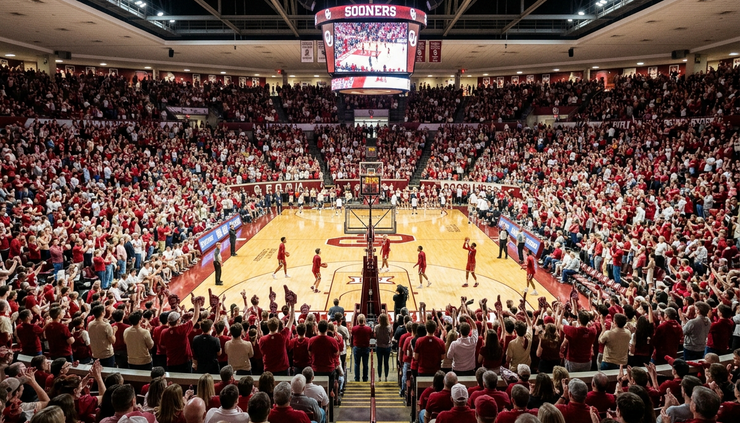
The season was defined by how Oklahoma handled SEC pressure
The 2026-27 Oklahoma Sooners basketball season review starts with the challenge of league play. Oklahoma’s move into the SEC raised the nightly standard. The conference is physical, athletic, and unforgiving on the road. A team can play well for 35 minutes and still lose if it gives up second-chance points, commits live-ball turnovers, or goes cold against switching defenses.
That made consistency the key theme.
The Sooners’ performance should be judged across a few core areas:
Area | Why it mattered |
Guard play | SEC games often turn on ball security, late-clock decision-making, and getting clean looks against pressure. |
Frontcourt depth | Rebounding and rim protection decide whether a team can survive long league stretches. |
Three-point shooting | Oklahoma needed spacing to keep driving lanes open and punish help defense. |
Bench production | January and February expose teams that rely too heavily on one or two scorers. |
Road toughness | Winning away from Norman is often the difference between a solid season and an NCAA tournament résumé. |
The most encouraging version of Oklahoma basketball is balanced. That means guards create without forcing shots, wings defend multiple positions, and bigs finish possessions with rebounds. When the Sooners play that way, they can make opponents work deep into the shot clock and then run after misses.
The less stable version shows up when the offense starts too far from the basket. Long possessions can turn into late contested jumpers. Against SEC defenses, that usually leads to transition chances the other way. For newcomers to the sport, that is one of the cleanest ways to understand momentum in college basketball. Bad offense often becomes bad defense within three seconds.
The season’s final evaluation depends on how Oklahoma performed in four stretches:
The nonconference schedule, where teams build confidence and collect résumé wins
The early SEC slate, when rotations tighten and roles become clearer
The February grind, when scouting reports are sharper and injuries matter more
The postseason window, where every possession gets louder
For current numbers, rankings, and efficiency trends, fan-friendly resources such as BartTorvik, KenPom, and ESPN’s Oklahoma team page help explain the story behind the standings.
Key players shaped the Sooners through roles, not just scoring
Every season has a leading scorer, but the best reviews look at roles. Oklahoma’s most important players in 2026-27 were not only the ones filling the box score. They were the players who made the system work.
The lead guard set the pace
The lead guard is the player who determines whether the offense feels calm or rushed. For Oklahoma, that role is always central. A strong lead guard gets the Sooners into sets, attacks closeouts, protects the ball, and knows when to hunt a shot.
In SEC play, this player’s value shows up in subtle ways:
Getting the ball across half court without burning clock
Calling out matchups after defensive switches
Feeding the post when a big has position
Drawing help and finding corner shooters
Taking care of the ball late in close games
When Oklahoma looked organized, the lead guard usually had fingerprints on the possession. When the Sooners struggled, turnovers and forced jumpers often started at the point of attack.
The wings carried the two-way burden
Modern college basketball asks wings to do nearly everything. They must shoot, defend, rebound, and sometimes create offense. Oklahoma’s wing group had one of the hardest jobs on the roster because SEC opponents often feature strong, explosive athletes at the two, three, and four spots.
The best wing minutes came from players who could guard without fouling and still hit open shots. That combination changes how a coach can build a lineup. A reliable wing lets Oklahoma switch more screens, play smaller when needed, and keep spacing around the rim.
This is why a wing who scores 10 points can be as valuable as a player who scores 18. If that player also defends the opponent’s top scorer, grabs tough rebounds, and keeps the ball moving, the impact goes beyond the stat sheet.
The frontcourt decided the physical battles
The Sooners’ bigs faced a simple but difficult test: protect the paint, rebound through contact, and finish strong. In the SEC, missed blockouts become dunks. Soft finishes become runouts. Foul trouble can change an entire half.
Oklahoma needed its frontcourt to be steady in three areas:
Defensive rebounding
Ending possessions matters more against teams that crash the glass.
Screening and rolling
Good screens create space for guards and force defensive rotations.
Rim protection
Even altered shots count. A big who makes drivers think twice changes the floor.
The most complete Sooners lineups likely paired guard creation with enough size to survive inside. That balance is the difference between a team that can win shootouts and a team that can win different kinds of games.

Traditions and milestones gave the season deeper meaning
Oklahoma basketball is not a blank slate. The 2026-27 season added another chapter to a program with national relevance across multiple eras.
The Sooners have reached the men’s Final Four multiple times, including runs in 1939, 1947, 1988, 2002, and 2016. The 1947 and 1988 teams finished as national runners-up. Those milestones still matter because they set the standard for what the program can be at its best.
The 1988 team remains one of the most famous in OU history. Coached by Billy Tubbs, that group played fast, scored in bunches, and reached the national title game. Decades later, the 2002 team under Kelvin Sampson brought a different identity, tough defense, rebounding, and control. The 2016 Final Four run, powered by Buddy Hield’s brilliant senior season, gave a newer generation a signature memory.
Those eras help explain how Oklahoma fans watch the current team. They value toughness, but they also know what high-level guard play can do in March. They respect defense, but they still respond to pace, shot-making, and confidence.
The program’s traditions keep that connection alive:
“Boomer Sooner” gives games a familiar soundtrack.
Crimson and cream connects basketball with the larger OU athletic identity.
Lloyd Noble Center remains the home base for big conference nights.
Bedlam history against Oklahoma State still matters, even as conference changes affect scheduling.
Senior day and alumni recognition link current players with past Sooners.
For historical records, season-by-season results, and player archives, Sports Reference is one of the easiest places to browse. For official program updates, schedules, ticket information, and fan resources, use SoonerSports.com.
Memorable games came from pressure, rivalry, and response
The games that stay with fans are rarely random. They usually fit one of three types: a statement win, a painful lesson, or a late-season response.
For Oklahoma’s 2026-27 review, these are the kinds of games that deserve the closest look when the final schedule and results are complete.
The early test that showed the team’s ceiling
Most seasons include an early game that reveals what a team can become. It may come against a ranked opponent, a neutral-site opponent, or a tough nonconference team with NCAA tournament hopes.
For Oklahoma, this kind of matchup matters because it gives the selection committee useful evidence. It also gives coaches a chance to see which lineups hold up when the pace rises and mistakes get punished.
The signs of a true ceiling game are clear:
Oklahoma wins the rebounding battle or keeps it close
The Sooners generate paint touches instead of settling
The defense forces tough shots late in the clock
Multiple players contribute instead of one scorer carrying everything
Even if the result is a loss, this kind of game can become a turning point if the team learns from it.
The SEC home game that brought Lloyd Noble Center to life
Every strong Oklahoma season needs at least one home game where the crowd becomes part of the story. SEC basketball offers plenty of chances for that. Ranked opponents, physical styles, and tight finishes can turn a January or February night in Norman into one of the season’s defining memories.
A memorable home win usually has a rhythm. The Sooners start with energy, the opponent answers, the game tightens, and then one run changes the building. A steal. A corner three. A blocked shot. A loose-ball scramble. Those moments can make a regular-season game feel bigger than the standings.
For new fans, that is part of college basketball’s appeal. The sport is emotional because the margins are small. One possession can flip a season’s confidence.
The road game that tested Oklahoma’s toughness
Road wins in major conferences carry extra value. The travel, crowd noise, unfamiliar sightlines, and officiating rhythm can all wear on a team. The best road performances often look less flashy than home wins. They come down to poise.
A strong road win from Oklahoma would likely include:
Low turnovers in the first 10 minutes
Good shot selection during opponent runs
Made free throws late
Defensive rebounds in the final two minutes
Smart timeouts and calm guard play
These are the games coaches love because they travel to March. Shooting can swing from night to night, but poise and defense give a team a chance anywhere.
The postseason moment that defined the ending
A season’s ending shapes how the whole year feels. A deep postseason run can turn a good season into a memorable one. A short stay can leave fans thinking about missed chances.
For Oklahoma, the postseason question is simple: did the Sooners play their best basketball when the games became win-or-go-home?
That answer depends on health, matchups, guard play, and whether the team’s half-court offense could produce clean looks under pressure. The NCAA tournament, in particular, rewards teams that can defend without fouling and score when the first option is taken away.
To follow postseason results and bracket updates, use the official NCAA men’s basketball hub.
What the 2026-27 season means for Oklahoma’s next step
The real value of a season review is what it reveals about the program’s direction. For Oklahoma, the 2026-27 campaign should be measured by more than record alone.
A successful season would show that the Sooners can recruit and develop SEC-ready athletes, defend at a high level, and build an offense with enough spacing and decision-making to survive against elite opponents. It would also show that Oklahoma can keep its identity while adapting to a new conference reality.
The key questions moving forward are clear:
Did the Sooners establish a dependable core?
Did young players earn bigger roles?
Did transfers fit the system?
Did Oklahoma improve from November to March?
Did the team create momentum for recruiting and fan support?
If the answer to most of those questions is yes, the season belongs on the positive side of the ledger. Even without a perfect record, growth matters when a program is building toward sustained SEC success.
The 2026-27 Oklahoma Sooners Basketball Season Review Key Players, Milestones, and Memorable Games is really a story about connection. It connects current players to Final Four history, links new SEC battles to old Big Eight and Big 12 memories, and reminds fans why college basketball seasons feel so personal.
The final takeaway is simple: Oklahoma basketball is at its best when skill, toughness, crowd energy, and program pride meet at the same time. The 2026-27 season gave fans another chance to measure that standard, celebrate the moments that hit hardest, and look ahead to what the Sooners can become next.


Comments