2026 NC State Wolfpack Football History Traditions and Must Know Milestones

NC State football has never needed a national bandwagon to feel big. On fall Saturdays in Raleigh, the Wolfpack build their own weather: red shirts, tailgate smoke, Carter-Finley noise, and a student section that can turn a third down into a warning siren.
The 2026 North Carolina State Wolfpack Football team will step into that same setting with a long story behind it. The season will bring new players, new pressure, and fresh ACC stakes, but the foundation is familiar. NC State football is built on tough finishes, proud defenses, standout quarterbacks, NFL talent, and a fan culture that treats loyalty as part of the uniform.
This guide looks at the history, major milestones, achievements, and traditions that make Wolfpack football easy to love and hard to ignore. It also includes trusted places to keep reading, from official team pages to historical archives and fan communities.

The Wolfpack football story starts with grit
NC State football dates back to the late 1800s, when college football was still rough, regional, and far less polished than the modern game. The program grew alongside the school itself, moving from early campus contests into the Southern Conference years, then into the Atlantic Coast Conference era.
NC State became one of the founding members of the ACC in 1953. That matters because ACC identity is not an accessory for Wolfpack football. It is part of the program’s core. The Pack has spent generations measuring itself against nearby rivals, old league powers, and changing conference schedules.
The early decades helped form the program’s personality. NC State was often at its best when it played with a hard edge. The school did not become known for football through flash alone. It earned its reputation through physical teams, smart quarterbacks, strong defensive fronts, and a fan base that stayed close through both breakthrough seasons and frustrating ones.
A few landmarks shaped the modern experience:
Milestone | Why it matters |
Football begins in the 1890s | The program has more than a century of history behind it. |
NC State joins the ACC as a founding member in 1953 | The Wolfpack become part of one of college football’s defining regional conferences. |
Carter-Finley Stadium opens in 1966 | Game day gains a permanent home built for big crowds and loud finishes. |
ACC championship seasons | The Pack proves it can rise to the top of the league. |
Modern bowl runs and NFL draft success | NC State becomes known as a steady producer of professional talent. |
For new fans, that timeline explains why Wolfpack football feels layered. Every season carries more than the weekly score. It carries old rivalries, past heartbreaks, family rituals, and memories of players who became local legends.
Championships and breakthrough seasons still define the standard
NC State has won multiple ACC football championships, with its strongest championship run coming during the mid-20th century and again in the 1970s. The Wolfpack claimed ACC titles in seasons that still matter to program history, including the 1960s run under Earle Edwards and the 1973 and 1979 championship teams.
The 1967 team holds a special place in Wolfpack memory. That group started the season with a long winning streak and rose near the top of the national rankings. Even though the season did not end with a perfect record, it remains one of the most famous campaigns in school history because it showed how high NC State could climb.
The 1973 season under Lou Holtz is another key chapter. NC State won the ACC and capped the year with a bowl victory, helping build one of the program’s most celebrated eras. Holtz later became one of college football’s best-known coaches, but his time in Raleigh remains a major part of the Wolfpack story.
The 1979 ACC championship team also deserves mention. It reinforced that NC State could return to the top of the conference across different eras, not just during one short run.
More recently, the 2002 team led by Philip Rivers finished with 11 wins, one of the best marks in school history. That season gave many modern fans their clearest image of what high-level NC State football can look like: a confident quarterback, a dangerous offense, and national attention.
The Pack has also built a steady bowl tradition. Bowl games are not all equal, and fans remember the details differently, but repeated postseason appearances show staying power. They also give seniors one more stage and younger players a preview of bigger expectations.
For readers who want records, schedules, and season-by-season results, start with the official athletics site at GoPack.com football and the broader historical listings at Sports Reference College Football.

The players who made NC State impossible to overlook
NC State’s national football identity has often come through individual stars. The program has produced quarterbacks, pass rushers, receivers, running backs, and specialists who left major marks in Raleigh and then carried that reputation into the NFL.
Roman Gabriel is one of the program’s early giants. A powerful quarterback from the late 1950s and early 1960s, Gabriel became an All-American at NC State before a long professional career. His name still belongs in any serious conversation about the best players in school history.
Ted Brown remains one of the great ACC running backs. His production and durability made him a standard for later Wolfpack backs. For many older fans, Brown represents the kind of player who made every carry feel meaningful.
Torry Holt brought star power to the wide receiver position. Before becoming a standout professional receiver, Holt gave NC State one of its most dynamic offensive weapons. His speed, polish, and big-play ability helped expand the program’s reputation.
Philip Rivers may be the most familiar modern name. His career at NC State from 2000 through 2003 reset expectations for quarterback play in Raleigh. Rivers started early, produced consistently, and became one of the most beloved players in school history before his long NFL career.
Russell Wilson added another unforgettable chapter. Before his professional success, Wilson gave NC State fans a creative, tough, and poised quarterback who could extend plays and frustrate defenses. His Wolfpack years remain a major part of his college story.
On defense, NC State can point to elite front-seven talent. Mario Williams became the No. 1 overall pick in the 2006 NFL Draft, a landmark moment for the program. Bradley Chubb continued that pass-rushing tradition years later, becoming one of the nation’s top defensive players and a first-round NFL pick.
That pipeline matters to 2026. Recruits and fans both notice when a program can point to real examples of development. The Wolfpack have done that across different coaching eras and positions.
Key names every new fan should know include:
Roman Gabriel One of the program’s foundational quarterback legends.
Ted Brown A standard-setting ACC running back.
Torry Holt A polished receiver who became a major professional star.
Philip Rivers The face of one of NC State’s best modern teams.
Russell Wilson A dynamic quarterback whose Wolfpack years still resonate.
Mario Williams A defensive force and No. 1 overall NFL Draft pick.
Bradley Chubb A dominant pass rusher who carried the defensive tradition forward.
For more official background on Wolfpack greats, the NC State Athletics Hall of Fame is one of the best places to browse.
Carter-Finley Stadium gives the Pack its home-field personality
Carter-Finley Stadium opened in 1966 and remains the center of NC State football life. It sits west of NC State’s main campus near the state fairgrounds, which gives game day a different feel from many campus stadiums. Instead of being tucked into a dense college quad, Carter-Finley has room to breathe. That space helped create one of the ACC’s best tailgating scenes.
The walk-up matters. Fans arrive early. Tents go up. Generations of families settle into the same parking routines they have followed for years. Students bring the volume. Long-time season-ticket holders bring the memory.
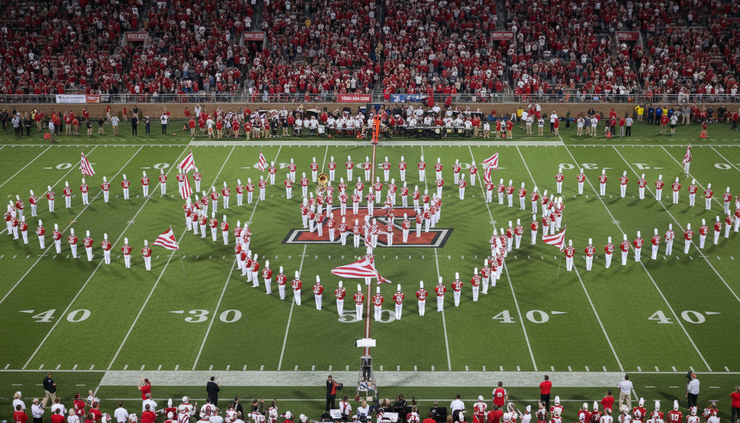
By kickoff, the place can become harsh on visiting teams. Carter-Finley is not the largest stadium in the country, but it can feel tight, loud, and personal. Night games add another layer. The red stands, the lights, the band, and the tension of ACC football make Raleigh feel like a very difficult place to get comfortable.
Several Wolfpack traditions help shape that atmosphere.
The “Wolfpack” identity is more than a nickname
NC State adopted the Wolfpack identity in the early 20th century, and it fits football especially well. A wolfpack suggests group effort, persistence, and shared purpose. That has always matched how NC State fans like their teams to play.
The best Wolfpack teams feel connected. They tackle in groups. They celebrate defense. They win ugly when needed. Even the mascot identity points back to the same idea: nobody hunts alone.
Mr. and Ms. Wuf bring personality to game day
NC State’s mascots, Mr. and Ms. Wuf, are central to the school’s spirit culture. They show up across athletics, but football gives them the biggest stage. Their presence ties modern Saturdays to a long line of school traditions and family memories.
Mascots can seem minor from the outside. Inside the fan base, they matter. They appear in childhood photos, student memories, alumni events, and the small rituals that turn a team into a community.
Red and white make the stadium feel unified
College football is visual. At NC State, the red matters. A packed Carter-Finley crowd in red gives the stadium its signature look. Fans who have never attended a game can understand the culture quickly by seeing the stands after a big touchdown or fourth-down stop.
The color also connects sports across the school. Basketball, baseball, wrestling, soccer, and other Wolfpack programs all feed the same identity. Football Saturdays become the largest gathering point for that shared pride.
Rivalries keep the 2026 season connected to the past
No history of NC State football makes sense without rivalries. The Wolfpack’s biggest games carry extra weight because they are personal, regional, and often inherited.
The rivalry with North Carolina is the headline. NC State and UNC are separated by a short drive and a much longer list of arguments. The game brings school pride, family bragging rights, recruiting stakes, and a year of message-board fuel. Records matter, but this matchup has its own emotional math. A difficult season can feel better with a win over Carolina. A strong season can feel incomplete with a loss.
Wake Forest is another long-running in-state opponent. The series does not always get the same national attention, but it has deep roots and plenty of strange, close, and painful games. For fans who value old ACC texture, NC State vs. Wake Forest still feels like a traditional conference fight.
Duke also belongs in the broader in-state picture, especially as conference scheduling changes bring different rhythms to old matchups. East Carolina is not an ACC rival, but games against the Pirates often carry statewide energy because both fan bases travel, care, and remember.
Realignment has changed college football across the country. ACC schedules are not as compact and predictable as they once were. That makes traditional games even more valuable. When NC State meets an old rival in 2026, the game will carry decades of context before the opening kickoff.
For schedules, kickoff times, ticket links, and roster updates, use the official NC State football schedule page. Future dates and opponents can change, so the official page is the safest source.
What to watch as the 2026 Wolfpack take shape
The 2026 NC State Wolfpack Football season will not be defined by history alone. Each team has to build its own identity. Because college football changes quickly, especially with transfers, early NFL departures, and new recruiting classes, the safest way to preview 2026 is to focus on the areas that usually decide NC State’s ceiling.
Quarterback play will matter first. The Wolfpack’s best modern teams have usually had stability and confidence at quarterback. When NC State gets strong decision-making at that position, the whole offense feels different.
Line play will matter just as much. NC State fans know the value of a defensive front that can hurry throws without constant blitzing. On offense, the Pack needs enough control up front to protect the quarterback and keep drives alive in short-yardage moments.
Health and depth will also shape the season. ACC play tests teams over time. The programs that survive injuries and still tackle well in November tend to stay in the race longer.
Special teams deserve attention too. Carter-Finley has seen plenty of games swing on field position, late kicks, and hidden yards. For a team trying to turn a good season into a memorable one, details like punt coverage and red-zone kicking can become the difference.
For current roster and coaching information, rely on the official 2026 roster when posted at GoPack.com. For recruiting and fan conversation, communities such as Pack Pride and Backing The Pack offer steady coverage and opinion. As with any fan site, treat rumors carefully and confirm major news through official sources.
Where to keep reading about Wolfpack history
NC State football rewards curiosity. The deeper the reading, the more connections appear between eras. A name on a stadium sign leads to an old coach. A retired jersey leads to a bowl game. A rivalry joke leads to a specific November afternoon that older fans still discuss in detail.
Helpful resources include:
GoPack.com football The official home for news, schedules, rosters, tickets, and team updates.
NC State Athletics Hall of Fame A strong starting point for learning about major Wolfpack athletes and coaches.
Sports Reference College Football A useful archive for season records, bowl history, coaches, and player stats.
ACC official site Good for conference standings, awards, schedules, and league-wide context.
Pack Pride A major fan and recruiting site for Wolfpack football coverage.
Backing The Pack A long-running fan site with commentary, analysis, and community discussion.
College Football Hall of Fame Useful for broader college football context and notable figures connected to the sport.

The takeaway for 2026 is simple
NC State football is not just a schedule of games. It is a long-running Raleigh tradition shaped by championship seasons, NFL-caliber players, bitter rivals, and a fan base that shows up with memory and noise.
The 2026 team will write its own chapter, but it will do so inside a story that started more than a century ago. That is what makes Wolfpack football compelling. New players arrive. Conferences shift. Rosters change. The red stays. Carter-Finley still fills. The Pack still runs together.
For new fans, the best next step is to learn the names, watch the rivalries, and understand why a fall Saturday in Raleigh feels different. For long-time supporters, 2026 is another chance to measure the present against the best parts of the past, while hoping the next must-know milestone is about to happen.


Comments