2026 Utah Utes Football History Traditions and Iconic Moments

Utah football has never needed the loudest national spotlight to build one of the most respected identities in the sport. The Utes did it with tough defense, fearless scheduling, cold-weather home games, and a fan base that treats Rice-Eccles Stadium like a weekly civic gathering.
The 2026 Utah Utes football team carries that legacy into a modern era shaped by the Big 12, expanded national expectations, and a program history that still feels close to the surface. To understand Utah in 2026, it helps to know the moments, players, chants, and symbols that made the Utes matter long before conference realignment put them in a new neighborhood.

The Utah football story grew from regional roots into national respect
Utah’s football history stretches back more than a century, but the program’s modern identity came from a steady climb rather than one sudden breakthrough. The Utes built their name in the old Western Athletic Conference, continued to rise in the Mountain West, became a national disruptor in the BCS era, then proved they belonged in the Pac-12 before moving into the Big 12.
That arc matters. Utah did not arrive in major college football by accident. The program earned credibility through coaching stability, player development, and a style that traveled well. The Utes became known for turning overlooked recruits into NFL players, playing elite defense, and meeting bigger-name opponents without flinching.
A few milestones show how the story came together:
Era | Why it matters |
Early 1900s football foundations | Utah established itself as one of the long-running programs in the Mountain West region. |
WAC years | The Utes built regional rivalries and claimed conference success that formed the base of the modern program. |
1994 breakthrough season | Utah went 10-2 under Ron McBride and beat Arizona in the Freedom Bowl, a key moment in raising national credibility. |
2004 undefeated season | Urban Meyer, Alex Smith, and a sharp spread offense led Utah to a perfect season and a Fiesta Bowl win. |
2008 undefeated season | Kyle Whittingham’s team finished unbeaten and beat Alabama in the Sugar Bowl, one of the program’s defining wins. |
Pac-12 era | Utah won division and conference titles, proving it could compete in a power conference. |
Big 12 era | The 2026 team plays in a league that gives Utah new rivalries and a fresh path toward national relevance. |
For official schedules, rosters, and current team information, the best starting point is the Utah Utes football page at Utah Athletics. For historical records, year-by-year results, and player pages, useful references include Sports-Reference College Football and Winsipedia’s Utah profile.
The games that shaped Utah’s identity
Every program has a few games that fans bring up again and again. Utah has plenty, and they all say something different about the Utes.
The 2005 Fiesta Bowl gave Utah a national platform it had rarely enjoyed. The Utes entered the game unbeaten and left no doubt, beating Pittsburgh to finish a perfect 2004 season. Alex Smith ran the offense with calm precision, and Utah became the first team from a non-automatic qualifying conference to earn a BCS bowl invitation. That season changed the way many fans viewed the program.
The 2009 Sugar Bowl may stand even taller in program memory. Utah faced Alabama, a national power loaded with blue-chip talent. The Utes attacked early, defended hard, and won 31-17. The victory completed a 13-0 season and strengthened the argument that Utah belonged in college football’s top tier.
The Holy War rivalry with BYU has also produced decades of tension, drama, and unforgettable endings. Some games have been defensive struggles. Others have ended in late-field-goal chaos. The rivalry means more because it splits households, workplaces, neighborhoods, and entire communities across Utah. Whether the teams meet in conference play or as nonconference opponents, the game has a pulse unlike most regular-season matchups.
Then came the Pac-12 years, when Utah had to prove week after week that its success could hold up against USC, Oregon, Washington, Stanford, and UCLA. The Utes won Pac-12 South titles, played in Rose Bowls, and won conference championships. Those achievements gave the program a new kind of credibility. Utah was no longer just the dangerous underdog. It had become a standard setter.

The players who turned Utah into a player-development program
Utah’s most important football tradition may be its ability to find and develop talent. The Utes have sent major names to the NFL, and many did not arrive in Salt Lake City with the same hype as recruits at blue-blood programs.
Alex Smith remains one of the clearest examples. He became the face of the 2004 unbeaten team and later went No. 1 overall in the NFL Draft. Smith’s college rise helped define Utah’s spread offense era and gave the program a national ambassador.
Eric Weddle may be the player most closely tied to Utah’s hard-nosed reputation. He played defense, contributed on offense, returned punts, and seemed to appear wherever the game demanded him. His long NFL career only added to his Utah legend.
Steve Smith Sr. brought a different kind of fire. Before becoming one of the toughest and most productive receivers of his NFL generation, he built his reputation at Utah with explosive playmaking and emotional edge.
Other names belong in any serious conversation about Utah football history:
Luther Elliss
A dominant defensive lineman who became one of the program’s great NFL success stories.
Jordan Gross
A standout offensive tackle who became a high NFL Draft pick and longtime pro.
Sione Pouha
A powerful defensive lineman who reflected Utah’s strength in the trenches.
Star Lotulelei
One of the most talented defensive tackles in school history.
Devin Lloyd
A modern defensive star whose versatility fit Utah’s identity perfectly.
Zack Moss
A tough, productive running back who became one of the program’s signature offensive players.
Britain Covey
A fan favorite, return specialist, and receiver whose career spanned eras and gave Utah fans one electric play after another.
That list also explains why NFL scouts keep watching Utah. The program’s pitch has never relied only on flash. It has relied on development, discipline, and proof.
Traditions give the Utes their sound and symbol
Utah football’s traditions are not just decorations around the game. They shape the feeling of a Saturday in Salt Lake City.
The “Mighty Utah Utes” chant is one of the most direct expressions of that identity. It is simple, loud, and communal. Chants matter in college football because they connect generations. A new student, a longtime season-ticket holder, and an alum visiting from out of state can all join the same words in the same rhythm.
The use of the “U” logo also gives the program a clean visual anchor. The red block U is easy to recognize, whether it appears at midfield, on helmets, on apparel, or on flags around campus. The logo works because it is simple. It does not need a long explanation. In a sport full of complex marks and constant uniform changes, Utah’s U carries weight through repetition and restraint.
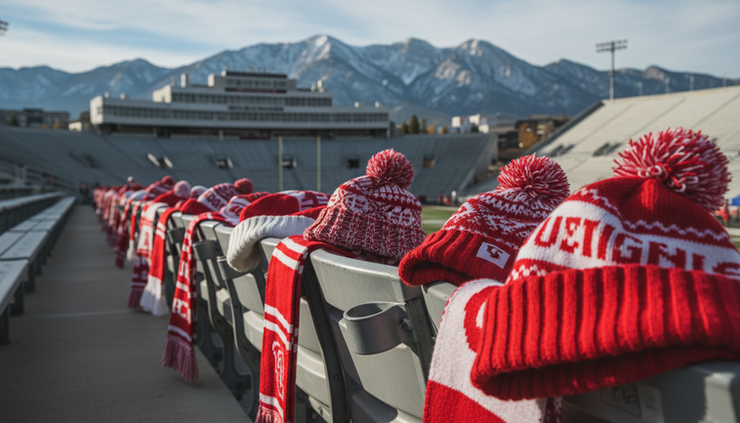
Rice-Eccles Stadium adds another layer. Set near the Wasatch Mountains, it gives Utah one of the most distinctive backdrops in college football. Late-season games can feel especially Utah, with cold air, red in the stands, and a crowd that expects physical football.
The MUSS, Utah’s student section, has become central to that atmosphere. Its energy turns home games into events and gives young fans a direct role in the program’s identity. For more on current student involvement and game-day culture, Utah’s official athletics site and the MUSS information through the University of Utah are good places to start.
The 2026 team carries the past into the Big 12 future
Talking about the 2026 Utah Utes football team means talking about a program in transition, but not a program searching for itself. Utah’s conference home has changed. The expectations have changed. The audience has grown. The core identity has stayed clear.
Under Kyle Whittingham, Utah became one of the most consistent and respected programs in the West. His teams have leaned on defense, special teams, strong line play, and physical offensive balance. Even as college football shifts through transfer portal movement, NIL changes, and playoff expansion, Utah’s best path still starts with those traits.
The Big 12 also gives Utah a different kind of stage. Instead of annual Pac-12 trips to the West Coast and Pacific Northwest, the Utes now face a broader conference map with programs from Texas, Oklahoma, Kansas, Iowa, Arizona, Colorado, West Virginia, Florida, and Ohio. That creates new travel demands, new recruiting opportunities, and new annual storylines.
For new fans, the 2026 season is a good entry point because Utah’s history is easy to follow through a few themes:
Defense travels
Utah’s best teams have usually tackled well, rushed the passer, and forced opponents into uncomfortable games.
Quarterback play can raise the ceiling
From Alex Smith to later eras, Utah’s biggest seasons have often paired toughness with efficient quarterback play.
Special teams are part of the culture
Utah has long treated field position, kicking, punting, and returns as winning edges.
The home crowd matters
Rice-Eccles Stadium can tilt close games, especially when the defense feeds the noise.
Longtime supporters already know these patterns. The 2026 season tests how well those familiar strengths translate in a Big 12 race where week-to-week matchups can vary widely in style.
For ongoing coverage, fans can follow the official Utah Football account through Utah Athletics, read historical context through College Football Reference, and check fan-driven coverage at sites such as Block U and UteZone. As with any fan or recruiting site, treat rumors as developing information until the school confirms them.
Why Utah’s iconic moments still matter
The best college football programs create memory. Utah has done that across different eras, with different coaches, and against different odds.
The 2004 team showed that a school outside the traditional power structure could crash the biggest bowl stage. The 2008 team showed that the first breakthrough was no fluke. The Pac-12 championship years showed that Utah could win once it joined a power league. The Big 12 era now asks a new question: how high can the Utes climb when their reputation is already established?
That is what makes the 2026 Utah Utes Football History Traditions and Iconic Moments story so compelling. It is not only a look back. It is a guide to what fans are seeing now.
The chant, the U, the mountains, the rivalry games, the defense, the NFL alumni, and the cold nights at Rice-Eccles all point to the same idea. Utah football has built a culture that can survive change because it was never based on one season alone.
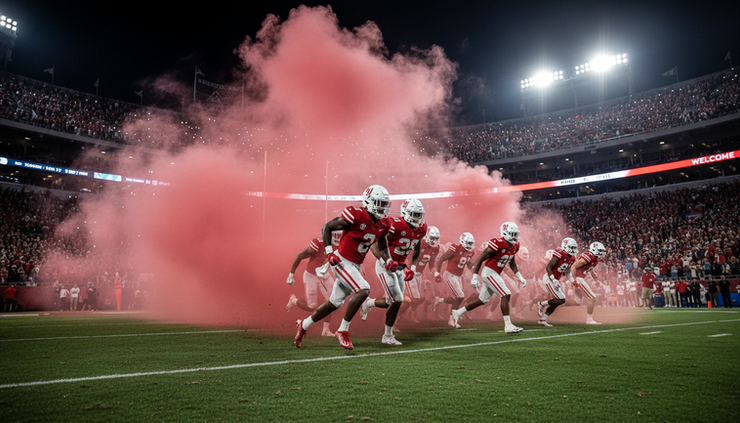
The 2026 Utes inherit more than a schedule. They inherit a standard. New fans can start with the famous bowl wins and rivalry games. Longtime fans can measure this era against the teams that made Utah respected across the sport.
Either way, the story remains the same: Utah football is at its best when it is physical, prepared, and proud of where it comes from.


Comments