Best Time to Buy Concert Tickets: 2026 Guide


The best time to buy concert tickets is either 90 or more days before the event or on the day of the show. These two windows consistently deliver the lowest prices. Day-of tickets median at $99, while the 2–4 week window before the event peaks at $162. Buying 90 or more days out lands at a median of $139, which is 14% below that peak. Understanding dynamic pricing, presale access, and last-minute market behavior gives you a real edge when deciding when to purchase.
What is the best time to buy concert tickets?
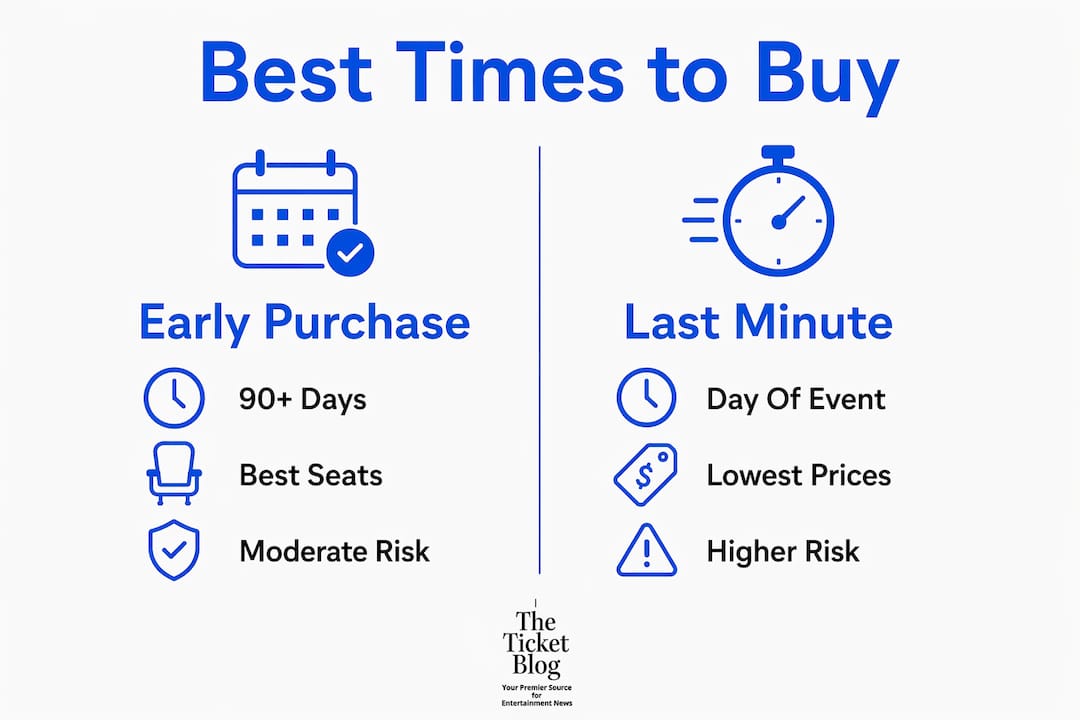
Two windows consistently beat the rest: very early and very late. Buying 90 or more days out gives you solid seat selection at a moderate price. Waiting until the day of the show gives you the lowest median price, but with limited seat choice and real availability risk.
The middle window, roughly 2–4 weeks before the event, is the worst time to buy. Prices peak at $162 during this stretch. That spike reflects maximum buyer urgency combined with shrinking inventory. Fans who missed the on-sale rush panic-buy, and sellers know it.
The right window for you depends on the event type. Personal finance expert Preet Banerjee describes this as the “liquid and replaceable” rule: if an artist has many tour dates and tickets remain available, you can afford to wait. If the show is a one-night stadium event with sellout risk, buy early or risk missing out entirely.
How dynamic pricing affects when you should buy
Dynamic pricing is the practice of adjusting ticket prices in real time based on demand. Primary ticketing platforms use algorithms that raise prices as inventory drops and buyer interest climbs. The result is a price curve that punishes hesitation at the wrong moment.
Here is how the price curve typically moves:
On-sale day: Prices start high due to initial demand surge, especially for major artists.
2–6 weeks after on-sale: Prices settle slightly as early demand fades.
2–4 weeks before the event: Prices spike again as urgency builds. This is the peak pricing window at a median of $162.
48–72 hours before: Prices begin to soften as sellers face a hard deadline.
Day of show: Median price drops to $99 as unsold tickets become worthless after the event.
The key insight is that ticket prices soften from peak panic pricing over the last days before an event. Sellers are motivated to accept lower offers rather than walk away with nothing. That seller psychology is what makes the day-of window so effective for budget-focused buyers.
Understanding why concert tickets are expensive in the first place helps you read these price movements more accurately. Demand, venue capacity, and artist popularity all feed into the algorithm.
How to use presales and early buying to your advantage
Presales are not primarily about getting cheaper tickets. The real benefit of presale access is securing specific seat locations before the general public sale opens. Floor seats, front rows, and premium sections go fast. Presales let you pick your spot before inventory shrinks.
There are several types of presale access worth knowing:
Paid fan club memberships: These cost $25–$150 per year and provide the most reliable presale access. Free fan signups often result in waitlists rather than guaranteed access. Paid memberships filter out casual buyers and scalpers, making your odds significantly better.
Credit card presales: Major card issuers partner with primary ticketing platforms to offer early access windows. You need the right card linked to your account before the presale begins.
Venue and promoter newsletters: Signing up for venue email lists gives you access to local presale codes, often 24–48 hours before general public sales.
Artist fan programs: Verified fan programs require registration before the tour announcement. Missing the registration window means missing the presale entirely.
Stacking multiple presale access points increases your chances of landing tickets. A buyer with a paid fan club membership, the right credit card, and a venue newsletter subscription has three separate entry points into the presale system.
Pro Tip: Set up your ticketing account profile completely before any presale. Save your payment details and verified ID in advance. Checkout timers run 7–10 minutes, and seat selection times out in 60–90 seconds. Fumbling with payment info at checkout costs you the seats.
One more thing worth knowing: waiting rooms do not improve your queue position. All participants are randomized at sale start. Preparation matters more than how early you enter the queue.
What to know about last-minute ticket buying
Last-minute buying is a legitimate strategy for fans who prioritize price over seat location. Day-of tickets carry a median price of $99, which is 29% cheaper than the 2–4 week peak window. That gap is real money, especially for expensive shows.
The risks are equally real. Here is what to weigh before going last-minute:
Limited seat selection: The best seats are long gone. Expect upper sections, partial-view spots, or scattered singles.
Sellout risk: For high-demand shows, tickets may simply not exist on the secondary market at any price.
Timing pressure: The sharpest price drops happen 2–3 hours before the event. Waiting until the last moment maximizes savings but minimizes your ability to plan.
Buyer guarantee considerations: Verify that any secondary marketplace you use offers a buyer guarantee. Some platforms confirm ticket validity only after purchase, which creates risk for last-minute buyers.
One in three ticket buyers purchase within 48 hours of the event. That volume shows both the popularity and the risk of this approach. High buyer activity in a shrinking inventory pool means prices can move quickly in either direction.
Pro Tip: For last-minute purchases, check cheap last-minute options on secondary marketplaces starting 48–72 hours before the show. Set a price alert if the platform allows it. The steepest drops usually happen within 3 hours of doors opening.

The seller’s motivation is simple. Tickets become worthless the moment the event ends. A seller holding unsold tickets at showtime will accept almost any reasonable offer rather than lose everything.
Practical steps for first-time buyers
A clear process removes most of the stress from buying concert tickets. Follow these steps before any major on-sale or presale:
Create and verify your accounts early. Set up profiles on primary ticketing platforms and any secondary marketplaces you plan to use. Save payment details and any required ID documentation.
Track tour announcements. Follow artists on social media and sign up for their newsletters. Tour dates and presale registration windows are announced there first.
Register for verified fan programs. Do this as soon as registration opens. Missing the window means missing the presale.
Join relevant presale programs. Evaluate whether a paid fan club membership makes sense for your favorite artists. For major acts, the $25–$150 annual cost often pays for itself in seat quality alone.
Set calendar reminders for every presale window. Presales open at specific times, often 10:00 AM local time. Missing the first hour of a presale can mean missing the best seats.
Compare fees across platforms. Fee-transparent platforms let you see the full price before checkout, which helps you make an accurate comparison between listings.
The table below summarizes the three main buying windows and what each delivers:
Buying window | Median price | Seat selection | Risk level |
90+ days out | $139 | Excellent | Low |
2–4 weeks out | $162 | Limited | Medium |
Day of show | $99 | Poor | High |
Choosing the right window depends on your priorities. If seat location matters, buying tickets early is the clear move. If you are flexible on where you sit and want the lowest price, the day-of window delivers. The 2–4 week window is the one to avoid unless you have no other option.
Key takeaways
The best time to buy concert tickets is either 90 or more days before the event for seat selection or on the day of the show for the lowest median price of $99.
Point | Details |
Avoid the 2–4 week window | Prices peak at $162 during this stretch due to buyer urgency and low inventory. |
Early buying wins on seats | Buying 90+ days out secures better locations at a median price of $139. |
Day-of delivers lowest price | Day-of tickets median at $99, but seat selection is limited and sellout risk is real. |
Presales are about seat control | Presale access secures specific seats early, not necessarily cheaper prices. |
Preparation beats queue timing | Checkout timers are short; saved payment details and verified accounts are critical. |
The Ticket Blog’s take on timing and ticket anxiety
Ticket buying anxiety is real, and most of it comes from not having a plan. The fans who consistently get good seats at fair prices are not lucky. They are prepared. They registered for the fan club three months ago, they have the right credit card linked, and they know exactly when the presale opens.
The dual-window strategy, buying very early or very late, is the most practical framework for most buyers. But it requires accepting a trade-off. Early buyers pay more than the day-of crowd but get to choose their seats. Last-minute buyers save money but surrender control. Neither approach is wrong. The mistake is buying in the middle window out of panic.
One thing The Ticket Blog has observed consistently: fans who are flexible about seating do far better with last-minute purchases than fans who have a specific section in mind. If you can sit anywhere and enjoy the show, the day-of market works in your favor. If you need floor seats or a specific row, presale access is the only reliable path.
Missing a presale registration deadline is the most common and most avoidable mistake. Tour announcements happen fast, and registration windows close before most fans realize they exist. The fix is simple: follow the artist, subscribe to the venue newsletter, and check your email the week after any major tour announcement.
— The Ticket Blog
The Ticket Blog: your concert ticket resource
The Ticket Blog covers every stage of the ticket buying process, from presale strategy to last-minute discounts and secondary market navigation. Whether you are buying for the first time or trying to land floor seats for a sold-out show, the guides here give you a clear path forward.

The site publishes real-time advice on presale windows, promo codes, and concert ticket discounts as they become available. Subscribing keeps you ahead of on-sale dates and presale registration deadlines. For fans who want to stop overpaying and start buying with confidence, The Ticket Blog is the place to start.
FAQ
What is the cheapest time to buy concert tickets?
Day-of tickets carry the lowest median price at $99, which is 29% cheaper than the 2–4 week peak window. The sharpest price drops typically happen 2–3 hours before the event starts.
How far in advance should I buy concert tickets?
Buying 90 or more days before the event delivers a median price of $139 and the best seat selection. For high-demand or sellout-risk shows, buying early is the only reliable way to secure tickets at all.
Do presales offer cheaper tickets?
Presales primarily offer early access to better seat locations, not lower prices. The real advantage is choosing your seats before general public inventory opens and the best spots disappear.
What are the best days to buy concert tickets?
No single day of the week consistently delivers lower prices. Timing relative to the event date matters far more than the day of the week. Focus on the 90-plus-day window or the day-of window rather than specific weekdays.
Is it safe to buy last-minute concert tickets?
Last-minute buying is safe on reputable secondary marketplaces that offer buyer guarantees, which confirm ticket validity before or at delivery. The risk is limited seat selection and the possibility that tickets for high-demand shows are simply unavailable.
Recommended


Comments