Stop Paying Surge Prices, Fans: Dynamic Pricing Savings Checklist

Updated: Sep 7
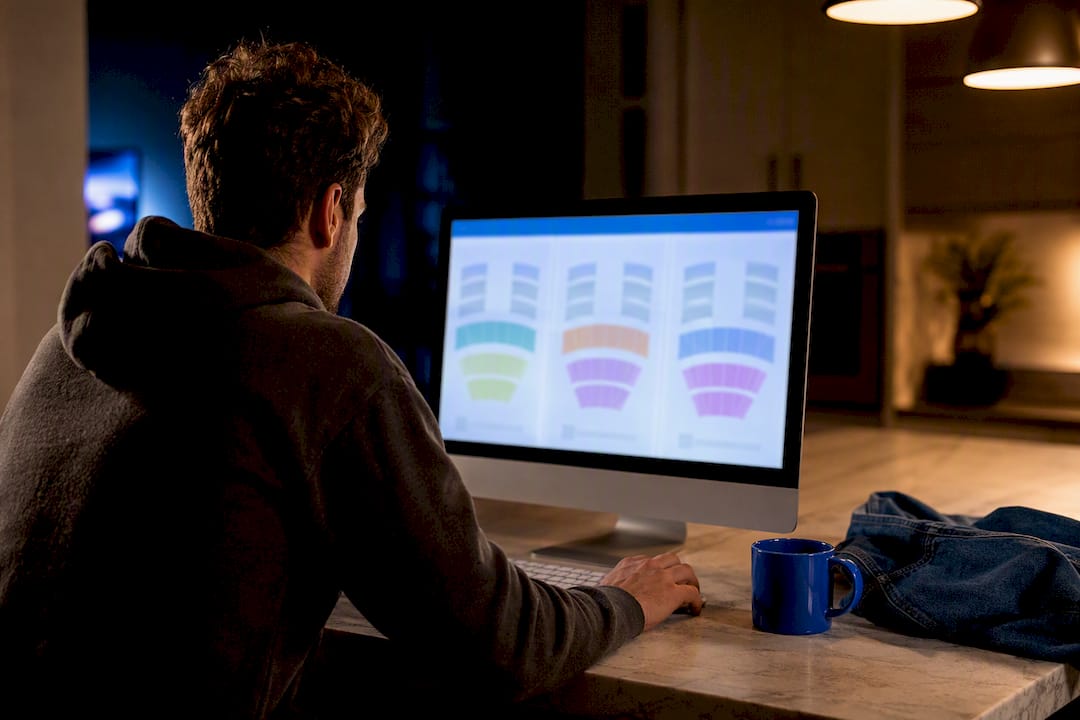
Dynamic pricing for tickets means the price you see for a concert or game seat can rise or fall in real time based on demand, much like an airline fare. For fans, that translates into one blunt reality: the price you saw yesterday, or even ten minutes ago, might not be the price at checkout today. This guide breaks down how that pricing actually works, who controls it, and what you can do to avoid getting stuck paying the peak.
TL;DR:
Dynamic ticket prices are driven by algorithms that respond in real time to demand signals such as sales velocity, remaining inventory, and event proximity.
Promoters, artists, and platforms share control over pricing, with artists typically setting initial prices and deciding whether to allow market-based adjustments.
Prices can spike quickly during high demand, but users can often avoid surges by purchasing early, using presales, or monitoring price alerts.
Regulatory efforts aim to improve transparency through disclosure rules requiring all-in prices and scrutinize illegal resale tactics and monopoly practices.
Building effective dynamic pricing systems is complex and costly, which is why smaller venues largely stick to manual tiered pricing rather than algorithmic models.
Table of Contents
How Dynamic Pricing Tickets Actually Work
True dynamic pricing runs on an algorithm that adjusts prices continuously as tickets sell. That’s different from tiered pricing, where a promoter manually opens a new, higher-priced block once an earlier one sells out. Both fall under the umbrella of variable ticket pricing, but only one reacts to demand second by second.
The algorithms driving real-time ticket pricing typically watch a handful of signals:
Sales velocity (how fast seats are moving in a given section)
Remaining inventory relative to time left before the event
Days or hours until the show or game
External buzz, like a reunion tour announcement or a playoff clinch
Most systems also run with guardrails: a price floor near face value and a ceiling that caps how high the algorithm can push a seat, plus limits on how fast a price can change in a single session. Those rules exist precisely because unrestrained pricing algorithms can spiral during a frenzied on-sale, turning a $95 seat into a $400 one before a fan even reaches the checkout page.
Pro Tip: If a price jumps between the moment you select seats and the moment you pay, refresh the page before entering your card. Sometimes the algorithm resets between waves of buyers, and you can catch a lower window.
Who Actually Sets the Ticket Price?
Fans often blame the ticketing platform, but pricing authority usually splits three ways:
Artists and their teams typically set the initial face value and decide whether to allow market-based pricing at all.
Promoters and venues negotiate contract terms that determine which pricing model applies to a given tour or season.
Ticketing platforms build and operate the pricing algorithms but generally act within limits the artist or promoter approves.
Some artists explicitly opt out of dynamic pricing or negotiate face-value exchanges for fans who get priced out. Others opt in because their teams project higher net revenue. The pricing model on any given tour is a contract decision made months before tickets ever go on sale, not something the platform imposes independently.
Why Organizers Adopt Dynamic Pricing
The economic case is straightforward: promoters would rather capture the premium a resale broker would otherwise pocket. An analysis of variable pricing in professional sports found it can boost primary-market ticket sales by roughly 1.59% per NFL game, while MLB teams using optimized variable pricing estimated potential revenue gains between about 2.8% and 6.7%.
That kind of lift makes sense for arena sellouts and premium seating, where demand structurally outpaces supply within seconds. It makes far less sense for a Tuesday minor-league game or a mid-tier theater run, where empty seats hurt more than underpriced ones. Practitioner guidance from TickPick’s organizer resources points to the same conclusion: dynamic pricing is most defensible when supply is scarce, not as a default setting for every event. The trade-off organizers accept is real: short-term revenue gains can cost long-term trust from fans who feel burned once and shop elsewhere next time.
What Fans Actually Experienced: Recent Examples
Coverage of recent tours shows why this issue generates so much anger. When Oasis’s reunion tour went on sale, standard tickets were rebranded “in demand” mid-sale and prices spiked well above the advertised face value, prompting widespread public backlash covered by outlets like Northeastern Global News. Al Jazeera documented the same pattern, noting fans who had waited in a virtual queue for hours watched prices climb before they could even complete checkout.
Not every dynamic pricing story ends in outrage, though; for example, MLB Picks | Manny’s Variety Picks highlights how dynamic pricing benefits certain baseball games. MLB clubs like the St. Louis Cardinals report that a meaningful share of games actually land at lower price points once the algorithm accounts for weak weekday demand.
The common thread in the complaints isn’t the pricing model itself. It’s the mismatch between:
Time invested (queueing, selecting seats, entering payment info) and a price that moves before the purchase completes
Advertised “starting at” prices and the real all-in total shown only at the final screen
How to Avoid Paying Surge Prices for Tickets
You can’t control the algorithm, but you can control your buying behavior enough to dodge the worst of it. Work through these in order:
Get into verified presales first. Fan club and artist mailing list presales almost always run before general on-sale, when tiers are lowest and dynamic surges haven’t kicked in yet.
Buy early or wait for the drop, not the middle. Scheduled tiers usually favor early buyers; last-minute discounts tend to appear only in the final days if a section still has unsold inventory.
Set price alerts and stay flexible on seats. A different section, a weekday show, or a nearby venue on the tour can cost dramatically less than the exact date and seat everyone else wants.
Do your checkout hygiene before the sale opens. Save your payment method, log into your account, and confirm your details in advance so you’re not fumbling for a card number while the price ticks upward.
Know the all-in price before you confirm. Fees can add real money on top of the ticket price, so check the total before you click “purchase,” not after.
Consider resale or face-value exchanges when they exist. Some artists run official exchanges that let fans resell at cost. That can beat both the surge price and a scalper’s markup on the secondary market.
Pro Tip: Compare primary and secondary marketplaces side by side before buying. Sometimes a resale listing posted right after an on-sale wave is cheaper than what the primary site is currently charging.
Regulators Are Watching Ticket Pricing Closely
Government scrutiny of ticketing has intensified. The FTC sued Live Nation and Ticketmaster in September 2025, alleging illegal resale tactics and deceptive practices toward artists and fans alike. Separately, the Department of Justice filed antitrust litigation against Live Nation and Ticketmaster, arguing the company’s market position lets it limit competition that would otherwise pressure prices down.
On the disclosure side, the FTC’s rule requiring all-in pricing means:
Platforms must show the total price, including mandatory fees, up front rather than tacking them on at checkout
Fans get a clearer view of what a ticket actually costs before entering payment information
Future enforcement could push toward more transparency around how and when dynamic price changes happen
The Tech Stack Behind Every Price Change
Running real dynamic pricing at scale requires more than a spreadsheet with price tiers. Platforms need a live inventory system that tracks every seat’s status in real time, feeding data into a pricing engine that recalculates offers as fast as fans click “buy.” That engine has to talk to the checkout system instantly, since a price locked in one second earlier still needs to hold through payment processing.
Behind that sits a demand-forecasting layer that blends historical sales patterns for similar shows with current signals like queue length and search traffic. Many operators combine this with pre-set price ladders, so the system can open the next published tier automatically once a sales-velocity threshold hits, rather than letting an unconstrained algorithm run wild.
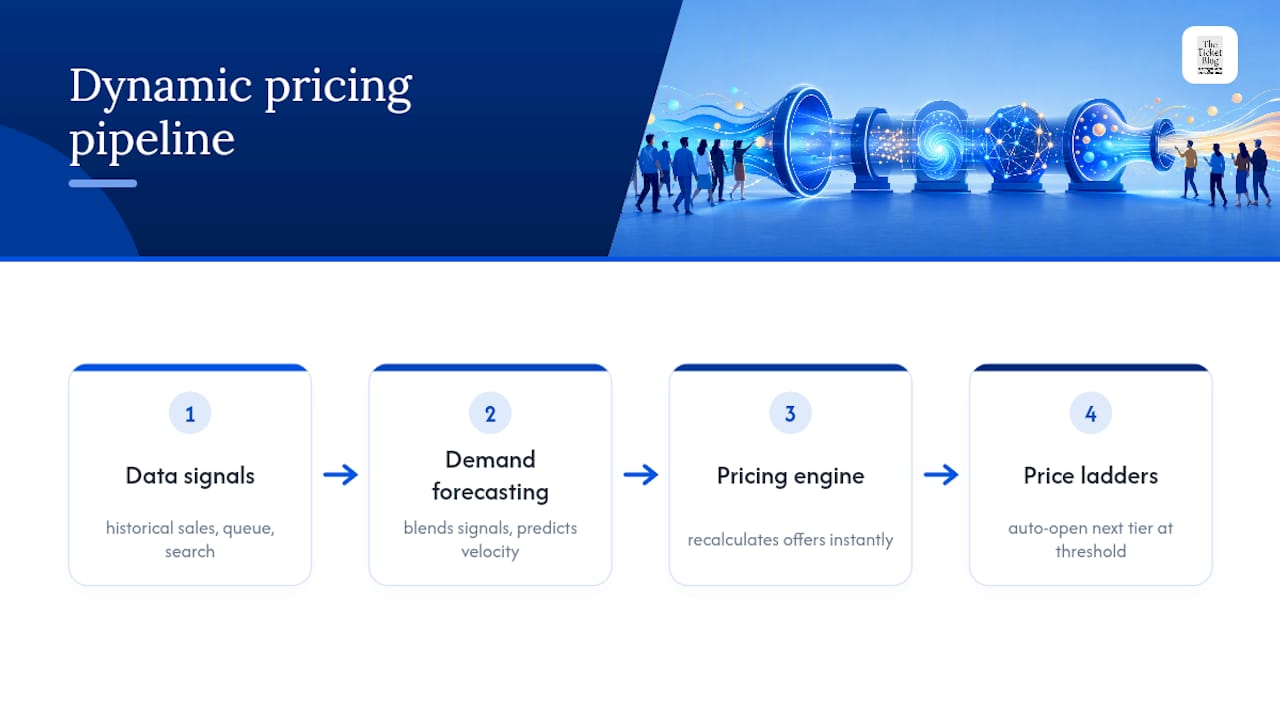
None of this is cheap or simple to build, which is one reason smaller venues and independent promoters largely stick to manual tiered pricing instead of full algorithmic models. The infrastructure investment only pays off at scale, when enough tickets move through the system to justify the cost of building and maintaining it. That’s part of why dynamic pricing shows up most often on major arena tours and less often at your local theater or minor-league ballpark.
What Happens to Your Data When Prices Go Dynamic
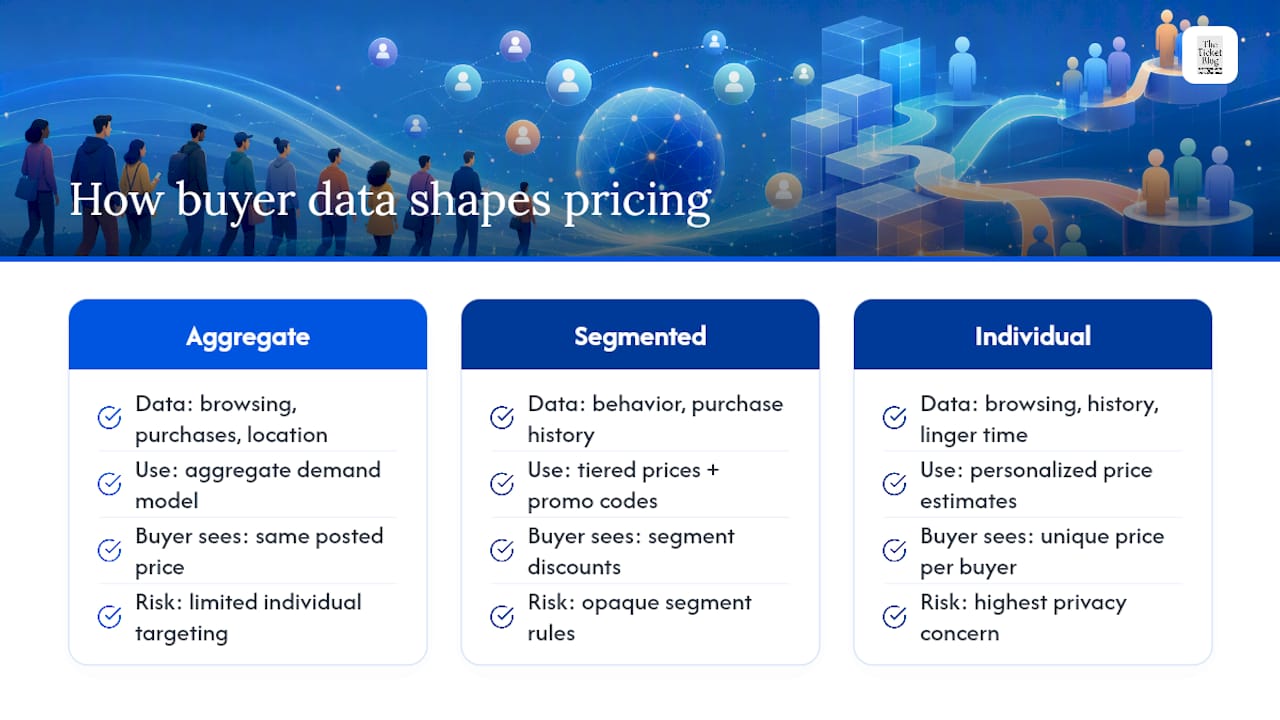
Pricing algorithms need buyer data to work, and that raises real privacy questions fans rarely see discussed. Systems that adjust prices based on demand often draw on browsing behavior, purchase history, device location, and even how long you’ve lingered on a seating map before clicking “select.”
Some platforms use that data narrowly, feeding it only into aggregate demand models that never single out an individual buyer’s price. Others go further, pairing tiered pricing with targeted promo codes or loyalty access that effectively let different buyer segments see different discounts without ever changing the posted price everyone else sees.
The ethical line gets blurry fast. Charging a “surge” price to everyone during a demand spike is one thing. Using someone’s shopping history to guess how much they’re willing to pay, and pricing them individually based on that guess, is a different and more troubling practice that consumer advocates have flagged as fans grow more aware of how much data ticketing platforms collect during account creation and checkout. Expect this to become a bigger flashpoint as fee-disclosure rules force more transparency around the price itself, even as the data collection that shapes that price stays largely invisible to the buyer.
The Ticket Blog’s Take on Dynamic Pricing
Outrage over surge pricing is justified, but it doesn’t get anyone a cheaper seat. The Ticket Blog exists to give fans the practical side of this fight: pricing trend breakdowns, markdown patterns for sports tickets, and flash sale examples that show exactly when prices dip. Subscribe to alerts, run through the buyer checklist before your next on-sale, and treat the algorithm like weather: you can’t stop it, but you can dress for it.
— The Ticket Blog
Get The Savings Checklist Before Your Next On-Sale
This site offers a hands-on library of guides, promo postings, and timing breakdowns built specifically around how ticket prices actually move.
Whether you’re chasing presale codes, tracking flash sale windows, or deciding between primary and secondary marketplaces, the site’s guides walk you through the exact steps that keep more money in your pocket. Head to The Ticket Blog now and pull up the savings checklist before your next favorite artist announces a tour.
Sources
Recommended


Comments