Beat 10 Minute Presales: Festival Guide with FTC and GAO Tips

Your best shot at landing festival tickets is registering early for the official presale, saving your payment and account details in advance, and having a backup pass type ready before the sale starts. Set alerts for on-sale dates, buy only through authorized sellers or verified resale, and know your fallback (single-day pass, different tier, or official resale) before the countdown hits zero.
TL;DR:
Register early for presale eligibility by signing up in advance for fan club, credit-card issuer, or promoter presales to secure access codes.
Prepare multiple backup pass options and confirm your payment details ahead of time to avoid losing tickets if your first choice sells out during checkout.
Use official resale platforms with buyer guarantees and verify transfer timing to avoid purchasing invalid or fake tickets from unofficial sources.
Expect additional fees during checkout that can significantly increase the final price, so always compare the itemized total rather than the advertised price.
Adopt a coordinated group strategy by assigning roles, sticking to the official platform for transfers, and paying only through traceable methods to prevent disputes.
Table of Contents
Festival Ticket Guide: The Complete Buying Checklist
Sale day rewards preparation, not luck. The steps below break the process into what to do before, during, and after the sale, so you’re not scrambling when the clock starts.
Before the sale:
Create or log into your account on the festival’s official ticketing platform and confirm your email and phone number are current.
Save a payment method directly in your account profile rather than typing card numbers under pressure.
Double check that your billing address matches the card on file. Mismatches are a common reason carts fail at checkout.
If you’re buying with friends, agree in advance on who buys, which pass, and how many tickets each person needs.
During the sale:
Select your pass type and dates first. Festival tickets rarely restock once a tier sells out.
Use the payment method you already saved. Do not switch cards mid-checkout.
Watch the countdown on your cart. Most platforms hold inventory for a limited window before releasing it back to the pool.
Have a second and third choice ready (a different day, a different tier) in case your first pick disappears while you’re finishing checkout.
After the sale:
Screenshot or save your order confirmation number immediately.
Check how tickets will be delivered. Mobile ticket apps like Ticketmaster’s are the standard for many major festivals and often require activation before the event.
Review the transfer policy now, not the week of the festival, so you know if a friend’s name can be swapped in later.
Pro Tip: Open the festival’s official site in one browser tab and your email confirmation in another before the sale starts. Refreshing between tabs wastes seconds you don’t have once the queue moves.
GA, VIP, or Camping: Which Festival Pass Fits You?
General admission (GA) covers stage access and standard grounds entry, which is all most fans actually need. VIP tiers add priority entry lanes, dedicated viewing platforms, air-conditioned lounges, and sometimes premium restrooms, but the price jump can run well past what those perks are worth for a casual attendee.
Multi-day passes almost always beat buying single days separately on a per-day basis, but only if you’re attending most or all of the lineup. If you only care about one headliner, a single-day ticket saves money outright.
Camping passes are frequently sold separately from GA and VIP tickets, so confirm inclusion before assuming it’s bundled.
Parking and shuttle passes are commonly add-ons rather than automatic perks, even with VIP tiers.
Some festivals bundle hotel stays or glamping into premium tiers. Check the official pass page, since inclusions vary a lot by event, as seen in the tiered options Louder Than Life publishes each year.
Compare the all-in total (pass plus mandatory add-ons) against a competing tier before deciding, not just the sticker price.
How Do Festival Presales Actually Work?
Presales exist to reward the fans paying attention, not to gatekeep tickets from everyone else. Qualifying almost always means doing something ahead of the public on-sale date, and most festivals publish the requirements weeks in advance if you know where to look.
Identify the presale type. Common categories include fan club presales, credit-card issuer presales (Citi and American Express run these often), promoter presales, and verified-fan registrations that require signing up ahead of time.
Register early. Verified-fan and lineup-announcement presales usually open a registration window days before the actual sale. Miss the window and you miss the access code.
Hunt for codes. Promo codes and fan-club windows often surface through artist newsletters, festival social accounts, or presale-focused platform guides.
Set up redundant alerts. Add the on-sale date to your calendar, follow the festival’s app and social channels, and subscribe to its mailing list. Relying on a single notification channel is how people miss ten-minute presale windows.
Studying how a festival ran its sale in prior years also pays off. Recurring events tend to repeat their presale structure and timing year over year, so tracking past patterns gives you a real edge on when to be ready.
What Should I Do in the Ticket Queue?
A queue position is not a reservation. It’s a place in line, and plenty of people in line ahead of you will abandon their cart or get timed out, which is exactly why having a clear fallback order matters more than obsessing over your queue number.
Decide your fallback hierarchy before the sale: weekend GA first, single-day pass second, official resale third.
Make sure your registered email and billing details match exactly, since mismatches can trigger extra verification steps like one-time passcodes that cost you time.
Use a device and browser you already trust for checkout. Now is not the time to test a new phone or clear your cookies.
If you’re buying as a group, assign one person per browser tab or device rather than everyone hitting refresh on the same link.
Avoid anything that promises to “beat the queue” through bots, multiple fake accounts, or automated refreshing tools. The FTC has flagged these tactics directly, warning that circumvention distorts availability for everyone playing by the rules, including you.
Pro Tip: If your group has four people trying to buy, don’t all queue for the same four tickets on one account. Split into two-person orders on two devices. It doubles your odds of at least one order clearing.
How Do I Spot a Fake Resale Ticket?
Verified resale marketplaces tied to the original ticketing platform are almost always the safer route once primary tickets sell out. These listings come from other buyers who purchased through the official system, so the ticket itself has a traceable origin.
Red flags on unofficial resale sites and social media marketplaces include sellers who only offer a screenshot as proof of purchase, anyone pushing paper tickets for an event that’s gone fully mobile, unfamiliar domains mimicking an official festival name, and pressure tactics like “three other buyers are looking at this right now.”
Confirm the platform’s buyer guarantee before paying, including what happens if the ticket turns out invalid.
Check the delivery timing. A legitimate transfer should land in your account or app well before the event, not the morning of.
Read the transfer and refund terms on the resale platform itself, not just the festival’s original policy.
The Government Accountability Office has found that some resale sites are built to closely resemble official sellers, which makes checking the actual domain and seller identity worth the extra thirty seconds. A side-by-side comparison of primary versus secondary sellers can help you spot the difference before you enter card details.
Why Does the Final Ticket Price Look Different at Checkout?
The number you see on the festival’s landing page is rarely the number you pay. Service fees, facility charges, and processing fees typically get added during checkout, sometimes pushing the total well above the advertised price.
The GAO’s review of the FTC’s fee disclosure rule confirms that sellers must show the total price for live-event tickets before a buyer agrees to pay, and cannot misrepresent what those fees cover.
That rule is exactly why comparing the final itemized total, not the headline number, is the only reliable way to judge whether a ticket is actually a good deal. Some festivals, including EDC Orlando, now advertise all-in pricing upfront specifically to cut through this confusion. Watch, too, for optional add-ons like ticket insurance or refund protection bundled into checkout by default. They’re rarely required, and they change your effective price more than most buyers realize. For a breakdown of where those charges actually come from, The Ticket Blog’s fee guide walks through each line item.
How Do Groups Buy and Transfer Tickets Safely?
Assign roles before sale day: one buyer, one or two backups watching alternate tiers, and someone tracking confirmation emails.
Collect payment from everyone in the group ahead of time so the buyer isn’t waiting on a Venmo transfer mid-checkout.
Stay within the platform’s posted purchase limits. Attempting to work around them with multiple accounts carries real legal risk, and the FTC has already penalized brokers for exactly this kind of circumvention.
Confirm the transfer process and name-change deadline immediately after purchase, not the week before the festival. A group toolkit like CrewsCanvas can help keep everyone’s travel and ticket logistics organized in one place.
What Consumer Protections Apply to Festival Tickets?
The Summer Concert Ticket Buying Checklist from The Ticket Blog walks through account setup and presale prep step by step, and the venue fee breakdown guide explains where extra charges typically come from.
Pair those with official guidance: the FTC’s consumer alert on scoring tickets covers bot activity and fraud risk, while the GAO’s review of the FTC’s fee disclosure rule confirms your right to see the total price before paying. Using a checklist alongside these official rules closes most of the gaps where buyers typically lose money or get scammed.
Ticket Refund and Cancellation Policies
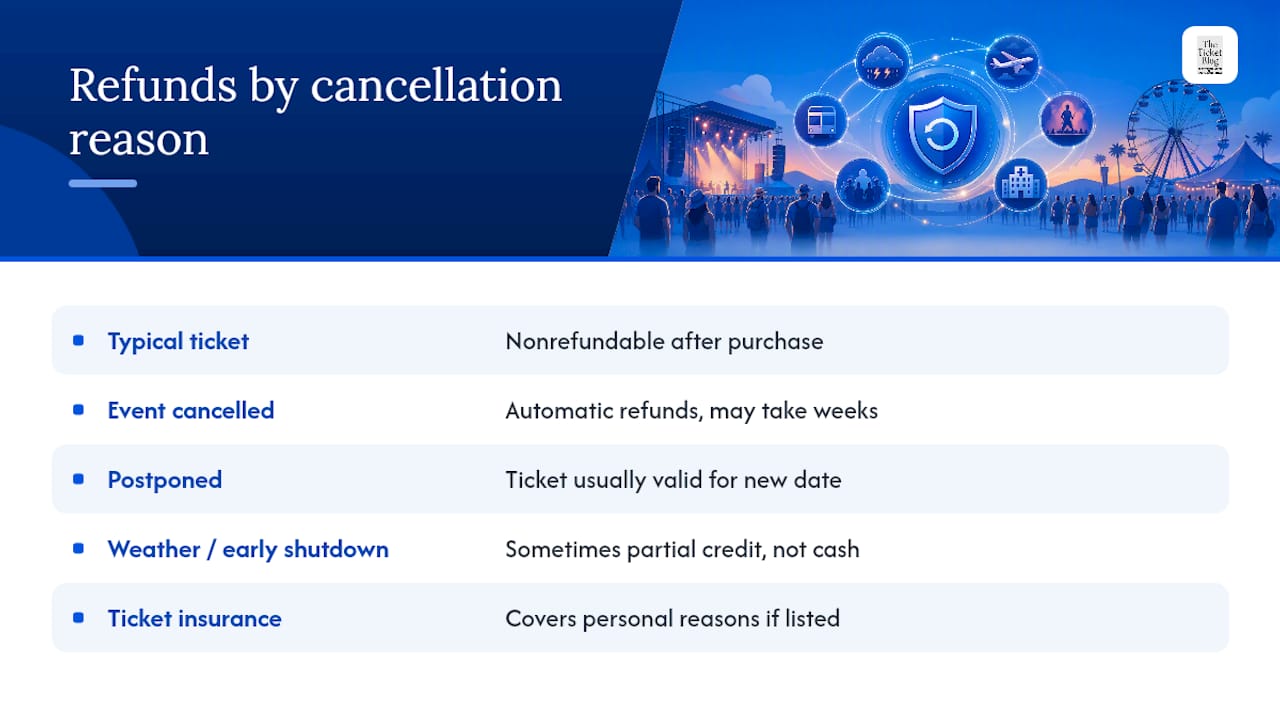
Most festival tickets are sold as nonrefundable once purchased, and that policy usually holds even if you simply change your mind or can’t attend. What actually gets refunded depends heavily on why the event didn’t happen as planned.
If a festival cancels outright, most organizers issue refunds automatically, though the timeline can stretch to several weeks depending on how many tickets need processing. Postponements are trickier: many festivals simply honor the original ticket for the new date rather than issuing money back, which catches buyers off guard if they assumed a reschedule meant a refund option.
Weather-related cancellations or early shutdowns midway through a multi-day event often fall into a gray area. Some festivals offer partial credit toward next year’s tickets instead of cash refunds, and the exact terms are usually buried in the fine print on the ticket purchase page rather than advertised upfront.
Optional ticket insurance, sold as an add-on during checkout, is the one path that reliably covers personal cancellation reasons like illness or travel disruption. It’s worth the extra cost specifically for high-price multi-day or VIP passes, where losing the full amount would hurt more. Read the insurance policy’s actual covered reasons before assuming it protects you for any circumstance, since most plans list specific qualifying events rather than blanket coverage.
Always read the refund policy on the ticket seller’s page before buying, not after something goes wrong.
Using Mobile Tickets and Digital Wallets
Mobile tickets have become the standard delivery method for most major festivals, replacing printed tickets and even PDF downloads in many cases. Your ticket typically lives inside the festival’s official app or the ticketing platform’s app, like Ticketmaster’s mobile app, rather than as a static file you can screenshot and reuse.
The practical upside is real: mobile tickets refresh their barcode periodically, which makes screenshotted copies useless at the gate and cuts down significantly on counterfeit tickets circulating on resale sites. The downside is that you need a charged phone and a working app on festival day, so it’s worth downloading the app and logging in well before you leave for the venue, not while you’re already in line at the gate.
Many platforms also support adding tickets to Apple Wallet or Google Wallet, which is worth doing as a backup in case the main app has connectivity problems on-site. Festival grounds often have patchy cell service given the crowd density, so having your ticket saved locally in a wallet app, rather than depending on live data to load it, can save you a stressful wait at the entrance.
If you’re transferring a ticket to someone else in your group, do it through the official app’s transfer feature days in advance. Last-minute transfers sent the morning of the festival sometimes fail to sync before gates open, especially on venue Wi-Fi that’s already overloaded with thousands of other attendees checking in at once.
What to Do if Denied Entry With a Ticket
Getting turned away at the gate with what you believe is a valid ticket is stressful, but staying calm and working through the right steps usually resolves it faster than arguing with gate staff. Ask the staff member specifically why the ticket was rejected. Duplicate scan, name mismatch, and invalid barcode are the three most common reasons, and each has a different fix.
If it’s a duplicate scan, someone else may have used a copy of your ticket, which is one of the risks of buying from unofficial resale sources or accepting a screenshot instead of an official transfer. Pull up your order confirmation email and the original purchase receipt on your phone as proof of purchase, since gate staff can often escalate this to a box office representative on-site.
Head to the venue’s box office or guest services tent rather than continuing to argue at the gate itself, since gate staff typically can’t override a scan rejection on their own. Box office staff can look up your order directly in the ticketing system and issue a replacement if your purchase checks out as legitimate.
If you bought through an unofficial reseller and the ticket fails, your recourse depends entirely on that platform’s guarantee, which is exactly why checking replacement and refund terms before paying matters more than the price difference. Keep every confirmation email and text related to the purchase until after the event, since that paper trail is what resolves disputes fastest.
Tips for Reselling Tickets Safely Beyond Official Platforms
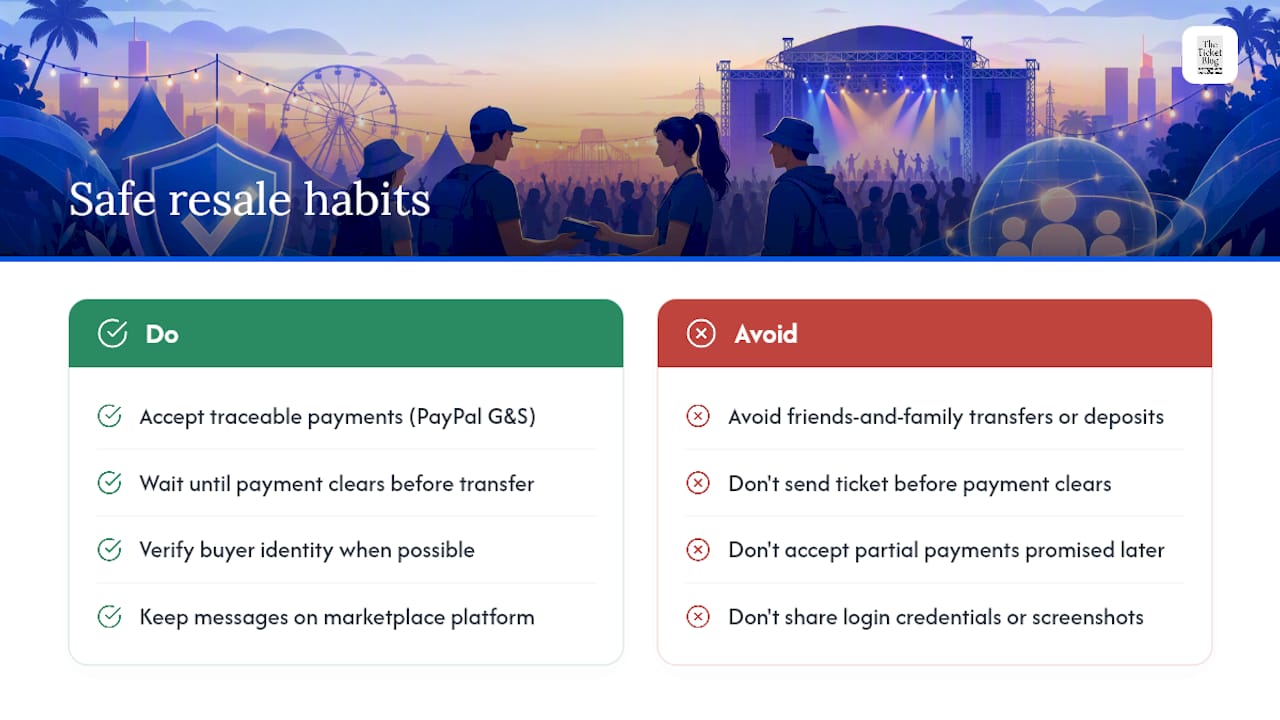
Selling a ticket you can no longer use outside the festival’s official resale system carries more risk for both sides, but a few habits keep it from turning into a dispute. Only accept payment through a traceable method like PayPal Goods and Services rather than a friends-and-family transfer or a direct bank deposit, since traceable payments give you recourse if something goes wrong.
Never send the ticket transfer before payment clears, and never accept a partial payment with a promise for the rest later. Verify the buyer’s identity as much as the platform allows, and communicate through the marketplace’s messaging system rather than moving to text or a private app, since that conversation history matters if a dispute comes up.
Transfer through the festival’s official app whenever the platform allows peer-to-peer transfers, rather than sharing login credentials or a screenshot of the ticket. Screenshots are the single easiest ticket type to duplicate and resell to multiple buyers, and if that happens, the second buyer through the gate is the one who gets turned away, not you.
If the festival’s platform doesn’t support transfers directly, check whether name changes are allowed instead, since some events let you swap the attendee’s name on file rather than transferring possession of the ticket itself. Price your resale at or below face value where possible. Many festivals explicitly prohibit reselling above face value in their terms of service, and getting flagged for scalping can result in the ticket being voided entirely.
Preparation Beats Shortcuts Every Time
Every tactic in this guide points to the same conclusion: readiness through official channels consistently outperforms attempts to game the system. Regulators are watching circumvention closely, and the fans who win tickets are the ones who showed up prepared, not the ones looking for a workaround.
— The Ticket Blog
Get More From The Ticket Blog’s Ticket Checklists
Reading a guide is one thing. Having the exact checklist open on your phone while a presale countdown hits zero is another. The Ticket Blog builds its guides specifically so you can act on them in the moment, not just understand the theory after the fact.
Beyond this festival ticket guide, The Ticket Blog maintains fee breakdowns, presale platform comparisons, and fraud-avoidance checklists built for exactly the situations covered here: registering ahead of a drop, comparing pass tiers, and reading a resale listing before you pay. If you’re heading into a festival on-sale this season, start by bookmarking The Ticket Blog’s homepage for updated promo codes and platform guides as new festivals announce their lineups and presale windows.
Sources
FAQ
Is 28 Too Old to Go to a Festival?
No. Festival crowds span a wide age range, and plenty of attendees are well into adulthood. Age has no bearing on ticket access, so the buying tactics in this guide apply the same regardless of how old you are.
What Do the Different Tiers Mean for Festival Tickets?
GA gets you standard grounds and stage access, while VIP tiers typically add priority entry lanes, elevated viewing areas, and lounge access for a higher price. Camping, parking, and shuttle passes are usually separate add-ons rather than automatic inclusions, so always check the official pass page for exact details, as outlined in this guide’s pass comparison section.
How Much Do Festival Tickets Usually Cost?
Prices vary enormously by event, lineup, and tier, and the headline price rarely matches what you pay at final checkout. The GAO has found that added fees can push the real total noticeably higher than the advertised price, which is why comparing itemized checkout totals matters more than the number on the landing page.
How Much Money Should I Bring to a Festival?
Beyond your ticket, budget for food, drinks, merchandise, transportation, and camping gear or lodging if you’re staying overnight. Many festivals now use cashless wristbands or mobile payment systems on-site, so check the event’s payment policy in advance and load funds accordingly rather than assuming cash works everywhere on the grounds.
Recommended


Comments