Georgia Bulldogs Basketball 2026-27 Season Preview, Key Players, History, and Legends

Georgia basketball has never needed a packed trophy case to matter. The Bulldogs matter because the program sits in one of the toughest leagues in college hoops, carries a proud Athens identity, and has produced players who helped shape both college and NBA basketball.
The 2026-27 season arrives with the same promise that makes every winter at Stegeman Coliseum interesting: a chance to climb in the SEC, build around new leaders, and turn a hard schedule into a springboard. Because college rosters change quickly through recruiting, the transfer portal, and NBA decisions, this preview focuses on the clearest factors that usually decide Georgia’s season, the player types likely to matter most, and the history that gives the program its weight.
For current roster updates, official schedules, and stats as the season gets underway, the best starting points are the Georgia Bulldogs men’s basketball page, Sports Reference’s Georgia history page, and national team pages such as ESPN’s Georgia Bulldogs section.

Georgia’s 2026-27 outlook depends on growth, depth, and SEC toughness
The simplest way to judge Georgia’s 2026-27 season is to look at three areas: guard play, frontcourt consistency, and whether the Bulldogs can turn close games into wins.
The SEC has become one of the deepest basketball conferences in the country. A team can play well for 35 minutes and still lose if it gives away late possessions, misses free throws, or allows second-chance points. That reality makes Georgia’s margin for error small, but it also gives the Bulldogs a clear path. If they defend, rebound, and protect the ball, every quality conference win carries real résumé value.
A successful Georgia season would likely include:
A winning home record
Stegeman Coliseum needs to feel like a difficult road stop. Georgia does not have to win every home SEC game, but it must protect enough of them to stay in postseason conversations.
Better late-game execution
Veteran guards matter most in the final four minutes. Georgia needs calm ballhandlers who can get the team into sets, draw contact, and avoid empty possessions.
More reliable perimeter shooting
Modern SEC defenses punish teams that cannot space the floor. If Georgia adds consistent shooting around its creators, driving lanes open and bigs get cleaner touches.
A frontcourt that rebounds through contact
The league is full of athletic forwards and physical centers. Georgia’s bigs must finish defensive possessions, contest without fouling, and create extra chances on the offensive glass.
Transfer portal production
Like most college programs, Georgia’s ceiling can change fast if transfers fill specific needs. The best portal additions are not always the highest-profile scorers. Sometimes the most valuable player is a defensive wing, a backup point guard, or a stretch forward who balances the lineup.
The season’s performance will not come down to one number. Fans should track adjusted efficiency, turnover rate, offensive rebounding, and free throw rate. For advanced team tracking once the season begins, BartTorvik and KenPom are useful resources, while NCAA team statistics can help ground the conversation in official numbers.
The key player groups that can define the Bulldogs
Because the 2026-27 roster will depend on final scholarship movement, the most useful preview is built around roles. Georgia’s best teams have usually had a blend of shot creation, toughness, and one or two players who could bend a defense.
The lead guard has to set the tone
Every good college team needs one guard who can control pace. For Georgia, that player must do more than bring the ball up the floor.
The lead guard’s job includes:
Getting the Bulldogs into offense early
Limiting live-ball turnovers
Creating paint touches
Finding shooters on time
Defending the point of attack
In the SEC, weak guard play shows up quickly. Pressure defenses turn small mistakes into dunks, and road environments punish hesitation. If Georgia gets steady lead-guard play in 2026-27, every other part of the roster has a better chance to settle.
The scoring wing must be more than a shooter
The modern wing is often the swing piece between an average offense and a dangerous one. Georgia needs a wing who can hit catch-and-shoot threes, attack closeouts, and guard multiple positions.
If that player becomes a 14-to-18 point threat on a given night, the Bulldogs can force opponents to make hard choices. Help off shooters and Georgia gets clean looks. Stay home and the lane opens.
The frontcourt has to anchor the floor
Georgia’s bigs need to give the team structure. That means screening hard, rolling with purpose, protecting the rim, and rebounding in traffic.
The best version of the Bulldogs would feature at least one forward or center who can do the quiet work that wins SEC games. Charges taken, box-outs, deflections, and strong outlet passes rarely lead highlight reels, but they change seasons.
The bench needs real identity
Depth is not only about playing 10 players. It is about knowing what each reserve brings.
One bench player may offer defense. Another may bring shooting. A third may give six hard fouls against elite bigs. If Georgia’s second unit can survive tough stretches without losing control of the game, the coaching staff can be more aggressive with matchups and foul management.
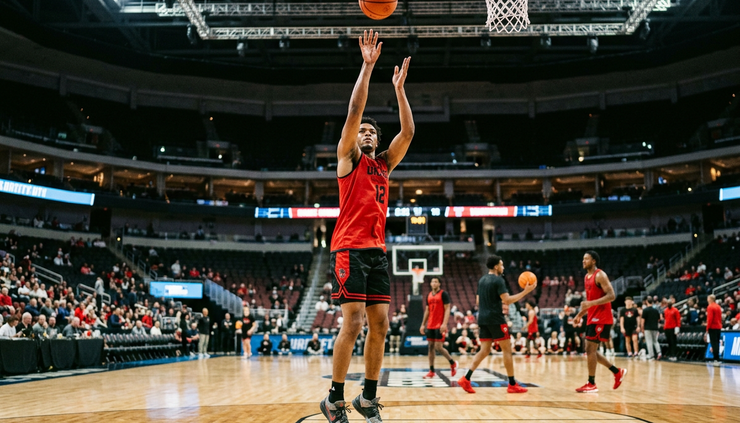
Georgia basketball history gives the program a deeper story
Georgia began playing men’s basketball in the early 20th century, and while football often dominates the state’s sports conversation, Bulldogs basketball has its own strong identity. The program’s history includes conference battles, NCAA Tournament runs, memorable coaches, and players who became household names.
The 1983 season remains one of the defining chapters. Georgia reached the Final Four, a milestone that still stands as one of the program’s proudest achievements. That team gave Bulldogs fans a lasting picture of what is possible when talent, coaching, timing, and belief connect.
The 1990s and 2000s brought more NCAA Tournament moments, including teams that played with the defensive edge and athletic style often associated with SEC basketball. Georgia has also had seasons where the program fought through change, coaching transitions, and the challenge of building consistency in a league full of national powers.
For a historical snapshot of season-by-season records, tournament appearances, and coaching history, Sports Reference’s Georgia Bulldogs archive is one of the cleanest places to start. The official Georgia athletics site also tracks current news, schedules, and program updates.
Tradition in Athens is not only about banners. It lives in the rhythm of game day.
Fans know the feel of Stegeman when a ranked opponent comes to town. They know the red and black, the band, the student section, and the tension of a late SEC possession. Georgia basketball tradition is built from those nights, when the building tightens and one stop can bring the arena to its feet.
Georgia’s basketball story is not a straight line of constant dominance. It is a program of big moments, elite players, and seasons where belief came before the breakthrough.
Legends and past players helped shape the Georgia name
Georgia’s greatest basketball names give the program national reach. Some became NBA stars. Others became beloved college figures. Together, they show the range of talent that has come through Athens.
Dominique Wilkins brought star power to Athens
No Georgia basketball legend stands taller than Dominique Wilkins. Known as “The Human Highlight Film,” Wilkins played at Georgia before becoming one of the most explosive scorers in NBA history.
His college career helped raise Georgia’s profile, and his professional success kept the Bulldogs tied to basketball fans far beyond the SEC. Wilkins became a Basketball Hall of Famer, and his legacy remains central to any discussion of the program’s all-time greats. His Hall of Fame profile is available through the Naismith Memorial Basketball Hall of Fame, and his NBA statistics are listed at Basketball Reference.
Anthony Edwards gave Georgia a modern superstar
Anthony Edwards brought national attention to Georgia during his one college season. His power, shot creation, and charisma made him one of the most watched players in the country before he became the No. 1 pick in the 2020 NBA Draft.
Edwards’ Georgia career was brief, but it mattered. He showed that the Bulldogs could attract elite one-and-done talent, and his NBA rise has kept Georgia in the minds of younger basketball fans. His pro profile and stats can be found at Basketball Reference.
Vern Fleming remains one of Georgia’s great guards
Vern Fleming played a major role in Georgia’s early 1980s success and went on to a long NBA career. His steady guard play and leadership helped define one of the program’s strongest eras.
For fans who want to understand Georgia’s Final Four legacy, Fleming’s place in that story is essential. He represents the kind of strong, composed guard play that every Bulldogs team still tries to find.
Alec Kessler connected production with loyalty
Alec Kessler was one of Georgia’s most productive and respected players. A skilled forward with size and touch, he became one of the program’s leading figures before playing in the NBA.
Kessler’s story also carries an emotional weight for longtime fans because of his lasting connection to the program and the way he is remembered. His career reflects a different kind of Georgia legacy, one built on consistency, achievement, and affection from the fan base.
Kentavious Caldwell-Pope became a model two-way guard
Kentavious Caldwell-Pope was an SEC standout at Georgia before building a long NBA career as a defender, shooter, and championship-level role player. His path shows the value of development.
At Georgia, he carried a heavy scoring load. In the NBA, he adapted into a winning complementary player. That range makes him one of the best examples for current Bulldogs guards who want to grow from college stars into pros.

What fans should watch as the 2026-27 season unfolds
The Bulldogs’ season will be shaped by matchups, health, confidence, and whether the roster finds a clear pecking order. Early games matter because they reveal rotations, but SEC play shows the truth.
Here are the biggest storylines to follow.
Can Georgia build an efficient offense
Georgia does not need to become a top national scoring machine to have a good season. It does need clean possessions.
Watch for:
Fewer rushed threes
Stronger paint touches
Better assist numbers
More free throw attempts
Late-clock options beyond isolation
If the Bulldogs can create quality shots without turning the ball over, they will give themselves a chance against more talented teams.
Can the defense travel
Home energy can hide flaws. Road games expose them.
A real SEC defense must communicate through screens, rebound after misses, and avoid fouls 25 feet from the basket. If Georgia’s defense travels, the Bulldogs can steal wins that change the shape of the season.
Which young player makes the jump
Most good college seasons include a surprise. A sophomore becomes a starter. A freshman earns crunch-time minutes. A reserve becomes the team’s best defender.
For Georgia, this kind of jump could be the difference between a rebuilding year and a postseason push. Development is often less dramatic than recruiting, but it can matter just as much.
How does Georgia handle February
February usually separates hopeful teams from serious teams. Scouting reports are sharper. Bodies are tired. Every opponent knows tendencies.
If Georgia is still improving in February, that is a strong sign. The best teams do not look finished in December. They keep adding counters, tightening rotations, and learning how to survive poor shooting nights.
The 2026-27 season can add to a proud but unfinished story
The appeal of Georgia basketball is that the story still has room to grow. The Bulldogs have legends, a Final Four banner, NBA stars, and a fan base that knows what a special night in Athens feels like. They also have the challenge of proving they can do it more often in the modern SEC.
The Georgia Bulldogs Basketball 2026-27 Season Preview Key Players History and Legends conversation starts with the coming roster, but it does not end there. This season will also connect to Dominique Wilkins’ star power, the 1983 Final Four team, Anthony Edwards’ modern rise, and every player who helped keep the program moving through harder years.
For new fans, this is a good season to learn the program’s identity. For longtime supporters, it is another chance to see whether Georgia can turn promise into results.

The 2026-27 Bulldogs will be judged by wins, losses, and postseason reach. But the season’s deeper test is simple: can Georgia play with enough toughness, skill, and belief to make Stegeman feel dangerous again? If the answer is yes, Athens will have another basketball chapter worth remembering.


Comments