How Affiliate Ticket Deals Work: A 2026 Guide

Updated: Jul 23

Affiliate ticket deals are performance-based agreements where promoters earn commissions by driving ticket sales through tracked referral links or promo codes. When a fan clicks your unique link and buys a ticket, the program credits you for that sale. No sale, no commission. The model is straightforward, but the details around tracking windows, payout triggers, and commission types make a real difference in how much you actually earn.
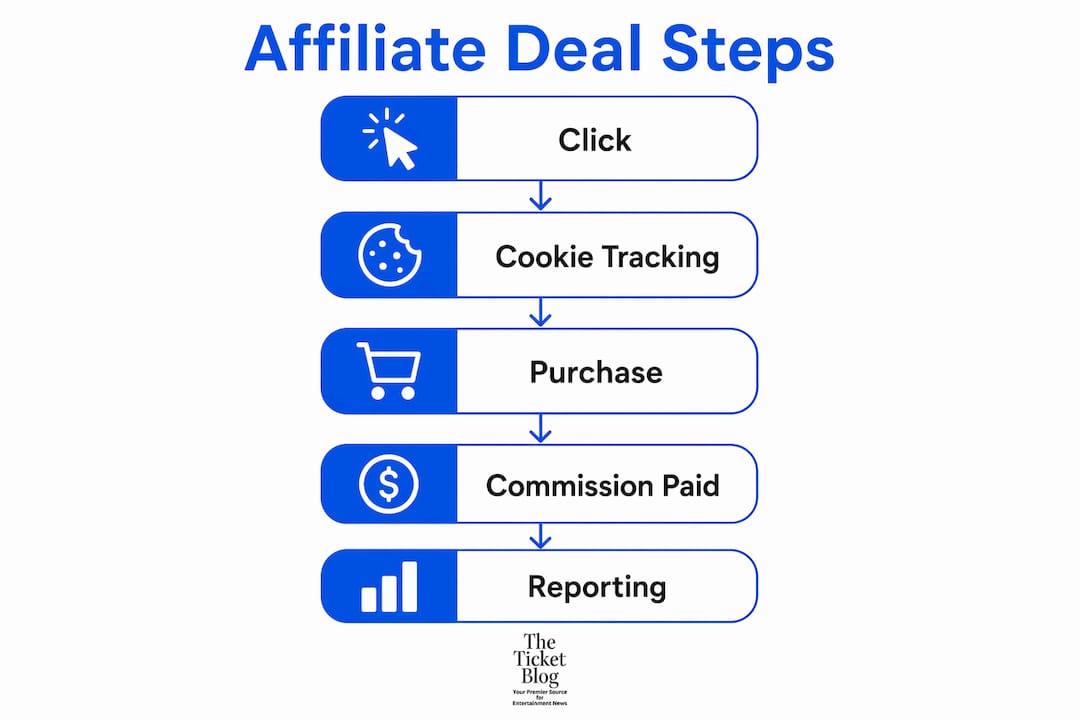
Here is how the core mechanics break down:
Affiliates receive unique tracking links or promo codes from a ticket program.
A referred buyer clicks the link or enters the code at checkout.
A tracking cookie records the referral for a set window, typically 7–30 days.
When the purchase is confirmed, the affiliate earns a commission.
Commissions can be a percentage of the ticket price, a flat fee per sale, or a tiered reward based on order size.
How affiliate ticket deals work: commission structures and tracking
Commission models in ticket affiliate programs generally fall into three categories: percentage-based, flat fee, and tiered. Percentage commissions are common, with many programs offering 1%–5% of the ticket face value, though some secondary market programs go higher. Flat fees work better when ticket margins are thin, since a fixed dollar amount per sale protects the program’s budget regardless of ticket price. Tiered structures reward volume, paying more per sale as an affiliate drives higher order totals.
Tracking is mostly cookie-based, crediting affiliates for purchases made within a defined window after the initial click, commonly 7–30 days. That window matters because fans rarely buy immediately. They might click a link on Tuesday and complete the purchase on Friday, and the cookie ensures the affiliate still gets credit. Most programs use last-click attribution, meaning the final affiliate link a buyer clicked before purchasing gets the commission.
Pro Tip: Align your commission type with the event’s profit margin. Flat fees tend to work better for lower-priced tickets, while percentage commissions shine on premium or high-demand events.
Some programs also offer tiered ticket sale commissions based on order size. For example, one program pays $5 for orders over $15, $10 for orders over $200, $20 for orders over $500, and $40 for orders over $1,000. That kind of structure rewards affiliates who attract buyers purchasing multiple tickets or premium seats.
How to join and start earning through ticket affiliate programs
Joining a ticket affiliate program follows a consistent process across most platforms. Here is what to expect:
Register via an affiliate network (such as Impact) or directly through a ticket brand’s partner portal.
Wait for approval. Many programs review applications manually, which can take anywhere from a few hours to a few days.
Select offers that match your audience, whether that is concerts, sports, or theater.
Receive your tracking link or promo code and start promoting through approved channels like websites, blogs, or email newsletters.
Monitor your dashboard for clicks, conversions, and earnings.
Payout thresholds vary by program. Some set the minimum at $100, paid via bank transfer or PayPal. Others pay monthly on a Net-30 or Net-60 schedule. Understanding when you get paid matters as much as the commission rate itself.
Most major programs use third-party affiliate management platforms like Impact to handle tracking, reporting, and payments. That setup offers transparency and automates payouts, but it does mean you will need to register on that external platform separately to access your performance dashboard.
Pro Tip: Check your dashboard weekly, not monthly. Catching a broken tracking link early can save you from losing credit on dozens of sales.
Understanding ticket promotions from an affiliate perspective
Ticket affiliate programs work well for event organizers because the model is entirely performance-based. Organizers pay commissions only on confirmed sales, which eliminates upfront ad spend risk and extends their marketing reach through a network of motivated partners. For affiliates, that same structure means your earning potential scales directly with your promotional effort.

Many programs sweeten the deal for buyers by attaching promo codes to affiliate links. A buyer who clicks your link might receive 10% off their order or an added perk like early entry. Dual incentives that reward both the referrer and the buyer consistently improve conversion rates, because the buyer feels they got a deal and the affiliate still earns their commission.
Affiliate marketing accounts for approximately 16% of all online sales in North America, making it one of the most productive channels for ticket sales promotion. For live events specifically, the ROI tends to run high because tickets carry strong word-of-mouth appeal. Understanding how referral ticket discounts work can help you craft promotional messaging that converts.
Compliance and legal considerations for promoting ticket deals
Promoting ticket affiliate offers comes with real rules, and ignoring them can get your account suspended. Most programs prohibit paid search ads that use the brand’s name or specific event names as keywords. Social media promotion is restricted or outright banned in some programs. Cookie stuffing, which means artificially inflating click counts, is strictly forbidden across every legitimate program.
The Federal Trade Commission requires affiliates to disclose their relationship with the programs they promote. Any post, article, or video that includes an affiliate link must clearly state that the link is a paid partnership or that you earn a commission on purchases. A simple line like “This post contains affiliate links” placed near the top of your content satisfies the requirement. Failing to disclose is not just a policy violation; it is a legal risk.
Beyond disclosure, stick to the approved traffic sources listed in your program agreement. Promoting through channels not explicitly permitted, such as certain coupon sites or email co-registration, can void your commissions even if the sales are genuine.
Common challenges in ticket affiliate marketing and how to handle them
Short cookie windows are one of the most common frustrations. A 24-hour cookie, which some programs use, means a buyer who clicks your link but waits two days to purchase will not generate a commission for you. The fix is to create urgency in your content, highlighting limited availability or price increases to encourage faster decisions.
Payout timing catches many new affiliates off guard. Some programs pay commissions on the sale date, while others hold payment until after the event occurs to verify the sale. If you are promoting events months in advance, your cash flow can lag significantly. Plan for that gap by diversifying across programs with different payout schedules.
Tracking failures happen when buyers clear cookies, use ad blockers, or switch devices between clicking your link and completing the purchase. Promo codes solve this problem because they are entered at checkout regardless of browser behavior. Using both a tracking link and a promo code together gives you the best coverage.
Finally, audience mismatch kills conversions faster than any technical issue. Promoting stadium concert tickets to a blog audience that follows small club shows will produce poor results no matter how good your tracking setup is. Match your offers to your audience’s actual interests and spending habits.
Exclusive vs. non-exclusive ticket affiliate programs
The distinction between exclusive and non-exclusive programs shapes how much flexibility you have as an affiliate. An exclusive program requires you to promote only that platform’s tickets, often in exchange for higher commission rates or dedicated account support. The trade-off is that you cannot diversify your income across multiple programs simultaneously.
A non-exclusive program lets you join multiple affiliate programs at once and promote whichever offers perform best for your audience. Most ticket affiliate programs are non-exclusive, which gives you the freedom to test different platforms, compare conversion rates, and shift your promotional focus toward whichever program pays best for a given event type. The downside is that you typically receive less personalized support and may face more competition from other affiliates promoting the same offers.
For most affiliates starting out, non-exclusive programs offer the better path. You can learn what works across different event categories before committing more effort to a single platform. You can also explore auction-style ticket sales as an additional angle for diversifying the types of ticket offers you promote.
Key Takeaways
Affiliate ticket deals pay commissions only on verified sales, making tracking accuracy and payout timing the two factors that most directly affect your earnings.
Point | Details |
Tracking relies on cookies | Most programs use 7–30 day cookie windows with last-click attribution to credit affiliates. |
Commission types vary | Percentage, flat fee, and tiered structures each suit different ticket price points and margins. |
Payout timing differs | Some programs pay on sale date; others hold payment until after the event is confirmed. |
Compliance is mandatory | FTC disclosure rules and program-specific channel restrictions apply to every affiliate. |
The Ticket Blog | Covers promo codes, affiliate strategies, and ticket-buying guides for concerts, sports, and theater. |
The real opportunity in ticket affiliate marketing is still being underestimated
Most people entering ticket affiliate marketing focus almost entirely on commission rates and overlook the two factors that actually determine long-term earnings: payout trigger timing and audience specificity. A 5% commission on a $500 ticket sounds great until you realize the program holds that payment for 90 days post-event, and your audience mostly attends $30 local shows.
The programs worth your time are the ones that combine transparent tracking, reasonable cookie windows, and payout schedules that match your promotional timeline. Third-party platforms like Impact have made that transparency much more accessible, but you still need to read the program terms carefully before investing effort in promotion. Affiliate marketing for events also benefits from the niche entertainment space, where passionate fans in communities around open mic events or local venues convert at higher rates than broad general audiences.
Affiliate marketing holds a 16% share of North American online sales, a figure that is built on affiliates who understand their audience, match offers precisely, and treat compliance as a baseline rather than an afterthought.
Find more ticket deals and affiliate tips at The Ticket Blog
The Ticket Blog covers everything from promo code strategies to in-depth guides on navigating secondary ticket markets for concerts, sports, and theater. Whether you are looking to save money on your next live event or sharpen your approach to promoting ticket offers, the blog delivers practical, up-to-date guidance without the fluff.
Readers can find exclusive discount codes, tips for stacking savings, and breakdowns of how different ticket platforms handle fees and buyer guarantees. For anyone building a presence in ticket affiliate sales, The Ticket Blog is a reliable resource for staying current on market trends and promotional best practices. Visit The Ticket Blog to start finding better deals today.
Recommended


Comments