How Regional Theater Pricing Works and Ways to Pay Less


The fastest ways to cut regional theater costs are digital lotteries, day-of rush tickets, preview performances, subscriptions, official promo codes, and verified resale comparisons. Lotteries and rush suit spontaneous buyers, previews and subscriptions reward planners and repeat attendees, and student or military programs help eligible patrons. Whichever tactic you use, the number that matters is the all-in price after fees, not the sticker price on the seat map.
TL;DR:
Digital lotteries and rush tickets provide the best savings for spontaneous buyers but often involve uncertain seat selection and last-minute efforts.
Booking midweek shows or previews early in a run generally yields lower prices, especially when paired with weekday matinees or schedule flexibility.
Purchasing tickets directly from the box office or venue app usually avoids additional service fees, offering a more reliable and cheaper option than resale marketplaces.
Subscription plans are most cost-effective for frequent theatergoers attending three or more shows annually, with potential savings up to 25 percent.
Balancing fee, parking, and concessions costs is crucial, as a low ticket price may be offset by hidden charges, and no single discount method applies universally.
Table of Contents
How Does Regional Theater Pricing Work for Discounts?
Every discount method trades something for a lower price: certainty, seat location, or advance notice. Understanding how regional theater pricing works starts with knowing what each tactic actually offers.
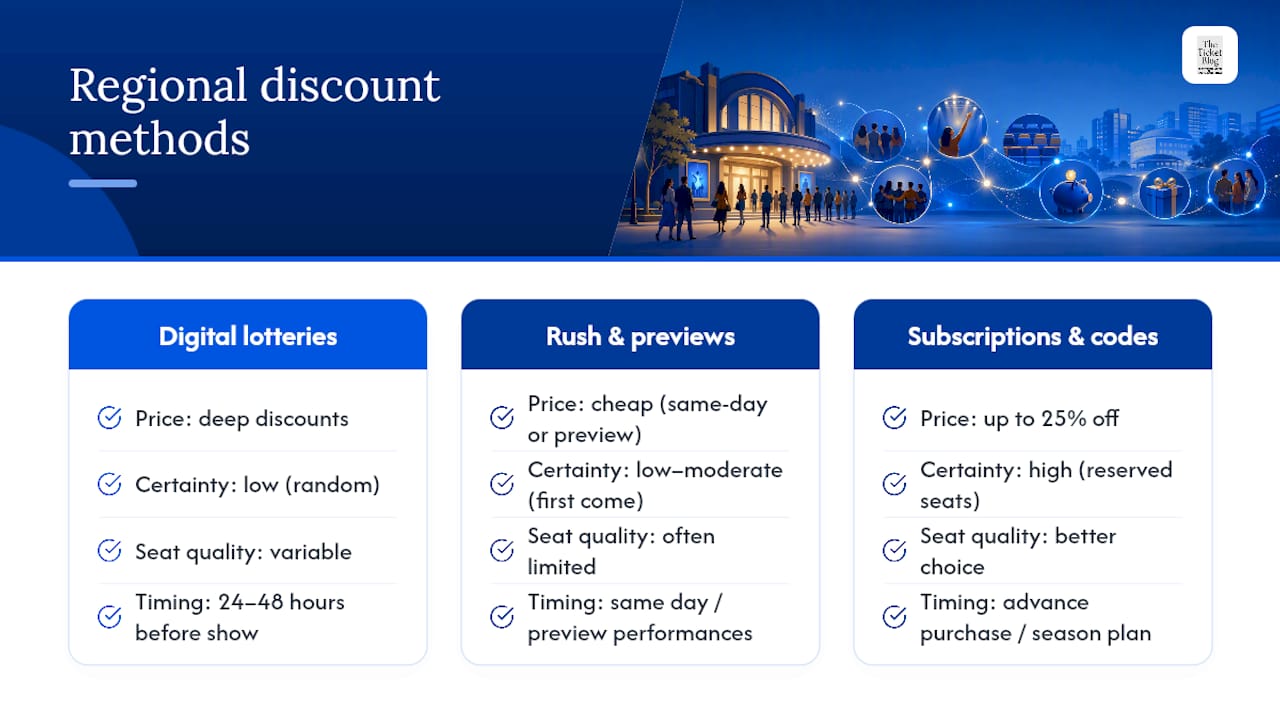
Digital lotteries put a limited batch of seats up for random drawing, usually 24 to 48 hours before curtain. Enter through the venue’s app or site, request a single ticket rather than a pair to boost your odds, and enter multiple dates across the run since each entry counts as a separate chance.
Rush tickets get released the same day, either at the physical box office or through an app-based release. Both formats reward early action. Set a phone alarm for the release time and refresh the app the moment it opens.
Preview performances, staged before official opening night, often run substantially cheaper because the show is still being fine-tuned.
Subscriptions and memberships pay off for anyone attending three or more shows a season, often trimming up to 25% off individual ticket prices while adding early access and exchange privileges.
Promo codes and age-based programs (student, senior, military) require quick eligibility checks but can shave real money off checkout.

Resale marketplaces behave unpredictably: prices drop sharply for shows that aren’t selling out, but stay firm or climb for hot tickets.
Pro Tip: Call the regional box office directly instead of booking online. Phone reservations sometimes skip the per-ticket convenience fee entirely, especially at smaller houses.
Which Nights and Dates Offer the Cheapest Tickets?
The calendar affects price almost as much as the discount method you choose. Regional houses price weeknights and matinees lower than Friday and Saturday evenings because demand simply runs thinner midweek.
Book Tuesday through Thursday evenings or weekday matinees for the lowest standard pricing tier.
Target preview weeks early in a show’s run instead of waiting for the buzz to build around a hit.
Watch for the day-of window on shows that aren’t selling out. Buyer behavior has shifted toward more last-minute purchasing compared to years past, which means theaters and resellers increasingly drop prices close to curtain to fill seats.
Skip the wait for high-demand touring productions or limited engagements. Popular titles with short runs rarely get cheaper, and waiting usually just narrows your seat options.
Timing works best when paired with flexibility. If you can move your night by a day or two, you have real leverage over price.
Where Should You Buy Regional Theater Tickets?
Where you buy matters as much as when. The box office remains one of the most reliable channels for avoiding third-party markups, since you’re paying the venue directly rather than a broker layering on service charges.
Box office or venue phone line: often the lowest total cost, particularly for smaller regional houses that don’t route every sale through a ticketing platform.
Official venue apps and partner sites: these run the lotteries and digital rush programs, so turning on push notifications puts you first in line when seats drop.
Resale marketplaces: can undercut face value for shows struggling to sell out, but you need to compare the full checkout total, not the listed price.
Peer-to-peer transfers: convenient among friends or groups, but riskier with strangers since there’s no platform guarantee behind the sale.
Fees can quietly erase a discount before you notice. Guides to tracking regional and touring pricing consistently find that service and convenience fees are the biggest gap between the advertised price and what actually hits your card. A $20 lottery seat with a $12 fee isn’t automatically a better deal than a $28 subscription seat with no fee attached. Mobile-only delivery, restrictive transfer policies, and last-minute “restocking” charges all deserve a second look before you commit.
How Do You Pick the Right Discount Method for You?
Not every tactic fits every buyer. Match the method to how you actually plan your nights out.
Planners booking weeks ahead: lean on subscriptions, season packages, and promo codes you can stack early. These give the widest seat selection and the most predictable pricing.
Spontaneous buyers deciding same-day: rush tickets and day-of resale price drops are your lane. You’ll trade seat choice for savings.
Students and patrons under 30: look for verified student rush, teen passes, or youth-specific lotteries, which often beat general rush pricing.
Groups of six or more: ask about block sales directly with the box office rather than buying individual discounted seats one by one, since group rates frequently beat stacking separate promo codes.
Pro Tip: Before choosing a method, ask yourself three questions: How flexible is my schedule? How picky am I about seat location? And am I willing to enter a lottery or wait in a rush line? Your answers point straight to the right tactic.
How Do You Avoid Resale Scams and Bad Tickets?
Resale can save money, but it carries risk if you skip basic checks.
Walk away from listings with no clear delivery method, an unverifiable seat number, or a seller pushing you to pay outside the platform.
Pay by credit card whenever possible. Card issuers offer dispute protections that peer-to-peer apps and cash transactions don’t.
Look for a platform buyer guarantee before purchasing, and confirm any transferred mobile ticket loads properly in your wallet app before show day.
If a ticket fails to scan at the door, go straight to the box office or will-call window with your purchase confirmation and photo ID.
Report suspected fraud to the platform immediately and to your card issuer if a refund isn’t offered.
How The Ticket Blog Helps You Save on Every Show
There’s no single trick that works for every buyer, which is why The Ticket Blog publishes guides comparing regional and touring costs, breaking down promo code strategy, and tracking weeknight deals. Sign up for alerts and you’ll catch lottery windows and day-of drops before they disappear.
Get Current Regional Theater Promo Codes and Deals
The Ticket Blog is the shortcut past hours of scattered searching for promo codes, lottery links, and rush-hour reminders scattered across a dozen venue sites. Instead of bookmarking ten different box office pages and hoping you remember to check them, one visit gives you live promo codes and curated deal roundups pulled from regional and touring shows alike.
Every listing links straight to the offer, whether that’s a discount code for an upcoming run or a roundup of the week’s best weeknight prices. If you attend regularly, signing up for email alerts means lottery windows and day-of releases land in your inbox instead of slipping past you. Visit The Ticket Blog to browse current promo postings and start applying the tactics from this guide the next time you buy.
Quick Checklist Before You Buy
Enter lotteries for multiple dates and request a single ticket to raise your odds.
Compare the box office price against resale before assuming resale is cheaper.
Buy a subscription if you attend three or more shows a season.
Check age or status eligibility for student, senior, or military discounts.
Add fees, parking, and concessions to the ticket price before calling it a deal.
Where to Verify Current Lottery and Rush Policies
Policies change by production, so confirm details directly with the venue’s box office or official app before showing up. Regional houses update rush and lottery rules more often than most guides can track in real time.
Why the “Best Deal” Myth Costs Theatergoers Money
The biggest misconception about regional theater pricing is that one method beats all the others. It doesn’t. A $20 lottery ticket sounds unbeatable until you factor in a $15 fee, a $10 parking garage, and a seat behind a pole. Meanwhile, a $65 subscription seat with no add-on fees and better sightlines can end up the smarter purchase for someone who attends regularly.
The other overlooked piece is patience versus commitment. Spontaneous buyers chasing day-of drops need to accept some nights will sell out before the discount appears. Planners locking in subscriptions trade flexibility for predictability. Neither approach is wrong, but pretending there’s a universal hack ignores how differently theaters price seats depending on demand, run length, and even the day of the week. The buyers who save consistently are the ones who treat these tactics as a toolbox, not a single master key, and who always do the fee math before they call anything a deal.
— The Ticket Blog
Sources
Recommended


Comments