30 Minute Workflow Fans Use to Find Sports Ticket Deals


The fastest way to find sports ticket deals is to check the primary seller’s official categories first, then compare resale marketplace listings side by side, and let price alerts do the waiting for you. Set a dollar or percent threshold, confirm the all-in price once fees and delivery are added, and buy the moment a listing clears your number. Skip this order and you’ll almost always overpay.
TL;DR:
Comparing all-in resale prices and setting specific dollar or percentage alerts increases chances of catching real discounts, especially for lower-demand regular-season games.
Official discounts and fan-based exchanges often offer cheaper or face-value tickets compared to dynamic or resale listings, particularly during early sales windows.
Last-minute price drops occur mainly for less popular games or events and should be verified with secure transfer methods and seller verification before purchase.
Dynamic pricing means prices can spike for marquee matchups and playoff games, making early buying or pre-sale access preferable for fans seeking the best deal.
Accounting for all fees, delivery charges, and taxes is essential, as these can significantly increase the final cost beyond the listed ticket price.
Table of Contents
How to Find Sports Ticket Deals: A Quick Tactics Checklist
You don’t need hours to find a fair price. Run through this order and you’ll usually know within 30 minutes whether a real deal exists for your game.
Check the primary seller first. Official ticketing pages often run promo categories, release-week pricing, or bundle deals that never show up on resale sites.
Search resale and peer-to-peer categories next. Filter by section and sort by all-in price, not sticker price. Editorial roundups consistently point buyers toward checking multiple ticket marketplaces rather than settling on the first one that loads.
Set two kinds of alerts. One for an absolute dollar drop, one for a percentage drop, and a zone alert if the platform supports it.
Look for official discount categories. Student verification, military discounts, promo codes, and multi-ticket packs often beat resale pricing outright.
Compare the final total, not the listed price. Add fees and delivery before deciding anything looks cheap.
Pro Tip: Run this checklist twice for the same game, once seven to ten days out and again 48 hours before kickoff. Prices rarely move in a straight line, and a second pass catches drops the first one missed.
When Do Sports Ticket Prices Actually Drop?
Ticket prices move on a predictable rhythm, with a few loud exceptions. Pre-sale and general on-sale windows tend to open at or near face value, since teams and leagues want strong early sales momentum. Prices then drift based on demand signals: a losing streak softens mid-tier seats, while a hot rookie or a playoff push pushes them the other way.
Dynamic pricing is why two fans can pay wildly different amounts for the same section on the same day. Marquee matchups, rivalry games, and postseason contests get repriced constantly against real-time demand, and they rarely get cheaper as the date approaches.
Regular-season games with modest local interest often soften in the final days.
Certain baseball and lower-tier racing events show some of the more reliable late-window price drops.
Rivalry games, playoff rounds, and championship-caliber matchups almost never discount and frequently climb instead.
A fan chasing a Tuesday-night regular-season game usually wins by waiting. A fan chasing a conference-final matchup almost always does better buying early, before the second and third demand waves hit.
Setting Up Price Alerts That Actually Work
Alerts only help if they’re tuned correctly. A flood of generic notifications trains you to ignore them, which defeats the purpose.
Set a dollar threshold for lower-priced seats. A $15 or $20 drop on a $60 ticket is meaningful; the same drop on a $400 ticket is noise.
Set a percent threshold for higher-priced seats. A 20% to 30% drop on premium sections tends to signal a genuine discount rather than routine fluctuation.
Add zone or section filters where available, so you’re not alerted to seats you’d never actually buy.
Confirm availability and delivery method the moment an alert fires, then buy immediately if the total still clears your threshold.
Price-history tools that track live pricing data across events help you set realistic thresholds instead of guessing. If a section has historically bottomed out around $85, waiting for $150 is wasted effort. A tighter version of this workflow (broad zone alerts a week or two out, narrower dollar alerts in the final 72 hours) is worth building into your game day strategy before the season even starts.
Should You Wait Until the Last Minute to Buy?
Last-minute drops are real, but they’re not guaranteed. Sellers holding unsold inventory sometimes liquidate in the final hours before puck drop or kickoff, and no-shows from season ticket holders can flood the resale market with cheap, verified seats.
Zone or “best available” deals work well here. Several last-minute apps now bundle zone-based pricing with fees already included, which suits fans who care more about being in the building than about a specific row.
Confirm the delivery method is mobile transfer, not a physical ticket you won’t receive in time.
Check that the seller or platform has a verification or buyer-guarantee policy before paying.
Look at the transfer window. Some tickets can’t legally change hands within a certain number of hours of the event.
Have a backup plan (a second listing bookmarked, or a box-office will-call option) if a transfer fails to land.
Pro Tip: If a last-minute price looks too good against everything else in the section, treat that as a red flag first and a bargain second.
How to Calculate the True Cost and Spot a Scam
The sticker price is never the real price. Add the ticket cost, service fees, delivery charge, and any applicable tax, then compare that single number across every listing you’re considering. A $70 ticket with $18 in fees and a $5 delivery charge is a $93 ticket, and it may lose to a $85 listing with no add-on fees.
Watch for stacked fee traps: platform service fees, delivery surcharges, and per-ticket processing charges that combine faster than they appear individually. Some marketplaces now advertise no-service-fee membership models that can lower total cost for frequent buyers, though it’s worth weighing the membership cost against how often you actually attend games.
Treat any request to pay outside the platform (wire transfer, cash app, gift cards) as a hard stop.
Be suspicious of unverifiable transfer methods, screenshots of barcodes, or PDFs sent directly instead of an in-app transfer.
An unusually cheap last-minute offer for a high-demand game deserves extra scrutiny, not extra excitement.
If something goes wrong, contact the platform’s support immediately, save every message and receipt, and dispute the charge with your card issuer if the seller goes silent.
Real Examples of Sports Ticket Deals in Action
Publisher-documented cases make these tactics concrete instead of theoretical.
A similar pattern shows up with student discounts: verifying eligibility through the primary seller before checking resale, then layering a promo code on top, has repeatedly beaten the best resale price for the same section.
Search order matters more than luck: primary seller, then resale, then alerts.
Threshold discipline (percent for premium seats, dollar amount for cheaper ones) filters out false alarms.
Promo-code checks take under a minute and are skipped far too often.
For the full walkthrough of a captured flash sale, see these flash-sale examples, and for a breakdown of discount categories worth checking, review these markdown types.
Why Season Ticket Holder Exchanges Are Worth Checking
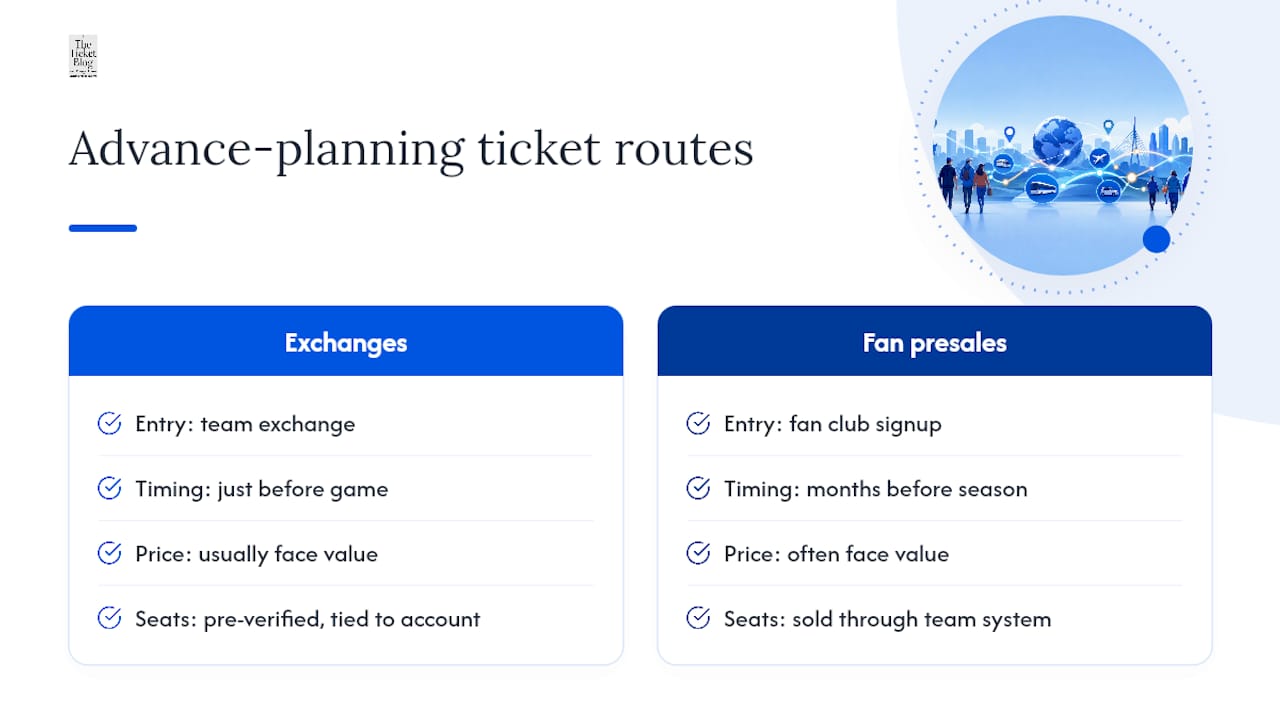
Season ticket holders who can’t make a game often list their seats through official team-run exchanges rather than general resale marketplaces. These exchanges typically sit inside the team’s own ticketing ecosystem, which means the seats are pre-verified, tied to the original season-ticket account, and usually cheaper than open-market resale because the seller just wants to recoup face value rather than profit.
Fan club presales work on a similar logic but from the other direction. Teams and leagues often grant early access to fan club members before tickets hit general sale, sometimes at face value with no dynamic-pricing markup yet applied. Joining a free fan club months ahead of a season can put you first in line for a presale window before demand-driven pricing kicks in.
Both routes reward a little advance planning. Season ticket exchanges are worth a scan for games where you suspect holders won’t attend (weeknight games during school schedules, or games during travel-heavy stretches for local fans). Fan club presales are worth signing up for the moment you know you want tickets for a specific season, since most clubs are free to join and the presale window often closes before general sale even opens. Neither guarantees the rock-bottom price you might catch on a last-minute resale deal, but both dramatically reduce the risk of paying inflated dynamic pricing for a seat that was available at face value a week earlier.
When to Buy vs. When to Wait: A Quick Read on Fan Types
Value shoppers should lean on alerts and last-minute zone deals, since patience is their biggest asset. Collectors and seat-specific buyers should purchase early and double-check the seat map and transfer method, since waiting risks losing the exact view they want. Experience-first fans should weigh packages and early access deals even at a premium, since the presale window often disappears before prices ever soften.
— The Ticket Blog
Save Time With The Ticket Blog’s Deal Guides
Running the full checklist for every game on your calendar takes real time, and that’s exactly what The Ticket Blog’s guides are built to shortcut. Its breakdown of markdown types shows which discount categories apply to your situation before you start comparing listings, and its flash-sale case studies show the exact thresholds that triggered real savings.
If you’d rather not rebuild an alert workflow from scratch every season, The Ticket Blog’s game day ticket strategy guide lays out the zone-to-dollar-threshold progression step by step. Browse the curated deals page on The Ticket Blog and sign up for deal alerts so the next price drop reaches you before the good seats are gone.
Sources
FAQ
What Is the Cheapest Way to Get Sports Tickets?
The cheapest reliable path combines checking official discount categories first, comparing resale listings by all-in price, and buying only after a price alert confirms the listing has hit your target threshold.
What App Can I Use to Find Cheap Sports Tickets?
Price-tracking tools like TicketData help you see typical price ranges, while last-minute apps such as Gametime surface zone deals with fees already built into the price.
Do Sports Tickets Get Cheaper Closer to the Game?
Often, yes, for lower-demand regular-season games and certain baseball or racing events, but rivalry games, playoff rounds, and marquee finals typically hold or increase in price as the event nears.
Is Gametime or Ticketmaster Cheaper?
It depends on the event and timing. Gametime tends to be competitive for last-minute, all-in-priced zone deals, while official sellers like Ticketmaster often win on early promo pricing and verified face-value exchanges, so comparing both before buying is the safer habit.
Recommended



Comments