Iowa Hawkeyes Basketball 2026-27 Preview Key Players, Stats, Traditions and Legacy

A good Iowa basketball season usually starts with a simple question: can the Hawkeyes score enough, move the ball well enough, and grow fast enough to survive the grind of the Big Ten?
That question carries extra weight in a 2026-27 preview because modern college basketball changes quickly. Transfers reshape rosters. NBA decisions arrive late. Freshmen can become starters before Thanksgiving. For Iowa, the path still runs through familiar values: pace, spacing, skilled forwards, smart guards, and a home crowd at Carver-Hawkeye Arena that can turn a cold winter night into a problem for any visitor.
This preview looks at the key player types to watch, the stats that should matter most, and the traditions and historic moments that give Iowa basketball its identity. For current roster updates, start with the official Iowa men’s basketball roster and the program’s schedule page.
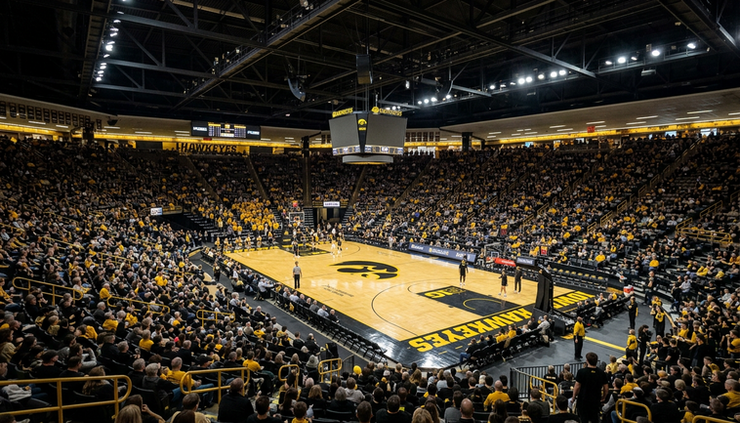
The biggest 2026-27 storyline is roster fit
The first thing to know about Iowa’s 2026-27 outlook is that the roster will matter more than preseason labels. That sounds obvious, but it is especially true for a program that has often thrived when roles are clear.
Iowa’s best teams tend to have several traits:
A lead guard who protects the ball
At least two reliable shooters
A forward who can pass, screen, and score
Bench players who know their jobs
Enough rebounding to survive Big Ten size
The Hawkeyes have never needed to win the same way as everyone else. Iowa’s identity has often leaned toward offense, tempo, and player development. When that formula works, the ball pops from side to side, bigs can catch on the move, and shooters get clean looks before defenses fully load up.
For deeper statistical context, Sports-Reference’s Iowa Hawkeyes men’s basketball history page is a useful stop. It tracks year-by-year records, NCAA Tournament results, coaching history, and player statistics.
Key players to watch and the stats that will define their impact
Because the 2026-27 season sits in the transfer-portal era, the exact rotation should be checked against Iowa’s official roster before the season tips off. The most useful way to preview the Hawkeyes is to focus on the players who fill the core roles Iowa needs to compete.
The names on the roster may shift, but these roles will decide the season.
The lead guard must set the tempo without wasting possessions
Iowa’s offense needs a steady lead guard. That player does not have to dominate the ball for 35 minutes, but they must create good shots early in the clock and keep turnovers under control.
The key stats to watch:
Stat | Why it matters |
Assist rate | Shows how often the guard creates made baskets for teammates |
Turnover rate | Measures whether Iowa can keep possessions clean |
3-point percentage | Forces defenses to respect ball screens and handoffs |
Free throw rate | Shows whether the guard can pressure the rim |
Minutes played | Tells how much trust the staff has in late-game situations |
Iowa’s best offensive teams usually have guards who make quick reads. A point guard who can hit the roller, skip to the corner, and finish through contact changes everything. If the Hawkeyes get that level of play in 2026-27, the whole offense becomes easier to trust.
A strong lead guard also helps on the road. Big Ten road games often get messy. The crowd gets loud, whistles change the rhythm, and a few empty trips can swing momentum. Iowa will need someone who can calm the game down without slowing the offense to a crawl.
The frontcourt anchor has to rebound, defend, and finish
Iowa has a long history of productive bigs and skilled forwards. The 2026-27 team will need another frontcourt anchor who can do more than score.
The key stats to watch:
Stat | Strong sign for Iowa |
Defensive rebounding percentage | Ends possessions before second-chance points pile up |
Block rate | Adds rim protection without constant help defense |
Fouls per 40 minutes | Shows whether the big can stay on the floor |
Field goal percentage at the rim | Turns good passing into efficient points |
Assist rate for a forward or center | Opens Iowa’s cutting and spacing game |
Iowa does not need its center or power forward to play like a traditional back-to-the-basket scorer every trip. The more valuable version is a player who screens hard, catches cleanly, makes the next pass, and finishes when guards draw help.
If that player can also play without fouling, Iowa’s defensive ceiling rises. Big Ten opponents will test the paint every week. Surviving that test is one of the cleanest paths toward a tournament-level season.
The wing scorer may be the swing piece
The player who often changes a season is the wing. A 6-foot-5 to 6-foot-8 scorer who can shoot, defend multiple spots, and attack closeouts gives Iowa more lineup options.
The key stats to watch:
3-point attempts per game
3-point percentage
Defensive rebounding
Steal rate
Free throw percentage
Points per possession in transition, if available through advanced data
A true wing scorer helps Iowa play faster. Missed shots can turn into outlet passes. Long rebounds can become early offense. Defenses that overhelp against Iowa’s guards can get punished by catch-and-shoot threes.
For player-by-player profiles once the roster is set, check Iowa’s official player bios and national stat pages such as ESPN’s Iowa Hawkeyes team page.
The bench will decide how long Iowa can keep its pace
Iowa basketball is at its best when it can run. That only works if the bench can hold up.
A good second unit does not need five double-figure scorers. It needs two or three players who defend, rebound, and avoid empty possessions. One bench shooter can tilt a game. One backup big who gives eight tough minutes can save a starter from foul trouble. One young guard who handles pressure can protect a lead.
Watch these numbers by midseason:
Bench stat | What it tells you |
Bench points per game | Whether scoring is too top-heavy |
Bench minutes | How deep the trust goes |
Plus-minus trends | Which lineup groups are working |
Turnovers from reserves | Whether depth holds up against pressure |
Offensive rebounds from reserves | Whether energy players are changing possessions |
Depth matters most in January and February, when scouting reports sharpen and legs get heavy. If Iowa has eight or nine playable pieces, the Hawkeyes can keep their preferred pace deeper into conference play.
The stats that will tell the real story
Preseason talk is fun, but Iowa’s season will become clear through a few numbers.
If Iowa finishes near the top half of the Big Ten in offensive efficiency and avoids being buried on the glass, the Hawkeyes should have a real postseason path.
The most important team stats are simple.
Assist-to-turnover ratio
Iowa needs clean offense. When the Hawkeyes pass well and limit live-ball turnovers, they can make opponents guard the full floor.
3-point volume and accuracy
Iowa does not have to lead the nation in threes, but it must shoot well enough to punish packed paint defenses. If the Hawkeyes have three or four credible shooters, driving lanes open.
Defensive rebounding
Nothing drains a crowd faster than good defense followed by an offensive rebound for the other team. Iowa’s frontcourt and wings must finish possessions.
Free throw rate
Jump shots are part of Iowa’s DNA, but the Hawkeyes need rim pressure. A team that gets to the line can win when the outside shot cools.
Late-game defense
Close Big Ten games often become half-court execution contests. Iowa’s ability to guard without fouling in the final four minutes will show whether this group can beat top-tier opponents.
For advanced team data during the season, many fans track KenPom and BartTorvik, both of which help explain how teams are winning beyond the basic box score.
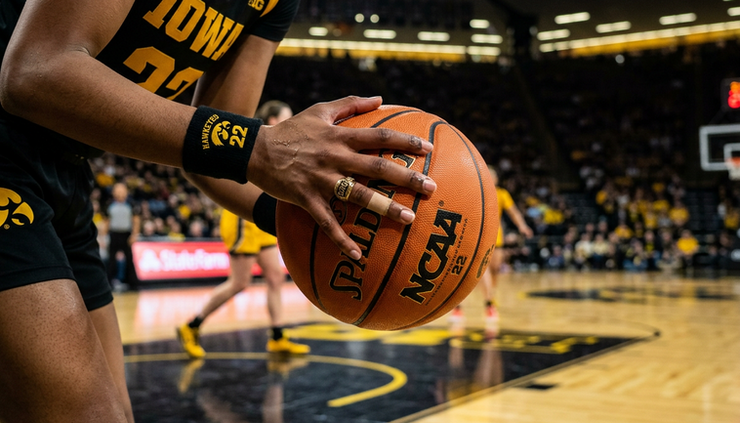
Traditions that make Iowa basketball feel different
Iowa basketball is not just a box score. The program carries a strong sense of place.
Carver-Hawkeye Arena, opened in 1983, gives the Hawkeyes a home that can feel steep and loud when the game tightens. The building is shared across Iowa athletics, but on basketball nights it has its own rhythm. The black and gold colors, the pep band, the student section, and Herky the Hawk create a setting that feels unmistakably Iowa.
The game-day staples matter:
The Iowa Fight Song
It connects basketball nights to the larger history of Hawkeye athletics.
Herky the Hawk
The mascot gives the arena energy, especially for younger fans and big rivalry games.
Black and gold pride
Iowa’s colors are simple, sharp, and instantly recognizable across Big Ten venues.
Carver-Hawkeye winter crowds
The best Iowa teams have fed off the building’s noise, especially when tempo rises.
Big Ten rivalries
Games against Wisconsin, Minnesota, Illinois, Nebraska, and others carry regional edge and long-running familiarity.
Iowa fans also bring a strong memory for player development. A freshman who plays hard in limited minutes can become a fan favorite before becoming a star. That makes the 2026-27 rotation especially interesting. New fans will watch the ball. Seasoned fans will watch who boxes out, who communicates on defense, and who earns minutes when the scouting report gets tougher.
Historic moments that define the Hawkeyes’ legacy
Iowa’s basketball legacy has several pillars, and each one still shapes how people view the program.
The Fabulous Five raised the national standard
The 1950s remain central to Iowa basketball history. The Hawkeyes reached the Final Four in 1955 and 1956, and the 1956 team played for the national championship. That era, often connected with Iowa’s “Fabulous Five,” gave the program a national profile and set a high bar for future generations.
For official historical records and postseason results, the NCAA men’s basketball history page offers a useful national frame.
The 1970 team played at a breathtaking pace
The 1969-70 Hawkeyes are still remembered as one of the most explosive teams in school history. Under head coach Ralph Miller, Iowa won the Big Ten and played a fast, high-scoring style that remains part of the program’s offensive mythology.
That team matters because it showed what Iowa basketball could look like when skill and pace came together. Even decades later, modern Iowa teams are often judged against that idea: can they run, pass, and score in waves?
Lute Olson’s 1980 team made the Final Four
The 1979-80 Hawkeyes, coached by Lute Olson, reached the Final Four and built one of the most beloved chapters in program history. Ronnie Lester’s talent and toughness remain a major part of Iowa basketball memory, even as injuries shaped the end of that run.
The 1980 Final Four team still stands as proof that Iowa can climb to the sport’s biggest stage when guard play, coaching, and belief align.
The 2022 Big Ten Tournament title delivered a modern banner
The 2021-22 Hawkeyes won the Big Ten Tournament, giving the program a major modern achievement. That run mattered because it showed Iowa could stack wins under tournament pressure, not just play attractive offensive basketball during the regular season.
Keegan Murray’s rise during that era also reinforced Iowa’s reputation for development. His growth into one of the nation’s top players and an NBA lottery pick gave future recruits a clear example of what is possible in Iowa City.
Luka Garza changed the standard for individual greatness
Luka Garza’s Iowa career deserves its own place in the program’s story. He became one of the most decorated players in school history and won major national player of the year honors in 2021. His scoring, footwork, work ethic, and consistency changed how modern fans think about Iowa bigs.
Garza’s No. 55 was retired by Iowa, placing him among the program’s permanent icons. His official Iowa profile is available through HawkeyeSports, and his college statistics can be found through Sports-Reference.
What would make 2026-27 a successful season?
A successful Iowa season does not need to be defined only by rankings in November. The Big Ten is too physical, too deep, and too unpredictable for that.
The better markers are clear:
Iowa has a stable rotation by conference play.
The lead guard earns trust in late-game possessions.
The frontcourt rebounds well enough to avoid long scoring droughts.
At least two shooters force defenses to stretch.
Young players improve from December to February.
Carver-Hawkeye becomes a real home-court edge.
If those things happen, Iowa can build a team that plays into March with confidence.
The 2026-27 Hawkeyes will be judged by wins, as every Iowa team is. Still, the season will be more interesting if viewed through the full lens: the players growing into roles, the stats that reveal identity, the traditions that make the arena feel alive, and the history that keeps the standard high.
For fans new and old, that is the draw of Iowa basketball. Every season starts with fresh questions, but the black and gold story is never starting from scratch.


Comments