Northwestern Wildcats Football 2026 History Traditions and Game Day Culture

Northwestern football has always carried a strange and appealing mix: Big Ten grit, academic pride, lakefront atmosphere, and the feeling that a great Saturday in Evanston can sneak up on anybody.
The 2026 Northwestern Wildcats Football team will arrive with more than a schedule and a roster. It will carry more than a century of stories, from early Big Ten roots to Rose Bowl memories, from program rebuilds to unforgettable upsets. For new fans, that history explains why the purple feels personal. For longtime supporters, it is part of the reward for sticking with a program that has known both lean years and magical runs.
The 2026 season also sits at an important moment for the Wildcats. Northwestern has been moving through a major facilities transition, with the new Ryan Field project expected to reshape the football experience in Evanston. That makes now a perfect time to look at what has defined Northwestern football, what fans celebrate, and why game day has a culture all its own.
Northwestern football history runs through survival, surprise, and revival
Northwestern began playing football in the late 1800s, and its place in the Big Ten gives the program one of the oldest identities in college sports. The Wildcats have never been the loudest brand in the conference, yet that has become part of their edge. They have often played the role of spoiler, climber, and stubborn underdog.
The program’s history includes long dry spells, sudden breakthroughs, and seasons that still shape how fans talk about the team. That rhythm matters. Northwestern football does not have a simple story of constant power. It has a more human one: persistence, patience, and the shock of seeing a team that many overlooked become impossible to ignore.
A few milestones stand out.
The Big Ten foundation
Northwestern’s long membership in the conference now known as the Big Ten gives the team a deep connection to Midwestern college football. Games against Illinois, Wisconsin, Iowa, Michigan, Ohio State, Minnesota, Purdue, Indiana, and Michigan State are not just schedule lines. They are part of the program’s identity.
The 1949 Rose Bowl win
Northwestern’s Rose Bowl victory after the 1948 season remains one of the great historical markers in the program. It gave the Wildcats a national stage and a moment that still belongs in any serious discussion of the team’s past.
The 1995 breakthrough
For many modern fans, the 1995 team is the turning point. Northwestern shocked college football by winning the Big Ten and reaching the Rose Bowl. The team, led by head coach Gary Barnett and a fierce defense, changed the way people viewed the program. It proved that Northwestern could rise from afterthought to champion.
That season still echoes. It gave the Wildcats a modern mythology, the kind every program needs. Fans who lived through it remember the disbelief. Younger fans inherit the story as proof that Northwestern can still surprise the sport.
The Pat Fitzgerald era
Pat Fitzgerald, a star linebacker on the 1995 team, later became the face of the program as head coach. His tenure included bowl wins, division success, and a strong emphasis on player development. The era also ended amid controversy and institutional change, which means it belongs to a fuller, more complicated program history.
Recent rebuilding and transition
The early 2020s brought major change, both on the field and around the stadium. Northwestern moved into a new chapter under David Braun, who took over during a turbulent period and helped stabilize the program quickly. For background on current team information, the official source is Northwestern Football at NUSports.com.
For historical records and season-by-season results, useful starting points include Sports Reference’s Northwestern Wildcats football archive and the Northwestern University Archives, which preserves broader university history.
The traditions make Northwestern feel different from other Big Ten programs
Northwestern traditions are not built around sheer size. They are built around closeness. Evanston is not a massive college town in the classic sense, and Northwestern’s enrollment is smaller than many Big Ten peers. That gives the football culture a more intimate personality.
The result is a game day that feels part campus gathering, part alumni reunion, part neighborhood event.

Some traditions and symbols shape the feel of the program.
Purple as a shared language
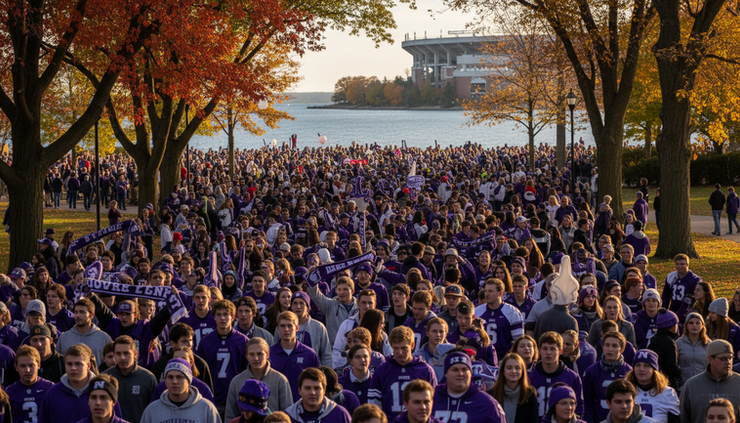
Northwestern purple is one of the most recognizable color identities in college sports. On game day, purple hats, scarves, jackets, and face paint turn the stadium into a visual signal of belonging. Fans may disagree about play calling, playoff hopes, or the best tailgate spot, but the purple is common ground.
Willie the Wildcat
Willie the Wildcat gives the program a familiar face. The mascot appears across athletics, but football Saturdays allow Willie to work the crowd, pose with kids, and keep the mood loose even during tense games.
The Northwestern fight song
“Go U Northwestern” is part of the sound of game day. Fight songs can feel old-fashioned from the outside, but inside a stadium they connect generations. Students learn the words. Alumni remember when they first sang them. Families pass the rhythm down without making a speech about tradition.
The Wildcat growl and crowd response
Like many college programs, Northwestern relies on call-and-response energy. The crowd’s noise may not always match the volume of the largest Big Ten stadiums, but when the Wildcats have momentum, the sound can sharpen quickly. A third-down stop, a late touchdown, or a forced turnover can flip the feeling in the building.
The Land of Lincoln rivalry
The Illinois rivalry gives Northwestern an in-state measuring stick. The annual matchup has often included the Land of Lincoln Trophy, a tradition that replaced the older Sweet Sioux Tomahawk trophy. Rivalry games matter because they reduce a long season to something simple: beat the team from downstate, or spend a year hearing about it.
For broader context on conference opponents and schedules, the Big Ten football page is a helpful place to follow league news.
Memorable moments explain why Wildcats fans never stop believing
Every college football fan base has heartbreak. Northwestern fans have had more than their share. That is part of why the high points hit so hard.
The unforgettable moments in Northwestern history tend to share a theme: people did not see them coming.
The 1995 season remains the central modern example. A team that had long been treated as a Big Ten afterthought beat Notre Dame in South Bend to open the season, kept winning, claimed the conference, and reached Pasadena. To understand Northwestern football culture, start there. It explains the fan base’s belief in long odds.
Then came later reminders that Northwestern could build winning teams in different ways. The Wildcats earned bowl victories in the 2010s and reached the Big Ten Championship Game after winning the West Division in 2018. They did it again during the unusual 2020 season, giving the program another modern peak.
Those seasons showed a formula that fits Northwestern well:
Smart, disciplined football
The Wildcats have often needed to win with execution, tackling, and situational awareness.
Player development
Northwestern rarely recruits like the biggest national powers, so growth inside the program matters.
Defensive toughness
Many of the best Northwestern teams have had a defensive identity that kept them in close games.
Belief during ugly stretches
The program’s history teaches fans not to assume a bad year defines the next one.
That last point is key for 2026. Northwestern supporters know how quickly the story can change. A team projected near the bottom of the conference can become difficult to play. A young roster can mature. A new stadium can change the emotional temperature around the program.
The phrase Northwestern Wildcats Football 2026 History Traditions and Game Day Culture may sound like a tidy summary, but the real story is less tidy and more interesting. The Wildcats are defined by the tension between modest expectations and major moments.

Game day in Evanston blends campus charm with Big Ten intensity
Northwestern game day does not look like every other Big Ten Saturday. Evanston gives it a different pace.
The campus sits near Lake Michigan, with tree-lined walks, academic buildings, residence halls, and nearby neighborhoods shaping the arrival experience. Fans often mix football with a full day in town. That might mean breakfast near campus, a walk along the lakefront, a stop at a tailgate, and then the game.
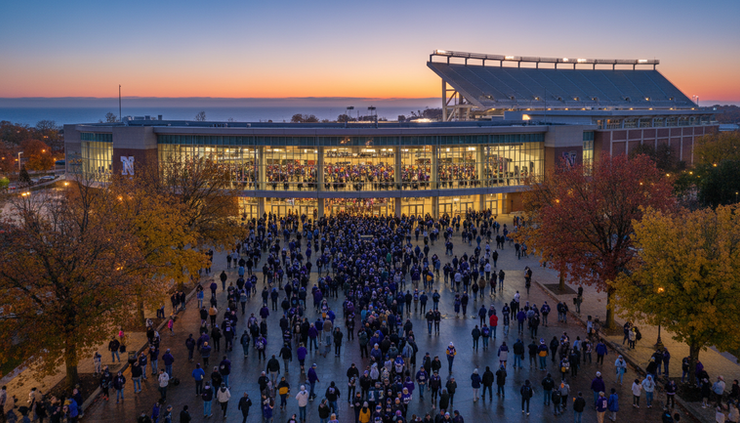
For 2026, the stadium question matters. Northwestern has been working through the Ryan Field rebuild, and official updates on the project are available through the Ryan Field redevelopment site. The new venue is expected to modernize the fan experience while keeping football in Evanston. If the project timeline holds, the 2026 Wildcats could be closely linked with a new era of home-field atmosphere.
A strong Northwestern game day usually includes a few familiar pieces.
Tailgating with a neighborhood feel
Northwestern tailgating is not always massive in the way fans see at some larger state schools. It can feel more relaxed and compact. Families, alumni groups, students, and local supporters create pockets of energy around campus and near the stadium.
A student section that can swing the mood
When Northwestern is competitive, the student section has real influence. A packed purple student section gives the Wildcats the kind of emotional push that matters in close Big Ten games.
Weather that becomes part of the game
Late-season football near Lake Michigan can be cold, windy, wet, or all three. That weather has a personality. It can slow down high-powered offenses, reward physical play, and turn a routine November game into something memorable.
Visiting fans in the building
Because Chicago is nearby and Big Ten alumni networks are large, visiting teams often bring a noticeable crowd. That can make home games feel like contests for noise as much as points. When Northwestern fans meet that challenge, the atmosphere feels especially satisfying.
For game details, tickets, official updates, and future schedule information, the safest source is Northwestern’s official football page. For campus background, the main Northwestern University website helps new visitors understand the setting beyond the stadium.
What to watch as the 2026 Wildcats take shape
Looking ahead to 2026 requires some care. Rosters, coaching staffs, injuries, transfers, and schedules can change quickly in college football. Rather than guessing at names or win totals, the better question is what themes will define the season.
Start with the stadium era. If Northwestern returns to a rebuilt Ryan Field environment in 2026, the first home games will carry extra emotion. Fans will compare the new experience with memories of the old stadium, temporary home arrangements, and decades of autumn routines.
Next, watch the roster identity. Northwestern teams often succeed when they know exactly who they are. That could mean a defense that limits big plays, an offense that controls the ball, or special teams that steal field position. The Wildcats rarely need flash to become dangerous. They need clarity, confidence, and depth.
The Big Ten context also matters. The conference has grown and changed, adding more national brands and longer travel demands. For Northwestern, that makes every competitive edge more valuable. Home-field advantage, player development, and smart scheduling stretches can shape a season.
Fans should also watch how the program tells its own story. College football is changing fast, with the transfer portal, name, image, and likeness rules, expanded postseason formats, and new media attention. Northwestern’s challenge is to compete in that world while staying connected to what makes it distinct: academics, resilience, and a tight football community.
For fans who want to keep learning, these resources are useful bookmarks:
NUSports football homepage for official news, roster updates, schedules, and tickets
Northwestern University Archives for historical university materials
Sports Reference Northwestern football history for past results and records
Big Ten football for conference-wide context
Ryan Field rebuild updates for stadium project information
Northwestern football is easy to underestimate if you only scan national rankings or stadium size. Stay with the program longer, and a richer picture appears. This is a team shaped by old Big Ten roots, a 1949 Rose Bowl triumph, the shockwave of 1995, modern division titles, rivalry pride, purple traditions, and a campus setting unlike any other in the conference.
The 2026 Wildcats will write only one chapter in that larger story. Yet it could be a meaningful one, especially if a new home-field era meets a fan base that remembers exactly why persistence matters. In Evanston, hope has never needed to be loud to be real.


Comments