The Role of Private Sales in Ticketing Explained

Private sales in ticketing are resale transactions conducted within authorized, controlled platforms that preserve ticket pricing integrity and reduce scalping. Unlike open secondary markets where prices spike unchecked, private resale channels give event organizers direct oversight of who sells, at what price, and under what conditions. Platforms like Ticketmaster Face Value Exchange and Tixr Resale have made this model operational at scale, changing how fans and organizers think about ticket flow. The role of private sales in ticketing goes beyond convenience. It is a structural shift in how the live events industry manages supply, demand, and fan trust.
How do private sales differ from public resale markets?
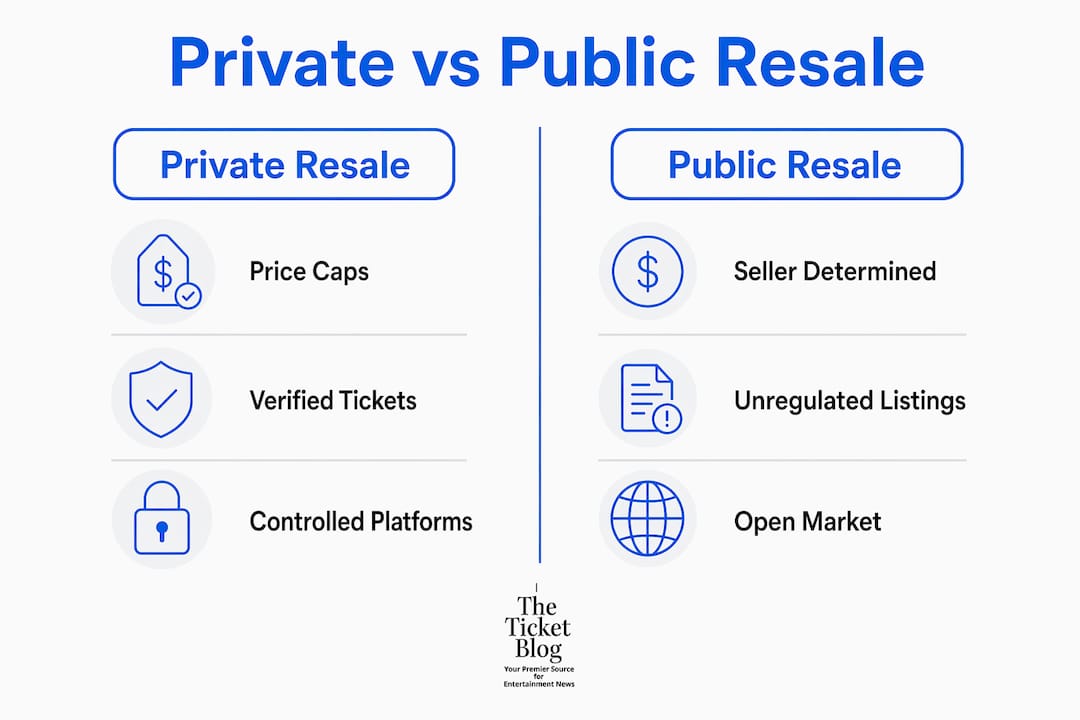
Public resale markets, such as open secondary platforms, operate with minimal pricing controls. Sellers list tickets at whatever the market will bear, which routinely pushes prices far above face value for high-demand events. Private resale channels work differently. They are embedded within the original ticketing ecosystem and enforce rules set by the event organizer or primary platform.
The clearest example is Ticketmaster’s Face Value Exchange, which caps resale prices at the original price paid, including fees and taxes. Tickets are cancelled and reissued to the new buyer, which eliminates counterfeit risk entirely. No fee passes to artists, and the platform is specifically designed to protect fan pricing. That is a fundamentally different model from a third-party resale site where a seller pockets the markup.
Here is how the two models compare across key dimensions:
Feature | Public resale market | Private resale channel |
Price control | Seller-determined | Organizer or platform-capped |
Fraud risk | Higher (unverified listings) | Lower (tickets reissued or verified) |
Organizer visibility | None | Full data access |
Fan pricing | Often above face value | At or near face value |
Transfer restrictions | Rarely enforced | Enforced at ticket level |
The operational differences matter beyond pricing. Private channels give organizers access to resale demand data, which informs future inventory decisions. Public markets generate no such insight for the original seller.
Key distinctions that define private resale channels:
Resale eligibility is set at the ticket type or section level, not applied universally
Pricing rules are enforced by the platform, not left to seller discretion
Transactions stay within the event’s own digital ecosystem
Buyer guarantees are backed by the primary platform, not a third party
What operational benefits do private sales offer event organizers?
Event organizers gain the most from private resale when it is built into the primary ticketing workflow from the start. Platforms like Tixr allow organizers to set eligibility criteria and pricing rules, keeping all resale activity on the event’s own pages without adding operational burden. That means organizers can define which ticket types are eligible for resale, set minimum and maximum resale prices, and control when the resale window opens.
The practical benefits stack up quickly:
Reduced fragmentation: Resale stays on the event page, so buyers never need to leave the organizer’s ecosystem to find a ticket
Centralized payment processing: Disputes, refunds, and seller payouts are handled within one system
Post-event payout timing: Platforms like Tixr and Ingresse release seller funds after the event, which reduces fraud and chargebacks
Demand intelligence: Internal resale data shows organizers which sections are most in demand and at what price points fans are willing to transact
Keeping resale transactions within the event ecosystem also reduces off-platform leakage and speeds up seller payouts. That is a direct improvement in experience for both sides of the transaction. When a fan lists a ticket on an external site, the organizer loses visibility into that transaction permanently. Private resale channels close that gap.
Private resale integration also changes fan behavior over time. When fans know a verified resale option exists within the platform they already trust, they are less likely to turn to unverified third-party sites. That reduces the organizer’s exposure to fraud complaints and customer service escalations tied to counterfeit tickets.

Pro Tip: If you are an event organizer evaluating resale platforms, look for systems that offer post-event payout timing. This single feature significantly reduces fraudulent listings from sellers who have no intention of honoring the ticket.
How do private sales impact ticket pricing and the broader market?
The economic impact of private sales on the broader ticket market is measurable and significant. UK government modeling found that resale price caps reduce consumer spending by £112 million annually and lower average resale ticket prices by £37. That reduction in spending reflects a shift away from profit-driven resale toward more stable, access-focused pricing.
Market condition | Effect of private resale price caps |
Average resale ticket price | Reduced by £37 per ticket |
Annual consumer spending on resale | Reduced by £112 million |
Scalper arbitrage opportunity | Significantly reduced |
Resale ticket volume | Decreased overall |
The volume decrease is worth examining. Fewer resale tickets in circulation sounds like a negative outcome, but it reflects a reduction in speculative purchasing. Scalpers buy tickets with the intent to resell at a premium. When private resale channels cap prices at face value, the profit motive disappears. That means fewer tickets are bought purely for arbitrage, which leaves more available for genuine fans at the point of primary sale.
Commission-based models add another layer to this dynamic. Ingresse, a Brazilian ticketing platform, uses promoter approval and price limits with roughly a 15% commission split between buyer and seller. The resale section activates only after the primary inventory sells out, and funds are released post-event to prevent fraud. This model preserves organizer control while giving fans a legitimate resale option.
“Commission structures and resale price caps significantly influence supply on private resale channels and the feasibility of arbitrage by scalpers.” — GOV.UK Analytical Note
The face-value-only approach and the commission-based model each have trade-offs. Face-value caps maximize fan affordability but may reduce seller willingness to list. Commission models create a small financial incentive for sellers while keeping prices within a controlled range. Both outperform open secondary markets on pricing fairness.
What does private resale mean for fans buying tickets?
For fans, private resale channels change the ticket purchasing experience in three concrete ways: pricing transparency, transaction security, and transfer clarity. Each of these directly affects whether you end up with a valid ticket at a fair price.
Here is what the fan experience looks like in practice across the most common scenarios:
Verified ticket access: Ticketmaster’s Face Value Exchange verifies all tickets and reissues them to new buyers, which eliminates the risk of purchasing a counterfeit or already-used ticket. You know exactly what you are buying.
Price transparency: Because resale prices are capped at face value or within a defined range, you can compare the resale price to the original ticket price without guessing whether you are being overcharged.
Transfer restrictions: Private sale outcomes vary depending on ticket transfer eligibility, which is controlled at the ticket transfer protocol level, not just pricing. Some tickets are mobile-only and non-transferable outside the platform, which affects your options if plans change.
Reduced fraud exposure: Because transactions stay within the primary platform’s ecosystem, buyer guarantees are backed by the original ticketing company, not a third-party reseller with limited accountability.
Resale window timing: On platforms like Tixr, the resale window opens at a defined point in the event lifecycle. Knowing when that window opens helps you time your search for a better deal.
The transfer restriction point deserves extra attention. Many fans assume that buying a ticket means they can transfer it freely. In private resale systems, transfer rules are enforced at the ticket level, not just through pricing policies. A ticket marked as non-transferable outside the platform cannot be moved to a different account or resold on an external site. Understanding this before you buy prevents frustration later.
Pro Tip: Before purchasing on a private resale channel, check the transfer eligibility status of the ticket. If it is mobile-only and non-transferable, confirm your plans are firm before completing the purchase.
For fans who want a broader view of how secondary markets operate alongside private channels, The Ticket Blog’s guide to secondary ticket markets covers pricing structures, buyer guarantees, and platform comparisons in detail.
Key takeaways
Private sales in ticketing give organizers pricing control and fraud prevention while giving fans verified access at fair prices, making them the most structurally sound resale model available today.
Point | Details |
Private vs. public resale | Private channels cap prices and verify tickets; public markets leave pricing to sellers. |
Organizer control | Platforms like Tixr let organizers set eligibility rules and keep resale within the event ecosystem. |
Economic impact | UK modeling shows price caps reduce average resale prices by £37 and cut consumer overspending by £112 million annually. |
Fan protections | Verified reissuance and transfer restrictions reduce fraud and pricing surprises for buyers. |
Commission models | Platforms like Ingresse use a roughly 15% commission split to balance seller incentives with price control. |
The Ticket Blog’s take on where private resale is headed
Private resale is not a perfect system, and it is worth being honest about that. The volume reduction that comes with price caps is real. Fewer tickets in the resale pool means some fans who genuinely need to sell cannot find buyers at face value, particularly for lower-demand events where the resale market is thin regardless of pricing rules.
That said, the alternative is worse. Open secondary markets have consistently failed fans on pricing fairness, and the fraud rate on unverified platforms remains a serious problem. From The Ticket Blog’s perspective, the direction the industry is moving toward, with more organizers adopting integrated resale tools and more platforms enforcing transfer restrictions, is the right one. The friction it creates for scalpers is a feature, not a flaw.
What is still underdeveloped is fan education. Most buyers do not know whether their ticket is eligible for private resale until they try to list it. Platforms need to surface transfer eligibility information at the point of purchase, not buried in terms and conditions. That single improvement would reduce a significant share of the confusion and frustration fans experience when plans change.
The future of private ticket sales likely involves tighter integration between primary sale and resale windows, with AI-assisted pricing tools that adjust resale caps dynamically based on demand signals. Organizers who adopt these tools early will have a structural advantage in managing fan relationships and reducing off-platform leakage. For fans, the practical advice is straightforward: use verified private resale channels when they exist, check transfer eligibility before you buy, and treat any listing on an unverified external site as a higher-risk transaction.
— The Ticket Blog
Find smarter ticket deals with The Ticket Blog

The Ticket Blog tracks private resale developments, platform updates, and pricing trends so you do not have to sort through it yourself. Whether you are trying to understand how a specific platform’s resale rules work or looking for the best way to find face-value tickets for a sold-out show, the guides here give you the context to make confident decisions. Check out the latest ticketing platform comparisons to see how private resale features stack up across the major players. For fans heading to live music events this summer, the 2026 summer concert promo codes page is updated regularly with verified savings. Smart ticket buying starts with knowing where to look.
FAQ
What is a private sale in ticketing?
A private sale in ticketing is a resale transaction conducted within an authorized, controlled platform where the event organizer or primary ticketing company sets pricing rules and eligibility criteria. Platforms like Ticketmaster Face Value Exchange and Tixr Resale are the most widely used examples.
How does face value resale work?
Face value resale caps the resale price at the original purchase price, including fees and taxes. Ticketmaster’s Face Value Exchange cancels the original ticket and reissues a new one to the buyer, which eliminates counterfeit risk and ensures the buyer pays no more than the original fan did.
Do private resale channels reduce scalping?
Yes. UK government modeling shows that resale price caps reduce the average resale ticket price by £37 and cut annual consumer spending on resale by £112 million, which directly reduces the profit motive for scalpers operating in those markets.
Can all tickets be resold on private platforms?
No. Transfer eligibility is controlled at the ticket level, not just through pricing policies. Some tickets are mobile-only or non-transferable outside the issuing platform, which means they cannot be listed on private resale channels or moved to another account.
What commission do private resale platforms charge?
Commission structures vary by platform. Ingresse uses roughly a 15% commission split between buyer and seller. Other platforms like Ticketmaster Face Value Exchange charge no fee to artists and focus on face-value integrity rather than commission-based revenue.
Recommended


Comments