Ticket Trade Explained: A Fan's Complete 2026 Guide


A ticket trade is defined as the buying, selling, or exchanging of event tickets between individuals through official or secondary platforms, giving fans flexible access to concerts, sports games, and theater shows. Whether you missed the initial sale for a Taylor Swift concert or need to offload two NFL seats you can no longer use, understanding what is a ticket trade explained in full helps you act fast and avoid costly mistakes. Platforms like Ticketmaster’s Fan-to-Fan resale and StubHub operate on opposite ends of the market, each with distinct rules, fees, and protections. Knowing the difference before you list or buy a ticket saves you money and stress.
What is a ticket trade, and how does the process work?
A ticket trade, also called ticket resale or a ticket exchange, is any transaction where a ticket changes hands outside the original box office sale. The industry term is “secondary market resale” when money changes hands, and “ticket exchange” when the swap is peer-to-peer at face value or below. Both terms describe the same core activity: one fan transfers access rights to another fan through a platform that manages the transaction.

Secondary ticket markets operate at real scale. Between 10–30% of tickets for sold-out major events are traded via secondary markets. That volume means the secondary market is not a fringe activity. It is a standard part of how fans access events.
The process on a platform like StubHub works in five steps:
List the ticket. The seller uploads the ticket, sets a price, and chooses a delivery method (mobile transfer, PDF, or physical mail).
Buyer purchases. The buyer pays the listed price plus a service fee. Ticket marketplaces operate like eBay, connecting sellers and buyers with platform protections, and sellers set final pricing with platform recommendations as a guide.
Payment is held. The platform holds the buyer’s payment in escrow until the event occurs.
Ticket is transferred. The seller delivers the ticket digitally or by mail before the event date.
Seller receives payout. Payouts are held 5–8 days post-event to confirm the buyer successfully entered the venue. This delay protects buyers from fraud.
Official exchanges like Ticketmaster’s Fan-to-Fan resale work differently. Ticketmaster’s resale automates transfers and instantly issues new barcodes to the buyer, which removes the risk of duplicate tickets being used. Seller fees on Ticketmaster’s primary resale run generally 10–15%, with payouts arriving 5–7 days after the event.
Pro Tip: Set your listing price by checking the current lowest ask on the platform before you post. Listings priced within 5–10% of the lowest ask sell significantly faster than outliers.
What are the benefits and limitations of ticket trading?
Ticket trading solves a real problem: primary sales sell out in minutes, but demand for the event does not disappear. The secondary market fills that gap. For buyers, the core benefits are access, flexibility, and convenience.
Benefits for buyers:
Access to sold-out events that are otherwise unavailable through official channels
Ability to choose specific seat locations that may have been gone at the original sale
Price competition between sellers on open marketplaces, which can drive prices below face value for less popular events
Buyer guarantees on major platforms like StubHub and SeatGeek that promise valid tickets or a full refund
Benefits for sellers:
Ability to recover costs when plans change and tickets would otherwise go unused
Potential profit on high-demand events where face value was set below market price
Convenient digital transfer tools that make the handoff fast and traceable
The limitations are real too. Combined buyer and seller fees run 10–30% per transaction on most platforms. That fee load can push a $100 face-value ticket to $130 or more by checkout. Sellers also face payout delays of up to 8 days post-event, which requires patience.
Fraud is the biggest risk. Invalid tickets, duplicate barcodes, and non-transferable tickets sold as transferable all appear on unregulated channels. Transferability rules are critical. Some events restrict mobile barcode transfers or name changes until hours before showtime. Buying a ticket that cannot be transferred to your name means you may be denied entry at the door.
Pro Tip: Always check the event’s official page for transfer restrictions before buying on any secondary platform. Some artists and venues lock tickets to the original buyer’s ID.
How to identify trustworthy ticket trades and avoid fraud
The safest ticket trades happen on platforms with verified seller programs and buyer guarantees. Fraud concentrates on unregulated channels: Facebook Marketplace, Craigslist, and direct peer-to-peer cash deals. Avoiding those channels eliminates the majority of fraud risk.
Use these criteria to evaluate any ticket trade:
Platform reputation. Stick to platforms with published buyer guarantees. StubHub, SeatGeek, and Ticketmaster all offer some form of guarantee that covers invalid tickets.
Ticket format. Mobile barcodes transferred through official apps (Ticketmaster app, AXS app) are harder to duplicate than PDFs. Prefer app-based transfers when available.
Transferability status. Verify transferability rules before completing any purchase. Some events use name-locked tickets that cannot legally change hands.
Seller history. On platforms like StubHub and SeatGeek, check seller ratings and transaction history. New accounts with no history warrant extra caution.
Payment method. Use a credit card, not a debit card or wire transfer. Credit cards offer chargeback rights if the ticket is invalid.
“The single most important step for buyers and sellers is verifying transferability rules before any transaction. Ignoring them is the most common reason fans get turned away at the gate.”
Closed-loop exchanges like Fulham’s Ticket Exchange take a different approach entirely. These systems restrict seller eligibility and pricing, and they often pay out in club credit rather than cash. They exist to keep tickets within a verified fan base and prevent scalping. If you are buying for a club or venue that runs a closed-loop exchange, that channel is almost always the safest option available.
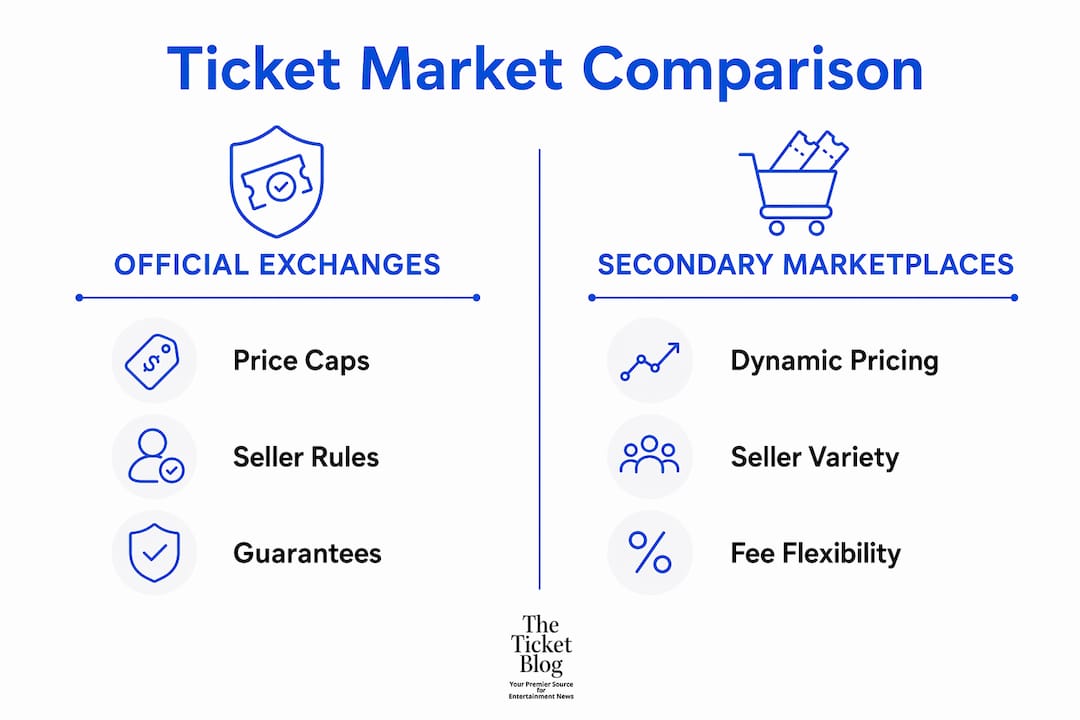
Official ticket exchanges vs. secondary marketplaces: a side-by-side comparison
The choice between an official exchange and a secondary marketplace depends on what you prioritize: price control and safety, or flexibility and access. The table below breaks down the key differences.
Feature | Official exchanges (e.g., Ticketmaster Face Value Exchange) | Secondary marketplaces (e.g., StubHub, SeatGeek) |
Pricing control | Capped at face value or near face value | Set by sellers; can exceed face value significantly |
Listing fees | Minimal or none | Seller fees typically 10–15% |
Buyer fees | Low or none | Buyer fees typically 10–15% |
Fraud risk | Low; platform manages transfers | Moderate; depends on seller reputation |
Payout timing | 5–7 days post-event | 5–8 days post-event |
Seller eligibility | Restricted to verified original buyers | Open to any registered seller |
Ticket delivery | Automated barcode reissue | Seller-managed transfer or mail |
Best for | Fans who want fair pricing and low risk | Fans who need access to sold-out events at any price |
Official face-value exchanges aim to prevent scalping through strict price caps and seller eligibility rules. These platforms often charge no listing fees, prioritizing fan access over platform revenue. The tradeoff is limited inventory. If the original buyer does not list on the official exchange, the ticket simply does not appear there.
Secondary marketplaces operate as liquid markets that capture revenue from underpriced original tickets. Dynamic pricing leads to markups that benefit resellers. That is the economic reality of open resale. For buyers, it means paying above face value is common for high-demand events. For sellers, it means real profit potential when demand outpaces supply.
For a deeper breakdown of how these platforms compare on fees, guarantees, and ticket types, The Ticket Blog’s guide to online ticketing platforms covers every major category in detail.
Key Takeaways
Ticket trading gives fans access to sold-out events, but the platform you choose determines your fees, fraud risk, and payout timeline.
Point | Details |
Ticket trade definition | A ticket trade is any fan-to-fan buying, selling, or exchanging of event tickets through official or secondary platforms. |
Fee awareness | Combined buyer and seller fees run 10–30% per transaction on most secondary platforms. |
Transferability first | Always verify transfer rules before buying or selling to avoid entry denial at the venue. |
Official vs. secondary | Official exchanges cap prices and minimize fraud; secondary markets offer broader access at higher cost. |
Payout timing | Sellers on major platforms wait 5–8 days post-event for payment, as funds are held in escrow until entry is confirmed. |
The Ticket Blog’s take on where ticket trading is heading
The secondary ticket market has matured significantly over the past decade. When The Ticket Blog started tracking platform trends, StubHub was essentially the only mainstream option for resale. Now fans have a real choice between official exchanges, closed-loop club systems, and open marketplaces. That choice is a genuine improvement for buyers.
The part that still frustrates me is the fee structure. Platforms advertise ticket prices that look reasonable, then add 20–25% at checkout. The total cost is the only number that matters, and too many fans do not calculate it until they are already committed. Always check the all-in price before you compare listings across platforms.
The best opportunity in ticket trading right now is timing. For most events, prices on secondary markets drop in the 24–48 hours before showtime as sellers get nervous about unsold inventory. If you can wait and your schedule is flexible, last-minute buying on platforms like SeatGeek often yields prices at or below face value. That window does not exist for the biggest events, but it works reliably for mid-tier concerts and regular-season sports games.
The official exchange model is also improving. More venues and artists are partnering with Ticketmaster and AXS to route resale through controlled channels. That trend benefits fans who prioritize fair pricing. Follow it, and you will spend less over time.
— The Ticket Blog
Find more ticket market guides at The Ticket Blog
The Ticket Blog covers everything fans need to know about buying and selling tickets without overpaying or getting burned.
From platform comparisons to fee breakdowns and the latest promo codes, The Ticket Blog keeps its guides updated for 2026 so you always have current information. If you want to understand the full picture of secondary ticket markets, including pricing trends, buyer guarantees, and insider tips, that guide is the place to start. You can also check The Ticket Blog’s hidden fee savings guide to learn how to cut checkout costs on your next purchase. Visit The Ticket Blog for the latest news, platform updates, and deals posted regularly for fans of every event type.
FAQ
What is the ticket trade definition in simple terms?
A ticket trade is any transaction where an event ticket is bought, sold, or exchanged between individuals through an official or secondary platform. The industry term is secondary market resale when money changes hands.
How does ticket trading work on platforms like StubHub?
Sellers list tickets at a chosen price, buyers purchase through the platform, and the ticket is transferred digitally. The platform holds payment in escrow and releases it to the seller 5–8 days after the event.
Is ticket trading legal?
Ticket trading is legal in most U.S. states, though some states have laws regulating resale prices or requiring seller licenses. Using a reputable platform with buyer protections is the safest way to trade legally and securely.
What are the main benefits of ticket trading for buyers?
Buyers gain access to sold-out events, can choose specific seats, and are protected by platform guarantees that cover invalid tickets. Open marketplaces also create price competition that can push costs below face value for lower-demand events.
How can I avoid fraud when buying traded tickets?
Stick to platforms with published buyer guarantees, use app-based mobile transfers instead of PDFs, and always verify the event’s transferability rules before purchasing. Paying by credit card adds an extra layer of protection through chargeback rights.
Recommended


Comments