What Does a Price Floor Mean for Tickets?


A price floor on tickets is a minimum price set by an organizer, venue, or league that prevents any ticket from selling below a fixed amount. When that floor sits above what the open market would naturally produce, economists call it a binding price floor, and it directly shapes what you pay. For concert and event buyers, this matters most when you’re targeting floor seating or near-stage spots, where minimum pricing is most aggressively enforced.
Here’s what price floors mean in practice for ticket buyers:
Minimum price policy: No ticket on a covered platform can sell below the set floor, regardless of demand.
Who sets them: Event organizers, venues, sports leagues, or official resale platforms, not government regulators in most cases.
Primary vs. secondary markets: Price floors often apply to official resale channels but may not extend to every third-party platform.
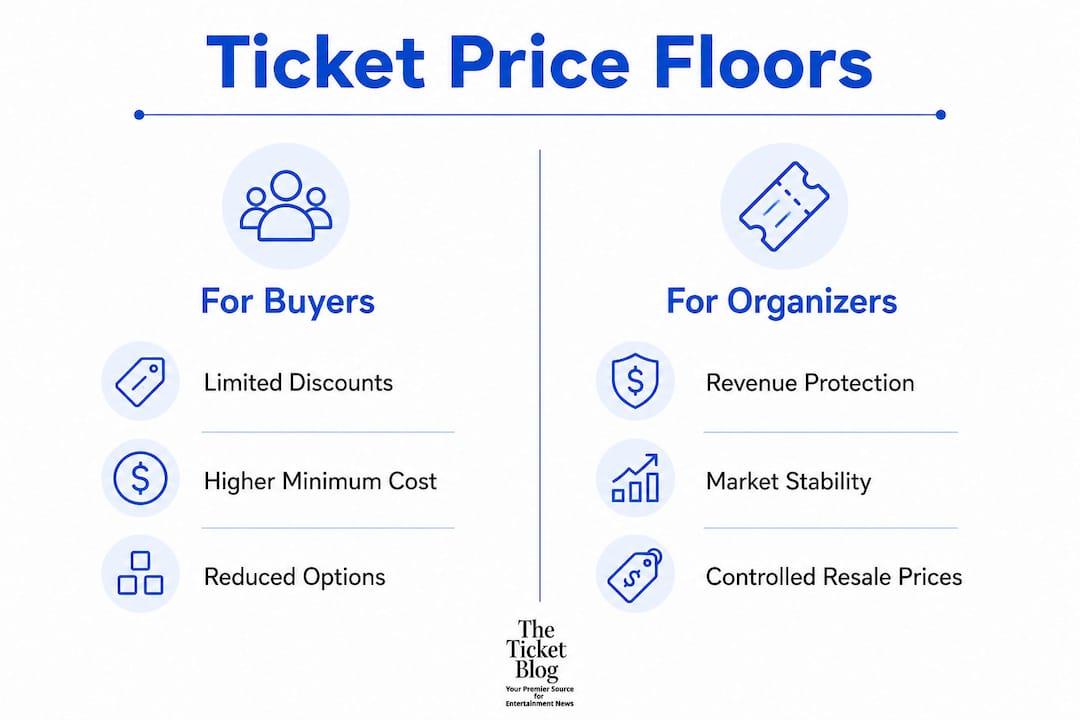
Who benefits: Organizers primarily benefit by protecting revenue and maintaining perceived ticket value; buyers typically face higher minimum prices.
Binding vs. non-binding: A floor only changes the market when it’s set above the natural equilibrium price. A floor below that point has no real effect.
Table of Contents
How price floors affect ticket buyers and overall market dynamics
Price floors keep ticket prices artificially elevated, which directly limits your access to lower-cost options. When a binding floor creates a surplus, more tickets are available than buyers want at that price, yet sellers cannot legally drop below the floor on covered platforms. You end up paying more than an unrestricted market would charge.
The NFL ran this system on its official resale platform until a 2016 court case found the practice violated US antitrust laws. Teams had required season-ticket holders to list on the league’s exchange, where sellers were prohibited from going below face value. When a team played poorly late in the season and demand dropped, holders couldn’t cut prices to move tickets. The New York attorney general’s office investigated and pushed for the floor’s removal, citing how it blocked price competition and kept costs high for buyers.
Price floors and price ceilings work in opposite directions. A price ceiling caps how high a ticket price can go, protecting buyers from extreme markups. A price floor sets the lowest allowable price, protecting organizer revenue. Both are forms of market regulation, but they create very different problems: ceilings cause shortages, floors cause surpluses of unsold inventory.
Key effects buyers should know:
Reduced affordability: Floors prevent last-minute price drops even when demand is weak.
Surplus inventory: Unsold tickets can pile up because sellers can’t lower prices to clear stock on regulated platforms.
Resale restrictions: Official resale platforms often enforce floors while third-party channels may not, creating a split market.
Buyer displacement: Floors push price-sensitive buyers toward unofficial channels or alternate seating sections.
Dynamic pricing interaction: When organizers also use dynamic pricing, floors set the bottom boundary while algorithms push prices upward from there.
Pro Tip: If you’re shopping for tickets on an official resale platform and prices seem stuck at face value even for a low-demand event, a price floor is likely in play. Check whether the same tickets appear on third-party platforms without that restriction.
Expert strategies for finding discounted tickets despite price floors

Understanding how price floors work gives you a real edge when shopping. The floor only applies to specific platforms and ticket categories, so knowing where the restrictions end is half the battle. Secondary ticket markets often find ways to offer discounts through promotions, bundling, and timing strategies even when floors exist elsewhere.
Practical steps that work:
Compare platforms: Official exchanges enforce floors; independent resale platforms may not carry the same restrictions, especially for general admission or upper-level seats.
Time your purchase: Demand drops in the days before an event, and platforms without floors will reflect that. Waiting until 24–48 hours out can surface lower prices.
Watch for promotions: Some sellers bundle parking, merchandise, or food credits to compete without technically dropping below the floor price.
Target non-floor sections: If floor seating carries a strict minimum, upper-level or side-stage seats often don’t, giving you proximity at a lower cost.
Check for last-minute releases: Venues sometimes release held inventory close to show time, occasionally at prices below earlier floor-level listings.
Use price alerts: Set alerts on platforms that allow it so you catch any price movement the moment it happens.
Pro Tip: The Ticket Blog tracks unsold ticket discounts and platform-specific pricing patterns. Checking those guides before you buy can tell you exactly when and where floors are likely to loosen.
What floor seating is and why it carries minimum prices
Floor seating refers to the flat, ground-level area directly in front of the stage at a concert or live event. These spots offer the closest proximity to performers, which makes them the most sought-after tickets at most shows. Because demand for floor seats consistently runs high, organizers treat them as premium inventory and protect that value with minimum pricing.
Floor seats are priced with floors to prevent season-ticket holders or early buyers from undercutting the organizer’s revenue by reselling cheaply. A sold floor section at $50 a ticket when the organizer set a $120 floor would signal to the broader market that the event isn’t worth full price, which can depress sales across all sections. Minimum pricing protects that perception.
Common event types where floor seat price floors appear — and where you might want to book local performance venues to avoid inflated minimum ticket prices — include:
Major concert tours: Arena and stadium shows from top-tier artists almost always carry floor minimums on official channels.
NFL and NBA games: Professional sports leagues have historically used floor policies on official exchanges, as the NFL case demonstrated.
Broadway productions: Premium orchestra and front-section seats often carry minimums, particularly for hit shows. Learn more about Broadway ticket pricing and how floors factor in.
Music festivals: General admission floor passes at major festivals frequently have floors that hold even as the event date approaches.
Boxing and MMA events: Ringside and floor-adjacent seats at major fights carry some of the strictest minimum prices in live entertainment.
What to keep in mind when targeting floor or near-stage tickets:
Floor tickets on official platforms will rarely drop below face value, even for weak-demand shows.
Third-party platforms may list the same seats without a floor, but verify the seller’s guarantee before buying.
Bundled offers (meet-and-greet packages, VIP upgrades) sometimes make the floor price more worthwhile than a bare ticket at the same cost.
Resale floors on floor seating can make concert ticket fees feel even steeper, since service charges stack on top of an already-elevated minimum.
Final tips for concertgoers dealing with ticket price floors
Price floors are a deliberate tool that organizers use to protect revenue, not a market outcome. They keep minimum ticket prices elevated, reduce your ability to find last-minute bargains on official platforms, and push price-sensitive buyers toward unofficial channels. Floor seating carries the most aggressive minimums because it’s the most valuable inventory at any live event.
The good news is that floors are platform-specific. They don’t cover every resale channel, and they don’t prevent promotions, bundles, or timing-based discounts from emerging elsewhere. Staying informed about how each platform operates is the most practical defense you have.
Final tips to keep in your back pocket:
Know which platforms enforce floors and which don’t before you start shopping.
For floor seating, compare official and third-party listings side by side.
Set price alerts and check back within 48 hours of the event for the best movement.
Look for bundled deals that add value without technically breaking the floor.
Follow The Ticket Blog for platform-specific guides, promo codes, and discount alerts that account for price floor dynamics across concerts, sports, and theater.
For deeper guidance on finding deals across every ticket category, visit The Ticket Blog and explore guides built specifically for buyers navigating today’s pricing environment.
Key Takeaways
Price floors in ticketing are set above market equilibrium to protect organizer revenue, which means buyers consistently pay more than an unrestricted market would produce.
Point | Details |
Price floor definition | A minimum price set above market equilibrium, preventing tickets from selling below a fixed amount on covered platforms. |
Who benefits | Organizers and venues protect revenue; buyers face higher minimum prices and fewer low-cost options. |
Floor seating impact | Floor and near-stage seats carry the strictest minimums because they are the highest-demand inventory at live events. |
Platform variation | Official resale exchanges enforce floors; independent third-party platforms may not, creating real price differences. |
Best buyer strategy | Compare platforms, time purchases within 48 hours of the event, and watch for bundled deals that add value at the floor price. |
Recommended


Comments