What Is a Group Ticket Discount? Your 2026 Guide


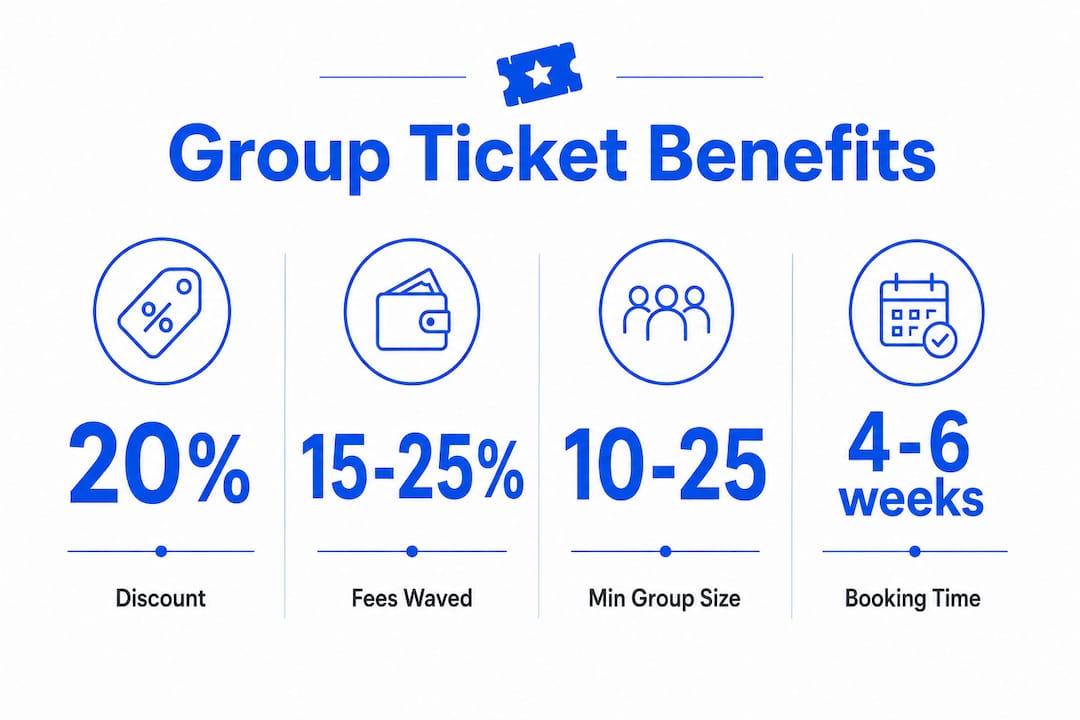
A group ticket discount is a specialized pricing arrangement where venues offer reduced per-ticket rates to parties booking a minimum number of tickets together, with discounts ranging from 20% to 33% off standard prices. Most programs require a minimum of 10–25 people to qualify. Beyond the price cut, group ticket deals often include waived service fees, locked-in pricing, and exclusive event access. For anyone organizing a group outing to a concert, theater production, or sports event, understanding how these arrangements work is the fastest way to maximize savings.
What is a group ticket discount and how does it work?
A group ticket discount is the industry’s standard term for volume-based event pricing. Venues and event organizers set a minimum group size, typically 10–25 attendees, and reward bulk purchases with a reduced per-ticket rate. The discount applies to the base ticket price, not automatically to fees or add-ons, so knowing what is included in your quote matters.
The mechanics are straightforward. You contact the venue’s group sales department, confirm your headcount, and receive a quoted rate. That rate is then locked in, protecting your group from dynamic pricing surges that can push individual ticket prices up as an event date approaches. This price protection is one of the most underrated advantages of group ticket pricing.

Group sales departments operate separately from general box office sales. They handle bulk orders, coordinate seating blocks, and manage payment schedules. Reaching out to them directly, rather than buying through a general ticketing platform, is how you access these reduced rates.
How group ticket bookings are structured
Securing discounted group tickets follows a clear process. Most venues require you to initiate contact 2–4 weeks before the event, though earlier is always better for popular shows.
Contact the group sales department. Call or email the venue directly. Have your estimated headcount ready. Most departments ask for a minimum confirmed number before quoting a rate.
Pay a deposit to hold your seats. Deposits are often around $100 and secure your seating block while you finalize your attendee list. This is not the full payment.
Confirm your final headcount. You typically have a window of one to two weeks to adjust your numbers before the final invoice is issued.
Submit final payment. Final payment is usually due 14 days before the event. Missing this deadline can result in losing your reserved block.
Distribute tickets to your group. Many venues allow name changes on tickets up until a set cutoff date, giving you flexibility if attendees change.
One often-overlooked advantage at this stage is that group bookings protect you from the price volatility that individual buyers face. Individual ticket prices shift with demand. Your group rate does not.
Pro Tip: Book at least four to six weeks out for high-demand shows. Group sales departments fill their allocated blocks early, and late requests often land on waitlists or get redirected to full-price inventory.
What are the real benefits of group ticket discounts?
The financial benefits of group ticket deals go well beyond the headline discount percentage. Service fees, which can add 15–25% to ticket costs, are frequently waived for group bookings. That waiver alone can save $5–$12 per ticket, which adds up fast across a group of 20 or more.
Here is a breakdown of what group buyers typically receive versus individual buyers:
Benefit | Individual ticket buyer | Group ticket buyer |
Per-ticket price | Full face value | 20%–33% off face value |
Service fees | 15%–25% added per ticket | Often waived entirely |
Seating | Scattered availability | Reserved contiguous block |
Payment flexibility | Full payment at checkout | Deposit now, balance later |
Exclusive perks | None | Possible backstage access, Q&As, free parking |
Price protection | Subject to dynamic pricing | Rate locked at booking |
The experiential benefits are equally real. Group bookings can include perks like free parking and artist Q&A sessions that individual buyers simply cannot access. Theater productions sometimes offer post-show meet-and-greets. Concerts may provide early entry or a dedicated group entrance lane.
Centralized ticket management is another practical win. One person handles the entire purchase, distributes tickets, and coordinates seating. That saves every attendee the time and frustration of buying individually and hoping to end up near each other.
Waived convenience fees reduce total cost beyond the base discount
Reserved seating blocks keep your group together without coordination headaches
Flexible payment schedules make it easier to collect money from attendees over time
Name change options protect you when individual plans shift
Exclusive experiences add value that no individual ticket can match
Pro Tip: When negotiating with a group sales rep, ask specifically about fee waivers on group bookings. Venues do not always advertise this benefit upfront, but many will waive convenience fees when asked directly.
Common pitfalls to avoid when booking group tickets
Group ticket offers come with real constraints. Knowing them in advance prevents costly mistakes.
Walk-in group discounts are rarely honored. Group tickets must be pre-purchased; showing up with a large party and expecting a discount at the door almost never works. Individual late arrivals pay full price.
Minimum group sizes are enforced strictly. If your headcount drops below the required minimum before the final payment date, you may lose your discount eligibility entirely. Strict enforcement of minimum group size is standard practice across venues.
Deposits are often non-refundable. Read the cancellation policy before paying. If your event falls through, you may not recover that initial deposit.
Discounts may be restricted to specific dates or sections. Venues use group pricing to fill less popular performances or seating areas. The best discount may not apply to the prime Saturday night show or front-row seats.
Final payment deadlines are firm. Missing the deadline by even a day can result in your block being released back to general sale.
Discounts apply to base ticket prices only. Group discounts apply to the base ticket price, not automatically to parking, programs, or other add-ons. Clarify exactly what your quoted rate covers.
The biggest mistake organizers make is assuming flexibility exists where it does not. Group sales contracts are structured, and venues enforce their terms to protect their pricing strategy.
How to plan a group outing and maximize your savings
Effective planning separates a smooth group outing from a stressful one. These steps give you the best shot at the deepest discount and the best seats.
Start with a firm headcount. Reach out to your group before contacting the venue. A confirmed number, even a rough one, gives you negotiating leverage and helps the sales rep quote accurately.
Contact group sales directly. Skip the general ticketing platform. Call the venue’s group sales line or send a dedicated inquiry email. Ask about minimum sizes, available dates, and what perks are included.
Be flexible on dates and seating. Venues use group discounts to fill less popular times, so flexibility on a Tuesday night versus Saturday can unlock a meaningfully deeper discount. The same applies to seating sections.
Negotiate payment terms. Ask about deposit amounts, final payment deadlines, and whether name changes are permitted. Flexibility in payment terms matters more than many organizers realize, especially when collecting money from a large group.
Combine group discounts with other promotions. Check whether the venue allows group rates to stack with seasonal promotions or member discounts. Not all do, but it is worth asking. The Ticket Blog’s guide to concert ticket discounts covers how different discount types interact.
Lock in your booking early. Early booking secures better seat availability and protects your group from price increases. The group discount buyer’s guide at The Ticket Blog walks through the full process for entertainment events in 2026.
Confirm attendee details before the cutoff. Collect names and contact information from every attendee well before the final payment deadline. Last-minute changes create stress and can jeopardize your discount.
Key Takeaways
A group ticket discount delivers savings well beyond the headline percentage when you account for waived fees, locked-in pricing, and exclusive perks that individual buyers cannot access.
Point | Details |
Definition and threshold | Group ticket discounts start at 10–25 people and cut 20%–33% off face value. |
Fee waivers add real savings | Service fees of 15%–25% per ticket are often waived, saving $5–$12 per ticket. |
Book 2–4 weeks in advance | Contact group sales early; deposits hold your block while you finalize headcount. |
Flexibility unlocks deeper deals | Choosing off-peak dates or non-premium sections often yields the steepest discounts. |
Walk-ins do not qualify | Group discounts require advance purchase; arriving without a reservation means paying full price. |
The Ticket Blog’s take on group ticket value
The most common mistake group organizers make is fixating on the discount percentage and ignoring everything else. After tracking group ticket deals across concerts, theater, and sports events, The Ticket Blog has found that the fee waiver is often worth more than the base discount itself. A 20% price reduction on a $60 ticket saves $12. Waiving a $15 service fee saves $15. The math is simple, but most buyers never think to ask about fees.
The second thing organizers overlook is payment flexibility. Consolidating seats and simplifying purchase management saves more than just money. It saves the coordination headache of chasing 20 people to buy their own tickets. A single group booking with a deposit-now, balance-later structure makes it far easier to collect from attendees gradually.
The advice to be flexible on dates is real, not just filler. Venues genuinely use group pricing to fill slower nights. If your group can do a Thursday instead of a Saturday, you will often get a better seat block, a deeper discount, and a more attentive group sales rep. The best group ticket deals go to the organizers who treat the booking like a negotiation, not a transaction.
— The Ticket Blog
Find your next group deal with The Ticket Blog
The Ticket Blog is the go-to resource for event-goers who want real savings, not generic advice.

Whether you are organizing a corporate outing, a birthday group, or a fan club trip, The Ticket Blog covers the full picture. From weeknight theater deals that pair perfectly with group pricing to detailed guides on navigating ticket marketplaces, the site gives you the tools to book smarter. Explore the latest group ticket offers, promo codes, and expert tips at The Ticket Blog and make your next group outing the one everyone talks about.
FAQ
What is the minimum group size for a group ticket discount?
Most venues require a minimum of 10–25 people to qualify for group ticket pricing. The exact threshold varies by venue and event type.
How far in advance should you book group tickets?
Contact the venue’s group sales department at least 2–4 weeks before the event. For high-demand shows, six weeks or more gives you the best seat selection and discount access.
Are group ticket discounts available at the door?
Walk-in group discounts are rarely honored. Group tickets must be pre-purchased in advance; individuals who arrive without a reservation pay full price.
Do group discounts apply to service fees?
Group discounts apply to the base ticket price. Service fees of 15%–25% per ticket are often waived separately through negotiation with the group sales department.
Can you combine a group discount with other promotions?
Some venues allow group rates to stack with seasonal or member promotions, but policies vary. Always ask the group sales rep directly whether additional discounts can be applied.
Recommended


Comments