When to Buy MLB Tickets: 2026 Timing Rules for Fans


For most regular-season games, wait until 5 to 7 days before first pitch, then buy once you see a price you like. For Opening Day, playoffs, and rivalry weekends, buy the moment tickets go on sale, because those categories don’t follow the usual discount pattern.
Resale-market analysis found that tickets can run about 25% cheaper on game day than a week earlier, and roughly half the price of what they cost three months out. That gap makes patience the default strategy for ordinary weeknight games. But Opening Day and marquee rivalry matchups stay expensive all the way to first pitch, since demand doesn’t taper off the way it does for a random Tuesday game in May. The Ticket Blog tracks these swings across the season, and the official MLB on-sale calendar remains the fastest way to confirm exactly when a specific team releases inventory.
Here’s what to do right now, regardless of which game you’re targeting:
Set a price alert on your preferred marketplace so you get notified the moment a listing drops into your budget.
Check your team’s box office page directly to see if single-game tickets or presale codes have already been announced.
Rate your own risk tolerance. If losing your seat entirely would ruin your plans, buy earlier than the general rule suggests.
Pro Tip: Screenshot the price the first time you see a seat you like, then check back every two or three days. Watching the trend line tells you more than any single snapshot.
Key Takeaways
The most reliable rule for MLB tickets is to wait 5 to 7 days for ordinary games but buy immediately for Opening Day, playoffs, and rivalry matchups.
Point | Details |
Default timing rule | Wait 5 to 7 days before ordinary regular-season games to catch typical price drops. |
High-demand exception | Buy immediately for Opening Day, playoffs, and rivalry games, since prices rarely fall. |
Cheapest windows | Tuesday/Wednesday games and April/May matchups tend to run cheaper than weekend summer games. |
Fees change the math | Always add service and delivery fees before comparing a primary listing to a secondary one. |
Use The Ticket Blog | The Ticket Blog offers timing guides, promo codes, and alerts to help you apply these rules in real time. |
Table of Contents
When Should You Buy Tickets for Different Game Types?
Not every MLB game plays by the same pricing rules, so the smartest move is to sort your game into a category first, then apply the right lead time.
Low-demand games cover weekday matchups, non-rivalry opponents, and anything in the first few weeks of the season. These are the games where patience pays off. Wait until 5 to 7 days out, since sellers and season-ticket holders tend to unload extra seats as the date approaches and demand simply isn’t strong enough to hold prices firm.
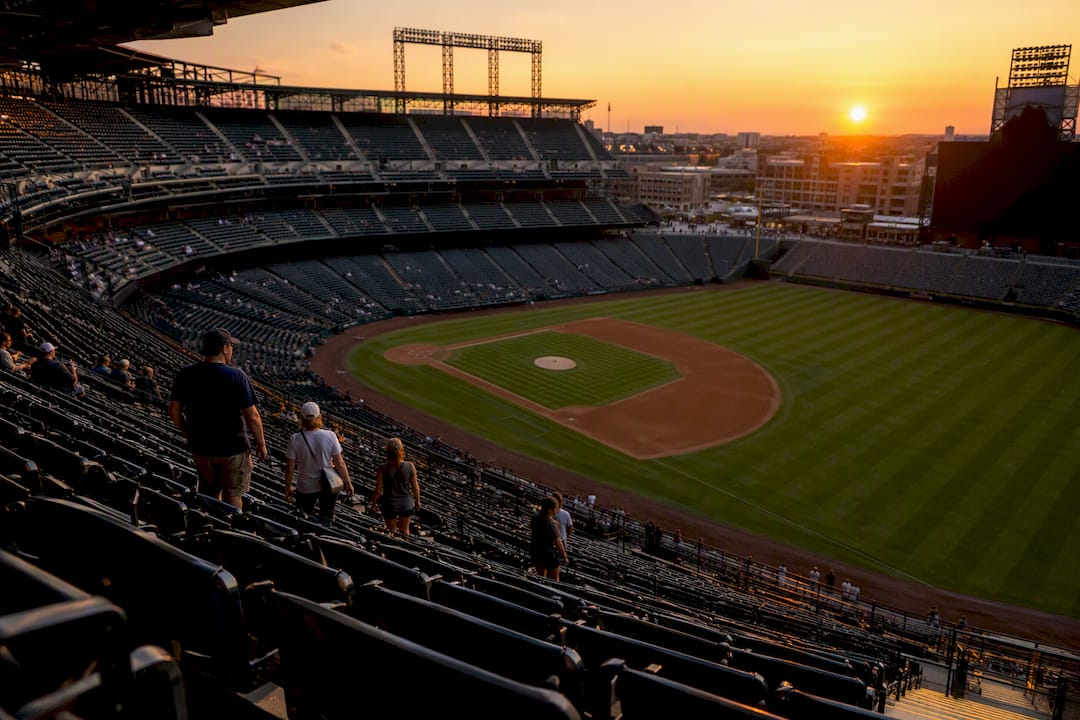
High-demand games include Opening Day, postseason games, rivalry series (think Yankees versus Red Sox or Cubs versus Cardinals), and weekend night games against a marquee opponent. Buy these the moment they go on sale. Prices for these games rarely soften, and in many cases they climb as the date nears.
Promotional and giveaway nights deserve early action too, especially if you’re buying for a group. Bobblehead nights and other popular giveaways draw walk-up crowds who wouldn’t otherwise attend, which tightens supply in the exact seating sections families want. If you need four or five seats together, don’t wait.
One exception worth flagging: teams with retractable roofs, like the Astros, Brewers, or Rangers, don’t see the same weather-driven price swings that hit open-air stadiums. Rain forecasts push prices down at outdoor parks but barely move the needle at weather-insulated venues.
Pro Tip: If you’re unsure which category a game falls into, check the opposing team’s market size and recent playoff history. A last-place team on a Tuesday is low-demand almost by default.
When Do MLB Tickets Go on Sale?
Season-ticket renewals and new full-season packages typically go out first, often in the fall or winter before the following season, well ahead of single-game tickets. Individual game tickets for most teams open to the general public sometime in late winter or early spring, but the exact date varies by franchise and sometimes by opponent. There’s no single league-wide date, which is exactly why checking your team directly matters more than relying on a rule of thumb.
The MLB on-sale calendar at mlb.ecal.com lists official schedules and on-sale entries for every team, and it’s the most reliable place to confirm a public on-sale date before a scalped or third-party listing shows up elsewhere. Team websites and official app notifications tend to post the same information, just with more promotional framing attached.
Presale access is where a lot of fans miss out on the best seats. Three paths matter most:
Team email newsletters often carry presale codes 24 to 48 hours before the public on-sale date.
Credit card and corporate partner presales (Chase, Capital One, and similar bank partnerships with MLB teams) frequently unlock inventory a full day early.
Fan club or loyalty program membership sometimes grants first access to premium sections before anyone else sees them.
The MLB Ballpark app, available on iOS and Android, pushes notifications for team-specific sales and presale windows, which beats refreshing a team’s website manually.
Pro Tip: Sign up for your team’s email list even if you only attend one or two games a year. Presale codes cost you nothing to receive and can save you a scramble later.
Do MLB Ticket Prices Drop or Rise Closer to Game Day?
Prices generally drop as game day approaches, but the pattern isn’t universal, and knowing the exceptions matters as much as knowing the rule.
For ordinary regular-season games, sellers tend to lower prices in the final week because unsold inventory becomes a sunk cost for season-ticket holders trying to recoup at least some value. That’s the mechanism behind the roughly 25% game-day discount FinanceBuzz identified in its resale-market review. Weekday games, particularly Tuesday and Wednesday matchups, tend to run cheaper than weekend games throughout the season, and April and May generally cost less than the peak summer months of July and August when school is out and vacation travel picks up.
Day games versus night games matter too. Weekday day games draw smaller crowds outside of getaway-day scheduling, which usually means softer pricing compared to a Friday or Saturday night start.
Timing Factor | Price Direction | Why |
Tuesday/Wednesday games | Cheaper | Lower overall attendance demand |
April/May games | Cheaper | Early season, cooler weather, less tourism |
July/August weekends | More expensive | Peak vacation season, higher walk-up demand |
Opening Day / rivalry nights | More expensive | Demand stays high through game day |
Day-of purchase (non-marquee game) | Cheaper | Sellers discount to avoid empty seats |
Weather plays a bigger role than most fans realize. Cold or rainy forecasts depress resale prices at open-air stadiums, sometimes significantly, while retractable-roof ballparks don’t show that same volatility since the game is guaranteed to happen indoors regardless of the forecast.
Pro Tip: Watch the ten-day forecast for outdoor stadium games. A predicted rain shower two days out can trigger a real price dip in secondary-market listings.
Where Should You Buy MLB Tickets?
Where you buy matters almost as much as when you buy, and each channel comes with a different mix of price, selection, and protection.
Primary sellers, meaning MLB.com and individual team box offices, sell at face value and typically offer the strongest buyer guarantees since the team stands behind the transaction directly. Ticketmaster serves as the official primary partner for most MLB clubs, handling presales, single-game releases, and mobile delivery. Primary channels are your best bet when a presale code is in play or when you want zero ambiguity about refund policy if a game gets postponed.
Secondary marketplaces, including SeatGeek, StubHub, and Vivid Seats, offer far more seat selection since they aggregate listings from season-ticket holders and brokers reselling unused seats. They’re often where the steepest last-minute discounts show up, but fees and buyer protections vary by platform, so always check the all-in price before comparing across sites.
Box offices also sometimes release previously held inventory, seats set aside for players, staff, or partners, when gates open on game day. Sport-management researchers have documented teams unloading this held-back inventory at face value right before or at gate time, which can mean a face-value seat with zero online service fees for fans willing to show up in person.
Channel | When to Buy | Price Trend | Sellout Risk | Fees | Refund Protection |
Team box office / MLB.com | Presale or early | Stable, face value | Low for regular games | Minimal to none | Strong, team-backed |
Official primary partner | Public on-sale window | Stable to rising for hot games | Moderate | Standard service fee | Strong |
Secondary marketplace | Anytime, best deals late | Often falls near game day | Low, wide selection | Varies widely | Platform-dependent guarantee |
For a deeper breakdown of how these two categories stack up feature by feature, The Ticket Blog’s primary versus secondary comparison walks through the tradeoffs in more detail.
Pro Tip: Never compare a secondary listing’s sticker price to a primary seller’s price without adding fees to both. The “cheaper” option often isn’t once checkout fees are added in.
How Far in Advance Should You Buy Based on Risk Tolerance?
Your ideal lead time depends less on the calendar and more on how much you’d hate losing your preferred seats. Turning that into a simple rule removes the guesswork.
Risk Tolerance | Recommended Lead Time | Trade-off |
Low (must have exact seats) | as soon as on sale | Highest price, guaranteed selection |
Moderate | 5 to 7 days out | Balanced price and decent selection |
High (comfortable gambling) | Day of game | Lowest price, real risk of sellout |
Groups need to think about this differently than solo fans. If you’re bringing four or more people and want everyone seated together, treat your purchase like a low-risk buyer regardless of the game type, because sections that fit large groups sell out from the middle outward, not just from the edges. Fans chasing a specific section, like a shaded seat behind home plate or a spot near a favorite player’s position, should also buy early since those seats vanish first even on otherwise low-demand nights.
For high-demand matchups, waiting is rarely a strategy at all. Buy immediately and treat the purchase like reserving a hotel room during a big convention.
Pro Tip: Rate your own risk tolerance on a 1 to 5 scale before you start shopping. A 1 or 2 means buy now. A 4 or 5 means you can gamble on game day. Writing the number down keeps you from second-guessing yourself mid-search.
What Are the Best Last-Minute Ticket Strategies?
Waiting until the final days works, but it works better with a plan instead of blind luck.
Set pricing alerts on your preferred marketplace so drops come to you instead of requiring constant checking. The MLB Ballpark app can notify you of team-specific box office releases, which sometimes beat marketplace prices for the same section.
On game day itself, check the box office after gates open, since held-back inventory sometimes surfaces at face value at that exact window. Corner and upper-level sections tend to see the steepest last-minute discounts on secondary marketplaces, since they’re the hardest seats for sellers to move.
Verify e-ticket transfers happen through the platform’s official system, not a screenshot or forwarded email.
Avoid person-to-person exchanges outside a stadium; there’s no recourse if the ticket turns out to be invalid.
Confirm mobile delivery and instant transfer are available before you buy, since same-day pickup options vary by seller.
For a full walk-through of day-of tactics, The Ticket Blog’s game-day strategy guide covers more ground on timing your final move.
Pro Tip: Always confirm instant transfer before buying a last-minute ticket. A “will call” or delayed-delivery listing adds real risk if you’re buying within hours of first pitch.
Do Opening Day, Playoffs, and Rivalry Games Follow Different Rules?
Yes, and treating them like a normal game is the most common mistake fans make. Opening Day and postseason tickets carry the steepest premiums of the entire season, and prices rarely soften as the date nears. Buy the moment tickets are released, and look into team hospitality packages if you want a guaranteed group experience.
Rivalry and primetime matchups behave the same way. Demand holds steady right up to first pitch, so waiting for a discount that never comes just costs you your preferred seats.
Giveaway nights split into two camps. If the promotional item (a bobblehead, a jersey, a hat) is the reason you’re going, buy early, since those crowds swell fast. If the giveaway is incidental to your plans, treat the game normally.
Retractable-roof teams sidestep weather-driven price swings entirely, so buy on the standard demand-based timeline, not a weather-watching one.
Pro Tip: For Opening Day, check The Ticket Blog’s Opening Day savings guide before assuming every listing is overpriced. Some deals still surface even on the year’s most expensive day.
How Do Fees Affect the Final Ticket Price?
The listed price rarely matches what you’ll actually pay.
Seat selection affects your total value too, not just your total cost. A stadium seating map helps you spot obstructed-view rows before you commit, and corner or upper-level seats often deliver a better price-to-view ratio than a mid-priced seat with a pole in the sightline.
Always add fees to the posted price before comparing listings across different sellers.
Check the delivery method; mobile transfer is typically fee-free, while physical or expedited shipping usually costs extra.
Compare the box office’s face-value price against the secondary market’s all-in price for the same section before assuming either one is the better deal.
For more on how discount timing interacts with fees, The Ticket Blog’s guide to unsold ticket discounts breaks down why some late listings look cheap but aren’t once fees are added.
Pro Tip: Never trust a listed price until you reach the final checkout screen. That’s the only number that actually counts.
What Evidence Backs These Timing Rules?
These recommendations come from three kinds of evidence: official on-sale calendars, sport-management reporting on box-office behavior, and resale-market price analysis. Each type answers a different question, whether it’s when tickets are released, how teams manage held-back inventory, or how prices actually move as game day approaches.
The single strongest number in this evidence: resale tickets run roughly 25% cheaper on game day than a week out, and about half the price of a purchase made three months in advance.
A few caveats worth keeping in mind:
Team-specific volatility is real. A struggling team’s prices fall faster than a contender’s.
Weather affects outdoor stadiums far more than retractable-roof venues.
Selection risk grows the longer you wait, even when price risk shrinks.
Pair these patterns with the decision matrix above rather than following either one blindly.
What the Ticket Blog Has Learned About MLB Ticket Timing
The pricing patterns in this guide hold up season after season because they’re driven by predictable behavior, not luck. Sellers with unused inventory feel more urgency as game day approaches, and that urgency is what creates the discount window most fans never think to wait for.
The 5 to 7 day rule works precisely because it splits the difference between the two things you’re actually trading off: selection and savings. Anyone chasing a specific game with real demand behind it should treat the on-sale date, not the following week, as their real deadline.
Set a price alert today for any game you’re planning to attend, even if it’s months away.
Get Timing Tools, Alerts, and Promo Codes From The Ticket Blog
Knowing the rules is one thing; catching the right price at the right moment is another. The Ticket Blog tracks pricing patterns across MLB, concerts, and theater, and publishes exclusive promo codes that stack on top of the timing strategies covered here.
Instead of manually checking five different marketplaces every few days, use The Ticket Blog’s guides to know exactly which channel fits your situation, whether that’s a primary seller for a presale code or a secondary marketplace for a last-minute discount. If you want a deeper look at how resale guarantees and fees actually compare across sellers, The Ticket Blog’s secondary market guide is the next stop.
Timing rules, promo codes, and price alerts all in one place, built around the same evidence covered in this guide.
Visit The Ticket Blog to check current promo codes before your next purchase.
Frequently Asked Questions
When is the best time to buy MLB tickets for a regular-season game? For most regular-season games without special demand, 5 to 7 days before the game tends to offer the best balance of price and available seating.
When should I buy Opening Day or playoff tickets? Buy Opening Day and playoff tickets as soon as they go on sale. These games consistently carry premium pricing that rarely drops as the date approaches.
Do MLB ticket prices really drop on game day? Yes, for most non-marquee games. Resale data shows tickets can run about 25% cheaper on game day than a week beforehand, though selection narrows significantly.
Where can I find official MLB on-sale dates? Check the MLB on-sale calendar or your team’s official website, since on-sale dates vary by franchise and aren’t standardized league-wide.
Are secondary marketplaces cheaper than the team box office? It depends on timing and fees. Secondary marketplaces often have wider selection and can offer late discounts, but always add service fees before comparing prices to a box office listing.
What’s the cheapest month to attend an MLB game? April and May tend to run cheaper than peak summer months, partly due to cooler weather and lower tourism demand outside of Opening Day itself.
Sources
These recommendations draw on official on-sale data and independent price-pattern reporting:
For strategy specific to sold-out games, The Ticket Blog’s sold-out alternatives guide covers your options when the usual timing rules no longer apply. Always confirm the exact on-sale date through your team’s own announcement before making a purchase decision.
Recommended


Comments