Why Are Concert Tickets So Expensive? 2026 Guide


Concert tickets are expensive because face value prices, mandatory fees, limited venue capacity, and a highly consolidated ticketing industry all push costs upward at the same time. Understanding why concert ticket prices are high requires looking at each layer separately. This article breaks down the economics of live event pricing, from artist costs and venue scarcity to Ticketmaster’s market dominance and the 2025 fee disclosure rules that are slowly changing how buyers experience checkout. If you have ever stared at a final cart total and wondered why concert tickets are so pricey, the answer is structural, not accidental.
Why are concert tickets so expensive? Supply, demand, and artist economics
The base price of a concert ticket reflects a simple but powerful constraint: venues hold a fixed number of seats. A 20,000-seat arena cannot expand to meet demand for a sold-out Taylor Swift or Beyoncé show. That scarcity alone gives promoters and artists pricing power that almost no other entertainment category enjoys.
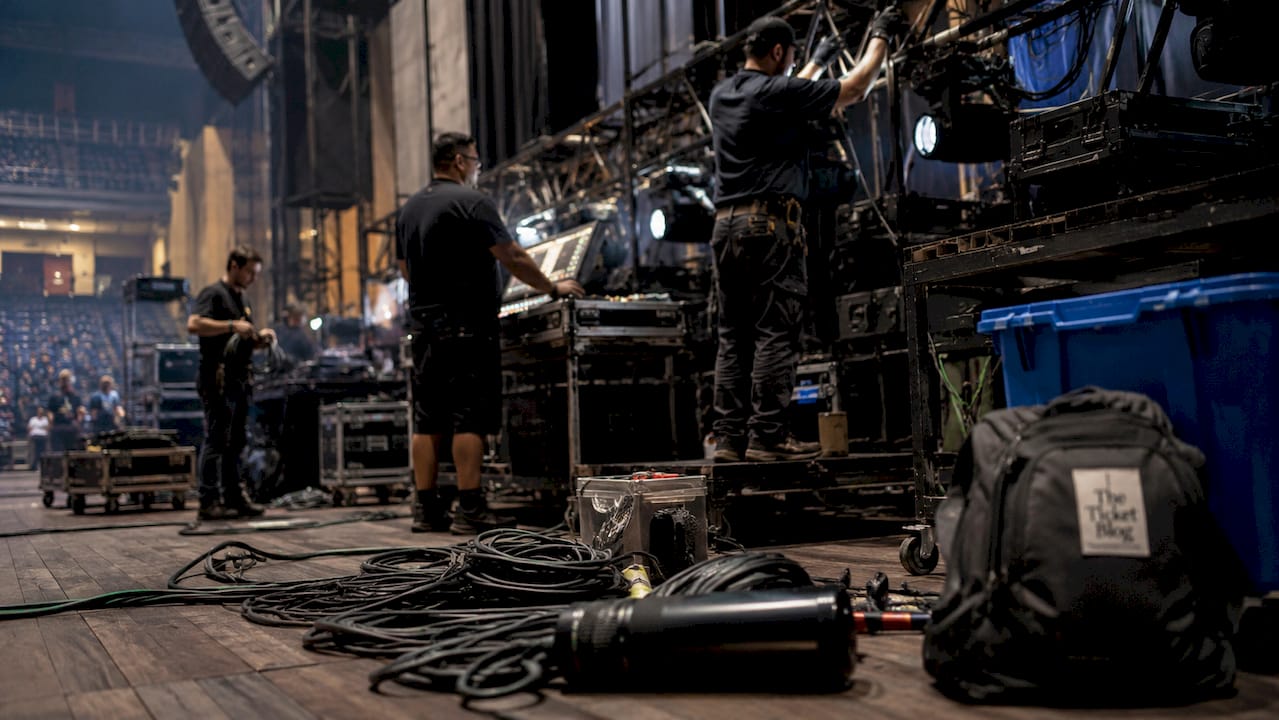
Artists and promoters set face value prices to cover substantial fixed costs before a single ticket sells. Stage production, lighting rigs, sound systems, touring crew wages, insurance, and venue rental fees all hit the budget before the first fan walks through the door. Touring revenue has replaced income lost to streaming and declining album sales, which means artists now build tours with higher fixed costs and pricing models designed to meet revenue goals directly.
A key economic concept explains why this trend accelerates over time. Baumol’s Cost Disease describes how live performance costs rise faster than productivity improvements allow. A string quartet still requires four musicians playing in real time, just as it did in 1900. Wages, travel, and production costs grow with inflation, but automation cannot reduce the labor required to put on a live show. That structural reality pushes base ticket prices upward year after year.
Key factors driving face value prices higher:
Fixed venue capacity creates artificial scarcity for high-demand shows
Rising production costs for staging, lighting, and touring crew
Declining recorded music revenue shifts artist income to live touring
Baumol’s Cost Disease ensures live labor costs outpace general inflation
Pro Tip: When you see a face value price that looks reasonable, check whether the venue is a theater, arena, or stadium. Smaller venues with lower capacity almost always sell out faster and command higher resale prices.
What fees are added on top of concert ticket face value?
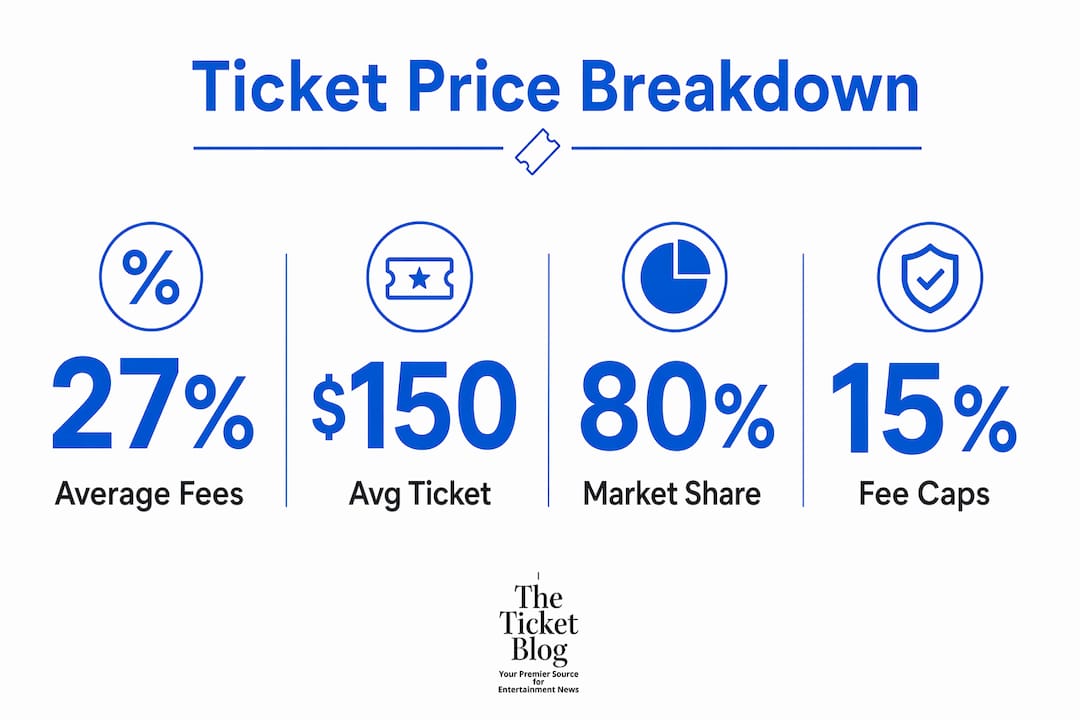
The most expensive part of buying a concert ticket is often not the face value. It is the stack of mandatory fees added at checkout, frequently hidden until the final payment screen. A 2023 Government Accountability Office study found that Ticketmaster fees average about 27% of the base ticket price. On a $100 ticket, that is $27 in fees before you even choose your delivery method.
These fees are not a single charge. They are a layered structure split between the ticketing platform, the venue, and the promoter. Understanding concert venue ticket fees helps you anticipate the real cost before checkout.
Fee type | Who receives it | Typical purpose |
Service fee | Ticketing platform | Platform operating costs and profit |
Facility charge | Venue | Building maintenance and operations |
Order processing fee | Ticketing platform | Transaction handling |
Delivery fee | Ticketing platform | Print-at-home, mail, or mobile delivery |
The FTC’s 2025 Fees Rule now requires upfront disclosure of total ticket prices, including all mandatory fees, before checkout begins. StubHub paid $10 million in consumer refunds after the FTC found it had failed to disclose total fees transparently. That settlement signals that regulators treat fee opacity as a consumer protection violation, not just a business practice.
Many buyers report that fee disclosure transparency matters more to their satisfaction than the fee amount itself. Seeing a $30 fee appear at the last checkout step feels deceptive, even when the fee is technically disclosed. The FTC’s enforcement aims to reduce that sticker shock by requiring all-in pricing from the start.
Pro Tip: Always search for the total ticket price, not the face value, when comparing platforms. Some secondary market sites show lower face values but charge higher fees, making the final cost more expensive than a primary market purchase.
How does industry consolidation keep concert ticket prices high?
Market structure is a major reason concert ticket prices remain high. Ticketmaster controls roughly 80% of the U.S. primary ticket market. That dominance is not accidental. It is the result of exclusive venue contracts and vertical integration built through the 2010 merger between Ticketmaster and Live Nation.
That merger created a single company controlling ticketing, venue management, artist management, and concert promotion. Venue and promoter contract terms determine how many tickets flow to competing platforms versus Ticketmaster’s controlled inventory. When venues are contractually bound to use Ticketmaster, buyers have no alternative primary market option, which removes the pricing pressure that competition would normally create.
The 2026 DOJ settlement with Live Nation introduced some structural changes. The settlement caps ticketing service fees at 15% for certain venues and allows up to 50% of ticket distribution through outside promoters. That is a meaningful shift, but it applies to a limited set of venues and does not address the full scope of Ticketmaster’s market position.
Secondary market resale and scalping compound the problem. When primary market tickets sell out in minutes, resellers buy in bulk and relist at multiples of face value. Fans who miss the primary sale face a secondary market where prices reflect maximum willingness to pay, not production cost.
Key structural factors keeping prices elevated:
Exclusive venue contracts lock buyers into a single ticketing platform
Vertical integration across ticketing, venues, and promotion removes competitive checks
Limited DOJ settlement scope leaves most of the market structure intact
Resale markets capture demand that primary pricing left on the table
How do economic factors and consumer behavior affect ticket affordability?
Concert ticket demand is inelastic. Fans tolerate high prices because live shows are irreplaceable and emotionally valuable in a way that streaming a concert recording is not. That inelasticity gives sellers confidence to raise prices without losing the core audience.
The consequence is a K-shaped demand curve. Higher ticket prices and tighter budgets price out lower-income fans while wealthier buyers absorb the increases. The result is that demand concentrates among higher-income consumers, which sustains elevated prices overall. Artists and promoters face little financial incentive to lower prices when their target audience can still afford them.
Rising living costs and inflation tighten budgets for middle-income fans. A $150 ticket that felt manageable in 2019 now competes with higher rent, groceries, and utility bills. The ticket price has not necessarily risen proportionally, but the share of disposable income it represents has grown.
Consumer frustration tends to focus on fees and pricing opacity rather than face value alone. When a $75 ticket becomes $105 at checkout, the experience feels manipulative regardless of where the extra $30 actually goes. That frustration drove the FTC’s enforcement actions and the push for all-in pricing rules that now require upfront total price transparency.
Key Takeaways
Concert tickets are expensive because limited venue supply, rising artist costs, layered mandatory fees, and a highly consolidated ticketing market all work together to push the total price well above face value.
Point | Details |
Fees add 27% or more | Ticketmaster fees average 27% of face value, per a 2023 GAO study. |
Supply is structurally limited | Fixed venue capacity creates scarcity that drives up prices for high-demand shows. |
Market consolidation reduces competition | Ticketmaster controls ~80% of the U.S. primary market, limiting buyer alternatives. |
Regulatory changes are underway | The FTC’s 2025 Fees Rule and the 2026 DOJ settlement introduce fee caps and transparency requirements. |
Inelastic demand sustains high prices | Fans pay premium prices because live concerts cannot be replicated by streaming or recordings. |
The Ticket Blog’s take on concert pricing complexity
The conversation around concert ticket prices tends to collapse into simple narratives: Ticketmaster is greedy, artists are greedy, scalpers ruin everything. The reality is more layered, and understanding it actually helps you shop better.
The fee structure is genuinely complex, and most of the frustration buyers feel is legitimate. Fees split between platforms, venues, and promoters are not transparent by design. The FTC’s enforcement against StubHub and the DOJ’s settlement with Live Nation are meaningful steps, but they do not fix the underlying market structure overnight. Buyers still face a market where one company controls most of the primary inventory.
What The Ticket Blog has found consistently is that informed buyers spend less. Knowing that hidden fee discounts exist, that some platforms charge lower fees on certain events, and that group purchases can reduce per-ticket costs gives you real options. The pricing system is not going to change dramatically in the next year. But your approach to navigating it can.
Live music costs what it costs partly because it is genuinely expensive to produce. That does not mean every fee is justified or that the current market structure is fair. Both things are true at once, and holding that tension is what leads to smarter buying decisions.
— The Ticket Blog
How The Ticket Blog helps you navigate concert ticket costs
Knowing why concert ticket prices are high is the first step. The next step is finding ways to reduce what you actually pay.
The Ticket Blog publishes up-to-date guides on fee structures, platform comparisons, and pricing promotions so you can make informed decisions before checkout. The Live Nation Summer of Live $30 promo is one example of how major platforms occasionally offer real savings that most buyers miss entirely. The Ticket Blog also covers group discount options for fans who want to reduce per-ticket costs by buying with friends or family. Whether you are buying for a single show or planning a full season of concerts, The Ticket Blog gives you the context to avoid overpaying.
FAQ
Why are concert ticket fees so high?
Ticketmaster fees average about 27% of the base ticket price, split between the ticketing platform, the venue, and the promoter. These fees cover platform operations, building maintenance, and transaction processing, and they are often disclosed only at the final checkout step.
What is dynamic pricing in concert tickets?
Dynamic pricing is a model where ticket prices rise and fall based on real-time demand, similar to airline fares. Platforms like Ticketmaster use it to capture more revenue from high-demand shows, which can cause prices to spike significantly above the original face value.
Does Ticketmaster have a monopoly on concert tickets?
Ticketmaster controls approximately 80% of the U.S. primary ticket market through exclusive venue contracts and vertical integration with Live Nation. The 2026 DOJ settlement introduced some fee caps and competition requirements, but the company retains dominant market share.
Will the 2026 DOJ settlement lower ticket prices?
The settlement caps service fees at 15% for certain venues and allows up to 50% of ticket distribution through outside promoters, which introduces limited competition. Prices may decrease modestly at affected venues, but the broader market structure remains largely intact.
How can you save money on concert tickets?
Buying early at face value, using platforms that show all-in pricing upfront, and checking for promotional offers like Live Nation’s discount programs are the most reliable ways to reduce costs. Group purchases can also lower the per-ticket price at select venues.
Recommended


Comments