Why Unsold Tickets Get Discounted: A Buyer's Guide


An event seat is a perishable good. The moment a show starts, any unsold ticket drops to zero value, which is exactly why unsold tickets get discounted as the event date approaches. Sellers face a simple choice: cut the price and recover some revenue, or let the seat go empty and recover nothing. This pricing logic, borrowed from airline yield management, drives the discount patterns you see across concerts, sports events, and theater productions. Understanding it puts you in a much stronger position as a buyer.
Why unsold tickets get discounted: the perishable inventory rule
Event tickets behave like airline seats or hotel rooms. They are perishable inventory items with a hard expiration. Once the opening act takes the stage, the unsold seat in row 22 is worth exactly nothing. That reality forces sellers to make pricing decisions that prioritize partial revenue over total loss.
The airline industry solved this problem decades ago with yield management. Ticket sellers in live entertainment apply the same framework. They track how many seats remain, how much time is left, and how fast sales are moving. When those signals turn negative, price cuts follow. The FIFA World Cup 2026 illustrated this clearly. Lower demand events and travel-heavy group-stage matches saw resale holders cut prices rather than risk walking away empty-handed at kickoff.

This is the core reason for the discount on unsold tickets. It is not generosity. It is math.
How dynamic pricing and yield management drive price drops
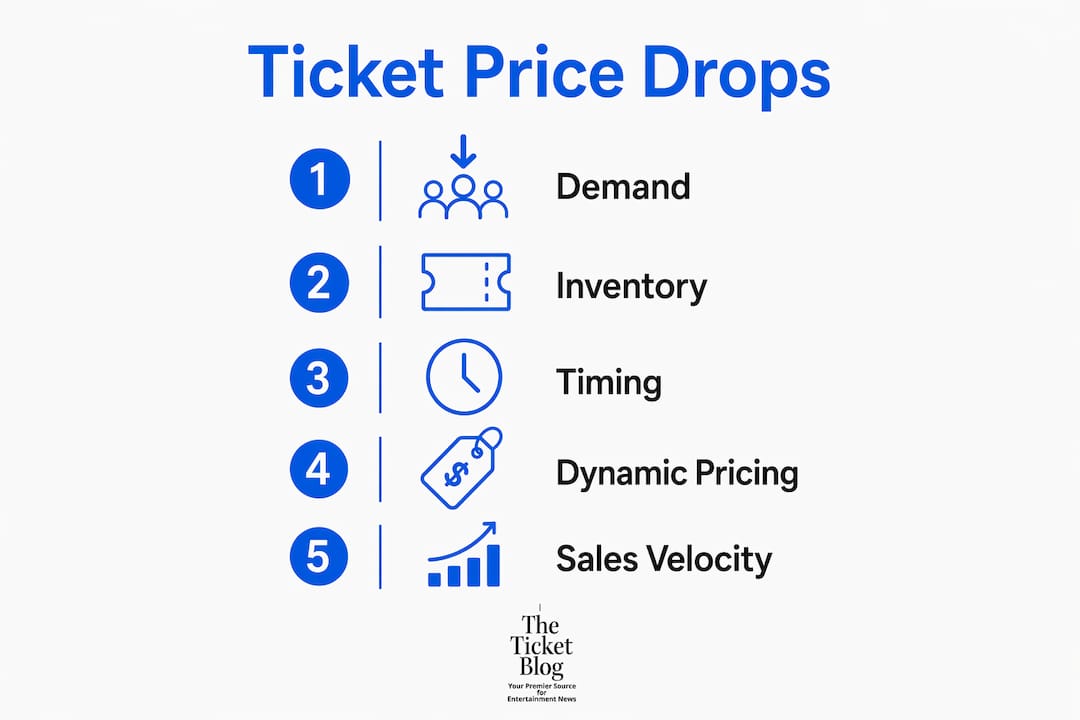
Dynamic pricing is the industry term for adjusting ticket prices in real time based on demand signals. Promoters and venues treat the period from 60 to 180 days before an event as a continuous yield-management problem, shifting prices up or down based on what the data shows.
The most important signal is on-sale velocity. Initial sell-through in the first 72 hours tells promoters whether their pricing was accurate. Strong early sales push prices up. Weak early sales trigger downstream corrections, including the release of lower-priced tiers or direct price cuts on existing inventory. This is why a concert that sells slowly in week one often shows cheaper tickets by week six.
Tiered release strategies add another layer. Organizers do not put all seats on sale at once. They release blocks of inventory at different price points over time. When a tier sells out, the next tier opens at a higher price. When a tier stalls, the system flags it for adjustment.
Pro Tip: Watch the first few days after a ticket goes on sale. If prices drop within two weeks of the on-sale date, that is a strong signal the event is underperforming its sales forecast. You may see further cuts closer to the show.
Key factors that trigger price drops include:
Sell-through velocity falling below the forecast curve
Weak demand in specific seating sections or price tiers
High inventory remaining with fewer than 30 days to the event
Competing events drawing audience attention in the same market
Resale holders cutting prices to exit their positions before kickoff
Why ticket prices don’t always fall last minute
Seeing empty seats on a venue map does not mean cheap tickets are coming. Visible unsold seats do not guarantee price drops because inventory is released in tiers with varied restrictions. A section may appear available but sit in a tier that the organizer has no intention of discounting.
Late demand can also push prices up instead of down. When a show gains momentum through social media or a news cycle, organizers raise prices to capture that surge. Pricing systems balance expected late demand against inventory risk, and a strong late booking curve tips that balance toward higher prices, not lower ones.
Four specific reasons prices stay high or rise close to the event:
Strong late demand. A viral moment or a sold-out nearby date pushes buyers into the remaining inventory, giving sellers pricing power.
Premium tier protection. Organizers hold back premium sections and refuse to discount them, preferring empty seats over brand damage.
Resale fee structures. Authorized resale marketplaces control resale prices and fees, which means even discounted face-value tickets carry fees that push the total cost up.
Inventory throttling. Ticketing systems limit how much inventory enters the resale market at once, preventing a flood of cheap tickets even when supply is high.
“Discount timing depends on sales trajectory, not calendar date. Drops happen when sales fall short of forecasts, not automatically close to the event date.” — Concert Ticket Sales Data: Dynamic Pricing for Promoters
How discounting affects event perception and buyer behavior
Heavy discounting fills seats but carries real costs. Studies show bigger discounts correlate with lower attendee satisfaction and reduced willingness to recommend the event. A buyer who paid $200 for a ticket feels differently about the experience than someone who paid $40 for the same seat. That gap in perceived value affects reviews, word of mouth, and future ticket sales.
Frequent discounting erodes perceived event value and can reduce long-term audience loyalty. Organizers who discount too aggressively train their audience to wait for deals. That behavior shifts the booking curve later and later, which creates the exact inventory problem that triggered the discounts in the first place.
Pro Tip: If you bought a ticket at full price and see the same seat selling for less a week later, check whether the organizer offers a price adjustment policy. Some venues and promoters honor these requests, especially for loyal customers.
The distinction between strategic discounting and mission-driven access matters here:
Strategic discounting fills seats and protects short-term revenue but risks long-term brand value.
Affordable access programs are intentional price reductions tied to community goals, such as student rush tickets at Broadway theaters or discounted youth sections at sporting events.
Flash sales are time-limited promotions designed to create urgency and move specific inventory blocks without signaling broader price weakness.
Buyers benefit from knowing which type of discount they are looking at. A flash sale on sports ticket deals is a different opportunity than a slow-burn price cut on a poorly selling show.
Practical buying strategies for discounted event tickets
Timing and flexibility are the two most reliable tools for finding discounted tickets. Prices fluctuate based on sales data, not fixed schedules, so checking frequently beats waiting for a single magic moment.
Check prices multiple times per week. Dynamic pricing systems update constantly. A price that was too high on monday may drop by thursday based on updated sales data.
Stay flexible on seating. Discounts appear unevenly across sections. The floor may stay expensive while the upper bowl drops significantly.
Use official resale channels. Platforms authorized by the organizer offer buyer guarantees that unauthorized sellers cannot match. The role of private sales in ticketing is real, but so are the risks of buying from unverified sources.
Watch the event’s social media. Organizers sometimes announce flash sales or promo codes through their own channels before listing them elsewhere.
Factor in local demand. A World Cup match between two distant nations played in a U.S. city with no local fan base will see more price cuts than a match involving the U.S. national team.
Buying scenario | Expected pricing behavior |
High-demand show, strong early sales | Prices rise closer to the event |
Low-demand show, slow early sales | Prices drop 2–4 weeks before the event |
FIFA World Cup 2026 group-stage match with low local interest | Resale prices fall significantly near kickoff |
Broadway show with student rush program | Discounted day-of tickets available at the box office |
Concert with Live Nation promotional pricing | Structured discount windows announced in advance |
FIFA’s approach to the World Cup 2026 is a useful case study. FIFA uses multiple channels, including discounted resale and even free ticket giveaways, after capturing most group-stage revenue from early buyers. That controlled unloading process protects early buyers while filling seats for broadcast and atmosphere purposes.
Key Takeaways
Unsold tickets get discounted because empty seats generate zero revenue once an event starts, making any price better than no sale.
Point | Details |
Perishable inventory drives discounts | Sellers cut prices near kickoff to recover partial revenue rather than lose it entirely. |
Dynamic pricing controls timing | Price drops follow weak sales velocity, not a fixed calendar schedule before the event. |
Empty seats don’t guarantee cheap tickets | Tiered inventory release means visible availability doesn’t always translate to lower prices. |
Heavy discounting has trade-offs | Bigger discounts correlate with lower attendee satisfaction and reduced long-term loyalty. |
Flexibility beats fixed timing | Checking prices frequently and staying open on seating gives buyers the best shot at deals. |
The Ticket Blog’s take on reading discounts in 2026
The biggest mistake buyers make is treating every discounted ticket as a sign that an event is failing. That reading is often wrong. FIFA’s World Cup 2026 strategy showed that even a massively successful event uses controlled discounting as a deliberate revenue tool, not a distress signal. Buyers who understood that distinction made smarter decisions than those who either overpaid early or waited too long expecting prices to collapse.
The second mistake is assuming that patience always pays off. For genuinely high-demand shows, waiting is a losing strategy. Prices for Taylor Swift or Beyoncé tours do not drop last minute. They rise. The discount opportunity exists in the middle tier of events: shows with real audiences but imperfect demand forecasts.
The Ticket Blog’s consistent advice is to treat ticket buying like any other purchase with a deadline. Know the event’s demand profile, watch the pricing curve early, and act when the data supports it rather than when anxiety does. Authorized resale channels and hidden fee savings are worth understanding before you buy, because the total cost of a discounted ticket often looks different once fees are added.
— The Ticket Blog
The Ticket Blog keeps you ahead of ticket pricing
The Ticket Blog covers ticket pricing trends, last-minute deals, and promo codes across concerts, sports, and theater so you never have to guess when to buy.
From summer concert promo codes to breakdowns of how dynamic pricing works at major venues, The Ticket Blog gives you the context to buy confidently. Whether you are tracking a specific show or watching the broader market for the right moment to move, the guides and deal alerts on The Ticket Blog are built to help you spend less and attend more.
FAQ
Why do unsold tickets get discounted before an event?
Unsold tickets get discounted because an event seat loses all value the moment the show starts. Sellers reduce prices to recover partial revenue rather than earn nothing from an empty seat.
Do last-minute ticket prices always drop?
No. Last-minute prices drop only when sales fall short of forecasts. Strong late demand can push prices higher, not lower, especially for high-profile events.
How does dynamic pricing affect unsold ticket costs?
Dynamic pricing adjusts ticket prices based on real-time demand signals and sell-through velocity. Weak early sales trigger price cuts; strong early sales push prices up over time.
Is it safe to buy discounted tickets from unofficial sellers?
Buying from unauthorized sellers carries real risk, including invalid tickets and no buyer protection. Official resale channels authorized by the organizer offer verified inventory and buyer guarantees.
Why are some seats visible on the venue map but not cheap?
Tiered inventory release means organizers control which seats enter the market and at what price. A visible seat may sit in a tier the organizer has no plan to discount, regardless of how many seats remain.
Recommended


Comments