2026 Kansas State Wildcats Football History Traditions and Fan Culture Guide

Kansas State football is not a program you understand only by reading a depth chart. To understand the Wildcats in 2026, you need the whole story: the lean years, the Snyder revival, the sound of “Wabash Cannonball,” the sea of purple in Manhattan, and the belief packed into four letters, EMAW.
The 2026 Kansas State Wildcats will write their own chapter on the field, but they inherit one of college football’s most distinctive cultures. This guide looks at the history, key milestones, notable players, memorable games, and fan traditions that shape Saturdays at Bill Snyder Family Stadium.

The 2026 Wildcats carry a story bigger than one season
Kansas State plays in Manhattan, Kansas, inside Bill Snyder Family Stadium, a venue named for the coach who reshaped the entire program. The Wildcats compete in the Big 12, a conference known for shifting styles, tough road trips, and close games that can change a season in one quarter.
For the latest 2026 roster, schedule, tickets, and game notes, the best starting point is the official Kansas State Athletics football page. The official site is also the safest source for coaching staff updates, depth charts, kickoff times, and bowl information once the season arrives.
What makes Kansas State different is the way its football identity blends humility with stubborn confidence. The Wildcats are not seen by their fans as a machine built by blue-chip recruiting alone. They are a program built on development, toughness, special teams, and players who often outgrow the labels placed on them.
That mindset matters in 2026 because K-State fans measure a team by more than preseason talk. They watch for signs that feel familiar:
Smart line play
A physical run game
Sound tackling
Reliable special teams
Quarterback poise in tight moments
A team that looks better in November than it did in September
Those traits became part of Kansas State’s football personality over decades, especially during the Bill Snyder era.
Kansas State football history includes one of the sport’s great rebuilds
Kansas State football dates back to the late 19th century, and the program’s long record includes stretches of frustration as well as breakthrough seasons. For much of the 20th century, the Wildcats struggled to win consistently. That history is part of why the program’s later success still feels so meaningful to longtime fans.
The turning point came when Bill Snyder arrived in 1989. At the time, Kansas State was widely viewed as one of the hardest jobs in major college football. Snyder turned the program into a national contender through disciplined recruiting, player development, and a relentless focus on details.
His impact changed everything. Bowl games became realistic. Winning seasons became expected. Manhattan became a difficult road environment. The Wildcats became a national story because the rise felt earned one step at a time.
A few milestones stand out.
Era | Milestone | Why it matters |
Late 1800s | Kansas State begins playing football | The roots of the program reach back more than a century |
1989 | Bill Snyder takes over | The modern identity of K-State football begins |
1993 season | Kansas State earns a breakthrough bowl win in the Copper Bowl | The Wildcats prove the rebuild is real |
1998 season | K-State rises into the national title conversation | The program reaches a level few once thought possible |
2003 season | Kansas State beats Oklahoma in the Big 12 Championship Game | One of the greatest nights in school history |
2012 season | K-State wins a Big 12 title under Snyder | The second Snyder era reaches a peak |
2022 season | Kansas State wins the Big 12 Championship Game against TCU | Chris Klieman’s program delivers a modern landmark win |
The 2003 Big 12 Championship Game remains a defining moment. Kansas State beat a powerful Oklahoma team, 35-7, and did it on a national stage. Darren Sproles ran through one of the country’s best defenses, and the Wildcats gave fans a night that still gets replayed in highlight packages and memory.
The 2022 Big 12 title win over TCU, a 31-28 overtime victory, belongs in the same conversation for a newer generation. It affirmed that the program could still win championships after Snyder and under Chris Klieman.
For season-by-season records and historical results, Sports-Reference’s Kansas State football archive is a useful place to compare eras, coaches, bowl games, and rankings.

Notable Wildcats helped define the program’s personality
Kansas State’s best players have often matched the program’s core story. Some were overlooked. Some changed positions. Some became college stars before building long professional careers. All helped shape how fans talk about Wildcat football.
Michael Bishop remains one of the most electric players in K-State history. His 1998 season helped push the Wildcats into the national spotlight. Bishop brought arm strength, speed, toughness, and a sense that any broken play could turn into a touchdown.
Darren Sproles became a Kansas State legend with his balance, vision, and burst. His performance in the 2003 Big 12 Championship Game made him central to one of the program’s greatest wins. He later became a respected NFL playmaker, which only grew his reputation among K-State fans.
Collin Klein gave the Wildcats a different kind of star. He played quarterback with power and calm, leading Kansas State during the 2012 Big 12 title season. His running style made short-yardage plays feel personal, and his leadership still resonates in Manhattan.
Tyler Lockett carried a famous K-State family name and built his own legacy as one of the best receivers and returners in school history. His route running, speed, and special teams value fit the Wildcats’ attention to hidden yards.
Jordy Nelson became another fan favorite, moving from Kansas State standout to NFL star. His rise from in-state roots to national recognition remains a classic K-State development story.
Other names matter too: Terence Newman, Martin Gramatica, Ell Roberson, Arthur Brown, Deuce Vaughn, Felix Anudike-Uzomah, Will Howard, and many more. Kansas State’s official Hall of Fame and honors resources are helpful for exploring players across sports and eras.
Memorable games that still shape the fan memory
Kansas State fans carry certain games like family stories. They get retold in tailgate lots, message boards, podcasts, and living rooms.
The 1998 Big 12 Championship Game against Texas A&M is remembered for heartbreak as much as greatness. Kansas State had a path toward the national championship picture before losing in double overtime. For many fans, it remains one of the most painful and important games in program history.
The 2003 Big 12 Championship Game against Oklahoma flipped the emotional script. Kansas State did not just win. It dominated. That game remains proof of what the program can become when everything clicks.
The 2012 season included a string of high-pressure wins that pushed Kansas State into the national race. That team reflected Snyder’s second act: controlled, tough, and opportunistic.
The 2022 Big 12 Championship Game against TCU gave the Klieman era its signature win. It also connected modern players with older traditions of defense, special teams, resilience, and belief.
Together, these memories give the 2026 team a standard. The Wildcats do not need to copy the past, but the best K-State teams tend to echo it.
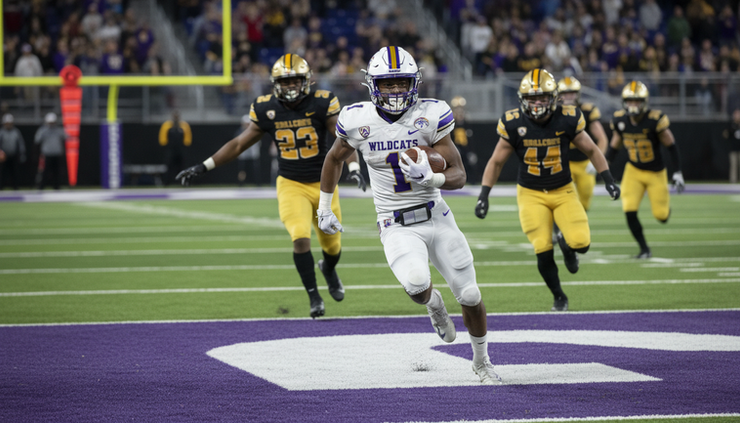
Traditions make Manhattan feel different on game day
Kansas State football culture is loud, specific, and easy to recognize. It starts before kickoff and continues long after the final whistle.
The most famous sound is the “Wabash Cannonball.” The Kansas State marching band plays it with a bounce that fans know by heart. The tradition is tied to the band’s history and has become one of the most recognizable parts of K-State game day. When the song starts, the stadium moves with it.
Then there is EMAW, short for “Every Man A Wildcat.” The phrase has grown beyond its older wording into an all-purpose expression of loyalty. It shows up on signs, shirts, chants, and posts from fans spread across the country. At its heart, EMAW means belonging to the K-State community.
Other rituals add to the experience:
The Wabash Cannonball
The band plays it, fans sway to it, and the whole stadium feels connected.
Willie the Wildcat
The mascot keeps the crowd involved and adds a familiar face to the sideline.
The K-S-U chant
Simple, loud, and perfect for a stadium full of purple.
The Cat Walk
Fans greet the team before the game, turning arrival into a shared ritual.
Purple everywhere
Kansas State has one of the cleanest visual identities in college football. On game day, Manhattan looks like it has chosen one color.
Tailgating around Bill Snyder Family Stadium is part of the rhythm too. Families set up early. Alumni reconnect. Students bring energy. Visiting fans often notice that K-State crowds can be welcoming before kickoff and relentless once the game starts.
For band and university culture, the official Kansas State University site and Kansas State Athletics are the best places to start. For fan conversation, recruiting talk, and opinion, sites like Bring On The Cats, GoPowercat, and EMAW Online offer active communities and regular coverage.
What to watch as the 2026 season approaches
The 2026 Wildcats will be judged by wins, losses, rivalry games, Big 12 standing, and how they perform when the season tightens. Since rosters, schedules, and conference dynamics can change, the smartest way to follow the team is to pair official updates with historical context.
Watch these areas as the season gets closer:
Quarterback stability
Kansas State teams are at their best when the quarterback protects the ball, manages tempo, and creates enough explosive plays to punish defenses.
Line of scrimmage play
K-State tradition values physical football. The offensive and defensive lines often reveal the true ceiling of a season.
Special teams
Few fan bases appreciate special teams like Kansas State’s. Field position, returns, coverage units, and kicking can all swing close Big 12 games.
Player development
The Wildcats have built much of their identity on turning fit, patience, and coaching into production. Rising second-year and third-year players often become major stories.
Home-field edge
Bill Snyder Family Stadium can change games, especially at night or during conference play. If the 2026 team protects its home field, the season can build momentum fast.

Further reading for Wildcats fans
For anyone building a fuller picture of Kansas State football, these sources are worth keeping close:
Kansas State Athletics football
Official news, roster updates, schedules, tickets, statistics, and game information.
A useful official resource for notable athletes and program recognition.
Sports-Reference Kansas State football archive
Historical records, coaches, bowls, rankings, and season-by-season results.
Conference standings, awards, schedules, and championship information.
A long-running fan site with commentary and community discussion.
Recruiting news, team coverage, and fan discussion.
Fan-focused coverage, recruiting updates, and message board conversation.
The best way to understand Kansas State football in 2026 is to see it as both a current team and a living tradition. The Wildcats have known hard seasons, sudden breakthroughs, national attention, and unforgettable heartbreak. They have also built a culture strong enough to connect generations of fans.
That is the beauty of K-State football. Every new season starts with questions, but the setting is familiar: purple in the stands, “Wabash Cannonball” in the air, Willie on the sideline, and a team trying to add one more chapter to a story that still has room to grow.


Comments