2026 Kentucky Wildcats Football History Traditions and Must Know Moments

Kentucky football has never been a simple story of wins and losses. It is a program shaped by old Southern Conference roots, SEC grind, breakthrough seasons, painful near-misses, beloved characters, and a fan base that treats a fall Saturday in Lexington like a family date on the calendar.
The 2026 Kentucky Wildcats football team will step into that long story with the same burden and gift as every Kentucky team before it. The roster will change. The schedule will bring new matchups. The SEC will stay unforgiving. Yet the identity remains familiar: tough defense, blue-collar pride, loyal fans, and the constant chase for the next program-defining moment.
For current schedules, rosters, and official updates, the best starting point is the Kentucky Wildcats official football site. For history, archives, and fan perspective, the links throughout this guide offer a deeper look at how Kentucky football became what it is.

Kentucky football history starts earlier than many fans realize
Kentucky football dates back to the late 1800s, which places it among the older college football programs in the South. The Wildcats later became part of the Southeastern Conference, where the program built its identity the hard way, by competing in one of the sport’s most demanding leagues.
The first great national chapter came under Paul “Bear” Bryant, who coached Kentucky before becoming a college football icon at Alabama. Bryant’s Kentucky teams gave the program one of its most important peaks. The 1950 team won the SEC championship and defeated Oklahoma in the Sugar Bowl after the season, ending the Sooners’ long winning streak and creating one of the proudest moments in school history.
A few milestone seasons still frame Kentucky’s football memory:
Era | Why it matters |
Early program years | Kentucky built its football roots before the modern SEC took shape. |
Bear Bryant era | The Wildcats became a national factor and won the 1950 SEC title. |
1976 season | Kentucky won a share of the SEC championship. |
1977 season | One of the strongest teams in school history finished with only one loss, though postseason limits kept the season from getting a bowl stage. |
Tim Couch years | Kentucky’s passing attack became one of the most exciting stories in college football. |
Mark Stoops era | Kentucky raised its modern floor with physical defense, player development, and multiple major bowl wins. |
The late 1970s still hold a special place for older fans. The 1976 Wildcats earned a share of the SEC championship, and the 1977 team remains one of the great “what if” squads in school history. That team was loaded, tough, and respected nationally.
The modern era brought a different kind of progress. Kentucky went from chasing bowl eligibility to expecting hard-nosed SEC games every week. The 2018 team, led by stars like Josh Allen and Benny Snell Jr., won 10 games and beat Penn State in the Citrus Bowl. The 2021 team also reached 10 wins after another Citrus Bowl victory, this time against Iowa.
For official season records and year-by-year results, Sports Reference’s Kentucky football archive is a useful tool. The University of Kentucky’s digital collections at ExploreUK are also worth browsing for historical photos, publications, and campus material connected to past eras.
The players who define the Kentucky standard
Kentucky football history is filled with names that mean different things to different generations. Some became college legends. Some became NFL stars. Some became fan favorites because they captured the spirit of the program.
Babe Parilli helped make Kentucky a national football name in the Bryant years. He became one of the great quarterbacks in school history and later played professionally. George Blanda, another historic name, first made his mark at Kentucky before building one of the longest pro football careers ever.
On defense and in the trenches, Kentucky produced players with staying power. Art Still became one of the program’s most respected defensive linemen. Dermontti Dawson turned into an NFL Hall of Famer after his time at Kentucky, giving the Wildcats one of their strongest claims in offensive line history.
Then came the high-flying years. Tim Couch changed how many people viewed Kentucky football in the late 1990s. With Hal Mumme’s Air Raid offense, Couch put up huge passing numbers and became the No. 1 pick in the 1999 NFL Draft. His era proved Kentucky could be exciting, bold, and nationally relevant in a new way.
Kentucky fans also remember players because of personality and toughness. Jared Lorenzen, known for his size, arm, and joy for the game, remains one of the most beloved figures in program history. Randall Cobb did almost everything on offense and special teams, becoming one of the most versatile players to wear blue and white.
The modern Kentucky fan vocabulary includes names like Josh Allen, Benny Snell Jr., Lynn Bowden Jr., Wan’Dale Robinson, and Will Levis. Allen became a dominant edge rusher. Snell ran with an attitude that matched the fan base. Bowden carried the 2019 offense in a way few players could, taking over at quarterback and turning a strange season into a memorable one.
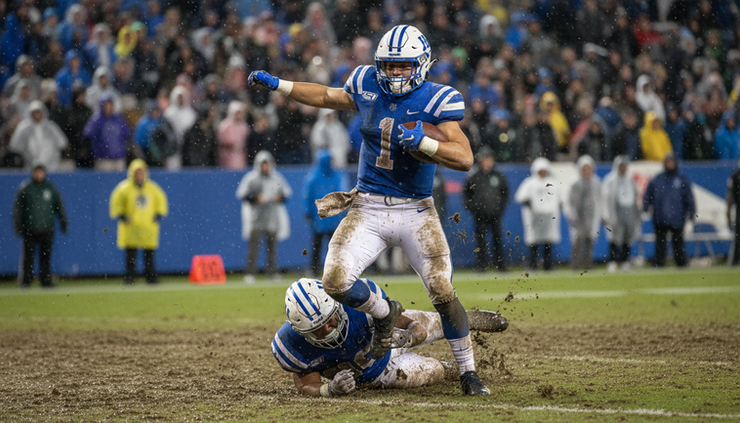
These names matter for the 2026 team because every new Wildcat gets measured against them in small ways. A running back who finishes runs will remind fans of Snell. A pass rusher with closing speed will bring up Allen. A quarterback with courage in the pocket will be compared, fairly or not, to Couch, Lorenzen, or Levis.
That is how tradition works. It gives every new team a language.
Memorable games that every Kentucky fan should know
Some games become more than a final score. They become reference points. Kentucky has several.
The Sugar Bowl win over Oklahoma after the 1950 season remains one of the program’s crown jewels. Oklahoma entered as a powerhouse, and Kentucky’s win gave the Wildcats a place in national college football history. It still belongs near the top of any list of must-know Kentucky football moments.
The 2007 win over No. 1 LSU at Commonwealth Stadium was a modern classic. Kentucky beat the eventual national champion in triple overtime, and the scene in Lexington captured what the program could feel like at full volume. Andre’ Woodson and that team gave fans one of the loudest memories in recent school history.
The 2018 win at Florida changed the emotional math of an entire generation. Kentucky had lost to the Gators for decades. When the Wildcats finally won in Gainesville, the streak ended and the program’s ceiling felt different. That same season produced the Citrus Bowl win over Penn State, with Benny Snell breaking Kentucky’s career rushing record and Josh Allen capping a brilliant college career.
The 2019 season gave fans a different kind of memorable run. After injuries changed the quarterback room, Lynn Bowden Jr. moved from receiver to quarterback and carried the offense with a rare blend of toughness and creativity. Kentucky’s Belk Bowl win over Virginia Tech finished that chapter with style.
The 2021 season added more proof that Kentucky could sustain success. Wins over Florida and LSU at Kroger Field gave the year real weight, and the Citrus Bowl victory over Iowa gave the Wildcats another 10-win season.
For box scores and historical records, BigBlueHistory’s football section offers a fan-driven archive with a strong historical focus.
Traditions make Kentucky football feel like Kentucky football
Kentucky football traditions are not only about what happens after kickoff. The day starts hours before that.
The Cat Walk is one of the clearest examples. Fans line up to greet the team as players arrive at the stadium. It gives the game day a personal feel. Players see the faces behind the noise. Fans get a close look at the team before the pads start popping.
Inside the stadium, the C-A-T-S chant connects sections of the crowd in a familiar call. It is simple, loud, and easy for new fans to learn. That matters. The best college traditions do not need a handbook.
The school’s colors, blue and white, turn Kroger Field into a shared visual identity. The stadium itself has history too. It opened in 1973 as Commonwealth Stadium and later became Kroger Field. For many fans, the name change did not erase the memories tied to the place: cold November games, upset wins, tailgate meals, and the long walk back after a close loss.

The band, the fight songs, and “My Old Kentucky Home” also tie football Saturdays to the wider culture of the state. Kentucky football does not exist apart from Kentucky identity. It shares space with horse farms, bourbon country, basketball history, and family loyalties that get passed down over decades.
Rivalry games sharpen that identity. The Governor’s Cup against Louisville carries in-state bragging rights. SEC games against Tennessee, Florida, Georgia, South Carolina, and others bring their own history and tension. In the expanded SEC, the exact rhythm of annual opponents can shift, but the emotional stakes remain.
Fan culture also lives online. Sites like A Sea of Blue and Kentucky Sports Radio’s Kentucky coverage keep conversation going year-round with recruiting talk, game reaction, and fan debate.
What the 2026 Wildcats inherit in the modern SEC
The 2026 Kentucky Wildcats will compete in a league that looks different from the SEC many older fans grew up with. Texas and Oklahoma joined the conference in 2024, and the league moved away from the old East and West division format. That means Kentucky’s path can include a wider range of opponents, more national attention, and fewer easy weeks.
That setting raises the stakes for everything Kentucky has tried to build in the modern era. The program has often been at its best when it does three things well:
Wins at the line of scrimmage
Develops overlooked players into SEC starters
Turns Kroger Field into a difficult road trip
Those ideas sound basic, but they fit Kentucky’s best seasons. The Wildcats have not usually won by copying flashier programs. They have won by being stronger than expected, more disciplined than expected, and more comfortable in ugly games than opponents want them to be.
For the 2026 team, the exact roster story will depend on recruiting, player development, transfers, injuries, and the final schedule. Fans looking for current details should rely on the official Kentucky football roster and the official Kentucky football schedule as the season approaches.
The bigger question is whether the 2026 Wildcats can add another memory to the program’s permanent list. That is the hook every season offers. Somewhere on the schedule may be a game fans talk about for 20 years.

Further reading for Kentucky football fans
The best way to follow Kentucky football is to mix official sources, archives, and fan voices.
Kentucky Wildcats football has official news, rosters, schedules, tickets, and game information.
SEC football tracks conference-wide schedules, standings, and league news.
Sports Reference Kentucky Wildcats history is useful for season records, coaches, bowls, and player stats.
ExploreUK gives fans access to University of Kentucky historical collections and archival material.
BigBlueHistory is a long-running fan archive with Kentucky football history.
A Sea of Blue offers fan analysis, recruiting coverage, and Kentucky discussion.
Kentucky Sports Radio keeps up with the daily pulse of Big Blue Nation.
The 2026 Wildcats will be judged by what they do on the field, but they will not play in a vacuum. They inherit Bear Bryant’s breakthrough, the grit of the 1970s, the Air Raid excitement of Tim Couch, the toughness of the Stoops-era rebuild, and the voices of fans who have waited through every kind of season.
That is what makes Kentucky football compelling. The next great moment always feels possible, and when it arrives, Big Blue Nation remembers it forever.


Comments