Charlotte Hornets 2026-27 Season Review, Key Players Moments, and Team History

A fair Charlotte Hornets season review has to start with the truth: the full 2026-27 NBA story cannot be finalized until the games are played, the standings settle, and the numbers are complete. As of Oct. 2, 2026, any “final” record, playoff result, award case, or breakout claim would need to be verified against official sources.
That does not make the season any less worth tracking. For Charlotte, 2026-27 sits at the crossroads of patience and pressure. The franchise has spent years trying to turn young talent into a stable winner. The next step is clear: stay healthy, defend better, grow around a lead guard, and give fans at Spectrum Center more nights that feel meaningful in April.
This review-style guide looks at how to evaluate the Hornets’ season, which players matter most, what moments should define the year, and why the franchise’s history still shapes the way fans experience every win, loss, comeback, and draft-night debate.
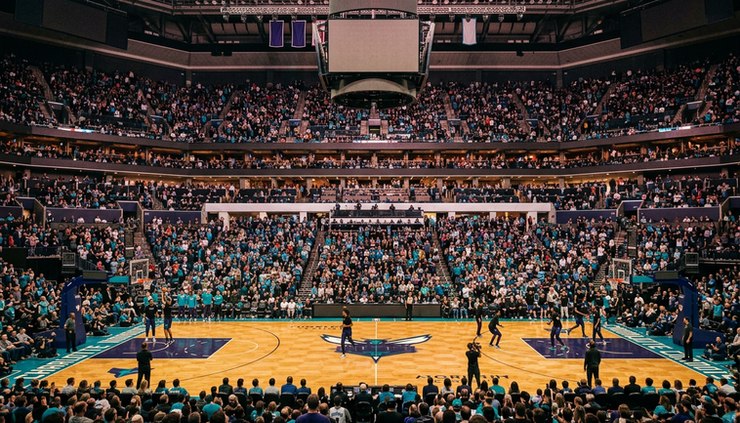
The 2026-27 performance picture starts with progress
The Hornets’ 2026-27 performance should be judged by more than wins and losses, though the record still matters. For a franchise trying to climb in the Eastern Conference, the season should answer a few simple questions.
Can Charlotte build a reliable identity? Can the key players stay on the floor together? Can the roster defend well enough to survive cold shooting nights? Can the bench protect leads instead of giving games away?
The best place to track the raw picture is the official NBA standings page, the Hornets’ team stats page at NBA.com, and the franchise index at Basketball Reference. Those sources will show the final record, net rating, offensive and defensive rankings, pace, shooting profile, and player availability.
A useful season review should focus on these markers:
What to evaluate | Why it matters for Charlotte |
Health of the lead players | The Hornets’ ceiling depends on their best creators playing enough games together. |
Defensive ranking | Young teams often score in flashes, but defense shows staying power. |
Half-court offense | Late-game possessions decide whether a team wins close games or merely competes. |
Player development | Charlotte needs recent draft picks and young rotation players to become dependable. |
Home performance | A stronger record at Spectrum Center builds confidence and pulls the fan base closer. |
Charlotte’s recent challenge has not been a lack of talent. It has been continuity. Injuries, roster churn, and defensive issues have made it hard to judge the team’s true level across a full season. If the 2026-27 Hornets show steadier lineups, fewer empty quarters, and better late-game execution, that would mark real progress even before talking about the playoffs.
The next step, though, cannot stay theoretical forever. Long-time fans know the difference between “promising” and “winning.” The Hornets have had plenty of promising stretches. The 2026-27 season needs to show whether the core can turn those stretches into a more serious climb.
Key players will decide the Hornets’ ceiling
The Hornets’ most important players are not just box-score names. They are the shape of the team. Their strengths and limits determine how Charlotte plays, how opponents guard them, and what kind of supporting cast the franchise needs.
LaMelo Ball remains the engine when healthy
LaMelo Ball is the player most likely to bend a game in Charlotte’s favor. His passing range changes spacing. His pull-up shooting can punish defenses that go under screens. His pace gives the Hornets easier baskets before the defense gets organized.
The issue has always been availability and control. When Ball is healthy and taking care of the ball, Charlotte can look dangerous against almost anyone. When he misses time or gets drawn into rushed possessions, the offense loses its rhythm fast.
For season-long evaluation, track his games played, assist rate, turnover rate, three-point volume, and on-off impact. His Basketball Reference player page is a good place to follow year-by-year production.
Brandon Miller is central to the next version of Charlotte
Brandon Miller’s development may be the clearest swing factor for the franchise. His size, shooting touch, and scoring feel give Charlotte a wing cornerstone, the type of player every modern team needs. If he keeps growing as a defender and secondary creator, the Hornets become much harder to scheme against.
The key is not just points per game. Miller’s 2026-27 season should be judged by shot quality, free throw growth, defensive matchups, and whether he can create good possessions when the first action breaks down. His Basketball Reference profile offers a clean statistical trail.
The frontcourt has to protect the floor
Every Hornets season in this era comes back to the frontcourt. Charlotte needs rim protection, rebounding, screen setting, and dependable finishing. No guard, no matter how creative, can carry a team that gives up layups and second chances all night.
The frontcourt’s job is not glamorous, but it decides the tone. Strong center play gives Ball cleaner transition chances. It gives Miller more room on the wing. It also helps a young team survive the nights when the jumpers do not fall.
The bench must turn talent into trust
The 2026-27 season should also reveal whether Charlotte has a second unit the coaching staff can trust. Bench groups shape the middle of games. They decide whether a six-point lead becomes 12, or whether it disappears before the starters return.
The names may change as the roster evolves, so the role matters more than any single label. Charlotte needs:
A guard who can organize the offense without forcing shots
A wing who can defend multiple positions
A big who can rebound and finish simple plays
At least one shooter who bends the defense away from the ball
If the Hornets get that mix, the team becomes less dependent on superhuman nights from its stars.

Standout moments should show growth under pressure
Every NBA season produces highlights. The best ones reveal something deeper. For the Hornets, the standout moments of 2026-27 should not only be huge dunks, buzzer-beaters, or hot shooting nights. They should be moments that show the team is growing.
Look for games that fit these patterns:
A comeback win against a playoff-level team
This type of win shows belief and late-game organization. Young teams often make runs. Better teams finish them.
A defensive stand in the final minute
Charlotte’s next step depends on stops. A late-game possession with clean switching, strong rebounding, and no panic would say a lot.
A Ball and Miller closing stretch
The franchise needs its best creators to solve games together. If they build chemistry in fourth quarters, that becomes one of the season’s biggest storylines.
A rookie or young bench player earning real minutes
The Hornets have often needed young players to grow quickly. A breakout rotation piece can change the whole feel of a season.
A meaningful late-season home game
The fan base has waited for spring basketball that matters. A packed Spectrum Center in March or April, with playoff stakes attached, would be one of the most important signs of progress.
The Hornets’ official site and the NBA video archive are useful places to revisit highlights once the season is underway. For game logs and opponent-by-opponent splits, Basketball Reference remains one of the easiest tools to use.
The franchise’s history gives this season more weight
The Hornets are not one of the NBA’s oldest franchises, but their history is rich, strange, and deeply Charlotte. The team arrived as an expansion franchise in 1988 and quickly became known for teal, purple, loud crowds, and a style that stood out across the league.
The early Hornets had stars and personalities that still matter to the fan base. Muggsy Bogues, the shortest player in NBA history, became a Charlotte icon. Larry Johnson brought power and charisma. Alonzo Mourning gave the franchise one of its first signature playoff moments. Dell Curry became both a great shooter and, later, a familiar broadcast voice.
One of the defining early milestones came in 1993, when Mourning hit a memorable series-winning jumper against the Boston Celtics. That shot gave Charlotte its first playoff series win and remains one of the franchise’s most replayed moments.
The franchise path later became complicated. The original Hornets moved to New Orleans after the 2001-02 season. Charlotte returned to the NBA as the Bobcats in 2004. In 2014, the Hornets name came back to Charlotte, reconnecting the modern team with the city’s original NBA identity. The NBA’s official history pages and the Hornets’ own team history section provide helpful background on that timeline.
Era | Why it matters |
1988 expansion arrival | Charlotte became an NBA city and built one of the league’s most recognizable looks. |
Early 1990s rise | The Bogues, Johnson, Mourning, and Curry era gave fans their first major memories. |
1993 playoff breakthrough | Mourning’s shot against Boston became a franchise-defining highlight. |
Bobcats years | The city kept NBA basketball, even through difficult seasons and rebuilding. |
2014 name return | The Hornets identity came home, restoring a direct link to the original franchise culture. |
Kemba Walker later became the face of another era. His scoring, toughness, and late-game shot-making made him one of the most beloved players in team history. His career page shows the production, but the connection went beyond stats. He gave fans a reason to believe during seasons that were not always easy.

Hornets traditions and fan culture still define the experience
Hornets basketball has always had a distinct feel. The colors matter. Hugo the Hornet matters. The “Buzz City” identity matters. So does the memory of packed early-1990s crowds, when Charlotte quickly proved it could care deeply about NBA basketball.
The culture is a mix of nostalgia and hope. Many fans remember the original Coliseum era, Starter jackets, pinstripe uniforms, and the novelty of seeing Charlotte on the national NBA map. Younger fans may connect more with Ball’s creativity, Miller’s rise, or the social rhythm of game nights uptown.
That blend gives the Hornets a rare kind of identity. The franchise has not won a championship, and it has not lived in the national spotlight for long stretches. Yet the brand still carries emotional weight. Teal and purple are not just colors. They are shorthand for a city that wants its basketball team to matter again.
Game nights at Spectrum Center reflect that hunger. When the Hornets are competitive, the building has a different edge. A Ball no-look pass, a Miller three, a chase-down block, or a late defensive stop can wake up the whole arena. The team has to earn that energy, but it is there.
The 2026-27 season is important because it can connect those layers. A strong year would not erase the hard seasons, but it would give old and new fans a shared reference point. Every franchise needs years that people can point to and say, “That was when things started to turn.”
The best way to follow the 2026-27 review is with trusted sources
Because the 2026-27 season needs verified numbers, the final review should be built from reliable sources once the schedule results are complete. These pages are good starting points:
NBA.com Hornets team stats for official team data
NBA.com standings for playoff positioning and conference rank
Basketball Reference Hornets franchise page for season history and advanced numbers
Hornets official team history for franchise milestones
LaMelo Ball’s Basketball Reference page for career and season stats
Brandon Miller’s Basketball Reference page for development tracking
A complete season review should return to a few final questions after the last game:
Did Charlotte improve its record and point differential?
Did the team defend at a level that can hold up against better opponents?
Did Ball and Miller play enough together to build real chemistry?
Did the frontcourt answer the rebounding and rim-protection questions?
Did the season produce momentum, not just isolated highlights?
If the answer to most of those questions is yes, the 2026-27 Hornets season will deserve to be remembered as a step forward. If not, it will likely become another year in the long search for a stable foundation.

The Hornets’ story has always been about more than the standings. It is about a city that embraced an expansion team, lost a name, fought through lean years, and welcomed that name back with pride. The 2026-27 season belongs in that larger arc.
For Charlotte, the goal is simple and difficult: turn talent into trust, trust into wins, and wins into a season fans can feel proud to revisit.


Comments