How to Stack Ticket Discounts and Promotions in 2026


Stacking ticket discounts is the practice of combining multiple promotional offers at checkout to pay less than any single deal would allow. Buyers who learn to stack ticket discounts and promotions routinely cut their total cost on concerts, sports events, and theater performances well below face value. The method works by layering compatible offers: early-bird pricing, promo codes, bundle deals, and payment method incentives. The Ticket Blog covers this approach in depth because it produces the most consistent savings of any ticket-buying strategy available today.
What you need to know before stacking discounts on event tickets
Discount stacking, the industry term for combining multiple promotional offers in a single purchase, requires knowing which discount types can coexist and which ones cancel each other out. Most ticket platforms offer several layers of savings, and understanding each layer is the first step toward combining them effectively.
The main discount layers you will encounter are:
Base price reductions: Early-bird pricing or group rates applied before fees
Promo codes: Alphanumeric codes applied at checkout to reduce the ticket price or add-on cost
Bundle deals: Packages that combine tickets with hotel stays, parking, or merchandise at a set price
Payment method incentives: Discounts triggered by using a specific app, credit card, or digital wallet
Cash-back portals: Passive rebates credited after purchase through services like Rakuten
Not all of these can be combined. Promo codes often apply only to specific categories such as tickets, add-ons, or merchandise, and they may not combine with bundle pricing or other codes. Reading the terms before you commit saves time and prevents checkout surprises.
The table below shows common ticket discount types and how stackable they typically are.
Discount type | Stackable with other offers? | Notes |
Early-bird pricing | Usually yes | Often compatible with promo codes |
Promo codes | Sometimes | One code per transaction on most platforms |
Bundle deals | Rarely | High value but usually excludes other codes |
Payment incentives | Often yes | Works alongside base price and some codes |
Cash-back portals | Usually yes | Passive; applies after purchase |
Pro Tip: Sign up for event newsletters and enable app notifications before you need tickets. Flash deals and exclusive promo codes often appear 24–48 hours before public sale.

How to stack ticket discounts and promotions step by step
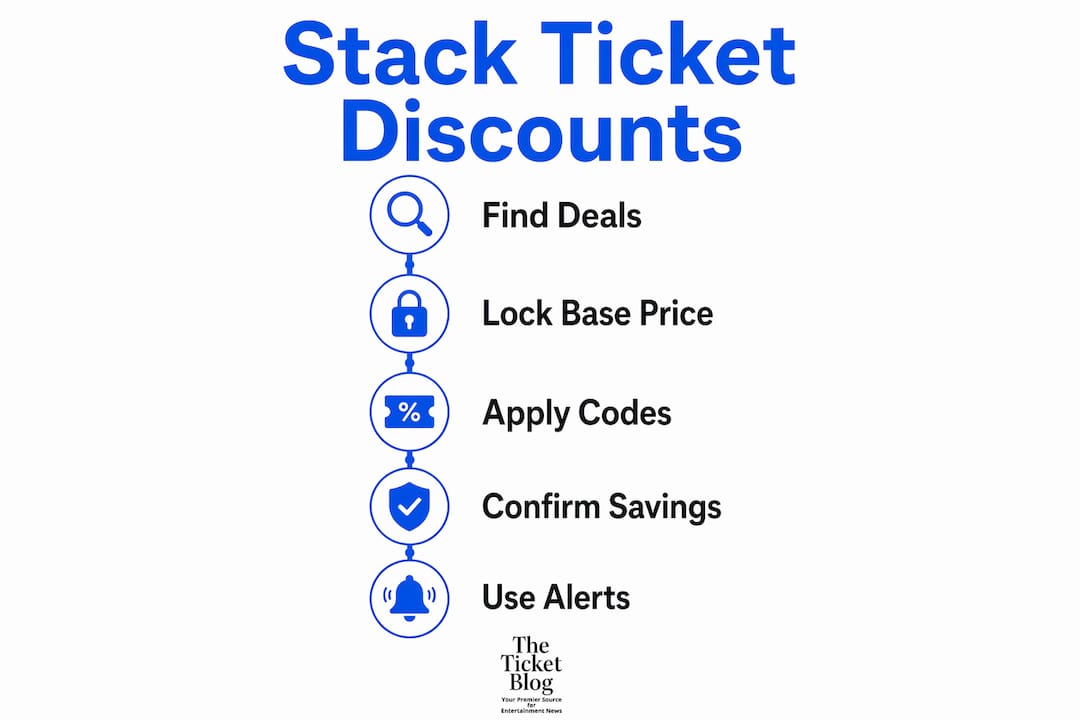
A clear sequence makes the difference between a successful stack and a wasted code. Follow these steps every time you buy tickets for a concert, sports event, or theater performance.
Identify all available discount layers. Search for the event on the primary ticketing platform and note the base price, any listed bundle options, and active promo codes. Check The Ticket Blog’s summer concert promo codes guide for current codes before you start.
Lock in early-bird pricing first. Early-bird pricing lowers the base ticket cost before fees or add-ons and is often compatible with promo codes applied later. Buying early gives you the lowest starting price to build your stack on.
Apply promo codes to the right line items. Add your ticket to the cart, then test your promo code before adding parking, merchandise, or other add-ons. Some codes apply only to the base ticket. Others apply only to add-ons. Testing each step separately reveals where the code actually works.
Activate payment method incentives. After your cart total is set, pay with a card or app that offers a rebate or discount. For example, Samsung Wallet users in the U.S. can earn a $10 discount on Atom Tickets after completing three spaced Tap to Pay transactions, valid through september 2026. This type of incentive sits on top of your base price and promo code savings.
Activate a cash-back portal before you check out. Combining passive savings like cash-back portals with active methods such as promo codes and seasonal sales allows buyers to reduce the effective price significantly beyond what any individual discount delivers. Open the portal, click through to the ticketing site, and then complete your purchase.
Verify the final cart total before you pay. Confirm that every discount appears as a line item in your cart. If a code did not apply, try removing and re-adding it, or swap to a different code from your list.
Pro Tip: Keep a simple notes document with the promo codes you plan to use, their expiration dates, and the categories they apply to. Expired or misapplied codes are the most common reason a stack fails at checkout.
Common challenges when stacking ticket deals and how to fix them
Stacking fails for predictable reasons. Knowing them in advance lets you work around them quickly.
One-code limits: Many platforms restrict promo codes to one per transaction. The workaround is to stack across different discount types rather than multiple codes. Combine one promo code with a cash-back portal and a payment incentive instead of trying two codes at once.
Category restrictions: A code valid for tickets may not apply to parking or merchandise in the same cart. Split your purchase if the platform allows it, buying tickets in one transaction and add-ons in a separate one.
Bundle conflicts: Bundle pricing with ticket and hotel or package deals typically cannot be combined with other promo codes. Compare the bundled price against the standalone ticket price plus your available codes to see which path saves more.
Flash sale timing: Last-minute flash ticket deals create short discount windows and are often incompatible with other offers. If a flash sale price is already lower than your stacked total, take the flash sale and skip the codes.
Cart recalculation errors: Some platforms recalculate fees after a promo code is applied, which can reduce or eliminate your savings. Always check the final total, not just the discount line, before you pay.
The most reliable stacking approach is to treat each discount type as a separate layer and test them in sequence. Trying to apply everything at once leads to conflicts that are hard to diagnose.
Pro Tip: Screenshot your cart at each step. If a discount disappears during checkout, you have a record to share with customer support.
Real-world stacking deals for concerts, sports, and theater in 2026
Real examples show how these layers combine in practice. The deals below are active or recently confirmed for 2026 events.
Live Nation’s 4-pack lawn tickets for $99 including fees bring the per-ticket cost to $24.75 for select Summer of Live concerts across the U.S. and Canada. That group pricing is a base-price reduction. You can then add a cash-back portal on top, since group deals rarely block passive rebates.
The Samsung Wallet $10 discount on Atom Tickets works alongside the platform’s standard pricing. It does not combine with other ticket promo codes, but it stacks cleanly with early-bird pricing on the base ticket. That combination can bring a $15 ticket down to $5 before fees.
Amtrak’s Big City Savings Sale offers up to 30% off Acela Business Class and Northeast Regional fares for travel in august and september 2026. Buyers attending events in Northeast cities can stack this travel discount with their ticket savings to reduce the total cost of the outing, not just the ticket itself.
The table below summarizes how these real deals stack.
Deal | Discount type | Stackable with |
Live Nation 4-pack ($99) | Group/bundle base price | Cash-back portals |
Samsung Wallet $10 off Atom | Payment incentive | Early-bird base price |
Amtrak 30% off travel | Travel discount | Ticket promo codes |
Early-bird concert tickets | Base price reduction | Promo codes, cash-back |
For a deeper look at the Live Nation Summer of Live deal structure, The Ticket Blog’s Live Nation $30 promo guide breaks down exactly how the pricing tiers work and which add-ons remain eligible for codes.
Key takeaways
Stacking ticket discounts requires combining compatible offer types in the right sequence, starting with the lowest base price and adding payment incentives and cash-back portals on top.
Point | Details |
Start with base price | Lock in early-bird or group pricing before applying any codes. |
Test codes by category | Promo codes often apply only to tickets or only to add-ons, not both. |
Layer passive savings | Cash-back portals apply after purchase and rarely conflict with other discounts. |
Compare bundles carefully | Bundle deals block most codes, so calculate both paths before choosing. |
Verify every cart step | Screenshot each discount layer to catch errors before you pay. |
The Ticket Blog’s take on stacking ticket savings
Stacking works best when you treat it as a system, not a one-time trick. The buyers who save the most are the ones who build a short checklist before every purchase: find the base price, locate active codes, identify their payment method benefit, and activate a cash-back portal. That four-step habit takes about five minutes and consistently produces better results than hunting for a single “magic” discount.
The part most guides skip is the comparison step on bundles. A ticket-plus-hotel bundle can look like a great deal until you calculate what you would pay buying each separately with a promo code and a cash-back rebate. Sometimes the bundle wins. Sometimes it does not. Running the numbers takes two minutes and has saved me real money on theater weekends in New York and sports trips to Chicago.
Timing is the other underrated factor. Early-bird pricing gives you the most flexibility because it is compatible with the widest range of other offers. Flash sales give you a low price but almost no stacking room. If you can plan ahead, early-bird plus a cash-back portal plus a payment incentive is the most reliable combination across concert, sports, and theater purchases.
The discipline to verify your cart before paying is what separates buyers who actually save from buyers who think they saved. Platforms make mistakes. Codes expire mid-session. Fees recalculate. Check the final number every time.
— The Ticket Blog
Where to find your next stacked ticket deal
The Ticket Blog tracks live promotions, promo codes, and bundle deals across major event categories so you do not have to monitor every platform manually.
The types of concert ticket discounts guide on The Ticket Blog covers every discount category in detail, from face-value group rates to payment method incentives. For buyers who want the latest codes delivered directly, the site’s hidden promo codes guide explains exactly where platforms hide their best offers and how to find them before they expire. Browse the full events and deals hub for current promotions on concerts, sports, and theater tickets updated regularly.
FAQ
What does it mean to stack ticket discounts?
Stacking ticket discounts means combining multiple promotional offers, such as a promo code, a payment incentive, and a cash-back rebate, in a single ticket purchase to reduce the total price below what any one offer would achieve alone.
Can you use two promo codes on the same ticket order?
Most platforms limit orders to one promo code per transaction. The effective workaround is to combine one promo code with a different discount type, such as a cash-back portal or a payment method incentive, rather than two codes.
Does early-bird pricing work with promo codes?
Early-bird pricing is the most stackable discount type available. It lowers the base ticket cost and is typically compatible with promo codes applied at checkout, making it the best starting point for any stacking strategy.
Are bundle deals worth it if I can’t stack codes?
Bundle deals block most promo codes but can still deliver strong savings when the bundled price beats the standalone ticket price plus any codes you have available. Always calculate both options before choosing.
How do cash-back portals fit into ticket stacking?
Cash-back portals like Rakuten are passive discounts credited after purchase. They rarely conflict with promo codes or payment incentives, making them a reliable final layer to add to any ticket stacking strategy.
Recommended


Comments