& Juliet Explained Story, Songs, History and Creative Team

What if Juliet did not die for Romeo? That single question turns one of theater’s most famous tragedies into a glittery, funny, and surprisingly thoughtful pop musical. & Juliet takes the ending everyone knows, tears out the final page, and asks what might happen if Juliet chose life, friendship, self-discovery, and one very eventful trip to Paris.
The result is part Shakespeare riff, part pop concert, part coming-of-age story. It uses songs made famous by Britney Spears, Backstreet Boys, Katy Perry, Robyn, Kelly Clarkson, Celine Dion, and other artists connected to hitmaker Max Martin. Yet the show is not just a jukebox of familiar hooks. Its best trick is how those songs become character moments.
This guide breaks down the story, major themes, key numbers, creation history, and creative team behind the musical.
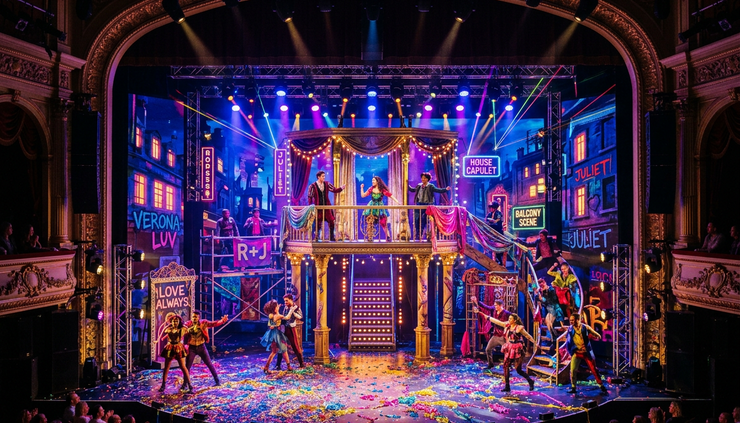
The story imagines Juliet after the ending of Romeo and Juliet
& Juliet begins with William Shakespeare proudly presenting the ending of Romeo and Juliet. Juliet wakes, finds Romeo dead, and takes her own life. His wife, Anne Hathaway, is not impressed.
In this version, Anne pushes back. Why should Juliet’s story end with a teenage suicide? Why should the girl at the center of the play get so little say in her own fate? Anne suggests a better question: what if Juliet lived?
That idea opens the musical’s central frame. Shakespeare and Anne become competing authors inside the story, revising the plot in real time. Their debate sends Juliet away from Verona with her Nurse, along with friends who help her imagine a future that does not revolve around Romeo.
Juliet travels to Paris, where she meets François, the shy child of wealthy nobleman Lance. François is expected to follow a life planned by someone else. Juliet, already rebelling against the role written for her, recognizes that feeling. Meanwhile, May, Juliet’s close friend, explores love, identity, and belonging in a world that keeps trying to define people too quickly.
Then Romeo reappears.
That twist could have turned the show into a simple love triangle, but & Juliet aims for something broader. Romeo is not treated as the one true answer to Juliet’s life. He is part of her past, part of her growth, and part of the joke. The show lets Juliet ask whether first love must be final love, and whether passion alone is enough.
The story also gives Anne and Shakespeare their own arc. Their argument about Juliet becomes a larger argument about marriage, legacy, listening, and authorship. Anne does not just want to fix a fictional heroine. She wants to be heard by her husband. Shakespeare, for all his genius, must learn that a story can become stronger when he stops controlling every line.
The musical’s main themes are choice, authorship, and second chances
The fun of & Juliet comes from its pop energy, but the show works because its themes are clear and easy to care about.
Juliet claims her own story
Juliet begins as a character famous for dying. The musical reframes her as a young woman at the beginning of her life. She makes mistakes, acts boldly, falls hard, and changes her mind. That is the point. She no longer exists to complete Romeo’s tragedy.
Her journey is not about rejecting romance altogether. It is about refusing to let romance be the only thing that defines her. The show treats self-knowledge as a real ending, not a consolation prize.
Anne Hathaway asks who gets to write history
Anne’s role gives the musical its sharpest meta-theatrical idea. She challenges Shakespeare from inside his own canon. The show knows that Shakespeare is revered, but it also knows that classic texts can be questioned, remixed, and argued with.
That tension keeps the piece from becoming a simple parody. Anne is not trying to destroy Romeo and Juliet. She is asking what the story leaves out.
May brings identity and acceptance into the center
May, a nonbinary character, adds one of the show’s most moving threads. Their story is about being seen without having to reduce the self to a simple label for someone else’s comfort.
The musical’s use of pop songs helps here. These are tracks many audience members already connect with growing up, longing, heartbreak, confidence, and escape. When May sings or shares a scene with François, the familiar music supports a story about finding language for who you are.
The adults get second chances too
The Nurse and Lance are comic figures, but their romantic subplot has real weight. So does the marriage between Anne and Shakespeare. The musical gives its older characters desire, regret, humor, and vulnerability. Life does not stop offering new pages after youth.
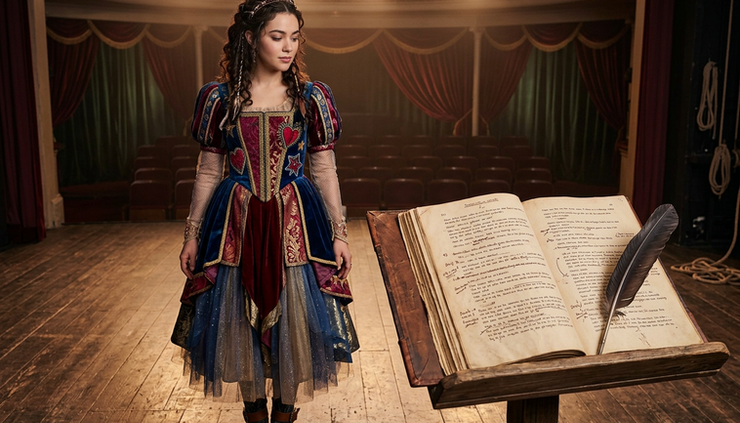
The songs turn pop hits into character moments
The score of & Juliet draws from the catalog of Swedish songwriter and producer Max Martin, whose work shaped decades of pop music. The show includes songs associated with Britney Spears, Backstreet Boys, NSYNC, Katy Perry, Kelly Clarkson, Ariana Grande, The Weeknd, Pink, Celine Dion, and others.
The clever part is context. These songs arrive with audience memories already attached, but the book often gives them new dramatic meaning.
Larger Than Life sets the rules of the world
The Backstreet Boys hit “Larger Than Life” helps establish the show’s playful tone. It fits Shakespeare’s theatrical ego, the show’s concert-like style, and the sense that this story knows it is performing for an audience.
It also tells viewers to expect scale. This is Shakespeare filtered through pop spectacle, not a museum piece.
Baby One More Time becomes a rebirth song
Britney Spears’ “...Baby One More Time” is one of the show’s most striking recontextualizations. In pop culture, the song is tied to teen longing and late-1990s iconography. In & Juliet, it becomes a moment of awakening.
Juliet has just survived the ending that was supposed to define her. The song’s familiar ache shifts into something theatrical: confusion, grief, and the first pulse of a new life.
I Want It That Way plays with romantic fantasy
“I Want It That Way” brings boy-band sincerity into a story that keeps questioning romantic scripts. The number works because the song is both heartfelt and slightly absurd in this setting. That balance is the show’s signature trick.
It lets characters feel big feelings while the audience enjoys the comedy of hearing a global pop anthem inside a Shakespeare sequel.
Since U Been Gone gives Juliet release
Kelly Clarkson’s “Since U Been Gone” is a natural fit for Juliet’s break from tragic destiny. It carries the force of someone realizing that survival can feel like freedom.
The song’s placement gives Juliet a burst of agency. She is not only mourning. She is discovering the energy that comes from leaving an old version of herself behind.
Teenage Dream and Break Free deepen François and May
The pairing of “Teenage Dream” and “Break Free” gives François and May a pop vocabulary for attraction, fear, and self-expression. The songs are joyful, but they also carry emotional stakes.
François feels trapped by family expectations. May wants to be loved honestly. Together, the numbers help turn a comic Paris plot into one of the show’s most tender threads.
Roar and Can’t Stop the Feeling bring the show home
Katy Perry’s “Roar” fits Juliet’s arc almost too perfectly, but the show earns it by building toward her self-assertion. By the time the number arrives, it feels less like a playlist pick and more like a thesis statement.
“Can’t Stop the Feeling!” helps close the musical with communal joy. The finale does not erase every conflict. Instead, it celebrates the idea that a rewritten ending can make room for more people.
The show was built from Max Martin’s catalog and a new book
The musical began with a bold commercial and creative idea: build a stage show around Max Martin’s songs, then use them to tell a new story rather than a biography of the songwriter. That choice separates & Juliet from many jukebox musicals.
The book is by David West Read, known for his work on Schitt’s Creek. Read’s script gives the show its meta-comedy, quick pacing, and emotional structure. Instead of treating the songs as isolated set pieces, the book creates a frame where pop anachronism makes sense. Shakespeare, Anne, and the characters are not trying to be historically accurate. They are trying to find the best version of the story.
& Juliet premiered in Manchester, England, in 2019 before transferring to London’s West End. It later reached Broadway, where it opened at the Stephen Sondheim Theatre in November 2022 after earlier North American development.
The timing of its rise matters. By the time the show reached wider audiences, theatergoers were hungry for productions that felt communal and celebratory. & Juliet offered bright design, familiar music, and a story about survival that did not ignore pain but refused to end in it.
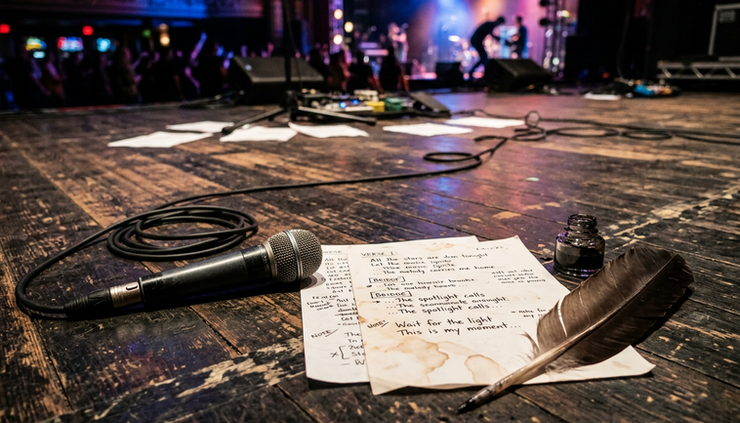
The creative team shaped the show as a pop concert with a beating heart
A concept like this could have become a string of karaoke numbers. The reason it holds together is the creative team’s shared vision.
David West Read gives the show its comic engine
Read’s book balances satire, sincerity, and speed. The jokes often come from collisions: Shakespearean stakes against modern language, parental pressure against pop lyrics, classic tragedy against glittering self-help optimism.
Yet the script does not treat the characters as empty punchlines. Juliet’s growth matters. May’s vulnerability matters. Anne’s frustration with Shakespeare matters. That emotional grounding helps the musical survive its own sparkle.
Luke Sheppard keeps the story moving
Director Luke Sheppard stages the musical with the momentum of a concert but the clarity of a book musical. The show rarely sits still. Scenes shift quickly, songs arrive with confidence, and the audience is encouraged to enjoy the artifice.
Sheppard’s approach embraces the fact that everyone knows the source material. He does not hide the Shakespeare connection. He lets the audience laugh at it, then uses that familiarity to create surprise.
Jennifer Weber turns pop movement into storytelling
Choreographer Jennifer Weber brings a sharp pop vocabulary to the show. The dance is not decoration. It signals confidence, confusion, flirtation, rebellion, and release.
In a jukebox musical, choreography often carries the pressure of making famous songs feel new. Weber’s work helps the numbers land as theater rather than tribute performance.
The design creates a world between Verona and a pop arena
The production design mixes period shapes with modern energy. Corset-inspired silhouettes meet bright colors. Quills and balconies share space with concert lighting. The result is a theatrical world where Shakespeare and pop music can occupy the same stage without apology.
Designers including Soutra Gilmour, Paloma Young, Howard Hudson, Gareth Owen, and Andrzej Goulding have been associated with major productions of the show. Together, the visual and sound world supports the central idea: the past is being remixed in front of us.
The show’s appeal comes from how accessible it is
Part of the success of & Juliet is simple. It is fun to hear a room full of people react when they recognize the opening of a beloved pop song. But the musical also appeals to theater fans because it understands structure.
It gives the audience:
A familiar story with a clear twist
Songs that already carry emotional memory
A heroine with an easy-to-follow want
A comic frame that gives the writers permission to play
Themes that feel current without turning into a lecture
That balance makes it friendly to people who do not know much Shakespeare and rewarding for people who do. The more one knows Romeo and Juliet, the more jokes and reversals land. Yet the plot remains simple enough for anyone to follow.
The show also benefits from generosity. It is not cynical about pop. It respects the craft of a three-minute song that can carry heartbreak, confidence, or release. It is not cynical about Shakespeare either. It argues with him because the work still matters.
Further reading on & Juliet
For more context, reviews, and interviews, these sources are good places to start:
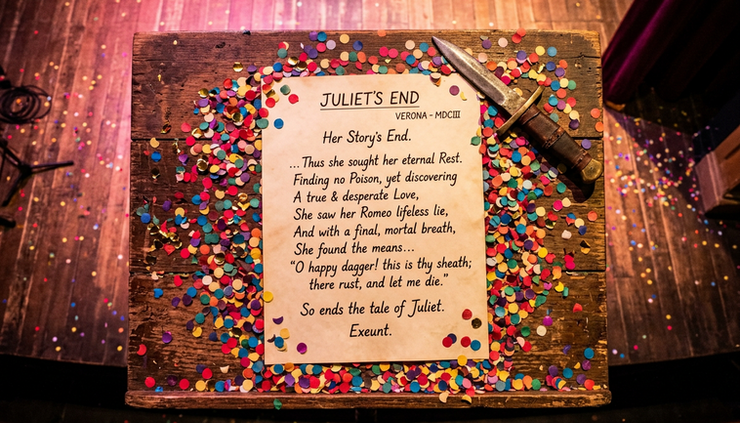
The takeaway is that & Juliet rewrites tragedy without erasing feeling
The lasting charm of & Juliet is not just that it saves Juliet. It lets her become more than the most famous ending in romantic tragedy. She gets friends, doubts, bad choices, big songs, and a future.
The musical also makes a wider case for why classics survive. They do not stay alive because every generation repeats them exactly. They stay alive because artists keep arguing with them, laughing at them, and finding new doors inside them.
In this version, Juliet does not wake up to die. She wakes up to ask what comes next. That question turns out to be more than enough for a musical.



Comments