Miami Heat 2026-27 Season Preview Best Seats at Kaseya Center and Key Players

The Miami Heat rarely enter a season quietly. Even when the roster changes, the identity stays familiar: sharp defense, hard conditioning, late-game nerve, and a belief that a tough regular season can harden a team for spring.
The 2026-27 season should be another test of that formula. Miami’s front office has long balanced star power with player development, and Erik Spoelstra’s teams tend to squeeze value out of lineups that may look ordinary on paper. For fans, that makes Heat basketball easy to follow and even better to see in person. A Tuesday night game at Kaseya Center can feel serious by the fourth quarter, especially when the defense tightens and the crowd starts rising before a stop.
This preview covers the team’s history, key players and storylines to watch, realistic performance expectations, and the best seats to buy for a Heat home game.
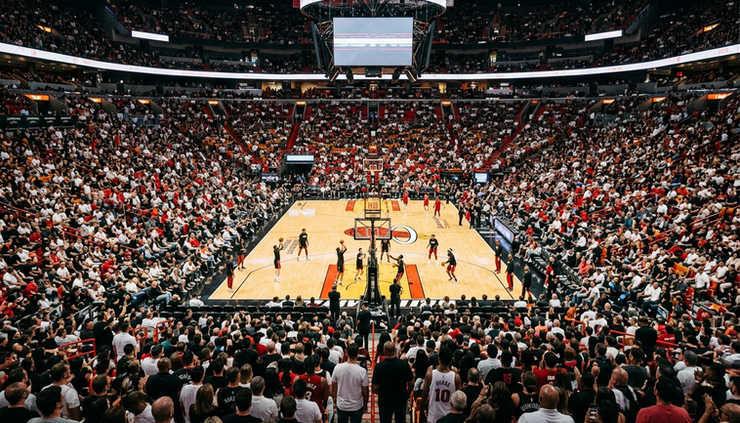
The Heat built a tradition around toughness and big moments
The Heat joined the NBA as an expansion franchise in 1988. The early years were about building roots in South Florida, but the franchise soon developed a much sharper edge. Pat Riley’s arrival in the 1990s brought a defensive identity, playoff expectations, and a standard that still follows the team today.
Miami’s championship history gives the franchise real weight:
2006
Dwyane Wade led the Heat to their first NBA title, with Shaquille O’Neal giving the team a dominant interior presence.
2012 and 2013
LeBron James, Wade, Chris Bosh, and a deep supporting cast turned Miami into the center of the NBA world.
Recent playoff runs
The Heat have stayed relevant in the modern NBA by winning with defense, spacing, smart coaching, and players who fit clear roles.
That background matters for 2026-27 because Miami is not just trying to be entertaining. The Heat measure success by playoff readiness. The regular season matters, but it often feels like part of a longer exam.
A few traditions make home games feel different:
White Hot playoff games
The all-white crowd look has become part of Miami’s postseason identity.
Heat Culture
The phrase gets used a lot, but it points to real habits: conditioning, accountability, film work, and trust in development.
Retired legends
Wade’s legacy still shapes the franchise, while Riley and Spoelstra remain central to the team’s standard.
South Florida style
The arena experience blends basketball intensity with Miami energy, music, and late-arriving drama.
For a deeper historical refresher, the team’s official history page at NBA.com Heat is a strong place to start. For season-by-season records and past rosters, Basketball Reference’s Miami Heat page is one of the most useful reference resources.
The key players will define Miami’s ceiling
Projecting an NBA season this far ahead always comes with roster uncertainty. Trades, free agency, health, contracts, and player development can all reshape a team quickly. Still, the Heat’s 2026-27 outlook starts with the players who represent the franchise’s main basketball ideas: defense at the center spot, shot creation on the perimeter, and role players who must make fast decisions.
Bam Adebayo remains the foundation
Bam Adebayo is the kind of player every serious playoff team wants. He can guard multiple positions, switch onto ball handlers, protect the paint, pass from the elbows, and score without needing every possession designed for him.
For Miami, Bam’s role is bigger than the box score. He often determines whether the Heat can stay small, switch defensively, and survive against elite offensive teams. If the 2026-27 Heat are going to climb in the Eastern Conference, Adebayo’s two-way consistency must be the base.
The big swing question is offense. If Bam continues to expand his range and late-clock scoring, Miami becomes less predictable. That matters in playoff-style games, when opponents take away first options.
Tyler Herro’s shot creation still matters
Tyler Herro gives Miami something every team needs: a perimeter scorer who can create space off the dribble and punish defenses from three. When Herro is healthy and efficient, the Heat offense opens up.
The next step is balance. Miami needs scoring, but it also needs clean decision-making late in games. Herro’s best version is not only a shot-maker. It is a guard who can read double teams, attack mismatches, and keep the ball moving when defenses load up.
If he delivers that, the Heat can avoid long scoring droughts, one of the biggest issues for defense-first teams.
Jaime Jaquez Jr. can be a connective piece
Jaime Jaquez Jr. quickly showed why Miami valued his feel for the game. He cuts with purpose, plays through contact, reads angles, and does not look rushed. On a team that prizes dependable wings, that skill set fits.
By 2026-27, the key will be growth as a shooter and defender against top wings. If Jaquez becomes a steady two-way starter or high-minute sixth man, Miami’s lineup options get much better.
Nikola Jovic and the young frontcourt may shape the style
Nikola Jovic has offered flashes of size, passing, and transition skill. Players like him can change the geometry of an offense when they develop. A tall forward who can handle the ball and make quick reads gives Spoelstra more ways to create offense without relying only on guards.
The same idea applies to any young bigs or wings who earn roles. Miami’s development system has a history of finding value, but young players need time. For the 2026-27 team, internal growth could be just as important as any offseason move.

What to expect from the 2026-27 Heat
The Heat are rarely judged only by regular-season flash. A fair expectation for 2026-27 is a team that aims to be in the Eastern Conference playoff mix, with its ceiling tied to health, shooting, and half-court scoring.
Miami’s strengths should look familiar:
Defensive structure
Spoelstra’s teams usually know where to be, how to help, and when to switch coverages.
Player development
The Heat often get useful minutes from players who were not obvious rotation pieces at first.
Late-game composure
Miami is comfortable in low-possession games where execution matters.
Playoff adaptability
The coaching staff has a long record of changing coverages and rotations during a series.
The concerns are also familiar:
Can the offense score enough against elite defenses?
Will the roster have enough size and rebounding?
Can Miami stay healthy through the winter months?
Will younger players become reliable every-night contributors?
A realistic regular-season outlook is that Miami should compete for a postseason spot if its core stays available. To push higher, the Heat will need either a major leap from a young player, a strong move from the front office, or a healthier and more efficient version of their main shot creators.
For current standings, schedules, and official team news during the season, use the Miami Heat official site and the NBA standings page. Those pages are better than relying on outdated preseason predictions once games begin.
The best seats at Kaseya Center depend on the game you want
Kaseya Center sits right on Biscayne Bay, and the building gives fans several very different ways to watch a Heat game. The best seat is not always the most expensive one. It depends on whether the priority is player access, sightlines, price, atmosphere, or comfort.
Before buying, check the official arena information at KaseyaCenter.com and compare ticket listings through reputable marketplaces. The safest starting point is the team’s official ticket hub at NBA.com Heat Tickets or Ticketmaster’s Miami Heat page. Resale options include SeatGeek, StubHub, and Capital City Tickets.
Courtside seats are best for access and intensity
Courtside seats are the dream option. The speed of the game feels different from that close. Screens sound harder, defensive calls are easier to hear, and the size of NBA players becomes obvious.
Best for:
Fans who want the closest possible view
Special occasions
Seeing player interactions, bench reactions, and in-game details
Tradeoff:
The overall spacing of plays can be harder to see from very low angles
Prices are usually the highest in the building
Lower bowl sideline seats give the best all-around view
If the goal is the best blend of sightline and atmosphere, lower bowl sideline seats are often the top choice. Seats near midcourt let you see plays develop without feeling removed from the action.
Best for:
Fans who want to follow strategy
First-time visitors who want a premium experience
Watching both benches and both ends of the floor
Tradeoff:
Midcourt lower bowl tickets can be expensive, especially for weekend games or marquee opponents
Lower bowl corner seats are a smart value play
Corner sections in the lower bowl can be a great compromise. You still feel close to the court, but prices are often lower than center-court sideline seats.
These seats are especially fun if you like watching drives, corner threes, and defensive rotations. From the right angle, you can see how quickly the floor opens when Miami forces a turnover or pushes in transition.
Best for:
Fans who want lower-level energy without paying center-court prices
Watching shooters spot up in the corners
Families or small groups looking for value
Tradeoff:
The far corner can feel distant depending on the exact row and seat angle
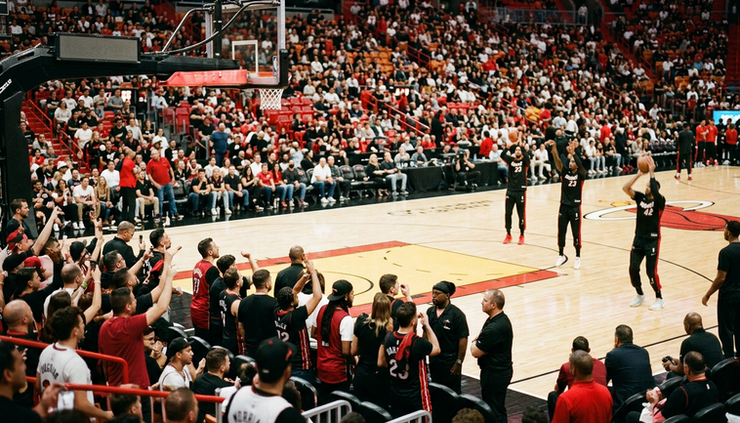
Club level seats are best for comfort
Club level seats are a strong choice for fans who want a more relaxed night. The view is usually elevated enough to follow plays cleanly, and club areas often offer easier access to concessions and restrooms.
Best for:
Date nights
Business-free entertaining with friends or family
Fans who want comfort and clear sightlines
Tradeoff:
The crowd energy may feel less intense than the lower bowl during some regular-season games
Upper bowl center seats are the best budget pick
For many fans, the upper bowl is where the value is. Center sections in the upper level can provide a clear tactical view of the whole court. You can see spacing, defensive shape, and passing lanes better than from some lower seats.
Best for:
Budget-conscious fans
Students and groups
Fans who care about seeing the full floor
Tradeoff:
You lose some of the sound and physical feel of the game
Baseline seats are best for drama near the rim
Baseline seats put you behind the basket, which makes drives, dunks, blocks, and rebounds feel dramatic. They can be great for fans who love paint action.
Best for:
Watching Bam battle inside
Seeing rim protection and finishing up close
Fans who like camera-style angles from behind the hoop
Tradeoff:
The opposite end of the court can feel far away
The basket support can affect sightlines in some rows
How to buy Heat tickets without overpaying
Ticket prices can change based on opponent, day of the week, injuries, standings, and demand. A rivalry game or a visit from a superstar will usually cost more than a weekday game against a rebuilding team.
A few buying tips help:
Compare official and resale listings
Start with the Heat and Ticketmaster, then check resale sites for price differences.
Look at total cost
Fees can change the final price. Compare checkout totals, not just list prices.
Choose weekday games for value
Monday through Thursday games often offer better prices than Friday, Saturday, or Sunday matchups.
Check rows, not just sections
A higher row at center court may beat a low row with a poor angle.
Buy earlier for marquee games
High-demand opponents can get expensive as the date gets closer.
Wait carefully for lower-demand games
Some resale prices soften closer to tipoff, but waiting can backfire if inventory dries up.
The best overall seat for most fans is a lower bowl sideline or corner seat in the first half of the section. The best value is often upper bowl center court, especially for fans who want to watch the game like a coach.
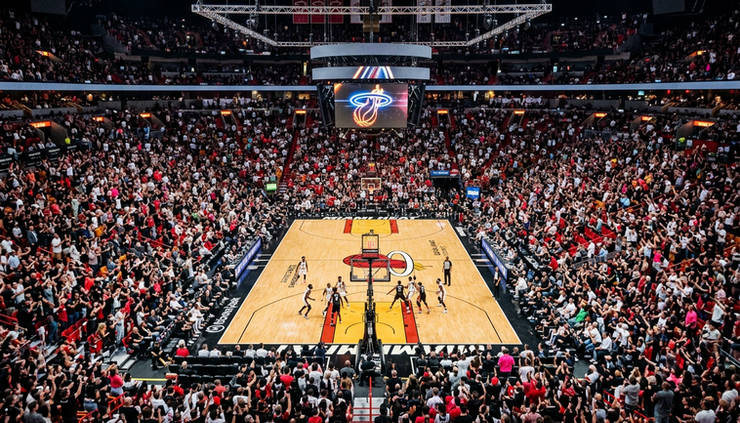
The season comes down to health, shooting, and belief
The 2026-27 Miami Heat should be judged through a familiar lens. Are they defending with force? Are their scorers healthy? Are the young players ready for larger roles? Can the offense hold up when playoff-level teams take away easy looks?
If those answers trend the right way, Miami can be a difficult team to face again. If the offense stalls or injuries pile up, the margin gets thin.
For fans, that uncertainty is part of the appeal. A Heat season is rarely simple. The team can look uneven in January, dangerous in March, and completely different once Spoelstra starts tightening matchups. Whether buying courtside seats for a special night or upper bowl tickets for a smart-value game, Kaseya Center remains one of the better NBA buildings for watching a team with a clear identity.
The best plan is simple: track the roster through the official team site, compare ticket prices early, pick the seating section that matches the experience you want, and get to the arena before tipoff. Heat basketball rewards attention from the opening possession.

Comments