Maybe Happy Ending Review, Storyline, Themes, and Songs Explained

A romance between two obsolete robots should not feel like one of the most human stories onstage. That is the quiet surprise of Maybe Happy Ending, a new musical that turns circuitry, memory, and planned obsolescence into a tender question: what makes a life worth keeping?
Written by composer Will Aronson and lyricist-book writer Hue Park, Maybe Happy Ending began in South Korea before reaching English-language audiences. Its Broadway production has drawn attention for its intimate sci-fi premise, warm humor, and emotional restraint. Rather than using robots for spectacle alone, the musical uses them to study loneliness, love, grief, and the frightening beauty of change.
This Maybe Happy Ending Review Storyline Themes and Songs Explained guide covers the story, the main character arcs, the songs, and why the show has connected with both musical theater fans and people who do not usually seek out new musicals.
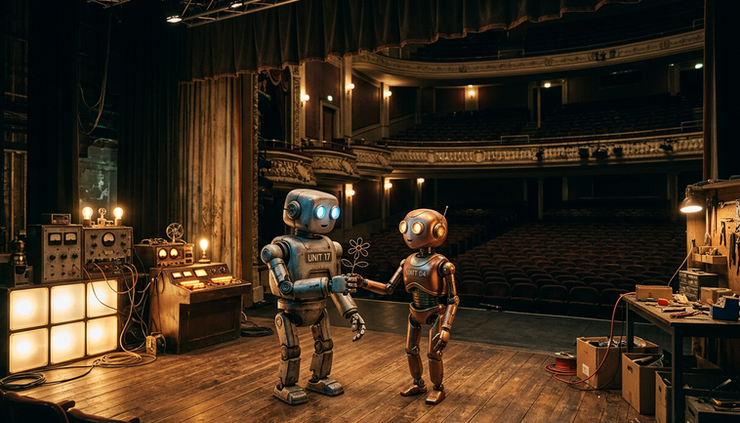
The story follows two robots learning how to want more
Maybe Happy Ending takes place in a near-future Seoul, where older models of helper robots have been replaced by newer technology. The central character, Oliver, is a Helperbot who lives alone in a retirement facility for outmoded robots. He spends his days inside a careful routine. He tends to his plant, listens to jazz records, and waits for what he believes will be a reunion with his former owner.
Oliver’s room is more than a setting. It is his defense system. Every detail gives him comfort because every detail is predictable. He has built a life around memory, ritual, and the hope that loyalty will one day be rewarded.
Then Claire arrives.
Claire is another retired helper robot, but she has a very different relationship to the world. She is practical, alert, and less sentimental than Oliver. When she asks to borrow his charger, she disrupts his routine in the smallest possible way. That tiny interruption becomes the start of the musical’s emotional engine.
At first, Oliver and Claire seem mismatched. Oliver clings to the past. Claire keeps a protective distance from it. He believes in devotion. She believes in survival. He is shaped by waiting. She is shaped by moving on.
The plot expands when Oliver decides to travel to Jeju Island in search of James, his former owner. The trip gives the musical a gentle road-story structure. Oliver and Claire leave the controlled space of the robot residence and encounter a wider world, one that does not always make room for machines who have outlived their usefulness.
Jeju Island also carries a specific emotional promise. Oliver wants to see fireflies, a natural wonder that contrasts beautifully with the artificial bodies of the two leads. In a story about machines, the image of fireflies matters. They are brief, fragile sources of light. Their beauty depends on impermanence.
As the journey continues, the musical slowly reveals the truth behind Oliver’s memories and Claire’s guardedness. The story does not treat memory as a simple archive. It asks whether memory is a blessing, a burden, or both. For robots who can store experiences with mechanical precision, forgetting may be a form of protection. For beings who are learning to love, forgetting may also be a kind of loss.
The phrase “maybe happy ending” fits the show because the story does not chase a clean fairy-tale finish. It aims for something more delicate. Happiness here is not permanent safety. It is the courage to experience love even when it may hurt.
Oliver and Claire take opposite paths toward feeling
The heart of Maybe Happy Ending rests on its two central arcs. Oliver and Claire are not human, but their emotional movements feel recognizably human.
Oliver learns that loyalty can become avoidance
Oliver begins the musical as a figure of sweet stubbornness. He is funny because he is exact. He is touching because his exactness hides fear. His devotion to James gives him purpose, but it also keeps him frozen.
He has arranged his life around the idea that the past will return. His jazz records, his plant, and his habits all support that fantasy. There is something beautiful in his faithfulness, but the musical gradually shows the cost of it. Oliver has turned loyalty into a way of avoiding new pain.
His arc moves from waiting to choosing. By traveling with Claire, he starts to understand that love is not only service, memory, or duty. Love can also be presence. Love can be a decision made without certainty of reward.
That shift gives the character real depth. Oliver does not simply become “more human.” The better description is that he becomes more alive to risk.
Claire learns that protection is not the same as peace
Claire’s arc runs in the opposite direction. She has already learned some painful lessons about attachment. Where Oliver preserves, Claire edits. She understands that memories can become too heavy to carry, especially for beings who may be repaired, reset, upgraded, or discarded.
Her guardedness is not coldness. It is strategy.
That makes her connection with Oliver moving. She does not enter the story to teach him whimsy, and he does not enter to rescue her from cynicism. They irritate each other, challenge each other, and slowly become necessary to each other. Her practicality grounds his romanticism. His openness unsettles her defenses.
By the end, Claire’s journey is not about abandoning self-protection. It is about accepting that pain does not cancel meaning. A relationship can be temporary and still matter. A memory can hurt and still deserve to exist.
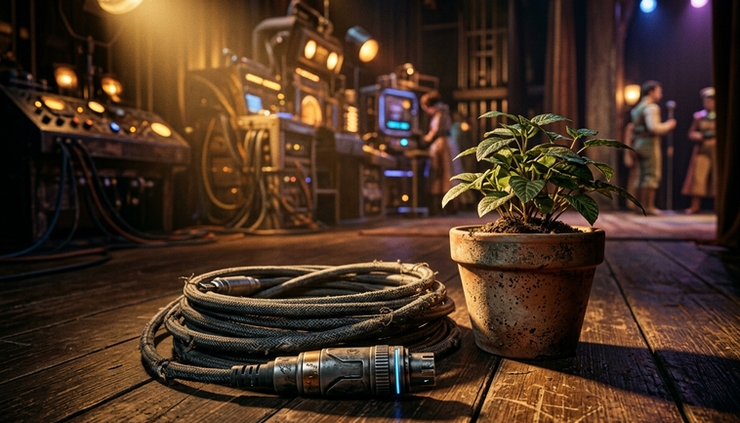
The key themes make the sci-fi premise feel intimate
The musical works because its science-fiction ideas stay tied to emotional questions. The show is not mainly interested in how helper robots function. It is interested in what happens when beings built to serve begin to have inner lives of their own.
Obsolescence and the fear of being left behind
Oliver and Claire are outdated models. That detail gives the show its quiet ache. Their world has moved on from them, even though they still have memories, habits, preferences, and needs.
That theme speaks beyond the robot premise. People know what it feels like to age out of a role, a relationship, a job, or a version of themselves. Maybe Happy Ending gives that feeling a physical form. These characters are literally built things, but they fear becoming useless in a way that feels painfully familiar.
The musical never turns this into a heavy-handed social lecture. It keeps the focus on small moments: a room, a charger, a record, a trip, a remembered voice. Those details make the theme land.
Memory as comfort and injury
Memory is one of the show’s richest ideas. Oliver treats memory like proof. His memories tell him who he is and who he has loved. Claire sees memory more warily. She knows that remembering can trap a person, or a robot, in an old wound.
The musical refuses to pick one simple answer. Memory can sustain identity. It can also prolong grief. Forgetting can heal. It can also erase meaning.
That tension gives the final stretch of the show its power. The question is not only whether Oliver and Claire love each other. The question is whether they can bear to remember that love.
Love without guarantees
Many musicals build toward the promise of lasting union. Maybe Happy Ending is more fragile. Its romance matters because it exists under limits. Batteries fail. models expire. memory can be changed. The future is uncertain.
That makes the love story more affecting, not less. Oliver and Claire do not get certainty. They get time, choice, and the possibility of joy. The musical suggests that those may be enough.
The songs carry the story’s emotional weight
Will Aronson’s music and Hue Park’s lyrics give Maybe Happy Ending a sound world that matches the premise: precise, lyrical, and quietly expressive. The score blends musical theater storytelling with a strong jazz influence, especially through Oliver’s love of old records and the recurring presence of jazz as a symbol of memory, longing, and style.
The songs do not stop the plot so the characters can announce emotions they already understand. More often, the numbers let the characters discover what they feel while singing.
Oliver’s songs reveal the safety of routine
Oliver’s early material tends to establish rhythm, order, and self-containment. Musically, these moments help the audience understand how carefully he has constructed his life. The melodies often feel bright and controlled, which makes the character endearing before the story begins to complicate him.
These songs matter because they make Oliver’s later vulnerability more visible. Once he steps outside his routine, the score can loosen with him. The emotional contrast is clear: the more Oliver risks, the less his music feels like a closed loop.
Claire’s music gives restraint an emotional pulse
Claire’s songs and shared numbers often carry a different energy. She is less eager to romanticize the world, so her musical language can feel more guarded. Her emotional impact often comes from what she does not say right away.
That restraint is a major reason the character works. A less subtle musical might make Claire simply sarcastic or hardened. Here, her guardedness has texture. When warmth breaks through, it feels earned.
The duets turn connection into structure
The duets between Oliver and Claire are the score’s emotional center. They chart the movement from inconvenience to companionship to love. In strong musical theater writing, a duet does not just sound pretty. It changes the relationship while it happens.
That is what these shared songs do. They let the audience hear two different survival strategies begin to harmonize. Oliver brings hope, ritual, and sentiment. Claire brings caution, wit, and honesty. As their musical lines meet, the show makes connection audible.
The effect can be especially powerful for newcomers to theater because the songs explain the form itself. The music is not decoration. It is the way the story thinks.
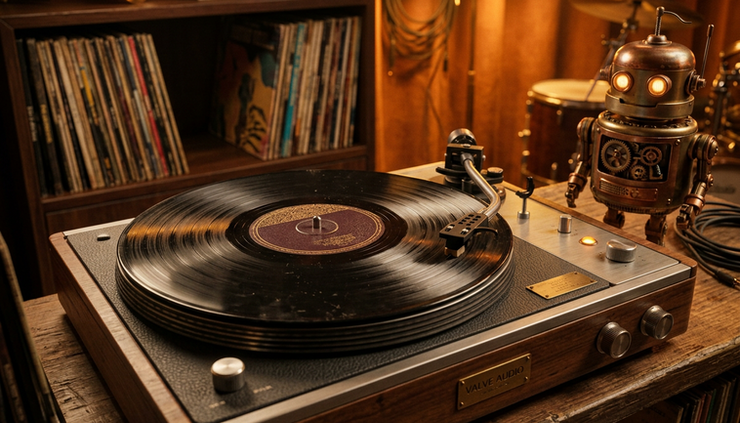
Jazz becomes more than a musical flavor
Jazz is not just an aesthetic choice in Maybe Happy Ending. It connects Oliver to a human past and to a version of love that feels elegant, wistful, and slightly out of reach.
The presence of jazz also deepens the show’s time-bending quality. The story is futuristic, but the sound often looks backward. That combination supports one of the musical’s main ideas: the future does not erase longing. New technology can still carry old heartbreak.
The emotional climax depends on musical understatement
Some musicals aim for huge release. Maybe Happy Ending often succeeds by holding back. Its most affecting musical moments are not loud because the story’s pain is intimate. The characters are not fighting armies or changing nations. They are deciding whether love is worth the ache of remembering.
That smaller scale is a strength. The show trusts silence, pauses, and gentle melodic turns. When a song lands, it often feels like a private realization that the audience has been allowed to witness.
How the stage world supports the story
A musical about robots could easily become cold or overly cute. Maybe Happy Ending avoids that by making its design language serve the characters. The world feels carefully organized, but not sterile. Rooms, screens, plants, chargers, records, and lighting all help define the emotional temperature.
The best productions of this material understand scale. The story wants intimacy. It benefits from visual precision, but it cannot be only about technical polish. The design should make the audience feel the limits of Oliver’s room, then the wonder of leaving it.
That contrast is central to the narrative. A small room means safety. The outside world means risk. Jeju means possibility. Fireflies mean wonder that cannot be stored, owned, or repeated on command.
The show’s physical world also supports its humor. Robot behavior can be precise, literal, and socially awkward, which gives the musical room to be funny without mocking its characters. The comedy matters because it keeps the emotional sections from becoming too heavy. Oliver and Claire are charming before they are heartbreaking.
Where to find official resources, reviews, and creator interviews
For the most current production details, start with the official site. It is the best place to confirm dates, casting, tickets, and production information.
For critical response, major theater outlets and newspapers have covered the Broadway production. These links are useful starting points for comparing how reviewers responded to the story, design, performances, and score.
For interviews and background on the creators, search for conversations with Will Aronson, Hue Park, director Michael Arden, and members of the Broadway cast. These are especially helpful because Maybe Happy Ending has an unusual path from Korean musical theater to an English-language Broadway staging.
When reading reviews, look for how critics discuss tone. Some responses focus on the charm of the robot romance. Others focus on the emotional force of the ending, the visual design, or the score’s jazz-inflected warmth. Together, they show why the musical has become a conversation piece among theater fans who enjoy intimate, high-concept storytelling.

The verdict is that the show earns its tenderness
Maybe Happy Ending sounds, in summary, like it might be precious: two helper robots meet, travel, and learn about love. Onstage, the premise becomes something richer. The musical uses artificial beings to ask deeply human questions about what to keep, what to release, and whether happiness still counts when it cannot last forever.
Oliver’s arc gives the story its innocence and ache. Claire’s arc gives it wisdom and tension. The songs connect both, turning small emotional shifts into musical events. The jazz influence, the sci-fi setting, and the romance all work because they serve the same idea: love is meaningful even when it comes with an ending.
For longtime theatergoers, the show offers a fresh structure and a rare kind of restraint. For newcomers, it offers a clear emotional doorway into what musicals can do. It tells a story that could only fully bloom through music, where a charger, a record, a plant, and a few fireflies can carry the weight of a whole lifetime.


Comments