U.S. Fans: Avoid Bad Views at MetLife Stadium — 6-Step Seat Checklist

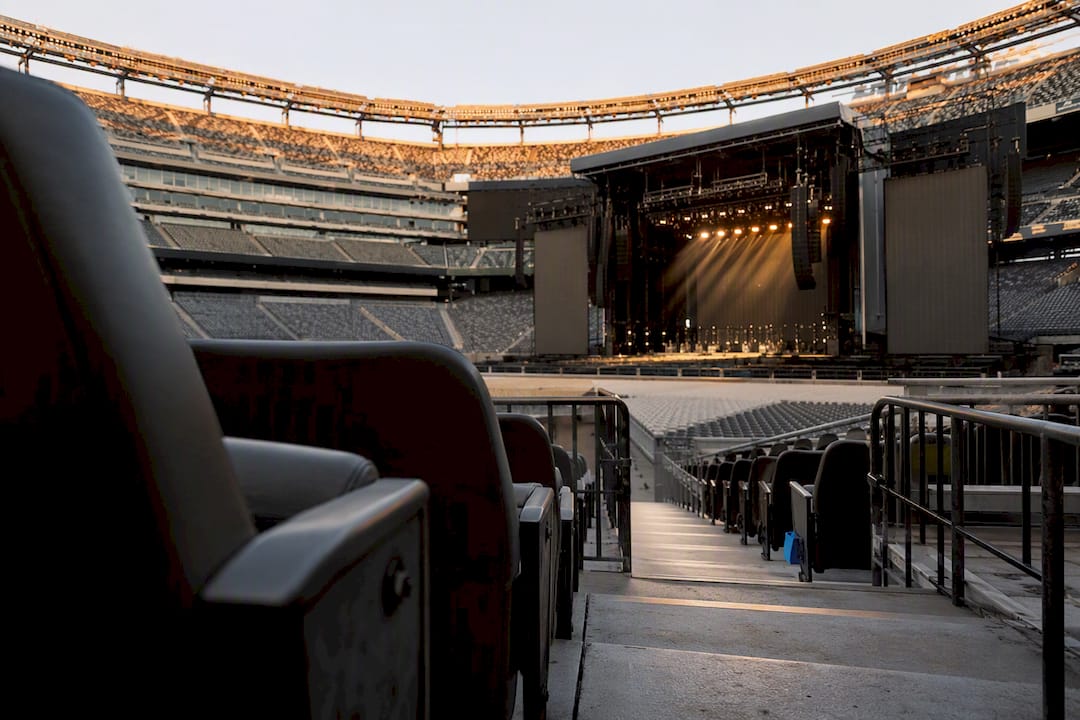
Open the official MetLife Stadium seating chart alongside an interactive seat-view tool like A View From My Seat before buying anything. For most concerts, 100-level sideline seats deliver the strongest sightlines, 200-level mezzanine seats balance view and sound, and floor rows put you closest to the stage. But always confirm the event-specific layout first, since stage placement shifts which sections actually work.
TL;DR:
Most fans should focus on Level 100 sideline seats around rows 10 to 25 for the best balance of proximity and clear sightlines, especially for end-stage setups.
Interactive tools like fan photos and 3D views are essential to verify the actual stage angle, view obstructions, and elevation differences before purchasing tickets.
Stage placement and configuration variations significantly impact which sections are best, with end-stage and in-the-round setups changing the usual seat viability.
Obstructed view seats are clearly disclosed and often cheaper but require careful review of images and seat-specific photos to avoid surprises.
Accessible seating is available on all levels and can be requested through the stadium’s ADA contacts, with specific requests ideally made before the event.
Table of Contents
Where to Find Official MetLife Stadium Seating Charts
MetLife Stadium publishes downloadable maps for every seating tier directly on its official seating page, covering Plaza, Level 100, Level 200, and Level 300. That page is the most reliable starting point because it reflects the venue’s actual structure rather than a third-party approximation.
Each level tells a different story about your concert experience:
Plaza level sits closest to the field, wrapping the lower bowl with the steepest, most direct sightlines to a stage set at either end zone.
Level 100 is the primary lower bowl, split into sideline sections (best for width of view) and end zone sections (cheaper, but angled).
Level 200 is the mezzanine tier, elevated enough to see the whole field and often better for taking in stage screens and lighting design.
Level 300 is the upper deck, the most affordable tier and still fully visible for most end-stage shows, though distance from the performer increases noticeably.
Section numbers generally climb from the 100s near one end zone around to the 300s at the top, with lower numbers on the sideline typically commanding the best combination of proximity and center-field position. Club and suite areas, separate from general seating, sit at their own level with private concourse access. One detail worth remembering: concert capacity is not fixed. It shifts with staging, so always check the specific event page for the actual configuration rather than assuming standard football seating applies.
How Interactive Seat-View Tools Show You What You’ll Actually See
Three types of previews exist, and each answers a different question about your seat. Photo-based tools like A View From My Seat show real, fan-submitted images from specific rows, which is the closest thing to standing in that exact spot. RateYourSeats offers section-level breakdowns that combine crowd feedback with layout notes, useful for understanding how MetLife’s concert configuration differs from its football setup. 3D Digital Venue generates panoramic, rendered views of the field from any section, helpful when no fan photo exists yet for a brand-new show.
Before trusting any preview, run through this quick check:
Does the angle point toward where the stage will actually sit for this show?
How far is the seat from field level, and does elevation change the perceived distance?
Are there sound towers, camera platforms, or rigging that could block part of the view?
Can you see the video screens clearly, not just the stage?
On interactive maps, sections with available fan photos are usually marked in a different color or highlight, a pattern used across major stadiums including SoFi Stadium’s concert seating chart, so you can quickly spot which rows have verified images versus guesswork.
Why Stage Setup Changes Which Seats Actually Work
An end-stage concert, where the stage sits at one end zone, opens up almost the entire lower bowl on the opposite side but can turn end zone seats near the stage into steep, awkward angles. A center-stage or in-the-round setup flips that logic entirely, often eliminating the sections directly behind the stage structure while making sideline seats on both ends equally viable.
Floor configurations add another layer. General admission floor seating usually replaces the first several rows of Level 100, meaning those rows simply don’t exist for that show. Because floor layout and stage position vary by show, a generic venue map won’t reflect what’s actually available.
A few practical patterns to watch for:
End-stage tours typically block a handful of end zone sections closest to the stage but preserve full sideline sightlines across the field.
In-the-round setups can put a stage in the middle of what would normally be floor seating, opening 360-degree sightlines but shrinking total floor capacity.
Sound tower placement creates predictable blind spots, and buyers who scan the event map for tower symbols can avoid the rows directly behind them.
Always pull up the show’s specific seating chart on the ticketing page rather than relying on memory from a past concert at the same venue.
Best Seats at MetLife Stadium by What Matters to You
Not every fan wants the same thing from a seat, so here’s how priorities break down in practice.
Sightline first: Level 100 sideline sections, roughly rows 10 through 25, tend to offer the best combination of depth perception and unobstructed view. Seats right up against the rail can feel close but often flatten your perspective on a wide stage setup.
Sound and atmosphere: Level 200 mezzanine sections near midfield capture the full mix from the stadium’s sound system without the crowd density of the floor, making them a strong pick for fans who want clarity over closeness.
Proximity above all: Front floor rows put you nearest the performers, but lower elevation means taller fans ahead of you can block sightlines, and the tradeoff worsens the further you are from center stage.
Best value: Level 200 and Level 300 sections at midfield typically offer the sharpest price-to-view ratio, since cost drops significantly per level while the sightline loss is modest compared to jumping from Level 100 to the upper deck.
Pro Tip: Avoid the very front row of any section when possible. Rows two through five usually give a better sightline because you’re not staring straight up at a barrier or the row in front.
Getting Accessible Seating at MetLife Stadium
MetLife Stadium confirms that accessible seating is available on all levels, not just in designated pockets, which matters for fans who want a specific sightline priority without sacrificing accessibility. For non-NFL events, including concerts, the stadium directs requests through its dedicated accessibility contact rather than the general box office.
To secure wheelchair-accessible or companion seating, request it directly through the ticket seller’s accessible seating option at checkout, or contact the stadium’s ADA office if the standard purchase flow doesn’t show availability for your desired section. Reaching out before the event also clarifies elevator locations and the most convenient entry gates for mobility needs, which can save real time on show day. If your seating request involves a specific level or section preference, mention it directly when you contact the ADA office rather than assuming general availability applies evenly across the stadium.
What Obstructed and Partial-View Labels Actually Mean
Labels like “obstructed view,” “no stage view,” “video view only,” and “listening only” exist because some seats genuinely can’t see the full performance area, whether due to a support beam, sound tower, or extreme angle. These tickets are disclosed at the point of sale and typically priced below comparable full-view seats.
Before buying, take these steps:
Look for the obstruction label directly on the listing, not just in the fine print.
Check whether the seller or platform provides a seat-specific photo, not a generic section image.
Cross-reference the section on an interactive seat-view tool to see if fan photos confirm the obstruction.
If you already purchased a ticket that turned out obstructed unexpectedly, contact the seller or platform’s fan support line promptly, since many have policies addressing undisclosed view issues.
Your Pre-Purchase Checklist for Confirming the Seat View
Run through this order every time before you commit:
Open the event-specific seating map, not the venue’s default chart.
Check a photo or 3D preview for that exact section and row.
Confirm the actual row and seat numbers match what the map shows.
Scan for any obstructed-view or partial-view labeling.
Verify ADA or companion seating options if needed.
Review the transfer and refund policy before finalizing.
Buy during pre-sale or shortly after tickets go live for the best selection, and set price alerts if you’re waiting on the resale market for better seats.
Pro Tip: A mildly obstructed seat at a steep discount can be worth it for a show you’d otherwise skip entirely. Just confirm the obstruction is minor (a rail or partial screen block) rather than a full sightline loss before accepting the tradeoff.
Navigating Concourses to Reach Your Seats Quickly
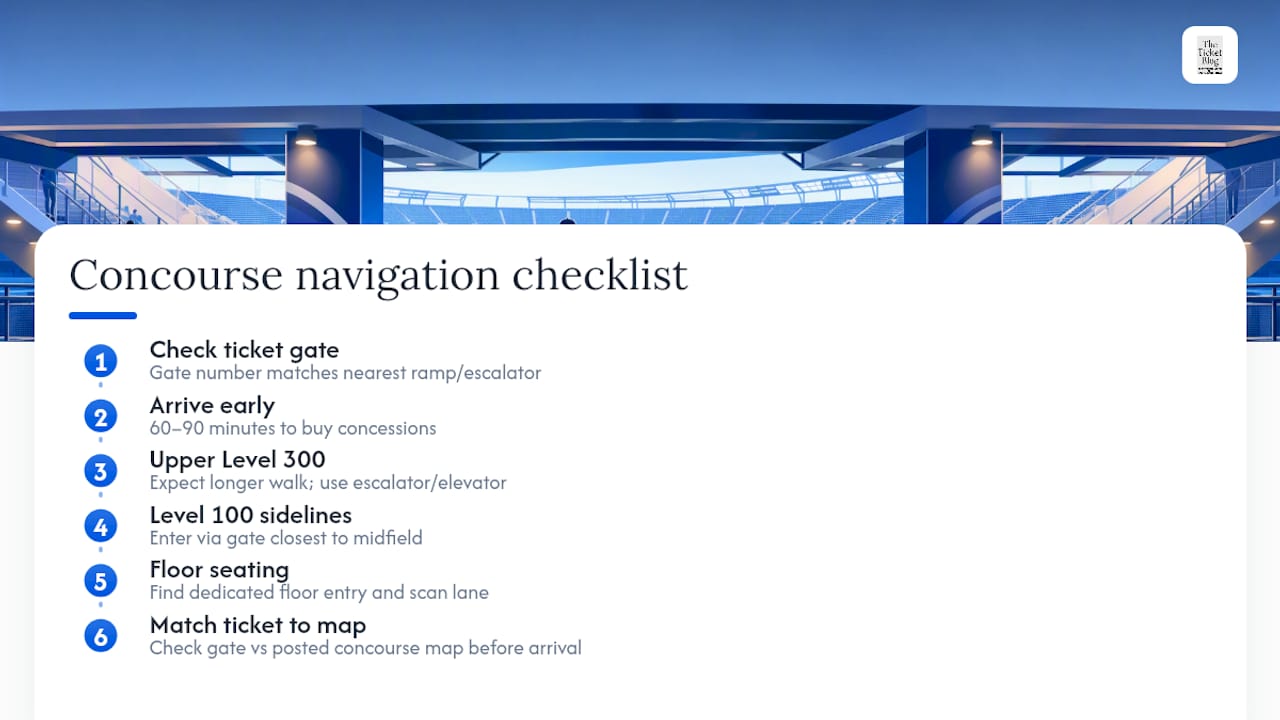
MetLife Stadium’s concourses circle each seating level, and knowing which entry gate lines up with your section saves real time before a show. Lower-level ticket holders should look for the gate number printed directly on their ticket, since it typically corresponds to the nearest ramp or escalator bank rather than the closest parking lot exit.
Concessions and merchandise lines cluster near the main concourse entrances, so arriving 60 to 90 minutes early gives you a buffer to grab food before opening acts start without missing seating time. If your seats are in the upper Level 300 tier, expect a longer walk from ground-level entry points and plan for escalators or elevators, especially during peak arrival windows when stairwells get congested.
For sideline sections in Level 100, the shortest path is usually through the gate closest to midfield rather than the nearest numbered gate, since MetLife’s interior concourse loops connect sections in a way that isn’t always intuitive from the exterior signage. Fans heading to floor seating should locate the dedicated floor entry point, which is typically separate from general Level 100 access and requires a different ticket scan lane. Checking your ticket’s gate assignment against the stadium’s posted concourse map before arrival avoids a frustrating lap around the building once you’re already inside.
Parking and Transit Options Based on Where You’re Sitting
MetLife Stadium sits within the Meadowlands Sports Complex, and parking lots are assigned by proximity to specific entry gates rather than by seating level directly. Fans with Level 100 sideline seats generally benefit from lots closer to the main plaza entrances, while upper-level ticket holders often park just as close since gate assignments matter more than seating tier for walking distance.
NJ Transit’s rail service to the Meadowlands is the most reliable transit option for concerts, running a dedicated line directly to the stadium from Secaucus Junction on event days. This route avoids the parking lot congestion that builds up in the hour after a show ends, which is often the biggest time cost of driving.
If you’re driving, purchasing a parking pass in advance locks in a specific lot, and choosing one near your assigned gate matters more than choosing one near your seating section. Rideshare pickup and drop-off zones are typically located away from the main lots, so factor in extra walking time if you’re arriving or leaving that way, especially for shows with a hard curfew that sends tens of thousands of fans toward the exits simultaneously.
Seat Amenities: Cup Holders, Legroom, and Weather Coverage by Level
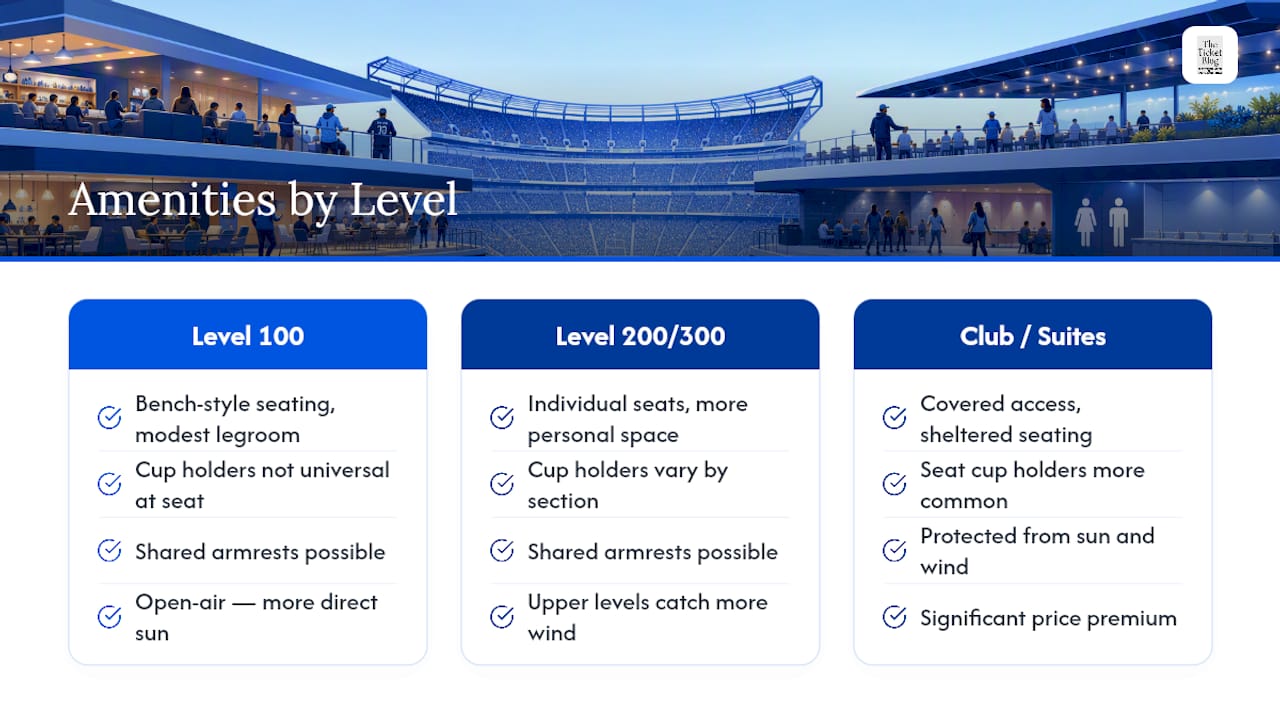
Legroom and comfort vary meaningfully between levels, and it’s worth knowing before you buy. Level 100 seats generally offer standard stadium bench-style seating with modest legroom, while Level 200 and Level 300 sections typically include individual seats with slightly more defined personal space, though this varies by exact section.
Cup holders aren’t universal across the stadium; some sections include them at the seat while others rely on shared armrests or none at all, so don’t assume every ticket comes with one. Weather exposure is a bigger factor than many first-time visitors expect: MetLife Stadium is open-air, meaning every level is exposed to sun, wind, and rain except for club and suite areas with covered access. Upper-level seating can catch more wind during evening shows, while lower-level seats near the field are more exposed to direct sun during afternoon or early-evening start times.
If shelter matters to you, club-level seating is the most reliable option, though it comes at a significant price premium over general seating. For everyone else, checking the forecast and dressing for exposed, open-air conditions is simply part of planning a MetLife Stadium concert.
How The Ticket Blog Chooses Seats: An Editor’s Quick Perspective
The Ticket Blog’s approach starts with your priority (sightline, sound, or price), moves to interactive previews to verify the actual view, then weighs price against value before recommending a purchase.
— The Ticket Blog
Find Better Seats and Better Prices With The Ticket Blog
Get curated seat-selection tips, promo codes, and deal roundups designed specifically for shows like the ones hitting MetLife Stadium this season.

Beyond MetLife, a similar preview-and-verify approach applies at other major venues. For seats at SoFi Stadium, the 300-level midfield and 500-level Infinity Screen sections show tradeoffs between price and sightline. Fans planning ahead for the summer touring season can also consult a concert ticket buying checklist to time purchases around presales and price drops.
For fans following major stadium tours, keeping an eye on entertainment news around New York area stadium shows can help you anticipate demand before tickets go on sale. Visit The Ticket Blog to browse current deal roundups and find the promo code that fits your next MetLife Stadium show.
Sources
FAQ
Where Is the Best Place to Sit for a Concert at MetLife Stadium?
Level 100 sideline sections around rows 10 through 25 generally give the best combination of sightline and depth perception, while Level 200 mezzanine seats near midfield offer strong value with balanced sound and view.
How Many Seats Does MetLife Stadium Have for Concerts?
Football capacity runs around 82,500, but concert capacity varies depending on stage size and floor configuration, so the exact number changes show to show.
Where Can I Find the Virtual Seating Chart for a Specific MetLife Stadium Concert?
Check the event’s specific ticketing page for the show-specific map, since MetLife’s concert layout shifts by tour, then verify sightlines using an interactive tool like A View From My Seat.
What’s the Best General Strategy for Picking Stadium Concert Seats?
Decide your priority first (sightline, sound, or price), then use a photo-based or 3D seat-view tool to confirm the actual view from that section before buying, since generic venue maps don’t reflect event-specific staging.
What Does an Obstructed View Seat Mean?
An obstructed or partial-view seat has some element, like a support beam, sound tower, or extreme angle, blocking part of the stage or field, and these seats are disclosed at purchase at a reduced price.
Recommended


Comments