New York Giants History and Traditions Milestones Legends and Game Day Rituals

Some NFL teams have long histories. The New York Giants have a living archive: mud, snow, famous goal-line stands, Hall of Fame pass rushers, unforgettable catches, and generations of fans who still talk about games as if they happened last Sunday.
Founded in 1925, the Giants are one of the NFL’s cornerstone franchises. They helped keep pro football alive in New York, built rivalries that shaped the league, and won championships across very different eras. Their story is not just a list of trophies. It is a story of defense, patience, bruising football, family loyalty, and a fan base that treats Sundays as a shared ritual.
For official timelines and records, the New York Giants history page is a strong starting point. For statistics by season, the Pro Football Reference Giants franchise encyclopedia offers one of the best public archives.

The Giants began as a bold bet on pro football
The Giants entered the NFL in 1925, when pro football still fought for attention in a baseball-first city. Tim Mara bought the franchise for a reported $500, a figure that now reads like sports folklore. The early Giants gave New York a professional football identity at a time when the college game carried more prestige.
The team’s first major milestone came in 1927, when the Giants won their first NFL championship. That season set the tone for what the franchise would often become: physical, disciplined, and hard to score against.
In the 1930s, the Giants became one of the NFL’s model teams. They won championships in 1934 and 1938, and the 1934 title game remains one of the great early chapters in league history. Known as the “Sneakers Game,” the Giants switched to basketball shoes at halftime on a frozen Polo Grounds field and rallied past the Chicago Bears. The image is simple and perfect: a cold day, a clever adjustment, and a team finding footing when the opponent could not.
The Giants also played a central role in the NFL’s rise as a national television product. Their 1958 NFL Championship Game loss to the Baltimore Colts, often called “The Greatest Game Ever Played,” helped bring pro football into more American living rooms. The Giants lost in overtime, but the game’s drama helped change the sport’s future.
A quick championship snapshot shows how spread out the franchise’s best years have been.
Season | Championship | Defining note |
1927 | NFL Championship | First title in franchise history |
1934 | NFL Championship | The famous Sneakers Game |
1938 | NFL Championship | Continued prewar dominance |
1956 | NFL Championship | A powerhouse team at Yankee Stadium |
1986 | Super Bowl XXI | Bill Parcells, Phil Simms, and a fierce defense |
1990 | Super Bowl XXV | A ball-control classic decided by “Wide Right” |
2007 | Super Bowl XLII | The unbeaten Patriots were stunned |
2011 | Super Bowl XLVI | Eli Manning and another late run |
The Giants have never been defined by only one decade. Their history stretches across eras, stadiums, and styles of football.
Legends gave the franchise its identity
Every historic franchise has stars. The Giants have legends who represent whole football philosophies.
In the 1950s, Frank Gifford became one of the NFL’s most recognizable players. He could run, catch, throw, and return kicks, and he later became a familiar voice to millions of television viewers. His Pro Football Hall of Fame biography captures why he remains one of the signature figures in Giants history.
Sam Huff gave the team a harder edge. As a middle linebacker, he became famous for his toughness and visibility in a growing television age. Andy Robustelli, Rosey Brown, Emlen Tunnell, and Y.A. Tittle also helped create the bridge between old NFL grit and modern football fame.
Then came the 1980s, when Giants football became linked forever with defense.
Lawrence Taylor did not just change the Giants. He changed how the sport dealt with edge rushers. His speed, power, and violence off the line forced offenses to rethink pass protection. Taylor’s Hall of Fame profile only begins to explain the effect he had on Sundays. With Harry Carson, Leonard Marshall, Carl Banks, and George Martin around him, the Giants built one of the most feared defensive units of the era.
Bill Parcells and general manager George Young shaped the team’s modern standard. Parcells brought the edge. Young built the roster. Together, they turned the Giants from a struggling franchise in the 1970s into champions.
On offense, Phil Simms delivered one of the cleanest Super Bowl performances ever in Super Bowl XXI, completing pass after pass against the Denver Broncos. Running back Joe Morris powered the ground game. Tight end Mark Bavaro became a folk hero for his toughness, especially after plays where defenders seemed to hang off him and still could not bring him down.

The next great Giants era belonged to Michael Strahan, Eli Manning, Tom Coughlin, and a defense that knew how to pressure Tom Brady at the biggest moments. Strahan became one of the NFL’s great defensive ends and later a Hall of Famer. His Hall of Fame biography covers the arc from dominant pass rusher to one of the team’s defining modern faces.
Eli Manning’s legacy rests on durability, calm, and two Super Bowl runs that grew more impressive with time. The numbers matter, and his career statistics are easy to track through Pro Football Reference, but his Giants story is best understood through January and February. When games tightened, Manning often looked the same: still, stubborn, and ready to throw.
Other modern stars left their own marks. Tiki Barber gave the offense big-play balance. Amani Toomer became one of the franchise’s most productive receivers. Justin Tuck, Osi Umenyiora, Jason Pierre-Paul, Victor Cruz, Hakeem Nicks, Ahmad Bradshaw, and Brandon Jacobs all shaped championship memories.
Memorable games still define how fans talk about the team
The Giants’ history includes plenty of regular-season drama, but a few games became franchise landmarks.
The 1934 NFL Championship Game remains the classic early example. The undefeated Bears looked ready to keep rolling. The Giants changed shoes, changed traction, and changed the game. It is the kind of story that feels too neat to be real, yet it sits at the heart of franchise lore.
The 1958 NFL Championship Game was painful for Giants fans, but it mattered deeply to the league. Played at Yankee Stadium, it ended with the Colts beating the Giants in sudden-death overtime. The game helped turn pro football into must-watch television.
The 1986 NFC Championship Game brought a different kind of joy. The Giants shut out Washington 17-0 at Giants Stadium, sending the franchise to its first Super Bowl. One week later, they beat the Broncos in Super Bowl XXI, and Simms earned MVP honors with a near-perfect passing performance.
Super Bowl XXV in January 1991 gave the Giants one of their most dramatic titles. Facing the high-powered Buffalo Bills, the Giants controlled the clock, tackled well, and survived when Scott Norwood’s field goal attempt went wide right in the final seconds. It was not flashy football. It was Giants football.
The 2007 Giants entered the playoffs as a wild-card team, then beat Tampa Bay, Dallas, Green Bay, and New England to complete one of the most famous postseason runs in NFL history.
Super Bowl XLII sits in a category of its own. The Patriots arrived undefeated. The Giants arrived fearless. The pass rush battered Brady, Manning escaped what looked like a sure sack, and David Tyree pinned the ball against his helmet for one of the sport’s most replayed catches. Plaxico Burress caught the winning touchdown, and the Giants won 17-14.
Four years later, the Giants did it again. Super Bowl XLVI brought another late drive from Manning, another win over New England, and another title for Coughlin’s group. Mario Manningham’s sideline catch remains one of the best throws and catches in Super Bowl history.
For historical game logs and season-by-season results, the Giants page at Pro Football Reference is especially useful. The NFL’s own Super Bowl history archive also provides official context for championship games.

Game day traditions connect old memories with new ones
Giants traditions are not as simple as a single chant or mascot. The franchise does not need much decoration. Its culture lives in routines that repeat across families, parking lots, train rides, cold seats, and old stories told before kickoff.
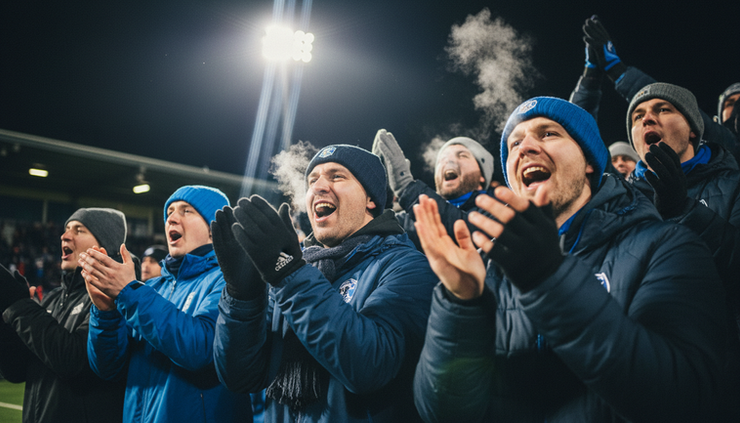
The nickname Big Blue says a lot. It feels plain, strong, and direct. Fans wear it on jackets, hats, and jerseys across the New York and New Jersey area. On game days at MetLife Stadium, that identity shows up in layers: old Taylor jerseys, Manning jerseys, Strahan jerseys, and newer names mixed in with winter coats and hand warmers.
Tailgating is the clearest fan ritual. Hours before kickoff, the lots around MetLife fill with grills, folding tables, team flags, and footballs tossed between cars. Some groups cook the same food every week. Others bring framed photos, lucky hats, or signed memorabilia. A home game can feel like a family reunion, even when nobody at the next parking spot knows your name.
Inside the stadium, the rituals shift. Fans rise on third down. They chant “Defense” when the opponent breaks the huddle. They track out-of-town scores. They boo bad penalties with the full force of New York sports impatience. They also know history, which means big defensive plays still carry extra weight. A sack at a Giants home game echoes differently because fans remember Taylor, Strahan, Tuck, and the long line of pass rushers before them.
The team’s Ring of Honor helps keep that memory visible. Seeing names from different eras inside the stadium reminds fans that the Giants are not only the current roster. They are Arnie Weinmeister, Mel Hein, Tunnell, Gifford, Huff, Taylor, Carson, Simms, Strahan, Manning, and many more.
Game day also carries geography. The Giants started at the Polo Grounds, played iconic games at Yankee Stadium, built a fierce home-field identity at Giants Stadium, and now share MetLife Stadium in East Rutherford, New Jersey. That move across venues is part of the franchise’s modern identity. The team carries New York in its name, New Jersey in its home routine, and fans from across the region in its seats.
For newcomers, the best way to understand a Giants game is to watch the emotional rhythm:
Early nerves if the offense starts slow
A loud surge when the defense creates pressure
Shared suspicion of any comfortable lead
Instant recognition when a game starts to feel like “one of those Giants games”
Deep loyalty, even when the season tests it
That last part matters. Giants fans do not only show up for trophy years. They carry the lean years too, from the struggles before the Parcells turnaround to the rebuilding periods after championship runs. The tradition includes patience, complaint, memory, and hope.
Why the Giants still matter in NFL history
The Giants matter because they sit near the center of the NFL’s long story. They connect the leather-helmet era to the television era, the defensive age of the 1980s to the quarterback-driven Super Bowls of the 2000s and 2010s.
They also offer a useful reminder about franchise identity. Some teams build their mythology around constant offensive fireworks. The Giants’ greatest moments often came through pressure, restraint, clock control, smart coaching, and one late play made under extreme stress.
That identity has produced a rare kind of continuity. A fan who watched Sam Huff could explain Lawrence Taylor. A fan who watched Taylor could understand Michael Strahan. A fan who watched Strahan could appreciate Justin Tuck. The names change, but the ideal remains familiar: make the other quarterback uncomfortable, survive the hard parts, and stay close enough to win late.
For player biographies, the Pro Football Hall of Fame is the best place to trace the careers of Giants legends who shaped the sport. For official team milestones, the Giants history section gives a franchise-centered timeline. For stats, records, and season results, Pro Football Reference remains a reliable companion.
The New York Giants history and traditions milestones legends and game day rituals all point to the same idea: this franchise is built on memory as much as achievement. The trophies matter. So do the frozen fields, the parking lot grills, the old jerseys, the defensive stands, and the stories passed down after every unforgettable Sunday.
The Giants’ past is not locked away in a museum. It shows up every fall, whenever Big Blue takes the field and the crowd waits for the next play that will be retold for years.

Comments