Virginia Tech Hokies Football 2026 Schedule History Traditions and Fan Guide

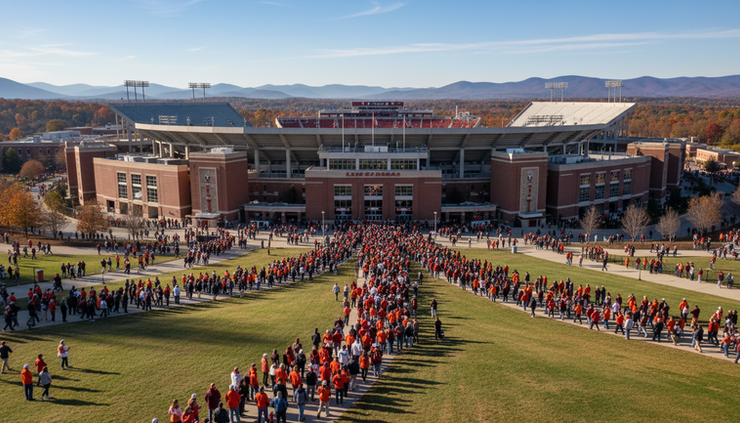
A fall Saturday in Blacksburg does not feel like a normal college football game day. The mountains frame the town, maroon and orange fill the streets, and Lane Stadium turns into one of the loudest venues in the ACC before the first snap.
The 2026 Virginia Tech Hokies football season brings another chance to measure the program against ACC rivals, protect home-field pride, and renew the annual fight with Virginia. This guide covers the 2026 schedule picture, the history behind the program, the traditions that define Hokies football, and practical tips for making the most of a game day in Blacksburg.
For the latest dates, kickoff times, TV assignments, and ticket information, always check the official Virginia Tech football schedule and the ACC football schedule page.
Schedule
The full week-by-week 2026 schedule should be confirmed through Virginia Tech Athletics, since kickoff times and broadcast windows can shift during the season. Still, the shape of a Hokies season is easy to understand. It usually comes down to three things: ACC positioning, rivalry intensity, and whether Virginia Tech can make Lane Stadium a true advantage.
The Virginia Tech Hokies Football 2026 schedule will be judged by how the team performs in those moments, not just by the final record.
The Virginia game is always the emotional centerpiece
No game on the schedule carries more local meaning than Virginia Tech vs. Virginia. The Commonwealth Clash has defined bragging rights across the state for generations. Families, offices, high schools, and entire towns split along maroon-and-orange and orange-and-blue lines during rivalry week.
For Virginia Tech, this game often means more than postseason positioning. It is about state pride. It is about recruiting. It is about ending the regular season with energy. When the Hokies beat Virginia, the offseason feels different.
For fans planning one road trip or one big home weekend in 2026, the Virginia game should be near the top of the list.
ACC games will shape the season
Virginia Tech’s place in the ACC gives the schedule its backbone. Conference games decide whether the Hokies are fighting for a bowl bid, climbing toward the top half of the league, or pushing into championship contention.
Key ACC matchups can vary year to year, but these types of games usually matter most:
Schedule spot | Why it matters | What to watch |
Early ACC opener | Sets the tone for league play | Penalties, line play, quarterback rhythm |
First major road test | Shows how mature the team is | Crowd handling, turnovers, special teams |
Late-season ACC game | Can decide bowl placement or standings | Depth, injuries, coaching adjustments |
Rivalry week | Carries emotional weight beyond records | Physical play, explosive moments, game management |
Virginia Tech fans should keep an eye on familiar ACC names such as Miami, Pitt, Syracuse, Boston College, Georgia Tech, North Carolina, NC State, Wake Forest, Clemson, Louisville, Florida State, Duke, and Virginia when they appear on the final slate. Some matchups carry old Big East flavor. Others reflect newer ACC battles. All can become season-defining depending on timing and stakes.
Nonconference games are more than warmups
Nonconference games can look less glamorous on paper, but they often reveal what kind of team Virginia Tech has. These matchups test depth, focus, and preparation. A clean win can build confidence. A sloppy performance can create pressure before ACC play begins.
For 2026, watch how the Hokies handle:
Season-opening execution Openers can be messy. Efficient offense and sound tackling matter more than style points.
Regional games Matchups against nearby programs often attract fans from both sides and can feel personal.
Power conference opponents Games against major conference teams can shape national perception and postseason hopes.
Trap-game situations A game before or after a major ACC matchup can test focus.
The best resource for confirmed opponents, locations, and ticket details is the official HokieSports football page.

History
Virginia Tech football dates back to the late 19th century, and the program has grown from a regional college team into one of the recognizable names in modern college football. The Hokies built their national identity through defense, special teams, player development, and a home atmosphere that travels well beyond Virginia.
The program’s first season came in 1892, long before the ACC era, national television windows, and modern recruiting calendars. Over time, Virginia Tech built a football culture tied closely to the university, the Corps of Cadets, and the town of Blacksburg.
The Frank Beamer era changed the program
No discussion of Hokies football history can skip Frank Beamer. A Virginia Tech alumnus, Beamer became the face of the program and guided it through its rise on the national stage. His teams became famous for aggressive defense, disciplined special teams, and momentum-changing blocked kicks.
That style became known as Beamer Ball. It was not a slogan without substance. Virginia Tech won games by flipping field position, scoring on defense, blocking punts, and forcing opponents into mistakes. Those teams made special teams feel like a third phase that could win a game on its own.
Under Beamer, Virginia Tech became a consistent bowl team and a regular presence in national rankings. The program’s 1999 season remains a landmark. Led by quarterback Michael Vick, the Hokies reached the national championship game in the Sugar Bowl against Florida State. Virginia Tech did not win the title, but that season pushed the program into the national spotlight.
ACC success brought new expectations
Virginia Tech joined the ACC in 2004 and quickly proved it belonged. The Hokies won ACC titles in 2004, 2007, 2008, and 2010, establishing themselves as one of the league’s strongest programs during that stretch.
Those years changed expectations in Blacksburg. Fans no longer hoped Virginia Tech could compete with major programs. They had seen it happen. Conference championships, ranked matchups, NFL talent, and packed Lane Stadium became part of the standard.
For more historical background, the Virginia Tech Athletics football history resources and the College Football Hall of Fame are useful starting points.
Traditions
Virginia Tech traditions give Hokies football its personality. They are loud, physical, and deeply connected to place. A first-time visitor can feel the difference before the team runs onto the field.
Enter Sandman turns the stadium into a warning sign
The most famous modern Virginia Tech tradition is the team entrance to Metallica’s “Enter Sandman.” When the opening riff hits, Lane Stadium starts bouncing. Fans jump in unison, the noise builds, and the Hokies sprint onto the field through a wall of sound.
The entrance has become one of college football’s defining scenes. It works because it is simple and shared. No one has to explain it for long. When the song starts, everyone knows what to do.
The HokieBird gives the program its character
The HokieBird is one of the more recognizable mascots in college sports. The name “Hokie” comes from the “Old Hokie” spirit yell, a university cheer that dates back to the 19th century. The bird itself gives Virginia Tech a mascot identity that is unusual, playful, and specific to the school.
That mix matters. College football is filled with tigers, bulldogs, bears, and wildcats. The Hokies stand apart.
Skipper connects football to the Corps of Cadets
Skipper, the cannon maintained by the Virginia Tech Corps of Cadets, fires after scores and during key moments. It connects modern football Saturdays to the military tradition that helped shape the university.
The sound is part celebration and part reminder. Virginia Tech is not just another campus with a stadium. Its football culture grew beside a cadet tradition, and that history still shows up on game day.
Lane Stadium noise is part of the brand
Lane Stadium has earned a reputation as one of the toughest road environments in college football, especially at night. The seating bowl holds sound well, and the fan base knows when to get loud. Third downs can become uncomfortable for visiting offenses.
The best Lane Stadium atmospheres usually share a few traits:
A meaningful opponent
A late afternoon or night kickoff
A strong defensive stand early in the game
A crowd that stays engaged after halftime
A close fourth quarter
When those pieces come together, Blacksburg feels much bigger than its size.

Fan Guide
A Virginia Tech football weekend rewards a little planning. Blacksburg is welcoming, but game days bring traffic, full restaurants, packed lots, and long lines near kickoff. The better the opponent, the earlier everything fills up.
Plan your trip before game week
Hotel rooms in Blacksburg and nearby towns can book quickly for major home games. Many fans also stay in Christiansburg, Roanoke, or other parts of the New River Valley. If the 2026 schedule includes a marquee home game, book lodging early and keep an eye on cancellation policies.
Parking rules can change by lot, pass type, and kickoff time. Before leaving, check the university’s official game day guidance through Virginia Tech Athletics and university transportation resources.
Good planning basics:
Arrive several hours before kickoff for major games.
Download or print parking information before you reach campus.
Check stadium bag policies before packing.
Build in extra time if the game has a noon kickoff.
Watch the weather, since mountain conditions can change quickly.
Tailgating sets the tone
Tailgating in Blacksburg is friendly, busy, and tradition-heavy. Many groups have used the same spots for years. The best tailgates feel relaxed but organized, with food ready early and cleanup handled before heading to the stadium.
A few simple tailgating tips make the day easier:
Bring layers for fall weather.
Keep food simple if you plan to enter the stadium early.
Use reusable containers when possible.
Respect parking lot boundaries.
Clean up before leaving the tailgate area.
Offer visiting fans a friendly welcome, unless kickoff has already turned everyone nervous.
Virginia Tech fans are proud of their home atmosphere. Being loud inside the stadium is expected. Being careless outside it is not.
Know the Lane Stadium experience
Try to be in your seat before the entrance. Missing “Enter Sandman” at Lane Stadium is like arriving late to the main event. The pregame build matters, and it gives first-time visitors the full experience.
Inside the stadium, expect noise, tight concourses at peak times, and long restroom or concession lines during halftime. If you are attending with children or older family members, identify meeting spots and exits before the game gets crowded.
A few stadium tips:
Wear comfortable shoes. Campus walking can add up.
Bring only what the stadium policy allows.
Stay patient in concourses after big plays and at halftime.
Follow usher instructions.
Keep aisles clear.
Hydrate during warm September games.
For seating, the best choice depends on the experience you want. Lower sections give you energy and proximity. Upper sections can provide better views of formations and play development. Night games and rivalry games tend to be loud everywhere.
Practice good fan etiquette
Great college football atmospheres work because fans care. They also work because fans understand the line between passion and poor behavior.
Cheer hard for the Hokies. Make noise on defense. Sing, jump, clap, and celebrate. At the same time, avoid throwing objects, harassing visiting fans, or blocking views for long stretches without awareness of people behind you.
Good fan etiquette is simple:
Be loud when it helps the team.
Be respectful when someone needs to pass.
Keep language reasonable around families.
Treat visiting fans as guests, not targets.
Stay to support the team, even if the game gets tense.
Leave your section cleaner than you found it.
A strong home-field advantage does not require hostility. Lane Stadium can be intimidating because it is united, loud, and invested.

Final takeaway
Virginia Tech Hokies football in 2026 will be about more than a schedule grid. The season will be shaped by rivalry pressure, ACC tests, player development, and the kind of home atmosphere that can turn one Saturday into a lasting memory.
Circle the Virginia game. Watch the ACC matchups that fall in the middle and back half of the schedule. Get to Lane Stadium early. Learn the traditions before kickoff. If “Enter Sandman” starts and the stadium begins to shake, do what Hokies fans have done for years: jump in, get loud, and enjoy one of college football’s most distinctive settings.


Comments