What Is a Primary Ticket Marketplace? A 2026 Guide


What is a primary ticket marketplace?
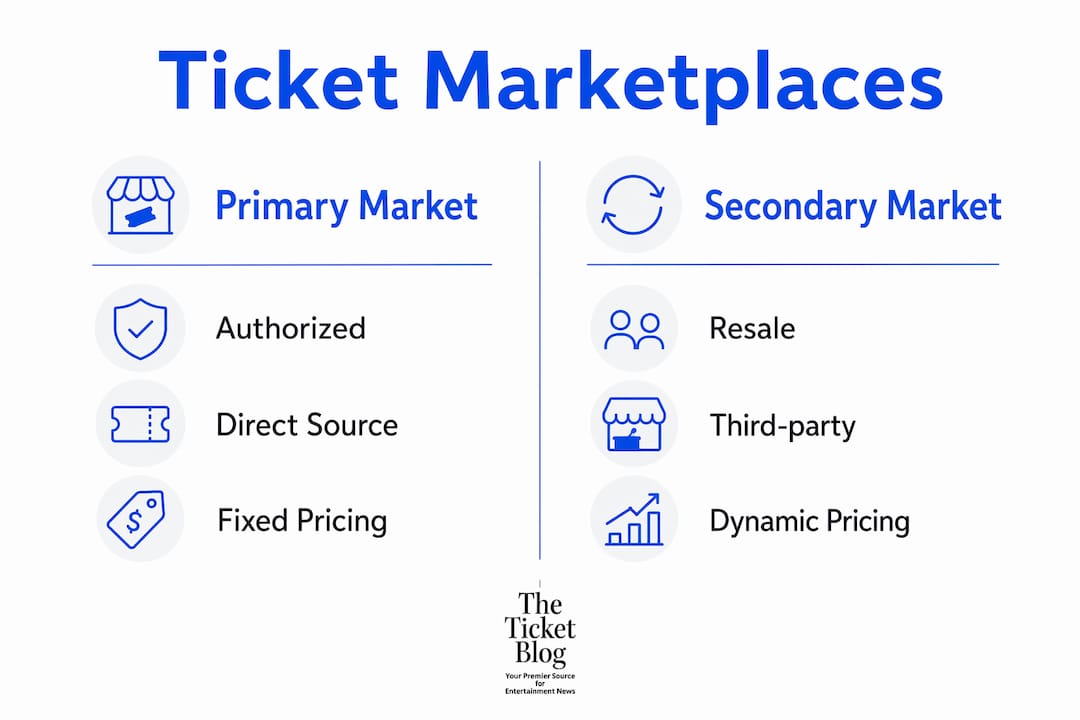
A primary ticket marketplace is an authorized first-sale platform that holds direct contracts with event rights holders, including venues, promoters, sports teams, and producers, to sell tickets directly to consumers. Think of it as the official source: when you buy through a primary marketplace, you’re getting a ticket that comes straight from the people who own the event.
These platforms are the only channel where tickets are sold for the first time, before any resale activity occurs. Primary tickets are always valid at the door, backed by the full assurance of the venue and rights holder. Common examples include a venue’s official box office, a sports team’s website, or an authorized ticketing company operating on the venue’s behalf.
Key characteristics of a primary ticket marketplace:
Holds a direct contractual relationship with the event’s rights holder
Sells tickets at face value, typically with added service or booking fees averaging 27% of the ticket’s face value
Guarantees ticket authenticity and validity at entry
Operates under strict inventory controls set by the venue or promoter
Serves as the only legitimate first-sale channel for that event
How primary ticket marketplaces operate
Ticketing firms work directly with venues, promoters, and sports organizations to manage the full distribution process. Most primary ticket sales happen online, though physical box offices and call centers remain available for buyers who prefer them.
Fee spotlight: According to a U.S. GAO report, primary market ticketing companies charged total fees averaging 27% of the ticket’s face value. Those fees cover the operational costs of the ticketing service and are paid by the buyer on top of the base price.
Not all inventory goes to the general public. A portion of tickets is routinely held back for fan club presales, season ticket holders, sponsors, media, and high-profile guests. This reserved allocation reduces what’s available when the general on-sale begins, which is why popular shows can feel sold out almost instantly.
To manage demand fairly, primary platforms use virtual waiting rooms and time-limited checkout windows. If you don’t complete your purchase within the allotted time, your selected tickets return to the pool. Understanding these systems before a major on-sale can save real frustration.
How the process typically flows:
Rights holder sets inventory, pricing tiers, and on-sale dates
Presale windows open for fan clubs, credit card holders, or sponsors
General on-sale launches, often with a virtual queue controlling access
Buyers complete checkout within a timed window or lose their selection
Tickets are delivered digitally or by mail, depending on the platform
Why buying from a primary marketplace protects you
Authenticity is the clearest advantage. Primary tickets are backed by the venue and promoter, which means the ticket you receive is guaranteed to work at the door. There’s no risk of counterfeit barcodes or voided transfers that can appear in resale transactions.
Some primary marketplaces also use dynamic pricing or auction mechanisms to set prices closer to actual market demand, particularly for premium seats. Auctions, for example, let the market determine a fair price rather than leaving that gap for resellers to exploit. For a deeper look at how this works, The Ticket Blog’s guide on auction-style ticket sales breaks down the mechanics clearly.
Consumer protections also tend to be stronger on the primary side. Fee transparency, official refund policies, and direct recourse with the venue are all built into the purchase.
Pro Tip: When you land on a ticketing page, look for language confirming the platform is the “official” or “authorized” seller for that venue or event. Rights holders typically list their authorized ticketing partners directly on the event’s official website.
Tickets are guaranteed authentic and valid at entry
Refund and exchange policies are set by the rights holder
Dynamic pricing and auctions can reflect fair market value for premium seats
Fee structures are disclosed upfront, even if they add to the total cost
Primary vs. secondary ticket marketplaces: what’s the real difference?
The secondary market is where tickets get resold after the initial purchase. Buyers in the secondary market are typically purchasing from individual fans who can no longer attend, or from professional brokers who bought tickets specifically to resell at a profit. Prices in the secondary market often exceed face value considerably, especially for high-demand events.
Here’s how the two markets compare from a buyer’s perspective:
Factor | Primary market | Secondary market |
Ticket source | Rights holder or authorized partner | Individual resellers or brokers |
Price | Face value plus service fees | Often above face value |
Authenticity guarantee | Backed by venue and promoter | Varies by platform’s buyer guarantee |
Availability | Limited to original inventory | Broader access after sellout |
Consumer recourse | Direct with rights holder | Through resale platform’s policy |
One nuance worth knowing: primary tickets are sometimes priced below market value to keep events accessible and maintain fan goodwill. That gap between face value and actual demand is exactly what creates the secondary market’s markup opportunity. For a full breakdown of the resale side, The Ticket Blog’s guide to secondary ticket markets covers pricing, guarantees, and insider tips in detail.
How to buy tickets safely on a primary marketplace
Buying safely starts with verifying the source. Go directly to the venue’s official website or the event’s official page to find the authorized ticketing partner. Avoid clicking through third-party ads, which can lead to resale platforms even when you’re searching for primary tickets.

Pro Tip: Presale codes are one of the best ways to access primary tickets before the general public. Sign up for artist newsletters, join official fan clubs, or check your credit card’s entertainment benefits. Many cards offer exclusive presale access through their own portals.
Practical steps for a safe purchase:
Confirm the platform is listed as the official ticketer on the event’s page
Factor in service fees when budgeting; the fee breakdown can add up quickly
Enter the queue early and have your payment details ready before the on-sale
Complete checkout promptly once tickets are in your cart
Save your confirmation email and check the delivery method before the event
The Ticket Blog regularly publishes updated tips, promo codes, and presale alerts to help you get ahead of on-sales. Bookmarking The Ticket Blog is one of the simplest ways to stay informed before a major event goes on sale.
Limitations of primary ticket marketplaces
Primary marketplaces aren’t without drawbacks. High demand events frequently sell out within minutes, leaving many buyers empty-handed despite entering the queue on time. The virtual waiting room system, while fair in design, can still result in long waits with no guarantee of securing tickets.
Service fees are another consistent friction point. The 27% average fee documented by the GAO means a $100 ticket can realistically cost more than the face value due to added fees before taxes or delivery charges. Fee structures vary by platform and event, and they aren’t always easy to spot until checkout.
Reserved inventory for presales, sponsors, and special groups also limits what reaches the general public. For events with local venue connections, checking options like performance venues in Colorado can sometimes surface direct-purchase paths with fewer intermediary fees.
The ticket purchasing process on a primary marketplace
The process follows a predictable sequence once you know what to expect. Rights holders set the on-sale date and pricing tiers weeks or months in advance. Presale windows typically open a few days before the general on-sale, giving fan club members or credit card holders early access.
On the general on-sale date, buyers enter a virtual queue. Position in the queue is usually randomized, not first-come-first-served, so joining early matters but doesn’t guarantee a front spot. Once inside, you’ll see available seats, select your tickets, and enter a checkout timer. Most platforms give you 5–10 minutes to complete payment before the cart expires.
After purchase, tickets are delivered digitally to a mobile app or email, or mailed physically for events far in advance. Some events require the original purchaser to show matching ID at entry, particularly for high-demand shows with nontransferable tickets.
Key Takeaways
A primary ticket marketplace is the only source that guarantees ticket authenticity, because it operates under direct contract with the event’s rights holder and sells tickets before any resale occurs.
Point | Details |
Official authorization | Primary marketplaces hold direct contracts with venues, promoters, and rights holders. |
Fee awareness | The GAO found primary market fees averaging 27% of the ticket’s face value, paid by the buyer. |
Authenticity guarantee | Primary tickets are backed by the venue and promoter, ensuring validity at entry. |
Reserved inventory | Fan clubs, sponsors, and media receive allocations before the general public on-sale. |
Queue systems | Virtual waiting rooms manage demand; buyers must complete checkout within a timed window. |
Recommended

Comments