What Is a Ticket Hold? Policies and Buyer Tips


A ticket hold is defined as a temporary reservation that secures a seat and quoted fare without requiring immediate payment. This practice applies across airlines, concert venues, sports arenas, and theater productions, giving buyers a window to finalize plans before committing funds. The US Department of Transportation mandates a 24-hour hold option for air travel booked at least 7 days before departure. Understanding what is a ticket hold, how it works, and what its limits are can save you money and prevent the frustration of losing a seat you wanted.
What is a ticket hold and how does it work?
A ticket hold, also called a reservation hold or fare hold, temporarily locks a seat and its quoted price without triggering payment. The reservation exists in the booking system, but no electronic ticket is issued until you complete payment. If the deadline passes without payment, the reservation cancels automatically and the seat returns to general inventory.
Hold windows vary by provider and ticket type. The most common durations are:
24 hours: The federally protected minimum for US domestic and international air travel booked 7 or more days before departure.
48 hours: A common window offered by many concert and theater ticketing platforms.
72 hours: Available from select airlines and premium event ticketing services, often for a small fee.
Fees for holding a ticket typically range from $5 to $10 and are usually credited back toward the final purchase price if you complete the booking. That means the hold costs you nothing extra as long as you follow through. If you let the hold expire, the fee is generally forfeited.
Pro Tip: Set a calendar alert the moment you place a hold. Most platforms will not send a second reminder before your deadline, and a missed hold rarely results in a refund of the hold fee.

Some providers apply blackout periods to hold eligibility. Holds may be unavailable during peak sale windows, holiday weekends, or within a set number of days of the event date. Always check the specific ticket hold policy before assuming the option is available.
“On hold” vs. “pending” vs. “ticketed”: what each status means
These three booking statuses cause more confusion than almost any other part of the ticket buying process. Each one carries a different meaning and a different level of travel or event readiness.
On hold: Your seat is reserved and the fare is locked at the quoted price. No payment has been initiated. You have until the hold deadline to complete the transaction or the reservation cancels.
Pending: Payment has been initiated but has not yet settled. The booking system is processing your transaction. Your seat is not yet confirmed, and you should not treat this as a finalized ticket.
Ticketed: Payment is complete, an e-ticket number has been issued, and your seat is confirmed. This is the only status that grants you entry to the event or flight.
The distinction between “on hold” and “pending” is where most buyers make mistakes. Consumers frequently misinterpret “pending” as a confirmed booking, when it actually means the transaction is still in progress. A pending status can revert to available inventory if the payment fails or times out.
A Passenger Name Record (PNR) is created when you place a hold, but no e-ticket number is attached. That distinction matters. A PNR without an e-ticket number means you have a reservation record, not a confirmed ticket. Only the “ticketed” status gives you the right to board a flight or enter a venue.
The practical takeaway is straightforward. Do not make non-refundable travel plans, book hotels, or arrange transportation based on an “on hold” or “pending” status. Wait for the ticketed confirmation before treating your booking as final.
Nuances and limitations of ticket holds you should know
Ticket holds protect the base fare, but they do not always lock in every cost associated with your booking. Airport taxes and government fees may fluctuate between the time you place a hold and the time you complete payment. The final price at checkout can be slightly higher than the fare you originally held, even if the base ticket price has not changed.
Beyond pricing nuances, several common restrictions apply to hold features:
Reward points and miles: Many airline hold programs exclude reward point redemptions, meaning you cannot hold a seat you plan to pay for with loyalty currency.
Infant passengers: Some airline hold systems do not support bookings that include lap infants, requiring those travelers to book and pay immediately.
Cutoff windows: Holds are often unavailable within a set number of days of departure or event date. Some airlines close hold eligibility 21 days before departure.
Group bookings: Large group reservations at concert and sports venues frequently bypass standard hold options and require direct negotiation with the box office.
Ticket holds are a tool for buyers who need time, not a substitute for a confirmed booking. Treating a hold as a guaranteed seat is the most common and costly mistake buyers make. The hold secures your price and position in the queue. Only payment secures your ticket.
Digital platforms frequently do not highlight hold options during checkout. The feature is often buried in secondary menus or presented as a non-default option. Buyers who do not actively look for it will miss it entirely. This is worth knowing because the hold option can be the difference between locking in a fair price and watching that price climb while you wait for a friend to confirm plans.
How to use ticket holds wisely when buying event or travel tickets
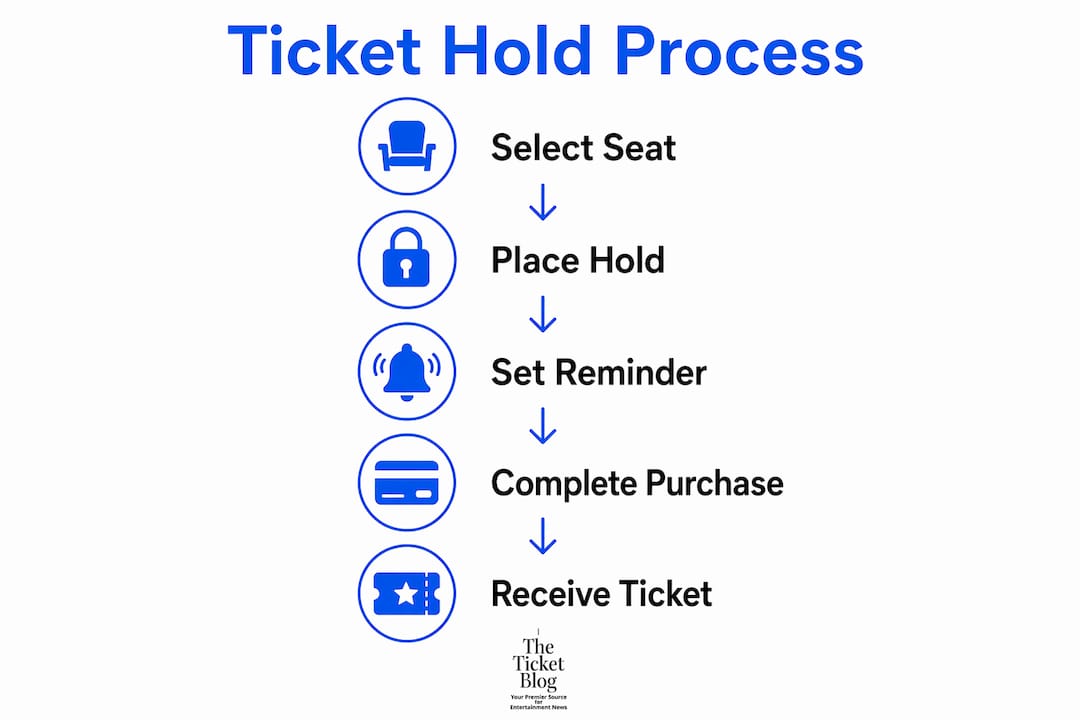
Using a ticket hold well requires a few deliberate steps before and after you place the reservation. Rushing through checkout without checking the hold policy is how buyers end up either missing the option or misunderstanding its terms.
Here is a practical approach:
Check the hold policy first. Before selecting seats, look for the provider’s hold terms. Note the duration, any fees, and whether your ticket type qualifies. Understanding concert venue ticket fees in advance helps you calculate the true cost of holding versus buying immediately.
Use holds for group coordination. If you are buying tickets for a group and need time to confirm attendance, a hold secures the seats while you finalize the headcount. This is one of the most practical uses of the feature.
Track your deadline actively. Do not rely on the platform to remind you. Write down the exact expiration time and set multiple alerts.
Complete payment well before the deadline. Payment processing can take time, especially with bank transfers or international cards. Submitting payment 30 minutes before the deadline is a risk. Give yourself at least a few hours of buffer.
Use holds to guard against price increases. Ticket prices for high-demand events can rise quickly. Placing a hold at the current price while you confirm details protects you from dynamic pricing increases.
Pro Tip: If you are buying tickets through a secondary market or resale platform, hold policies differ significantly from primary sellers. Always read the specific terms for each platform, as resale holds may carry non-refundable fees and shorter windows.
Holds also help when you are waiting for payment clearance, such as a direct bank transfer or a paycheck that lands the next day. Rather than losing the seat to another buyer, a hold keeps your position while your funds arrive. The Ticket Blog covers ticketing platform options in detail for buyers who want to compare how different sellers handle holds and reservations.
Key Takeaways
A ticket hold secures your seat and quoted fare temporarily, but only completing payment converts that reservation into a confirmed, usable ticket.
Point | Details |
Hold definition | A temporary reservation locking a seat and fare without immediate payment. |
Typical hold window | Most holds last 24–72 hours; the US DOT mandates 24 hours for air travel booked 7+ days out. |
Status distinctions | “On hold” and “pending” are not confirmed tickets; only “ticketed” grants entry or travel rights. |
Price lock limits | Base fares are typically locked, but taxes and fees may still change before final payment. |
Common restrictions | Reward points, infant passengers, and late bookings are often excluded from hold eligibility. |
The Ticket Blog’s take on ticket holds and buyer awareness
Ticket holds are genuinely useful, and most buyers underuse them. The stress of watching a seat disappear while you wait for a friend to confirm or a payment to clear is avoidable. A hold gives you breathing room without costing you anything if you follow through.
That said, the feature has a real design problem. Hold options are often hidden during checkout, presented as a secondary or opt-in step that most buyers scroll past. Platforms benefit from immediate purchases, so there is little incentive to make holds prominent. Buyers who know to look for the option gain an advantage that casual shoppers miss entirely.
The bigger risk is overconfidence. Buyers who place a hold and then treat it as a done deal are the ones who end up losing both the seat and the hold fee. Active management is not optional. The hold is a clock, not a guarantee.
The best use of a ticket hold is specific: you have identified the exact seats you want, you know the price is fair, and you need a short window to confirm logistics or clear payment. That is the scenario where holds deliver real value. Using them speculatively, or placing holds on multiple events without intent to buy, wastes the feature and can result in unnecessary fees.
— The Ticket Blog
The Ticket Blog’s resources for smarter ticket buying
The Ticket Blog is built for buyers who want to spend less and stress less when purchasing tickets for concerts, sports, and theater events.
Whether you are trying to understand hold fees, avoid service charges, or find tickets after a show sells out, The Ticket Blog has guides written specifically for event-goers navigating real purchasing decisions. The guide on how to avoid concert fees covers strategies that work alongside hold features to reduce your total cost. For buyers who missed a hold window and need alternatives, the guide on sold-out ticket options walks through every practical path to finding a seat. Visit The Ticket Blog for up-to-date tips, promo codes, and expert guidance on every stage of the ticket buying process.
FAQ
What is the ticket hold definition in simple terms?
A ticket hold is a temporary reservation that locks in a seat and fare at a quoted price without requiring immediate payment. The reservation cancels automatically if payment is not completed before the hold deadline.
How long does a ticket hold last?
Most ticket holds last between 24 and 72 hours. The US Department of Transportation requires airlines to offer at least a 24-hour hold for flights booked 7 or more days before departure.
Does a ticket hold guarantee my seat?
A ticket hold reserves your seat temporarily but does not guarantee it. Only completing payment and receiving a confirmed ticket status guarantees your seat and entry rights.
Can ticket hold fees be refunded?
Hold fees of $5–$10 are typically credited toward the final purchase price if you complete the booking. If the hold expires without payment, the fee is usually forfeited.
Why can’t I find the hold option during checkout?
Hold options are often a non-default feature buried in secondary checkout menus. Platforms do not always promote them prominently, so buyers need to actively look for the option before selecting seats or proceeding to payment.
Recommended


Comments