2026 Oregon State Beavers Football History Traditions and Fan Guide

Oregon State football has never been a program built on shortcuts. Its story runs through foggy Corvallis Saturdays, underdog wins, packed student sections, and a fan base that takes pride in showing up when the national spotlight looks elsewhere.
That is what makes the 2026 Oregon State Beavers football season worth watching before a single snap is played. To understand the team, it helps to know the history behind the orange and black, the traditions that shape game day, and the moments that still echo around Reser Stadium.
This guide offers a clear look at the Beavers’ past, their football culture, and the best resources for following the program in 2026.

Oregon State football began as a campus tradition and became a state institution
Oregon State football dates back to the late 19th century, when the school was known as Oregon Agricultural College. The program’s early years looked nothing like modern college football. Small crowds, local opponents, and evolving rules defined the sport. Yet the foundation was already there: students, alumni, and townspeople gathering around a team that represented Corvallis.
The Beavers nickname grew into one of the most recognizable identities in the Pacific Northwest. It fit a land-grant school known for engineering, agriculture, forestry, and practical work. The name suggests toughness and construction, which matches the way Oregon State fans often describe their team at its best.
Over the decades, Oregon State moved through different conference eras and several identities within college football. The program has spent much of its life competing against West Coast powers, often as the determined outsider. That role shaped the fan culture. Oregon State supporters do not need the Beavers to be the trendiest team in the sport. They want a team that plays hard, represents the school well, and makes Corvallis a difficult place to visit.
For official team news, schedules, rosters, and ticket information, the best starting point is the Oregon State Beavers football page. For broader school history and archival material, the Oregon State University Special Collections and Archives Research Center is a valuable resource.
The milestone wins that built the Beavers’ identity
Oregon State’s football history includes long rebuilding periods, memorable peaks, and a few wins that still rank among the great moments in West Coast college football.
The 1942 Rose Bowl win remains one of college football’s most unusual classics
One of Oregon State’s defining achievements came after the 1941 season, when the Beavers reached the Rose Bowl. Because of World War II security concerns on the West Coast, the game moved from Pasadena to Durham, North Carolina. Oregon State defeated Duke, giving the program one of its most important bowl victories.
That game still stands out because of both the result and the setting. The Rose Bowl almost always belongs to Pasadena. Oregon State’s win in North Carolina makes that chapter unique in the history of the bowl itself.
Fans interested in season-by-season results can cross-check records at Sports Reference’s Oregon State football archive.
Terry Baker gave Oregon State a Heisman legacy
No Oregon State football history is complete without Terry Baker. In 1962, Baker won the Heisman Trophy, becoming one of the most celebrated athletes in school history. He also played basketball at Oregon State, which adds to his legendary status on campus.
Baker’s most famous football moment came in the Liberty Bowl, when he broke a long touchdown run that remains part of Beavers lore. His Heisman win gave Oregon State something few programs can claim: a player recognized as the best in college football.
That legacy still matters. It reminds new fans that Oregon State’s history is not only about scrappy underdog stories. The Beavers have also produced national stars.
The 1967 Giant Killers became part of Oregon State folklore
The 1967 Oregon State team earned the nickname Giant Killers after a remarkable run against elite opponents. The Beavers beat highly ranked Purdue, tied UCLA, and defeated No. 1 USC. That stretch became one of the most beloved chapters in program history.
The Giant Killers label fits Oregon State so well because it speaks to the program’s larger personality. The Beavers have often been most dangerous when overlooked. When a ranked opponent walks into Corvallis, long-time fans know the setting can turn tense fast.
The 2000 team brought Oregon State back to the national stage
For many modern fans, the 2000 season is the high-water mark. Oregon State completed a brilliant campaign and then dominated Notre Dame in the Fiesta Bowl after the season. That win announced that the Beavers could do more than compete. They could overwhelm a national brand on a major stage.
The Fiesta Bowl team still carries weight because it connected older history to the modern era. It gave a new generation of fans their own reference point. When people talk about what Oregon State football can become at its best, that season often enters the conversation.

Reser Stadium gives the Beavers their home-field personality
Reser Stadium is more than a venue. It is the public face of Oregon State football.
The stadium originally opened as Parker Stadium in the 1950s and later became Reser Stadium. Over time, major renovations changed the shape and feel of the facility. The modern version keeps the game close to the crowd, with a setting that feels tied to campus rather than cut off from it.
The atmosphere matters. Corvallis is not a giant city where football gets lost among other pro and college teams. On home Saturdays, the Beavers become the center of town. Fans move through campus, tailgates fill the area, and the stadium turns into a compact, loud, orange-and-black home.
For venue details, seating information, and facility updates, visit the official Reser Stadium page.
Why the stadium experience feels different
Oregon State game days have a Pacific Northwest feel. Fall weather can shift from crisp sunshine to steady rain. Fans come prepared. The best seats are not always about comfort. Sometimes they are about being close enough to feel the rhythm of the student section, hear the band, and sense the pressure rising before a third down.
For new fans, a few parts of the Reser experience stand out:
The student section
Oregon State students bring the most visible energy in the stadium. Their chants, colors, and noise help define the home-field mood.
The band and spirit squads
The marching band helps give game day its pace. Fight songs, halftime performances, and timeout music connect the current team to decades of Beavers football.
The tailgate culture
Tailgating around Corvallis is friendly, local, and relaxed compared with some larger college football scenes. It is common to see families, alumni groups, students, and visiting fans sharing the same walkways.
The third-down roar
Like most college stadiums, Reser gets loudest when the defense needs a stop. Those moments reveal how engaged the crowd can be.
Traditions keep the Beavers connected across generations
Every college football program has traditions. Oregon State’s stand out because they feel closely tied to place. The rituals are not only about spectacle. They are about Corvallis, alumni loyalty, and the idea that supporting the Beavers is a shared habit.
Wearing orange and black is part of the ritual
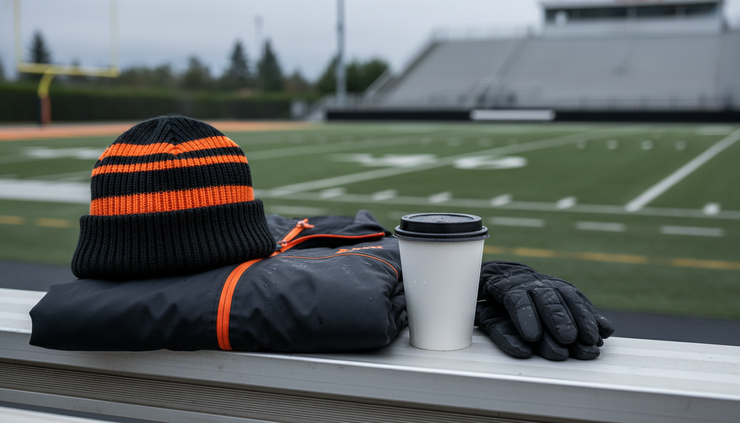
Oregon State fans make the colors easy to spot. Orange and black fill Reser Stadium on Saturdays, from rain jackets to knit caps to vintage jerseys. The color scheme is bold, and it travels well. At away games, Beavers fans often stand out in sharp blocks of orange.
Benny Beaver remains central to fan culture
Benny Beaver is one of Oregon State’s most visible symbols. The mascot connects fans of all ages, especially on game days when families gather along Beaver Walk areas, tailgate lots, and stadium entrances.
Mascots can feel like side characters at some schools. At Oregon State, Benny is part of the campus personality. The character reflects the program’s mix of humor, toughness, and local pride.
The rivalry with Oregon still shapes the season
The Oregon State-Oregon rivalry remains one of the sport’s most important regional matchups. The series has a long history and deep ties across the state. Families, workplaces, and high schools across Oregon often include fans on both sides.
The rivalry has gone through changes in name and conference context, but the emotion has not disappeared. For Oregon State fans, beating Oregon carries a meaning that no other regular-season win can fully match.
A good way to track current information on the broader rivalry and Oregon State news is through official school platforms, reputable local sports coverage, and historical databases such as the College Football Reference Oregon State page.
Fan engagement goes beyond the stadium
Oregon State’s fan base stretches well beyond Corvallis. Alumni chapters, watch parties, radio broadcasts, podcasts, and online communities all help keep supporters connected.
The official athletics site and the broader Oregon State Beavers athletics homepage are the safest places for confirmed updates. For university news and campus context, the main Oregon State University website gives a wider view of the school behind the team.

What to know about the 2026 Oregon State Beavers
The 2026 Oregon State Beavers football team will arrive in a college football era defined by realignment, roster movement, and changing postseason paths. That makes official sources more important than ever.
Rather than guessing at future depth charts or matchups, fans should treat 2026 as a season to follow closely through verified channels. Coaching updates, schedule changes, broadcast windows, and roster news can shift quickly in modern college football.
Use this simple checklist when tracking the Beavers in 2026:
What to follow | Best source |
Schedule, roster, and game notes | |
Tickets and stadium policies | |
Historical records | |
University archives | |
NCAA team profile |
For anyone building a 2026 Oregon State Beavers Football History Traditions and Fan Guide of their own, those resources help separate confirmed information from offseason rumor.
Players and coaches will change, but the program’s identity is steady
College rosters now change faster than they did in past eras. Transfers, early NFL Draft entries, and recruiting cycles reshape teams every year. Oregon State is not immune to that reality.
Still, the program’s identity remains consistent. Oregon State wins fans when it fields tough lines, smart quarterbacks, dependable special teams, and a defense that feeds off the home crowd. The Beavers’ best teams have usually blended player development with belief.
That matters for 2026. Fans should look less for a single slogan and more for signs of structure:
Does the offensive line create a physical tone?
Does the quarterback protect the ball and extend drives?
Does the defense tackle well in space?
Does the team play clean football in close games?
Does Reser Stadium become a real advantage?
Those clues often tell the story before the standings do.
How new fans can enjoy a Beavers game day
A first Oregon State football game should start before kickoff. Corvallis rewards fans who arrive early and take in the campus.
Start with a walk through the university area. The setting helps explain why so many alumni stay attached to the program. Oregon State is a major research university, but the game-day footprint still feels personal and approachable.
If attending in person, check stadium policies in advance through official athletics channels. Bag rules, parking instructions, mobile ticketing, and gate times can change by season or event.
A simple game-day plan works best:
Arrive early enough to walk around campus.
Wear orange or black, especially for rivalry games.
Check the weather and dress for rain if needed.
Learn the basic fight songs and crowd cues by watching the student section.
Stay through the fourth quarter if the game is close, because Reser can get loud late.
For long-time supporters, the advice is even simpler: bring someone new. Oregon State football grows through shared experience. A parent brings a child. An alum brings a neighbor. A student brings a roommate who has never cared about football. That is how traditions survive.
The Beavers’ story is still being built
Oregon State football is rich because it contains both history and unfinished business. The 1942 Rose Bowl, Terry Baker’s Heisman season, the Giant Killers, and the Fiesta Bowl triumph are permanent chapters. They give the program weight.
The traditions give it warmth. Reser Stadium, Benny Beaver, orange-and-black Saturdays, tailgates, student noise, and the Oregon rivalry all make the program feel lived-in rather than manufactured.
That combination is why the 2026 season matters. It is not just another year on the schedule. It is the next chance for Oregon State to add to a story that has always valued toughness, loyalty, and the belief that Corvallis can still surprise the college football world.
For the most accurate 2026 updates, start with the official Oregon State football site, then use the archives and historical resources above to understand how each new game fits into more than a century of Beavers football.


Comments