Five-Minute Checklist to Avoid Ticket Scams and Report Fraud

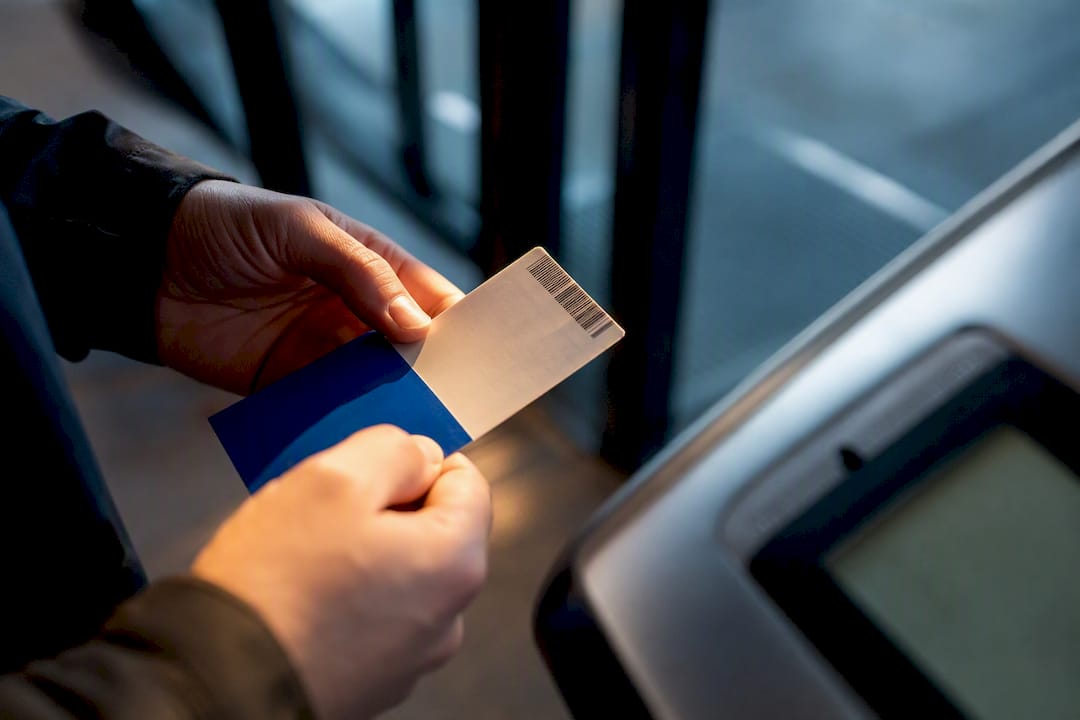
The fastest way to avoid ticket scams is to buy from official sellers or verified marketplaces, pay with a credit card or the platform’s own checkout, and accept only official in-app or mobile-wallet transfers. Never pay with a P2P app, wire transfer, or gift card, and never accept a screenshot as proof of a ticket. That single combination of seller, payment method, and delivery format closes off the paths scammers rely on most.
TL;DR:
Only buy tickets from verified sellers using official platforms that support credit card payments or marketplace checkout to ensure dispute rights and fraud protection.
Be cautious of listings lacking seat details, posted before presale, or requesting payment via gift cards, wire transfers, or social media direct messages.
Always verify seller reputation by checking for buyer guarantees, matching URL addresses, and confirming seats against venue maps before payment.
Avoid screenshots, hand-printed barcodes, or hurried transactions; insist on official digital transfers with written proof to prevent reuse or cancellation.
Report scams immediately to agencies like the FTC or FBI’s IC3, and document all communications and receipts to increase chances of recovery and assist investigations.
Table of Contents
How to Spot Ticket Scams Before You Pay
Ticket scams follow a handful of recognizable patterns, and knowing the mechanics behind each one makes them much easier to catch.
Fake and duplicate tickets are the most common. A scammer sells the same barcode to multiple buyers, or forges a ticket outright, and only the first person to scan in actually gets inside. At the gate, this shows up as a “ticket already used” error with zero warning beforehand.
Speculative or ghost ticketing happens when a seller lists tickets they don’t yet own, often before an event’s presale even opens. The BBB warns that these listings frequently skip seat numbers entirely or mention only a general section, betting the seller can source real tickets later. Sometimes they never do.
Cloned barcodes and canceled transfers exploit screenshots. A seller sends a photo of a mobile ticket, then cancels the transfer or reuses the barcode elsewhere after you’ve already paid. Ticketmaster’s own guidance flags screenshots as inherently unsafe because the underlying digital ticket can be duplicated or revoked without your knowledge.
Social media lures push buyers off legitimate platforms into direct messages, where there’s no marketplace protection at all. Payment-routing scams use gift cards, wire transfers, or fake “verification code” requests to drain funds through channels that can’t be traced or reversed.
Fake/duplicate tickets: same barcode sold twice, no seat verification possible
Speculative listings: missing seat/row details, posted before presale
Screenshot transfers: barcode can be reused or canceled after payment
Social media DMs: no buyer protection, high-pressure tactics
Gift card or wire requests: irreversible, untraceable, a guaranteed red flag
According to PIRG’s consumer guidance, pressure to act fast and requests for unusual payment methods are two of the clearest behavioral signals that a listing is fraudulent.
How to Verify a Seller and a Listing Before You Pay
A few minutes of checking can save you a wasted trip and a drained bank account. Run through these steps before sending any payment.
Look for a written buyer-protection guarantee. Legitimate marketplaces and venues spell out refund and replacement terms clearly on the listing page, not buried in a chat message. The BBB’s entertainment resources recommend confirming this policy exists in writing before you commit.
Check the URL character by character. Scam sites mimic real ticketing platforms with swapped letters or extra words in the domain. Confirm official contact information matches what the venue or team lists on its own site.
Cross-check the seat against the venue’s seating map. If the section, row, or seat number doesn’t correspond to a real location in the venue, the listing is either speculative or fabricated.
Search the seller’s name plus “scam” or “complaint.” State attorney general offices and the BBB both track consumer complaints, and a quick search often surfaces a pattern others have already flagged.
Insist on an official transfer and written confirmation. Refuse any seller who offers only a screenshot or asks you to complete payment before transferring the ticket.
Pro Tip: Ask the seller directly for the order confirmation number and the original purchase platform. A legitimate seller answers instantly; a scammer stalls, changes the subject, or pushes you toward a faster payment method.
Safe Payment Methods That Protect Your Money
Your payment method determines whether you have any recourse if a ticket turns out to be fake, and the differences between options are larger than most buyers realize.
Credit cards and marketplace checkout systems give you a built-in dispute process. If a ticket never arrives or turns out to be counterfeit, you can contest the charge with your card issuer and often get your money back. Marketplace escrow-style payments work similarly: the platform holds funds until delivery is confirmed, which protects both sides of the transaction.
Peer-to-peer apps, gift cards, and wire transfers offer none of that. The FTC explicitly warns that P2P payment apps are usually irreversible once sent to a stranger, which is exactly why scammers push buyers toward them. A gift card request is close to a guaranteed scam signal. There’s no legitimate reason a ticket seller needs a Target or Amazon gift card code to complete a sale.
Credit card or platform checkout: strong dispute rights, fraud protection built in
Debit card: weaker protection than credit, but better than cash apps
P2P apps (Venmo, Cash App, Zelle): usually irreversible for stranger transactions
Gift cards or wire transfers: essentially untraceable, almost always a scam signal
If a seller pushes back when you ask to pay by card, treat that as the end of the conversation. Say plainly that you only pay through the platform’s checkout, and if they refuse, walk away. A ticket that’s genuinely a good deal doesn’t require you to break basic financial safety rules to get it, and dynamic pricing markups on legitimate resale sites are never a reason to route around buyer protections.
If You Get Scammed: Document, Report, and Recover
Acting fast after a scam improves your odds of both recovering funds and helping authorities build a case against the seller.
Save everything immediately. Screenshot the original listing, every message exchange, your receipt, and any error message you got at the gate. Scammers often delete listings and block buyers once payment clears, so capture evidence before that happens.
Contact the seller and the platform first. Ask for written confirmation of how they plan to resolve it, and give them a firm deadline.
File a report at Reportfraud. This helps the FTC track scam patterns nationally, even though individual reports don’t guarantee a refund.
File a complaint at Ic3. The FBI’s Internet Crime Complaint Center is the primary channel for documenting online fraud, and complaints there feed into broader investigations.
Contact your state attorney general’s consumer office. You can find your state’s office here to file a formal complaint.
Dispute the charge with your card issuer if you paid by credit card, and keep a timeline of every contact attempt with the seller.
Use BBB Scam Tracker to report the incident publicly, and involve local police if the loss is significant.
Keep your expectations grounded. Reporting builds the case against repeat scammers and helps investigators spot patterns, but it doesn’t guarantee your money comes back, especially if you paid through an irreversible method.
Practical Pre-Purchase Checklist: Five Minutes Before You Pay
Run through this short list right before you hit “buy,” every single time, even for events you’ve bought from before.
Seller check: Real contact info, visible reviews, and a written buyer-protection policy.
Listing check: Full seat, row, and section details that match the venue’s actual seating map.
Delivery check: Official in-app transfer or mobile wallet only. No screenshots, no exceptions.
Payment check: Credit card or marketplace checkout, with a saved copy of your payment confirmation.
Account check: Two-factor authentication turned on and a unique password for your ticketing accounts.
Five checks, five minutes, and you’ve eliminated the overwhelming majority of scam paths that trip up rushed buyers during high-demand on-sales.
How The Ticket Blog Helps You Buy With Confidence
Verification steps only work if you actually follow them under pressure, which is why The Ticket Blog builds its guides around real buying moments. The ticket payment plans guide breaks down which payment options protect you and which ones scammers push. The marketplace comparison guide walks through buyer guarantees platform by platform, so you’re not guessing which site actually backs its listings. Pairing those with vetted promo codes can help get savings without trading away safety.
Authenticating Physical Tickets When Digital Options Aren’t Available
Some venues, especially smaller theaters and local sports teams, still issue paper tickets. Physical stock doesn’t come with the fraud protections built into mobile transfers, so you need a different verification approach.
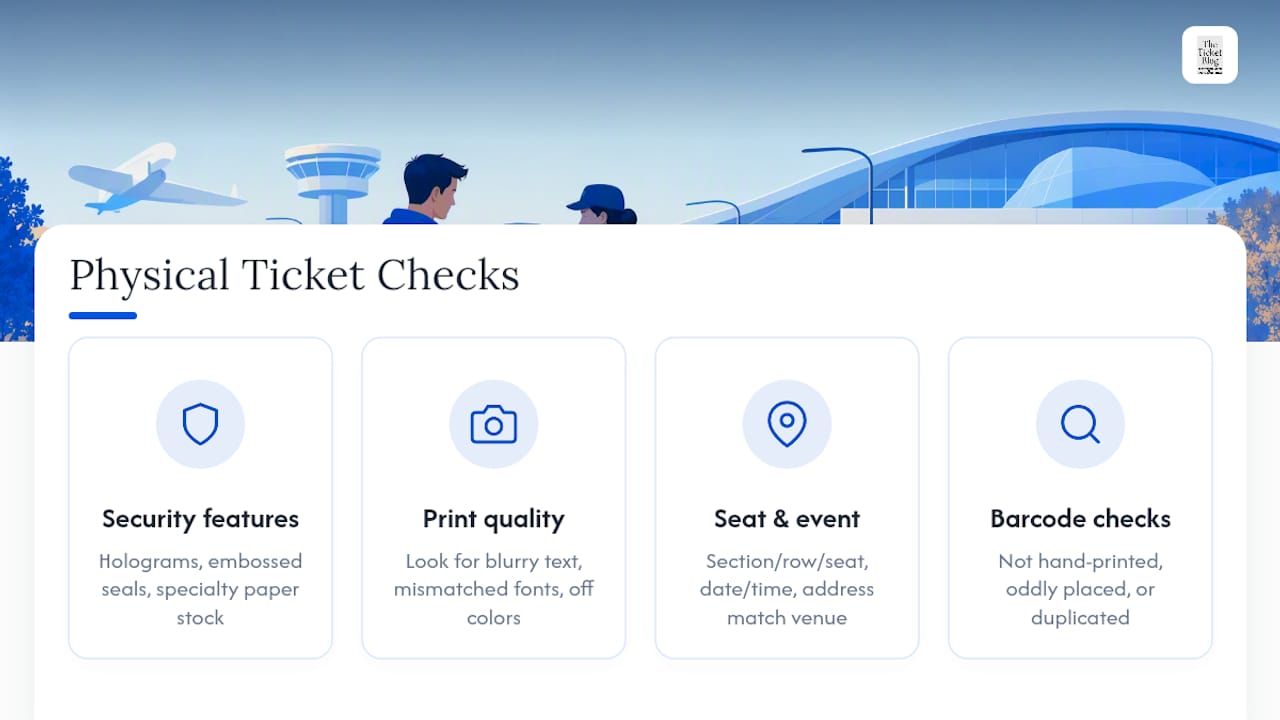
Start with the paper itself. Legitimate tickets typically use security features like holographic strips, embossed seals, or specialty paper stock that’s hard to replicate with a home printer. Check the print quality closely: blurry text, mismatched fonts, or colors that look slightly off from official team or venue branding are common tells of a forged ticket.
Cross-check every printed detail against the venue’s actual layout. Section, row, and seat numbers should correspond to real locations, and the event date, time, and address should match the official event page exactly. If the barcode looks hand-printed, oddly placed, or duplicated in a way that seems copied rather than uniquely generated, treat that as a warning sign.
Buy physical tickets only from the box office, the official team or venue website, or a seller who can meet you in person at a verified location, ideally near the box office itself, where staff can help confirm authenticity on the spot. Avoid mail-order purchases from unfamiliar sellers entirely. If a physical ticket seems like the only option for a sold-out show, a face-to-face exchange near the venue on event day, paid by card wherever possible, remains safer than shipping cash or a check to a stranger.
Using Event Organizer Resources to Confirm Ticket Legitimacy
Venues and event organizers usually have more verification tools available than most buyers realize, and reaching out directly is often the fastest way to confirm a suspicious listing.
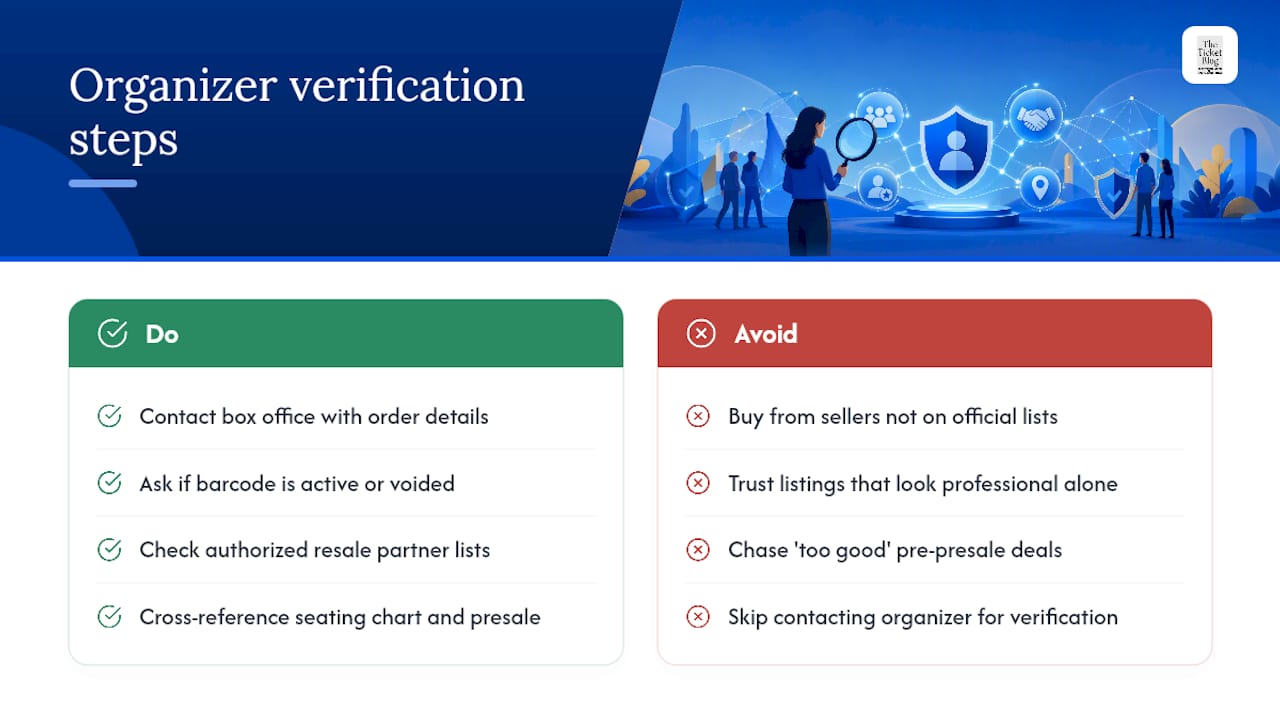
Most box offices maintain a customer service line specifically for ticket authentication questions. Call or email with the order number, seat details, and seller name, and ask whether that specific ticket has already been scanned, transferred, or flagged. Many venues can confirm within minutes whether a barcode is active or already voided.
Official team and artist websites also publish lists of authorized resale partners. If a seller isn’t on that list, treat the purchase as higher risk regardless of how professional the listing looks. Some venues additionally post presale schedules and seating charts directly on their sites, which lets you cross-reference a listing’s claimed seat against what actually exists before you ever contact the seller.
For major tours and high-demand sports events, official artist or team newsletters and verified fan accounts often announce presale codes and legitimate resale windows. Buying through those official channels, or waiting for a verified on-sale rather than chasing a “too good to be true” pre-presale listing, removes most of the risk that speculative ticketing creates in the first place.
Our Take: Skip the Guesswork, Follow the Checklist
The conventional advice on ticket safety spends too much time describing scams and not enough time telling readers what to actually do in the sixty seconds before they pay. That’s backwards. The research is consistent: payment method and delivery format matter more than how polished a listing looks, because scammers have gotten very good at making fake listings look legitimate.
Where most guidance falls short is treating reporting as an afterthought. Filing with the FTC or IC3 after a scam matters for tracking patterns, but it rarely returns your money. The real leverage sits before payment, in the five minute checklist most buyers skip when they’re excited about a show.
Prioritize this order: verify the seller, confirm the seat against the venue map, insist on an official transfer, and pay by credit card. Skip any one of those and you’re relying on luck rather than protection.
— The Ticket Blog
Find Curated Deals and Safety Guides at The Ticket Blog
Verification steps only help if you know where to apply them, and that’s a gap that curated resources can fill. Rather than sending readers into a search engine to sort real marketplaces from scam sites, curated listings, vetted promo codes, and safety checklists can be offered in one place so readers are not hunting for pricing tips on one page and scam warnings on another.
The concert ticket buying checklist walks through exactly what to confirm before a major on-sale, and the fee-avoidance guide explains how to spot inflated pricing without falling for a scam that looks like a discount. If you’re weighing whether a specific marketplace is trustworthy, the StubHub legitimacy breakdown walks through what buyer protections actually look like in practice. Visit The Ticket Blog for the full library of guides and start your next purchase with a verified plan instead of a guess.
Trusted Resources for Reporting Ticket Fraud
If you’ve already been scammed, these are the agencies built to receive your report and act on the pattern it reveals.
Reportfraud: report online ticket scams directly to the Federal Trade Commission.
Ic3: file an internet crime complaint with the FBI for online fraud involving ticket purchases.
State attorney general consumer offices: find your state’s office for local complaint filing and consumer protection support.
BBB Scam Tracker: report the incident publicly to warn other buyers and build a documented pattern.
Sources
FAQ
What are some of the most common ticket scams right now?
Fake or duplicate barcodes, speculative listings without real seat details, canceled screenshot transfers, and social media sellers demanding gift cards or wire payments are among the most frequent scams reported today.
What is “ghost tapping” in the context of ticket fraud?
Ghost tapping generally refers to scammers exploiting contactless payment or transfer systems to move stolen funds or fraudulent tickets without the victim’s direct awareness, though the term is used inconsistently across reports, so treat any listing involving unusual tap-to-pay requests with caution.
How can I tell if someone is scamming me over a ticket purchase?
Watch for pressure to pay quickly, requests for gift cards or wire transfers, refusal to provide an official in-app transfer, and listings missing specific seat, row, or section information.
What are real examples of ticket scams to watch for?
Common examples include selling the same digital barcode to multiple buyers, listing tickets before an event’s official presale opens, and sending a screenshot of a mobile ticket that gets canceled after payment clears.
Is it safer to buy tickets with a credit card than other payment methods?
Yes. Credit cards and marketplace checkout systems give you dispute rights if a ticket turns out to be fake, while peer-to-peer apps and wire transfers are usually irreversible once sent to a stranger.
Recommended


Comments