Concert Ticket Marketplaces Compared: Best Picks for 2026


For most buyers comparing price, transparency, and guarantees in 2026, TickPick and Gametime deliver the best all-in totals depending on your timing, while StubHub remains the strongest choice when you need the widest selection for a sold-out show. The single most important thing you can do before clicking “buy” is compare all-in totals across at least two platforms for the same seat, because identical seats can cost 20–40% more on one platform than another once buyer fees are included.
Quick shortlist:
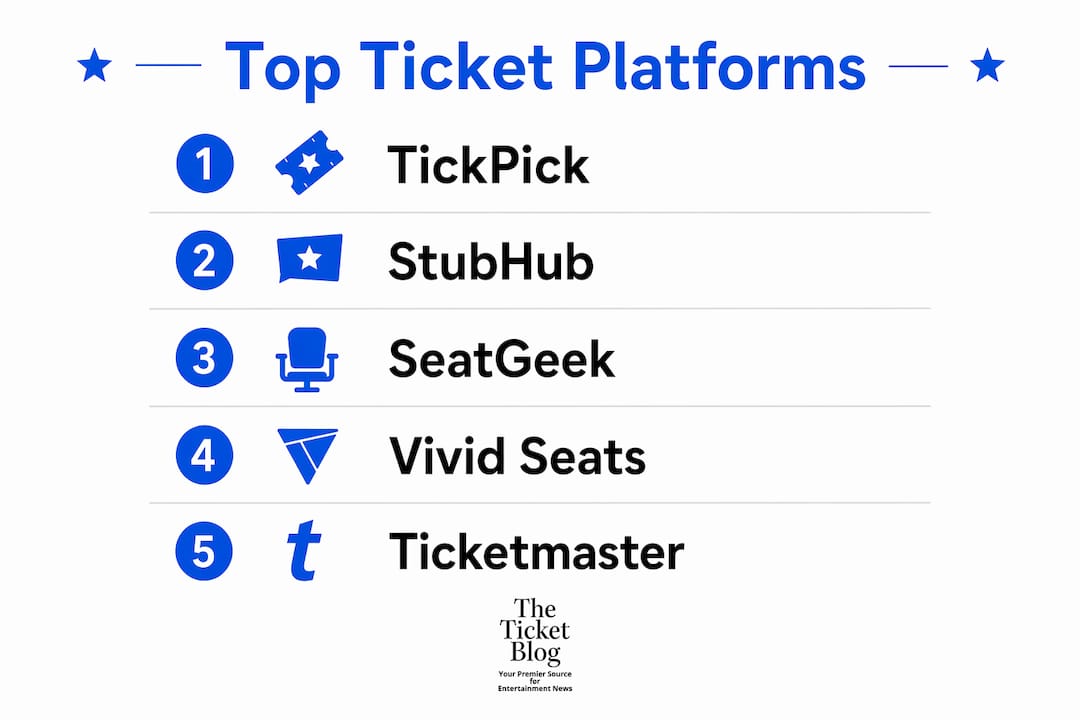
TickPick — best all-in price; zero buyer fees, sellers pay commission
StubHub — best selection; widest inventory for high-demand and sold-out events
Gametime — best last-minute; prices often drop sharply in the final 24–48 hours
SeatGeek — best seat evaluation; Deal Score and 3D maps reduce guesswork
Ticketmaster — best for face value; check here first before going to resale
Warning: The FTC’s all-in pricing mandate (effective May 2025) requires sites to show fee-inclusive totals upfront, but fees are often baked into the listed price rather than eliminated. “All-in” means transparent display, not necessarily lower cost. Always confirm the final checkout total before purchasing.
Table of Contents
Concert Ticket Marketplaces Compared: At-a-Glance Table
The table below covers the 14 platforms you’re most likely to encounter when shopping for concert tickets in 2026. Columns reflect the dimensions that actually affect your wallet and your experience at the gate.
Platform | Best For | Buyer Fees / All-In | Selection Depth | Buyer Guarantee | Delivery | Mobile App | Typical Price vs. Face Value | Support Speed |
TickPick | Price-focused buyers | zero buyer fees; sellers pay commission | Good | BuyerTrust Guarantee | E-ticket / transfer | Strong | Often below other resale sites | Moderate |
StubHub | Widest selection | Buyer fees ~10–20% | Largest | FanProtect Guarantee | E-ticket / mobile transfer / mail | Excellent | Above face value; varies by demand | Good |
SeatGeek | Seat evaluation & deal scoring | Buyer fees ~15–25% | Large | Buyer Guarantee | E-ticket / transfer | Excellent | Above face value | Good |
Vivid Seats | Repeat buyers / loyalty rewards | Buyer fees ~15–25% | Large | 100% Buyer Guarantee | E-ticket / transfer | Good | Above face value | Moderate |
TicketNetwork | Niche & international events | Fees vary by broker | Broad (broker network) | Buyer Guarantee | E-ticket / mail | Moderate | Above face value | Moderate |
Ticketmaster | Face-value & official resale | Fees ~10–30% (event-dependent) | Primary + resale | Verified Resale | Mobile ticket / e-ticket | Excellent | At or above face value | Good |
Gametime | Last-minute buyers | Fees bundled into listed price | Moderate | Gametime Guarantee | E-ticket / mobile | Excellent | Often discounted near showtime | Moderate |
TodayTix | Theater & curated events | Fees vary by event | Theater-focused | Buyer protection | Mobile / e-ticket | Excellent | Varies; often below box office | Good |
TicketSmarter | Broker catalog shoppers | Fees vary | Broad (broker) | 100% Guarantee | E-ticket / mail | Moderate | Above face value | Moderate |
Discounted / bundled deals | Low to moderate | Limited / local | Standard refund policy | Varies | Good | Often below market | Slow | |
Ticket City | Broker-managed purchases | Fees vary | Moderate | 100% Buyer Guarantee | E-ticket / mail | Moderate | Above face value | Good |
Ticket Liquidator | Broker comparison shoppers | Fees vary | Broad (broker network) | Buyer Guarantee | E-ticket / mail | Moderate | Above face value | Moderate |
Viagogo | International / festival tickets | Buyer fees ~15–25%… | International | Buyer Guarantee | E-ticket / mail | Good | Above face value; varies by region | Slow |
Groupon | Local bundled deals | Low | Limited | Standard | Varies | Good | Often below market | Slow |
Fee transparency note: Since the FTC’s May 2025 rule, platforms show all-in totals at checkout. The practical difference is that some sites, like Gametime, bundle fees into the listed price from the start, while others add fees as a line item at the end. Both approaches now show the full total before you pay, but the displayed price early in your search may still look deceptively low on some platforms. Check the final checkout screen, not the search results page.
Standout notes:
TickPick’s no-buyer-fee model means the price you see in search is almost exactly what you pay.
StubHub’s FanProtect Guarantee is one of the most tested in the industry, with replacement or refund if tickets fail.
SeatGeek’s Deal Score and 3D seat maps help you evaluate whether a seat is actually worth the price.
Viagogo is useful for cross-border events but has drawn consumer complaints; use it only when other platforms lack inventory.
Groupon appears twice in the featured list; it is one platform, best treated as a supplementary source for local or bundled deals rather than a primary concert ticket destination.
How we compared these marketplaces
Every platform in this article was evaluated against a consistent set of criteria during a structured review window in early 2026, focused on the U.S. resale market.
All-in price accuracy — Final checkout total compared to the initial listed price for the same seat across platforms.
Fee clarity — Whether fees were visible early in the search flow or only at checkout.
Guarantee terms and track record — What each platform’s guarantee actually covers (replacement, refund, “equal or better”) and how quickly support executes on claims.
Inventory breadth — Number of listings for a sample of high-demand and mid-tier concerts across multiple date ranges.
Mobile UX — App rating, ease of purchase, and mobile ticket delivery reliability.
Payment security — Accepted payment methods, fraud protections, and checkout encryption.
Support responsiveness — Availability of live chat, phone, and email, plus typical response-time estimates based on published policies and user-reported experiences.
For price checks, the same seat category (floor/GA and lower bowl) was searched across at least eight platforms for three different concert events at varying time horizons: 90+ days out, 2–4 weeks out, and within 48 hours of showtime. Pricing data shows the highest median prices typically fall in the 2–4 week window before an event, with lower medians both far in advance and on the day of the show. Prices in the resale market shift rapidly, and identical seats commonly differ by 20–40% between platforms due to buyer fees, so any specific figures here reflect the testing window and should be re-checked before you purchase.
Platform profiles: which one fits your buying scenario?
TickPick
TickPick’s zero-buyer-fee model is the clearest structural advantage of any platform on this list. The price you see in search results is the price you pay. Sellers absorb a commission of roughly 10–15%, which means TickPick often posts the lowest final total for identical seats when compared side-by-side with fee-adding platforms, because identical seats can cost 20–40% more on one platform than another once buyer fees are included. The BuyerTrust Guarantee covers invalid or undelivered tickets. Delivery is primarily e-ticket or transfer. If price is your primary filter, start here.

StubHub
StubHub’s main advantage is sheer volume. For sold-out shows or high-demand tours, it consistently surfaces more listings than any other single platform. The FanProtect Guarantee is well-established: if your tickets are invalid or don’t arrive, StubHub will find replacements or issue a refund. Buyer fees typically run between 10% and 20%. The mobile app handles transfers cleanly, and the platform supports multiple delivery methods including mail for physical tickets. The trade-off is that fees add up fast on premium seats.
SeatGeek
SeatGeek’s Deal Score assigns a value rating to each listing relative to comparable seats, which makes it genuinely useful for buyers who aren’t sure whether a price is fair. The 3D seat maps let you preview sightlines before committing. Buyer fees average between 15% and 25%. SeatGeek aggregates listings from multiple sources, so inventory is broad. It’s the strongest platform for methodical comparison shoppers who want data before they decide.

Vivid Seats
Vivid Seats runs a rewards program that credits frequent buyers toward future purchases, with credits typically ranging 5–10% depending on loyalty status. If you attend multiple events per year, those credits add up to a meaningful discount over time. Inventory is large, fees run between 15% and 25%, and the 100% Buyer Guarantee covers invalid tickets. Support is available through multiple channels, though response times are moderate.
TicketNetwork
TicketNetwork operates as a broker network rather than a direct marketplace, which means listings come from a wide range of individual brokers. That model increases inventory depth for niche concerts and international events that larger platforms may not carry. Fees vary by broker and event. The buyer guarantee applies across the network, but the support experience depends partly on which broker fulfilled the order.
Ticketmaster
Ticketmaster is the right first stop for any event, not because resale prices are lower, but because primary inventory at face value is often still available at on-sale. The platform’s Verified Fan program and presale codes give registered users early access. Service fees on primary tickets run between 10% and 30% depending on event and venue. Verified resale listings appear alongside primary inventory on event pages, making it easy to compare both in one place. Mobile tickets with rotating barcodes are the default delivery method, which reduces fraud at the gate.
Gametime
Gametime is built for buyers who decide at the last minute. The app bundles fees into the displayed price from the start, so there’s no checkout surprise. Prices often drop sharply in the final 24–48 hours as sellers cut losses, making it one of the better options for flexible buyers willing to accept some inventory risk. Zone deals (where you pick a section rather than a specific seat) can yield additional savings. The mobile-first design is clean and fast.
TodayTix
TodayTix focuses on theater and curated live events rather than stadium concerts. For Broadway, off-Broadway, and smaller venue productions, it offers presale access and deals that general resale platforms don’t carry. The mobile-first buying experience is polished. If your event is a theater production, TodayTix should be your first search, not your last.
TicketSmarter, Ticket City, and Ticket Liquidator
These three broker-style platforms share a similar model: they aggregate listings from broker networks and offer broad catalogs across concerts, sports, and theater. All three carry buyer guarantees and support e-ticket and mail delivery. Ticket City has a longer track record and is noted for customer service on complex orders. Ticket Liquidator runs frequent promotional listings. TicketSmarter surfaces both common and harder-to-find inventory. None of the three consistently undercut TickPick on all-in price, but they’re worth checking when a specific seat or section is unavailable elsewhere.
Groupon
Groupon is not a primary concert ticket marketplace. It occasionally lists discounted event tickets, often bundled with other local experiences. Useful as a supplementary check for local or smaller events, but not a reliable source for major concert inventory.
Viagogo
Viagogo’s strength is cross-border inventory, particularly for European festivals and international tours. For U.S. domestic concerts, other platforms will usually offer better pricing and faster support. Buyer fees run 15–25%, and consumer complaints about the platform’s practices have been documented in multiple markets. Use it when no U.S.-focused platform carries the listing you need.
How to choose the right platform before you buy
Decision checklist:
Is face-value inventory still available? Check Ticketmaster and the venue’s official site first. Resale should be a second step, not a first. The primary marketplace guide at The Ticket Blog explains the difference clearly.
How price-sensitive are you? If all-in cost is the top priority, start with TickPick and compare against one aggregator.
How flexible is your timing? If you can wait until 24–48 hours before showtime, Gametime’s last-minute pricing often beats the field.
Do you attend events frequently? Vivid Seats’ rewards program pays off over multiple purchases.
Is the event sold out or high-demand? StubHub’s inventory depth makes it the most reliable fallback.
Is this a theater event? Go to TodayTix before any general resale platform.
Red flags to watch at checkout:
Delivery method listed as “will call” or “standard mail” for an event within 72 hours — physical tickets may not arrive in time.
No seller reviews or seller rating visible on the listing.
A price dramatically below every other listing for the same section (counterfeit risk).
Guarantee language that says “equal or better” without defining what that means — platforms sometimes fulfill this obligation with seats that buyers consider objectively worse.
A checkout total that jumps more than 30% above the listed price after fees are added.
Questions to ask support before purchasing a high-value ticket:
“What is the exact delivery method and estimated transfer time for this listing?”
“If the tickets don’t arrive or don’t scan, what is the replacement timeline?”
“Is the seller’s rating or fulfillment history available?”
Pro Tip: Before buying any ticket above $150, open the same event on TickPick and one aggregator simultaneously. If the all-in totals are within $10 of each other, go with the platform whose guarantee you trust more. When identical seats vary by more than 20–40% in final price, the cheaper platform is almost always the better buy.
Practical tactics to save money and verify listings
The cheapest platform for any given event changes constantly, which is why aggregators are the most efficient starting point. Tools like UPFRONT, SeatPick, and SmarterStub pull live, fee-inclusive listings from multiple platforms in real time, so you can see true all-in costs side by side without opening eight browser tabs. With typical price differences of 20–40% for identical seats between platforms, aggregators reduce friction by surfacing the lowest total for a specific seat category in one search.
Timing matters more than most buyers realize. Historical pricing data shows that median resale prices are typically lowest either 90+ days before an event or on the day of the show. The most expensive window is roughly 2–4 weeks out, when demand peaks and sellers hold firm. If you’re flexible, waiting for the last-minute dip in the final 24–48 hours can yield real savings, but you accept the risk of limited inventory and the need to purchase quickly on mobile. The Ticket Blog’s best time to buy guide breaks down these windows with more detail.
A quick cross-platform price check, step by step:
Search the event on an aggregator (UPFRONT or SmarterStub) and note the lowest all-in total for your preferred section.
Open that same section on TickPick. Compare the final checkout price, not the listed price.
If you’re within 48 hours of showtime, check Gametime for zone deals in the same area of the venue.
Confirm delivery method: e-ticket or mobile transfer is always preferable to mail for anything within a week.
Check the seller’s rating or fulfillment history if the platform displays it.
Buy on whichever platform shows the lowest all-in total with a credible guarantee.
Promo codes are worth checking before finalizing any purchase. The Ticket Blog maintains a regularly updated list of active codes for StubHub, SeatGeek, Vivid Seats, and others. A working code on a platform that’s already competitive on price can push it clearly below the alternatives.
What ticket guarantees actually cover and what to do when things go wrong
Most major platforms advertise some version of a buyer guarantee, but the practical coverage varies. Here’s what the common guarantee types typically mean:
Guarantee Type | What It Usually Covers | Practical Limit |
FanProtect (StubHub) | Replacement tickets or full refund if tickets are invalid or not delivered | Replacement seats may differ from original; “equal or better” is platform-defined |
BuyerTrust (TickPick) | Refund or replacement for invalid or undelivered tickets | Execution speed depends on support volume |
100% Buyer Guarantee (Vivid Seats, TicketSmarter, Ticket City) | Valid tickets or refund; replacement if available | “Equal or better” language applies; document everything |
Gametime Guarantee | Refund or replacement for invalid tickets | Best executed via the mobile app; response times vary |
Verified Resale (Ticketmaster) | Tickets verified by Ticketmaster; refund if event canceled | Limited to verified resale listings, not all third-party resale |
One important caveat: “equal or better” replacements are defined by the platform, not by you. Buyers sometimes receive seats that are technically in the same price tier but with worse sightlines or further from the stage, and platforms consider the obligation fulfilled. Document everything and escalate quickly if you believe the replacement doesn’t meet the standard.
Escalation timeline if something goes wrong:
Immediately upon arrival (tickets don’t scan): Contact the platform’s support via the app or live chat. Do not leave the venue. Take a screenshot of the error message.
Within 1 hour of the issue: Request a replacement or refund in writing (chat or email). Note the support agent’s name or ticket number.
Within 24 hours: If no resolution, escalate to the platform’s dispute team. Attach all documentation: order confirmation, screenshots, and any communication with the seller.
Within 7 days: If the platform denies the claim, file a dispute with your credit card issuer. Most card networks support chargebacks for goods not received or not as described.
For canceled events: Refund timelines vary by platform, typically 5–10 business days after the official cancellation announcement.
Pro Tip: Always pay with a credit card, not a debit card or gift card. Credit card chargeback rights are your strongest fallback if a platform’s guarantee process stalls.
Key Takeaways
For most buyers in 2026, the best strategy is to check primary inventory first, then compare all-in resale totals across at least two platforms before purchasing, with TickPick as the default starting point for price and StubHub for selection.
Point | Details |
Check primary inventory first | Ticketmaster and venue sites often have face-value tickets; resale should be a second step. |
TickPick wins on all-in price | Zero buyer fees mean the listed price is close to the final checkout total. |
StubHub leads on selection | Largest inventory makes it the most reliable fallback for sold-out or high-demand shows. |
Time your purchase strategically | Median prices peak 2–4 weeks out; the last-minute window (24–48 hours) often yields the lowest resale totals. |
The Ticket Blog for deals and codes | The Ticket Blog’s curated deals page tracks active promo codes and low-price listings across major platforms. |
The Ticket Blog’s take on how to buy smarter
The conventional wisdom in ticket buying is to find the cheapest listing and stop there. That approach misses the most important variable: whether the platform behind that listing will actually make you whole if something goes wrong. A $30 saving on a $200 ticket means nothing if the guarantee takes three weeks to process and you miss the show.
The platforms that consistently earn trust aren’t always the cheapest. They’re the ones with a demonstrated track record of executing on their guarantees quickly, communicating clearly, and not hiding behind “equal or better” language when a replacement is clearly inferior. StubHub’s FanProtect and TickPick’s BuyerTrust have the most consistent reputations in that regard, based on published user experiences and industry analysis.
The other underappreciated point: the secondary market’s best prices are not always on the biggest platforms. Industry analysis consistently recommends prioritizing platforms with a demonstrated support record over those with the lowest nominal price. The cheapest platform for a given event changes by the hour. An aggregator check takes 90 seconds and removes most of the guesswork.
The Ticket Blog’s position is straightforward: check primary inventory first, use an aggregator to compare all-in resale totals, and buy on the platform with the best combination of price and guarantee track record for your specific event. Promo codes are a legitimate additional lever, and The Ticket Blog maintains updated codes for the major platforms.
Disclosure: The Ticket Blog earns affiliate referral fees when readers purchase through links on this site. That does not change the editorial rankings or recommendations above, which are based on the criteria described in the methodology section.
The Ticket Blog’s curated deals page saves you the comparison work
Comparing eight platforms for every concert you want to attend gets tedious fast. The Ticket Blog’s deals and promo codes page does the heavy lifting: daily-checked promo codes for StubHub, SeatGeek, Vivid Seats, TickPick, and others, plus curated low-price listings for upcoming high-demand events and quick how-to guides for navigating each platform’s checkout.
What you get in one place: verified promo codes that actually work at checkout, consolidated links to the lowest all-in listings across platforms, and guides on timing your purchase for the best price window. No account required, no subscription. Check the current deals before your next purchase and apply a code at checkout. On a $150 ticket, a 10% code saves $15 in under 30 seconds.
Useful sources and further reading
Prices and platform policies change frequently. Re-run the quick cross-platform check described in this article before any purchase, and verify guarantee terms directly on the platform’s site.
Ticket Flipping: The Best Place to Buy Concert Tickets in 2026 — Covers timing data, last-minute dip evidence, and platform rankings with price-check methodology.
Tixplorer: Best Ticket Sites Compared (2026) — Fee-inclusive comparison across major platforms; covers FTC all-in pricing mandate details.
UPFRONT Ticket Price Aggregator — Real-time all-in price comparison across multiple marketplaces; useful for quick cross-platform checks.
Pendium: Best Concert Ticket Resale Sites — Industry analysis focused on guarantee track records and support quality.
BestReviews: 6 Concert Booking Sites Worth Using in 2026 — Covers SeatGeek’s Deal Score and 3D seat maps in detail.
Unstar: Ticket Marketplace Practical Notes — Practical notes on “equal or better” guarantee execution and escalation.
The Ticket Blog: Types of Concert Venue Ticket Fees — Explains facility, service, and delivery fees in plain terms.
The Ticket Blog: Best Time to Buy Concert Tickets — Detailed breakdown of price windows and timing strategy.
The Ticket Blog: What Is a Primary Ticket Marketplace? — Explains the difference between primary and resale channels for buyers new to the secondary market.
Recommended
Comments