How to Get Concert Ticket Deals: Fast, Actionable Tactics


The fastest way to get concert ticket deals is to stack legitimate presales, set price alerts with aggregators, and compare total cost (ticket plus fees) before you check out. Do those three things and you’ll beat most fans to the good seats and the good prices.
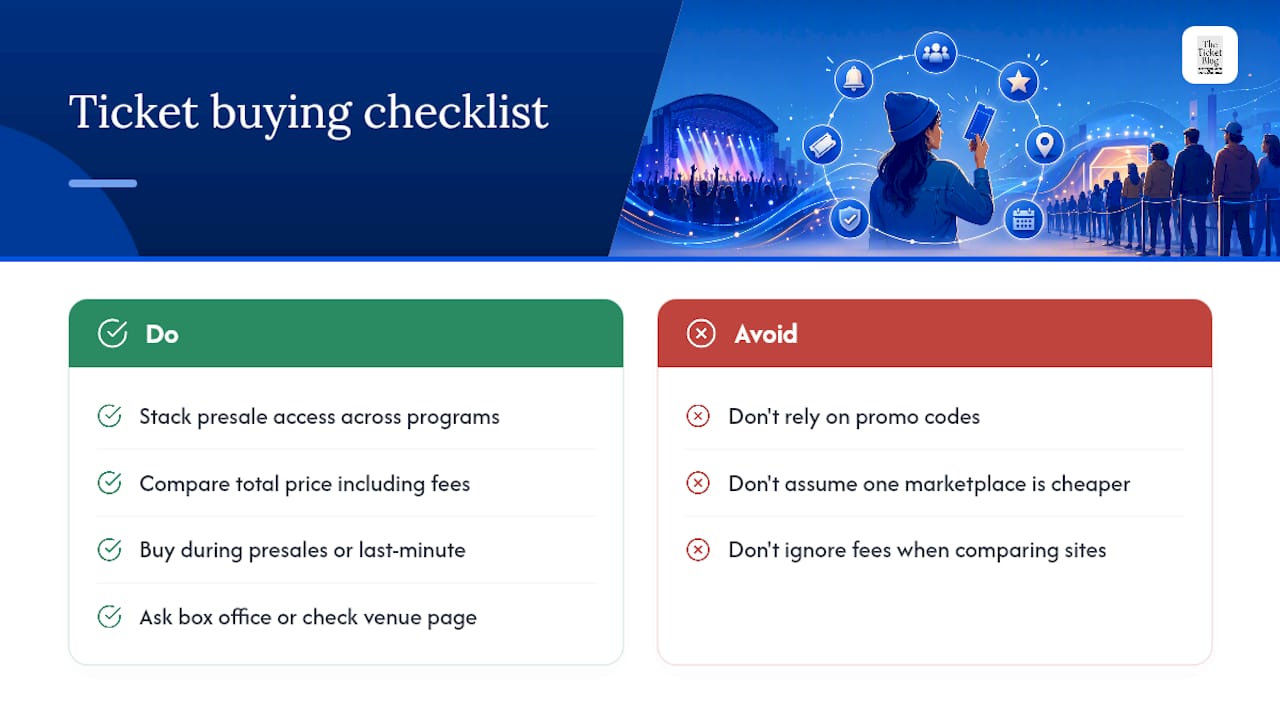
Stack presales first. Fan clubs, artist mailing lists, and cardholder presales open before general sale.
Set alerts on aggregators so you know when a resale price drops on a section you want.
Compare final cost, not sticker price, since fees can shift the ranking between platforms.
Try weekday shows or the box office when the tour routes through a smaller market.
Pro Tip: Save your card details and verify your photo ID in your ticketing accounts a day before any on-sale. That prep step alone can be the difference between checking out in seconds and watching seats vanish while you type.
Key Takeaways
Stacking presale access and comparing total cost across platforms consistently beats waiting for resale luck.
Point | Details |
Presales first | Save payment info, verify ID, and register for artist or card presales before general on-sale. |
Compare final cost | Add ticket price, fees, and delivery together before judging which platform is cheapest. |
Use price alerts | Set aggregator alerts on specific seats instead of manually refreshing resale sites. |
Verify buyer protection | Choose marketplaces with verified-ticket badges and clear money-back guarantees. |
Try low-demand windows | Weekday shows, box office purchases, and smaller venues often cost less than peak on-sales. |
Table of Contents
Which Ticket Sites Offer the Best Concert Deals?
No single platform wins every category. Ticketmaster and other primary sellers control face-value inventory and presale codes, while resale marketplaces like StubHub, SeatGeek, Vivid Seats, Gametime, TodayTix, TicketNetwork, and TicketLiquidator compete on price transparency, buyer protection, and last-minute deals. Groupon occasionally surfaces bundled or discounted local event tickets outside the mainstream resale ecosystem. The right pick depends on whether you need guaranteed access to a hot show or the lowest possible total price on a seat that’s already on sale.
Category | What to know |
Best for primary access | Primary ticketing sites (like Ticketmaster) hold face-value inventory and control presale codes, artist verification, and official on-sale timing. |
Best for last-minute deals | Apps built around day-of and last-minute inventory (Gametime, TodayTix) surface discounted seats as showtime approaches, often with simplified pricing shown upfront. |
Fee transparency | Some resale marketplaces display an all-in price before checkout, while others add fees during the process. Always check the final total before confirming. |
Buyer protection | Look for a stated money-back guarantee and a verified-ticket or authenticity badge, standard on major resale marketplaces like StubHub, SeatGeek, and Vivid Seats. |
Presale availability | Primary sellers and official venue partners typically control the earliest presale windows; resale marketplaces list inventory after tickets first hit the market. |
Promos and loyalty | Marketplaces periodically run promo codes and loyalty credits, and general aggregator roundups track which sites currently have active offers. |
A few trust signals matter more than brand recognition when you’re deciding where to buy:
A clear buyer guarantee or refund policy stated before you pay, not buried in the terms.
A verified-ticket badge or seller rating system that flags legitimate listings.
A deal-score indicator (SeatGeek is known for this) that ranks a listing against comparable seats.
Editorial roundups consistently note that marketplace promos and loyalty perks shift often enough that checking two or three platforms before buying is worth the extra five minutes.
Gametime and TodayTix tend to win on last-minute bargains because their inventory skews toward same-day and near-term shows. Ticketmaster and other primary partners remain the strongest route for guaranteed presale access to high-demand tours, since resale listings for those shows often carry a premium until closer to the date.
How Do You Get Presale Access to Concert Tickets?
Presale tickets usually give you better seat selection and let you skip resale markups, though they aren’t automatically cheaper than face value. Getting in requires setting up access points before the on-sale, not scrambling the morning tickets go live.
Save your payment method and verify your photo ID in your ticketing account ahead of time.
Join the artist’s fan club if a presale code is included and the membership cost pencils out.
Subscribe to venue and promoter email lists, since many run their own presale windows.
Register for streaming-based presales. Spotify’s Fans First program selects engaged listeners for early codes.
Check whether your credit card qualifies. Amex, Chase, Citi, and Capital One all run cardholder presale windows that can open before the general presale.
Look into carrier and employer perks. Some wireless carriers and workplaces distribute codes for select tours.
Some presales skip codes entirely and instead require registering directly on an artist or event page so your account gets recognized at checkout.
Pro Tip: Log into your account on two devices ahead of time, preselect your preferred seat map filters, and have a second payment method ready in case the first one fails mid checkout.

How Can You Track Resale Ticket Prices Without Checking Constantly?
Use a price-tracking tool or aggregator and set an alert for the section or price threshold you want, then let the notification do the checking for you.
Price-tracking sites that monitor listings across marketplaces and flag drops on the seats you’re watching.
Browser and app alerts that push a notification the moment a comparable seat drops below your target price.
Aggregator services that let you compare the exact same seat across multiple resale sites in one view, which saves the time of tab-hopping between platforms.
When comparing listings, add the list price, service fees, and delivery cost together before judging which is actually cheaper. The Ticket Blog’s guide to price-drop alerts walks through setting these up step by step.
How Do You Buy Resale Tickets Safely and Avoid Hidden Fees?
Verify the buyer-protection policy before you buy, and favor marketplaces with verified-ticket badges and a clear money-back guarantee if the tickets don’t work.
Check the seller’s rating and review history on the platform.
Confirm the delivery method (mobile transfer, PDF, or physical) and the timeline for receiving tickets.
Read the refund policy before you pay, not after something goes wrong.
Review the full fee breakdown at checkout, since the listing price rarely reflects what you’ll actually pay.
On some marketplaces, you can message a seller directly to ask about a lower price on multi-ticket listings.
Government market analysis has found that resale transaction fees can add a typical amount to the final price, often covering fraud protection and buyer guarantees baked into the platform’s business model.
A ticket that looks $10 cheaper on one marketplace can end up costing more once fees are added.*
What Other Strategies Lower the Cost of Concert Tickets?
Beyond presales and price tracking, a handful of older tactics still work reliably.
Buy at the box office if the venue is local, which sidesteps online service fees entirely.
Pick weekday shows or smaller venues, since demand (and price) tends to dip midweek.
Ask about student, military, or teacher discounts, which some venues and promoters offer but don’t always advertise.
Split festival passes with a group to lower the per-person cost of multi-day events.
Look into seat-filler or volunteer programs, which some venues use to fill empty seats at a steep discount or free.
Last-minute apps make sense when you’re flexible on seat location and comfortable with the show potentially selling out before you commit. That trade-off usually pays off at larger venues with more unsold inventory close to showtime, and less so at intimate club shows where every seat moves early.
Pro Tip: If you’re planning a festival trip, splitting a hotel room and travel costs with a group can shrink your per-show expense more than any ticket discount will.
Does Data Support Presale Stacking as a Reliable Deal Strategy?
Cardholder presales and streaming-based presales show up again and again as dependable early-access points, and the research backs that pattern rather than just anecdotal buzz.
Bot-driven purchases and scalper activity account for a large share of on-sale traffic during high-demand drops, which makes presale stacking and account verification a practical defense rather than a nice-to-have. Combine that with the a typical amount fee load common on resale transactions, and the math consistently favors locking in a seat during presale over waiting for a resale bargain that may never materialize.
Review card issuer presale calendars (Amex, Chase, Citi, Capital One) before each tour announcement.
Check your streaming activity and artist-follow status ahead of major tour announcements.
Why Presales Beat Speculative Resale Hunting
Presales give you first pick of seats and skip the fee premiums that resale carries. The Ticket Blog treats presale stacking as the default strategy, reserving resale hunting for sold-out shows or genuine last-minute price drops.
Frequently Asked Questions
What’s the single best way to get concert ticket deals? Stack presale access through cardholder programs, artist fan clubs, and streaming presales, then compare total cost across a few marketplaces before buying.
Are concert ticket promo codes worth searching for? Yes, but treat them as a bonus, not a strategy. Marketplace promo codes and loyalty credits change frequently and rarely beat the savings from buying during presale or at the box office.
Is StubHub or SeatGeek better for cheap tickets? Neither is universally cheaper. Compare the total price, including fees, on the exact seat you want across both, since pricing shifts by event and demand.
When is the cheapest time to buy concert tickets? Buying during a presale before general demand kicks in, or waiting for a last-minute price drop close to showtime, are typically your two best windows.
Do military and student discounts really work for concerts? Some venues and promoters offer them, though they aren’t always advertised. It’s worth asking the box office directly or checking the venue’s discount page before assuming none exists.
Sources
Follow venue and artist newsletters, card benefit pages, and aggregator apps for ongoing deals, and check box office listings directly when a tour comes through your area.
Recommended
Comments