Blue Dots on Concert Seat Maps: What They Really Mean

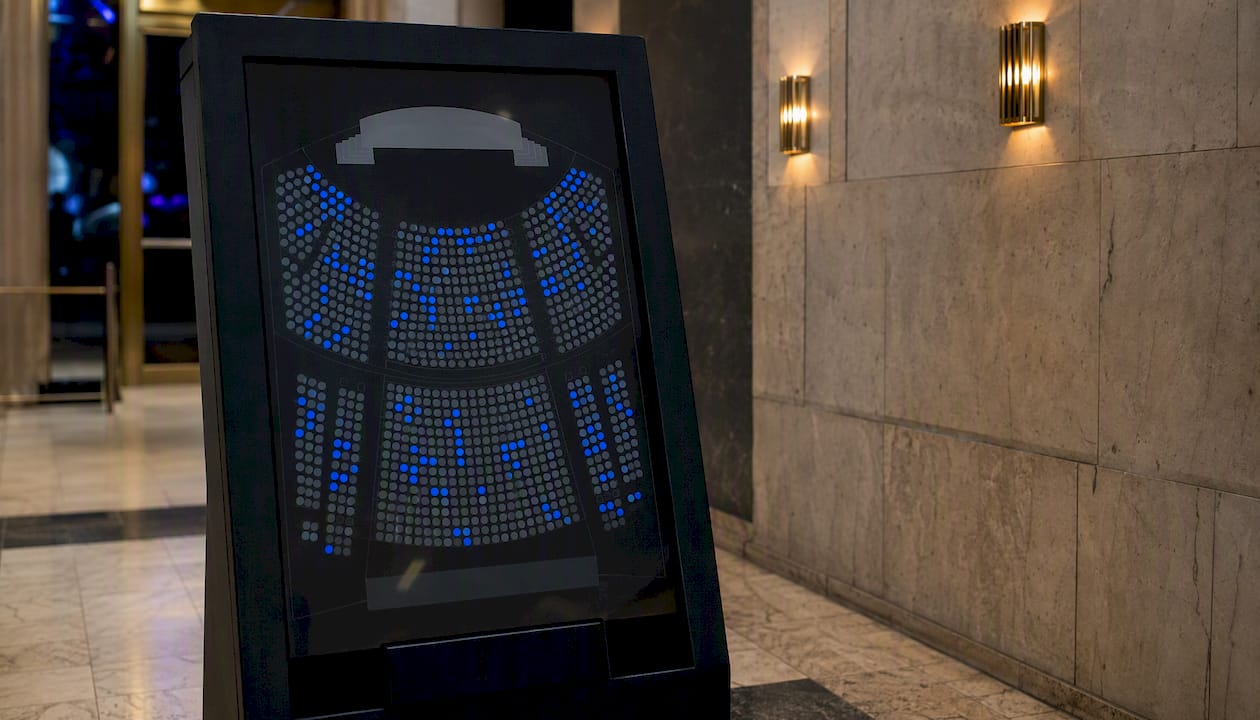
Blue dots on a concert seating map almost always mean one thing: those seats haven’t sold yet. They can also mark seats held back by the artist, a promoter, or the venue for reasons that have nothing to do with weak demand. If you’re staring at a chart full of blue right now, here’s the short version: buy immediately if you need a specific seat or resale is already selling below face value, and wait if you can stomach some risk, because a large share of tickets sell in the final days before a show.
A blue-dot pattern is worth acting on when it pairs with two other signs: sluggish sales heading into the second week after tickets go on sale, and resale listings that are already undercutting face value weeks out. That combination suggests real trouble, not just early-market caution.
When the dots matter: slow week-two sales plus resale prices already dropping below face value before the show is close.
When they usually don’t: the show just went on sale, it’s a big arena tour with fan-club or artist holds still locked, or you’re looking at a chart more than three weeks out.
Pro Tip: If resale tickets are listed under face value more than two weeks before the show, that’s often your green light to buy. Sellers rarely discount early unless they expect prices to keep falling.
Key Takeaways
Blue dots mark unsold or held seating inventory, and the buying decision comes down to reading sales pace and resale pricing together, not the chart alone.
Point | Details |
Blue dots mean unsold or held seats | Some blue inventory is genuinely unsold; some is an unreleased artist or presale hold. |
Week two beats launch day | Sales pace one to two weeks after on-sale is far more diagnostic than day-one numbers. |
Resale price is your best early signal | Listings under face value weeks out usually predict discounts, not necessarily cancellation. |
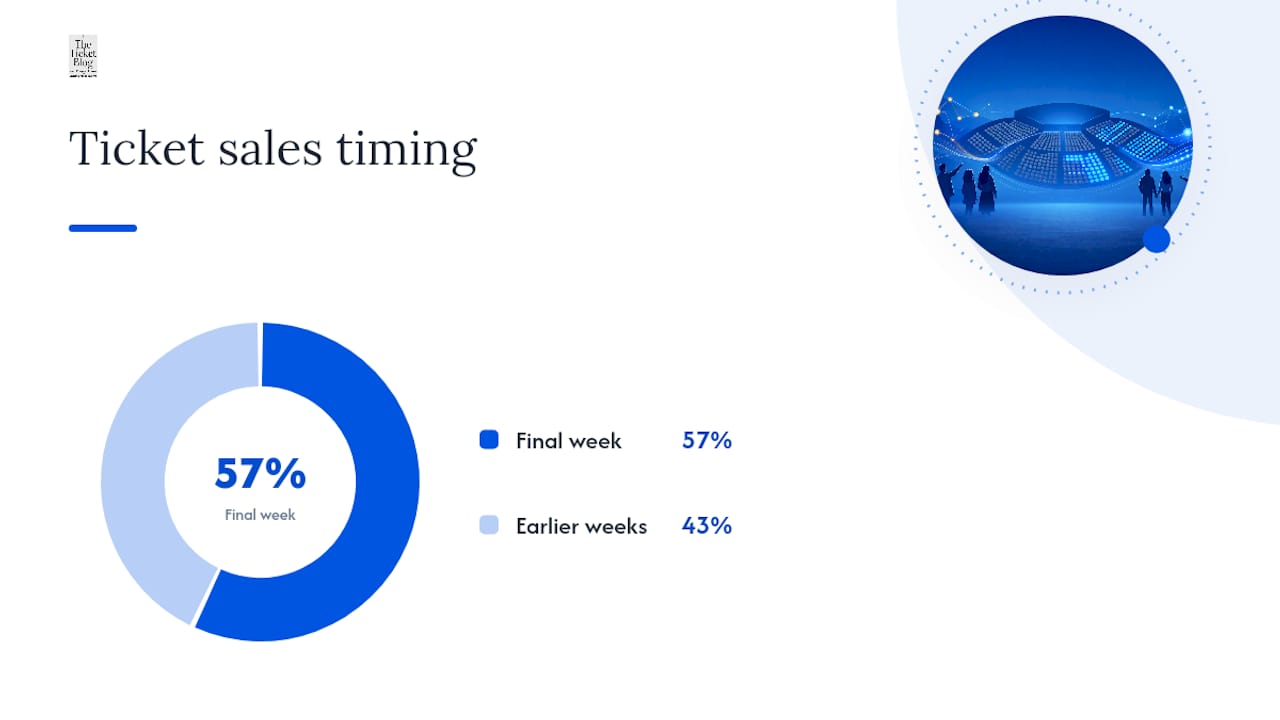
Late buying is now normal | Roughly 57% of tickets sell within the final week, so early blue dots often resolve on their own. |
Cancellations stay rare | Fewer than 1% of shows get canceled, so treat viral “blue dot” panic with skepticism. |
The Ticket Blog tracks the deals for you | Curated listings and pricing guides help you decide when a discount is real versus a fan rumor. |
Table of Contents
What Do Blue Dots and Other Seating-Map Symbols Actually Mean?
Interactive seating maps on platforms like Ticketmaster are built in layers. One layer shows seats available for public purchase. A second, invisible layer tracks internal holds: presale allocations, artist and management holds, ADA-accessible blocks, and production kills for sightline or staging reasons. The colored dots you see only represent the first layer, and that’s the root of most fan confusion.
A typical legend breaks down like this:
Blue or open dot: seat is currently available to purchase.
Gray or filled dot: seat is sold, reserved, or otherwise unavailable to the public.
Restricted or limited-view marker: seat is sellable but flagged for an obstructed sightline.
No visible marker: often means the seat is held internally and hasn’t been released to any sales channel yet.
Ticketing platforms manage this through availability systems that report what’s called “sellable quantities” to the front-end map. According to Ticketmaster’s own availability API documentation, reserve states and cached data can make the public map look more empty than the real inventory picture, because seats sitting in an unreleased hold don’t show as sold, they just show as unavailable to buy or absent from the chart entirely.
Here’s a scenario that trips up a lot of fans: a major arena show goes on sale, and the map shows entire sections lit up blue. Panic sets in. But if that tour still has a fan-club presale window open, or the artist negotiated a hold on floor seats for a later VIP release, those blue dots aren’t unsold tickets in any meaningful sense. They’re inventory that hasn’t been unlocked yet. Reporting on the phenomenon fans have nicknamed “blue dot fever” confirms that unreleased holds routinely stay blue on public maps right up until a contractual drop-dead date, often just days before the show.
Pro Tip: Check the map again a day or two after any presale window closes. If the same sections are still blue after the presale ends, that’s a stronger signal of real unsold inventory than what you saw on day one.
Why Do Concert Tickets Go Unsold in the First Place?
Blue dots don’t appear out of nowhere. A handful of predictable market forces drive them, and most have little to do with the artist being unpopular.
Pricing misalignment is the most common culprit. Dynamic pricing and premium tiers can price a chunk of the audience out of buying early, even for artists with strong overall demand. If the top tiers feel disconnected from what fans think a ticket is worth, sales stall until promoters adjust or discount. Understanding how ticket tiers work helps explain why premium sections often lag behind general admission.

Venue oversizing happens when a promoter books a room bigger than an artist’s current drawing power supports. A band that filled 3,000-seat theaters five years ago might get booked into a 10,000-seat arena based on a hit single, and the room simply doesn’t fill at that scale. Industry observers point to downsizing, adding intimate second nights, or swapping venues as the standard fix, one The Week’s coverage documents repeatedly across the current touring cycle.
Timing has shifted, too. Fans buy later than they used to. Industry data shows 57% of tickets now sell within the final week before the show, a pattern that makes early blue dots far less alarming than they once were. A map that looks half-empty three weeks out can fill dramatically in the last seven days.
Competition and calendar crowding also matter. When three major tours announce overlapping dates in the same market, or a festival announcement drops the same week as an arena on-sale, demand splits and sales slow across the board.
Resale behavior offers an early warning system. When brokers who bought tickets speculatively start dumping inventory below face value weeks before the show, that’s often the clearest real-time signal that even insiders expect softer demand. Rising average ticket prices have made fans more price-sensitive across the board, a trend KFVS12’s reporting links directly to the empty-seat conversation dominating social media.
What Happens to Tickets That Don’t Sell?
Unsold inventory rarely just sits there until showtime. Promoters have a playbook, and cancellation is almost always the last page in it, not the first.
The most common response is targeted discounting, sometimes called papering in the industry, where promoters quietly drop prices on remaining inventory or push last-minute deals through email lists and apps. Releasing held inventory is another frequent move: those unreleased artist or fan-club holds mentioned earlier often get dumped into general sale once a hold deadline passes, which can suddenly make a “sold out” show reappear with fresh availability, or reduce a wall of blue dots without any real cancellation.
Resale marketplace patterns shift depending on how the show is actually trending. When sell-through is healthy, resale prices tend to hold steady or climb as the date approaches. When it’s genuinely struggling, resale prices often soften in the final two weeks as sellers try to unload inventory before it becomes worthless. A guide on why unsold tickets get discounted breaks down this pricing behavior in more detail.
Cancellations remain the rarest outcome. Live Nation has stated that fewer than 1% of scheduled shows were canceled in 2026, a figure worth keeping in mind every time a friend claims a show is “definitely getting canceled” because of a blue seating chart. That said, cancellations do happen. Variety’s reporting on the Pussycat Dolls reunion tour documented a real cancellation tied to underwhelming sales, proof the risk is real even if it’s uncommon.
Outcome | Relative frequency | What tends to trigger it |
Price discounts or papering | Common | Soft sales in weeks two through four after on-sale |
Held inventory released to public sale | Common | Presale or fan-club hold deadlines expiring |
Seats comped or given away | Occasional | Venue or promoter trying to boost attendance numbers |
Cancellation or postponement | Rare | Severe, sustained sell-through failure combined with financial risk |
Pro Tip: Watch resale listings, not the seating map, for the earliest warning that discounts are coming. Brokers usually cut their prices before promoters publicly discount, since they’re trying to exit before the official price drops under them.
How Can You Tell If a Show Is Actually Struggling?
Launch-day sales tell you almost nothing reliable. Industry practitioners treat week two after on-sale as the far more diagnostic checkpoint, since it filters out the artificial spike from superfans buying instantly and shows you the true underlying demand curve, a method detailed in how promoters read ticket sales velocity.
A few concrete checks separate a genuinely struggling show from one that’s just on a normal, later timeline:
Check the sales pace, not the raw number sold. A steady decay in weekly sales is normal. A sudden cliff, where sales nearly stop for two straight weeks, is the real warning sign.
Compare resale supply to face value. If dozens of listings sit below face price three or more weeks out, that’s a stronger signal than blue dots alone.
Look at which sections are actually blue. If premium and VIP tiers sit untouched while general admission sells briskly, that usually points to mispriced premium tickets, not overall weak demand, something a look at theater tiered-pricing structures explains well.
Scan for venue changes. A downsize announcement, an added second show, or a venue swap is promoter language for “we overbooked.”
Gauge social buzz against ticket movement. High engagement with slow sales often means price, not popularity, is the barrier.
Practitioners commonly use a pace index, tickets sold divided by forecast, with rough benchmarks: above 100% means the show is tracking ahead, 85% to 100% means monitor closely, and anything under 70% by the midpoint of the sales window typically triggers active intervention like discounting or a venue change. Layer that against the reality that 57% of tickets sell in the final week, and you get a clearer picture: a low pace index at week two is a real concern, but the same low number three weeks before the show still has room to correct.
How Should You Buy Tickets When You See Blue Dots?
Here’s a practical sequence for deciding whether to buy now or ride it out.
Set a price ceiling before you shop. Decide the maximum you’ll pay for face value and for resale, and don’t move that number once emotions kick in.
Check resale pricing against face value. If secondary listings are already under face weeks out, that’s a signal the market expects softening, and it’s often your cue to buy now before demand or price shifts again.
Track the chart over several days, not once. A single snapshot tells you nothing. Watching the same sections over a week shows you whether blue dots are shrinking, staying flat, or spreading.
Set price-drop alerts where the platform allows it, so you’re not manually refreshing a page daily.
Decide your risk tolerance for the final-week window. Waiting can pay off if you’re comfortable losing your preferred seats to someone else, since a genuine surge in the last week can also push prices back up.
Verify the transfer method before paying anyone directly. Mobile transfer through an official platform is safest. Screenshots of tickets prove almost nothing.
Use payment methods with buyer protection for peer-to-peer deals. PayPal’s goods and services option is widely recommended for ticket transactions specifically because it gives you recourse if a seller never delivers.
Check seller history and reviews before committing to any private sale, and walk away from listings that pressure you to pay outside a protected method.
Pro Tip: A simple heuristic works better than overthinking it: if resale is already under face value, buy now. If resale is still at or above face and the show is more than three weeks out, you can afford to wait and watch.
Understanding fees also changes the math on when to buy. A ticket that looks like a bargain on a seating chart can lose its appeal once service charges land, so it’s worth reading up on how to avoid unnecessary ticket fees before you commit to a purchase you can’t undo.
When Do Blue Dots Actually Predict a Cancellation?
Translating everything above into usable rules, here’s where the evidence lands.
Rule one: a pace index under 70% by the sales midpoint, combined with resale prices already sitting below face value and no venue downsize announced, is the closest thing to a genuine warning sign. Rule two: blue dots on premium tiers alone almost never predict cancellation. They predict a price adjustment or a tier restructure. Rule three: a wall of blue dots within days of on-sale, especially for major tours, is background noise. Wait for the week-two read before drawing any conclusion.
A couple of real patterns illustrate this well.
Case where dots matched real trouble: the Pussycat Dolls’ 2026 reunion tour cancellation followed sustained weak sell-through that had been visible on public charts for weeks, not a single bad on-sale day.
Case where dots were misleading: tours that later downsized venues or added intimate makeup dates often showed heavy blue on their original, oversized room, then quietly sold through once moved to a smaller venue, exactly the fix industry observers describe as the standard remedy rather than outright cancellation.
The larger truth underneath both cases is that cancellations rarely come down to a seating chart. They come down to sunk production costs, artist guarantees, and promoter risk math that fans never see on any public map, a point investigative reporting on the blue dot fever trend makes clear.
What Ticket-Market Watchers Want Fans to Understand
Most fans treat a blue dot like a diagnosis. It’s closer to a symptom, and symptoms need context before they mean anything. The single biggest misread we see repeated across social media is treating launch-day availability as proof of trouble, when the far more useful checkpoint sits two weeks later, once presale holds clear and the real demand curve shows itself.
If you’re risk-averse and need a specific seat for a specific date, buy early and stop watching the chart. Trying to time a market that regularly sees over half its tickets move in the final week is a losing game for anyone who genuinely cannot miss the show. If you’re a bargain hunter with flexibility, the opposite strategy works: track resale pricing weekly, wait for it to dip under face value, and treat that dip as your entry point rather than a red flag to avoid.
What we won’t do is tell you cancellations are common, because they aren’t, and the data on that is about as clear as ticketing data gets. The economics behind a cancelled tour date involve production costs, guarantees, and promoter risk that no fan can see from a seating chart, no matter how many blue dots are on it.
Find Better Ticket Deals Without the Guesswork
Reading a seating chart tells you whether a show might discount. It doesn’t tell you where the actual deal is sitting right now, and that’s where a lot of fans lose money they didn’t need to spend. The Ticket Blog exists to close that gap: curated deal listings, promo codes, and step-by-step buying guides built specifically around the pricing patterns and resale behavior covered above.
Instead of manually tracking resale charts across five different apps, you get one source that already flags which shows are trending toward discounts and which tiers are worth waiting on. Whether you’re chasing a bargain on a slow-selling tour or trying to lock in a face-value seat before a fast seller disappears, The Ticket Blog breaks down the current listings and pricing trends so you can make the call in minutes instead of days. Head to the site now to check today’s featured deals and grab the guide that matches the show you’re watching.
Frequently Asked Questions
Do blue dots always mean a concert is going to be canceled? No.
How can I tell the difference between a genuinely struggling show and normal late buying? Check sales pace at the two-week mark after tickets go on sale rather than launch day, and compare that against resale prices. If resale is already under face value and sales stalled hard at week two, that combination points to real trouble.
Why do some sections stay blue while others sell out fast? Premium and VIP tiers often sit untouched while general admission sells briskly, usually because those tiers are priced above what current demand supports, not because the whole show is failing.
Is it better to buy concert tickets early or wait? It depends on your risk tolerance. Buy early if you need a specific seat and can’t risk losing it. Wait if you’re comfortable with volatility, since a large share of tickets sell in the final week before a show.
What’s the safest way to buy tickets from a reseller? Use a platform with buyer protection, verify the seller’s history, and pay through a protected method like PayPal’s goods and services option rather than a direct bank transfer.
Sources
Recommended
Comments