Tampa Bay Buccaneers 2026 History Traditions Fans and Milestones

The Tampa Bay Buccaneers have never had a quiet identity. This is a franchise built on orange uniforms, a pirate ship, dominant defenses, wild swings, Hall of Fame names, and two Super Bowl runs that changed how the rest of the NFL viewed football in Tampa.
As the Buccaneers move through 2026, the story is still rooted in the same mix that has defined the team since 1976: resilience, defense, big personalities, and a fan base that knows how to ride out hard years without losing its voice. To understand the modern Bucs, it helps to look back at the milestones, players, games, and traditions that built the Krewe.

The Buccaneers were shaped by a difficult beginning and a fast breakthrough
Tampa Bay entered the NFL in 1976, and the early years were brutal. The expansion Buccaneers lost their first 26 regular-season games, a record that still follows the franchise in any history discussion. That start could have defined the team forever. Instead, it became the first chapter in one of the league’s stranger and more interesting arcs.
The Bucs finally broke through in 1977, then stunned the league just two years later. In 1979, Tampa Bay won the NFC Central and reached the NFC Championship Game. The defense-led team fell to the Los Angeles Rams, 9-0, but the message had changed. The Buccaneers were no longer just an expansion afterthought.
That early rise gave Tampa Bay its first true star: Lee Roy Selmon. The Hall of Fame defensive end became the face of the franchise, not only because of his play, but because of the way he carried himself. Selmon remains one of the most respected figures in team history, and his place in Buccaneers lore goes far beyond statistics.
The team’s original look also became part of its identity. The creamsicle orange uniforms and the winking pirate logo known as Bucco Bruce were often mocked during losing seasons, but time changed the way fans saw them. What once looked like a symbol of failure became a beloved throwback. When the Bucs bring back the creamsicles, the reaction shows how strongly fans connect to the full history, not just the championship years.
For official timelines and team records, the Buccaneers history section and the franchise page at Pro Football Reference are useful starting points.
The defense-first era made Tampa Bay feared
The modern Buccaneers identity took shape in the late 1990s. Head coach Tony Dungy helped build a team that played with discipline, speed, and edge. The defense became the heart of the franchise, and Tampa Bay became known for a scheme that influenced football across the league.
The phrase Tampa 2 still carries weight. The system needed quick linebackers, smart safeties, and a front four that could pressure without constant blitzing. Tampa Bay had the right players for it.
The core was special:
Warren Sapp
A disruptive defensive tackle who could wreck the middle of an offensive line.
Derrick Brooks
A fast, instinctive linebacker and one of the greatest players in franchise history.
John Lynch
A hard-hitting safety who gave the defense its physical tone.
Ronde Barber
A smart, durable corner who became one of the best nickel defenders the game has seen.
Simeon Rice
A pass rusher whose speed gave the championship defense another level.
This group helped turn Raymond James Stadium into a difficult place to play. It also gave the franchise a personality. Tampa Bay was no longer simply colorful. It was fierce.
The 1997 playoff win over the Detroit Lions marked the start of a new era. The 1999 NFC Championship Game loss to the Rams was painful, especially because the Bucs held the eventual Super Bowl champions to 11 points. Even in defeat, Tampa Bay showed it had become one of the NFL’s toughest teams.
Two Super Bowl wins changed the franchise forever
The Buccaneers have two Super Bowl victories, and each one tells a different story about the franchise.
The first came after the 2002 season. Jon Gruden arrived as head coach, the defense reached its peak, and Tampa Bay pushed through the NFC. The defining image of that run came in the NFC Championship Game against the Philadelphia Eagles. Ronde Barber’s late interception return for a touchdown at Veterans Stadium sealed the win and sent the Bucs to their first Super Bowl.
In Super Bowl XXXVII, Tampa Bay beat the Oakland Raiders, 48-21. The defense intercepted Rich Gannon five times, and Dexter Jackson earned Super Bowl MVP honors. Derrick Brooks and Dwight Smith returned interceptions for touchdowns, giving the game the feel of a defensive celebration.
The second championship came after the 2020 season, when Tom Brady joined Tampa Bay and helped change expectations overnight. The roster already had stars such as Mike Evans, Chris Godwin, Lavonte David, and a strong defensive front. With Brady, Rob Gronkowski, Leonard Fournette, and others added to the mix, the team found its postseason rhythm at the right time.
Super Bowl LV was historic for several reasons. Tampa Bay played the Kansas City Chiefs at Raymond James Stadium, becoming the first team to win a Super Bowl in its home stadium. The Bucs won, 31-9, behind a smothering defensive performance and a calm, efficient offense.
Milestone | Why it matters |
1976 inaugural season | Tampa Bay joins the NFL and begins one of the league’s most unusual franchise stories |
1979 NFC Championship appearance | The Bucs go from expansion struggles to title contention in just a few seasons |
1997 playoff win over Detroit | The Dungy-era defense announces Tampa Bay’s return to relevance |
2002 Super Bowl season | The franchise wins its first championship behind an all-time defense |
2020 Super Bowl season | The Bucs win at home and become a national NFL story again |
For deeper historical context, visit the Pro Football Hall of Fame’s Buccaneers page and the NFL’s official Buccaneers team page.
Notable players connect every Buccaneers generation
Every era of Buccaneers football has its standard-bearers. Selmon carried the early years. James Wilder gave the offense credibility during difficult seasons. Paul Gruber became a model of consistency on the offensive line. Dungy’s defense produced multiple Hall of Fame careers.
The 2002 champions still define the franchise’s defensive legacy, but the 2020 team widened the story. Tom Brady’s arrival brought global attention, yet the team was not built on one player alone. Mike Evans had already become one of the best players in franchise history. Lavonte David had spent years playing smart, steady linebacker in Tampa. Chris Godwin became a trusted target. Vita Vea brought size and force to the defensive front.
Evans deserves special mention because he links eras. He arrived before the Brady years and remained central during the championship run. His consistency as a receiver made him a franchise icon, and his relationship with the community helped strengthen that bond.
So did players such as Derrick Brooks and Warrick Dunn. Brooks became known for leadership and community work after his playing career. Dunn, through his charitable efforts, built a legacy that reaches far beyond Tampa Bay. Those examples matter because Buccaneers history is not just about Sundays. It is also about how players show up in the region they represent.
Buccaneers traditions make the team feel different
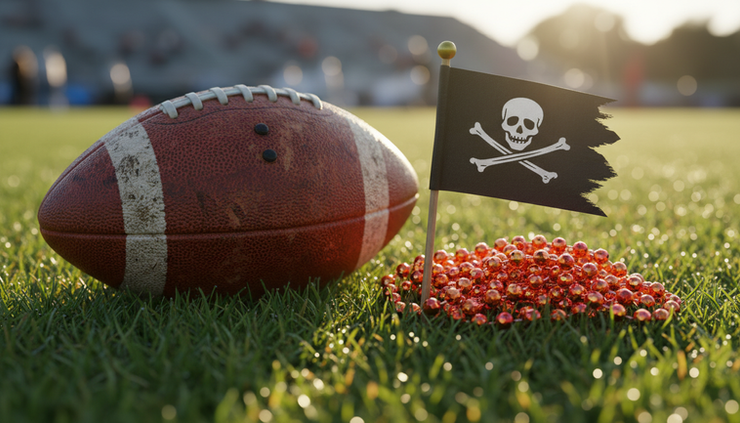
Few NFL traditions are as easy to identify as the pirate ship at Raymond James Stadium. The cannons fire after Buccaneers scores and during big moments, giving home games a sound that belongs only to Tampa Bay. It is loud, theatrical, and perfectly matched to the team name.
The team’s fan culture has its own language. Supporters call themselves the Krewe, a nod to pirate identity and Tampa’s Gasparilla tradition. The nickname works because it feels local. It ties the football team to the city’s parade history, waterfront personality, and love of spectacle.
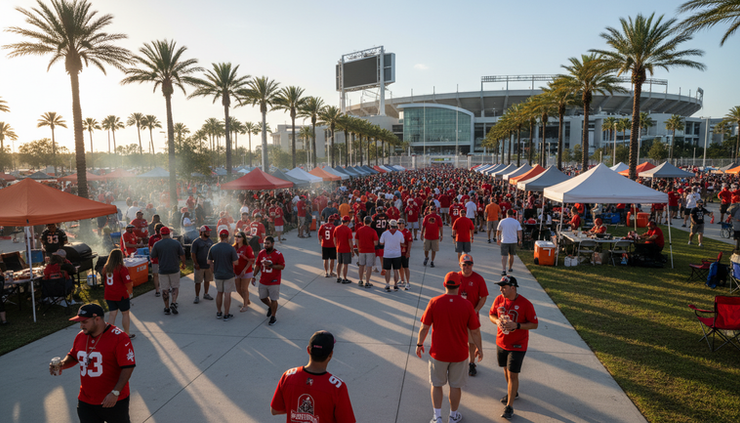
Game day in Tampa brings together several versions of the franchise at once. Some fans wear creamsicle throwbacks. Others wear the red and pewter from the championship eras. Some still celebrate the defensive stars of the late 1990s and early 2000s, while younger fans connect more with the Brady-era Super Bowl team and modern stars.
That mix gives the stadium a layered feel. A Buccaneers game is not only a sporting event. It is a reunion of eras.
Fan-run coverage also plays a big role in the culture. Sites such as Pewter Report and Bucs Nation track roster moves, draft talk, game reactions, and fan debates throughout the year. They are useful places to see what the most engaged fans are discussing between Sundays.
The Buccaneers’ community work adds depth to the brand
The Bucs’ presence in Tampa Bay extends beyond Raymond James Stadium. Through the Tampa Bay Buccaneers Foundation, the organization supports youth programs, education efforts, health-related causes, military appreciation, and football access across the region.
One important part of the team’s community identity is its support for girls flag football. Tampa Bay has been closely associated with the growth of the sport in Florida, where girls flag football has a strong high school presence. The team’s clinics, events, and visibility help more young athletes see a future in the game.
The Buccaneers also connect with local schools, youth football programs, service members, and nonprofit organizations. These efforts rarely draw the same attention as playoff games, but they help explain why the team matters to the region. A franchise builds deep roots when it shows up year-round.
For fans following the 2026 Buccaneers, the best source for current schedules, roster news, tickets, and community updates remains Buccaneers.com. Historical archives and fan sites can add context, but the official site is the place to confirm what is happening now.

What the 2026 Buccaneers carry forward
The 2026 Tampa Bay Buccaneers are part of a franchise story that refuses to fit one simple label. The team has been an expansion struggler, a defensive powerhouse, a Super Bowl champion, a throwback fashion favorite, and a modern contender with national reach.
That range is what makes the Bucs interesting. Their history includes painful losing streaks and unforgettable wins. Their traditions include cannon fire, creamsicle colors, pirate language, and a stadium experience that no other NFL team can copy. Their best players have included Hall of Fame defenders, record-setting offensive stars, and leaders whose work in Tampa Bay continued long after the final whistle.
The spirit of the Buccaneers comes from that full picture. It is not only the trophies, and it is not only the rough beginnings. It is the way the franchise turned both into identity. For any fan tracking Tampa Bay in 2026, the past is not background noise. It is part of every flag raised, every cannon blast, and every Sunday shared by the Krewe.


Comments