What Is a Flexible Ticket? Your 2026 Flight Guide


A flexible ticket is an airline booking option that lets travelers modify key details like departure dates, times, or occasionally destinations, with reduced or waived penalty fees compared to standard fares. You’ll also see it marketed as a “flexi flight,” “flexible fare,” or “open ticket,” but the core promise stays the same: pay a bit more upfront, and you keep the freedom to adjust your plans without a costly penalty.
Flexible tickets tend to suit travelers whose schedules are genuinely uncertain. That includes:
Business travelers managing project timelines or client-driven itineraries
Travelers awaiting visa approvals who can’t lock in a firm departure date
Families coordinating around school or work schedules with shifting windows
Weather-sensitive trips where departure timing may need to shift
The key features that define a flexible fare across many airlines and booking platforms include:
Date and time changes permitted before departure
Reduced or waived change fees (though fare differences may still apply)
Partial or full refund options under certain conditions
The ability to rebook without purchasing an entirely new ticket
How flexible tickets actually work when you need to change plans
When you hold a flexible ticket and need to modify your flight, the process is more straightforward than most travelers expect. You contact the airline or your booking platform, request the change, and the airline applies the new itinerary without charging a standard change fee. What many travelers miss, though, is that waiving change fees does not mean waiving fare differences. If your new flight costs more than the original, you pay the difference.
Here’s what typically happens when you modify a flexible booking:
Date or time changes: Permitted on most flexible fares, often up to 24 hours before departure
Route or destination changes: Allowed on some premium flexible fares, but not universally
Fare difference charges: You pay the gap between your original fare and the new flight’s price
Refund eligibility: Varies by airline and fare class; some offer travel credit, others offer cash back
United Airlines, for example, structures its flexible fare options within its fare class tiers, where higher cabins and specific economy fare codes carry change-friendly rules. Booking platforms like Skyscanner and Flight Network let you filter search results by flexibility, making it easier to compare which fares permit changes before you commit. Always check the fare rules tab before purchasing, since the label “flexible” can mean different things depending on the airline.
Flexible tickets vs. standard tickets: what actually changes
Standard tickets, particularly basic economy fares, come with strict restrictions. Fixed dates, no changes permitted, and no refunds are the norm. If your plans shift, you’re often looking at forfeiting the ticket entirely or paying a change fee that rivals the cost of a new booking.
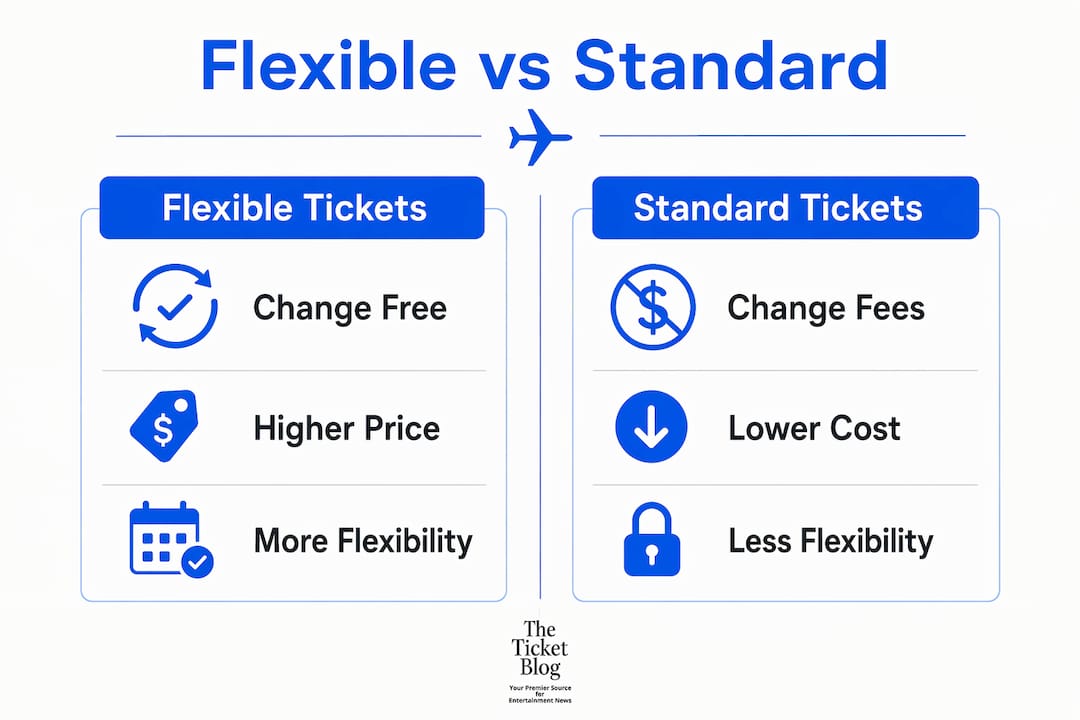
The core differences between flexible and standard tickets:
Changeability: Flexible fares allow date and time modifications; standard fares typically do not
Change fees: Flexible tickets reduce or eliminate change fees; standard fares charge them at full rate
Refund policy: Flexible fares often include partial or full refund options; standard fares rarely do
Price: Flexible tickets carry a premium of approximately 15% over comparable standard fares
Fare class: Flexible fares typically sit in higher fare buckets, which can also affect seat selection and baggage
One distinction worth knowing: flexible tickets and refundable tickets are not the same thing. Refundable fares protect your cash by letting you cancel and get your money back. Flexible fares protect your travel schedule by letting you change the flight and keep traveling. If a project might be canceled entirely, a refundable fare makes more sense. If the trip is happening but the timing is uncertain, a flexible fare is the right tool.
Are flexible tickets worth the cost?

The honest answer depends on your specific situation. Flexible tickets command roughly a 15% premium over standard fares, and that premium only pays off when the alternative, paying change fees or rebooking at a higher price, would cost more.
A practical way to think about it: if the likelihood of changing your plans exceeds 50%, or if the expected change fee on a standard ticket surpasses the flexible premium, the flexible fare is the financially smarter buy. Think of it less as a luxury upgrade and more as a form of travel risk management.
Situations where flexible tickets deliver clear value:
Uncertain business travel: Project timelines shift, client meetings reschedule, and last-minute changes are routine
Visa delays: Travelers waiting on approvals can’t always commit to a fixed departure date
Peak-season travel: Fare differences on busy routes during holidays or major events can be steep, making flexibility worth the upfront cost
Family coordination: When multiple schedules need to align, having room to adjust one ticket without penalty saves money overall
If your dates are firm and the route has frequent daily flights, a standard fare is usually the better value. The flexible premium becomes hard to justify when the chance of needing a change is genuinely low.
Pro Tip: Before buying a flexible ticket, calculate the change fee on the standard fare and compare it to the flexible premium. If the premium is lower than one likely change fee, the flexible ticket pays for itself the first time you use it.
Tips for buying flexible tickets and getting the most from them
Reading the fare rules before purchasing is the single most important step. Airlines use the word “flexible” loosely, and what one carrier includes under that label, another may not. Some fares allow date changes but not refunds. Others waive the change fee but still require you to cover any fare difference.
Practical steps to follow when shopping for flexible fares:
Filter by flexibility on booking platforms: Skyscanner and Flight Network both offer fare flexibility filters, letting you see which options permit changes before you click through
Check the fare rules tab directly: Look for language about change fees, fare differences, and refund eligibility. Don’t rely on the fare label alone
Give at least 24 hours’ notice: Most flexible fares require changes to be requested at least 24 hours before departure to qualify for fee-free modifications
Compare the flexible premium to your expected risk: If the route is high-demand or your dates are uncertain, the premium is often worth it
Consider date and airport flexibility as an alternative: Searching across nearby dates or airports can sometimes surface cheaper standard fares that make flexibility less necessary
Pro Tip: Flexible fares on online ticketing platforms often appear under different labels. Search for “changeable,” “free changes,” or “no change fee” in addition to “flexible” to catch all qualifying options.
Airline policies vary significantly, so reading fare rules carefully before purchase protects you from surprises. A flexible ticket is only as useful as the specific terms attached to it, and those terms differ by carrier, route, and fare class.

Key Takeaways
Flexible tickets are worth buying when the cost of changing a standard ticket would exceed the flexible premium, which is higher than standard fares.
Point | Details |
Flexible ticket definition | A fare that allows date and time changes with reduced or waived penalty fees. |
Change fees vs. fare differences | Flexible tickets waive change fees, but travelers still pay any fare difference on pricier flights. |
Flexible vs. refundable | Flexible fares protect your travel schedule; refundable fares protect your cash if you cancel. |
15% price premium | Flexible tickets typically cost more than comparable standard fares. |
When it pays off | Buy flexible when your chance of changing plans is real and rebooking later would likely cost more. |
Recommended

Comments