What Is a Ticket Barcode? How It Works and Why It Matters

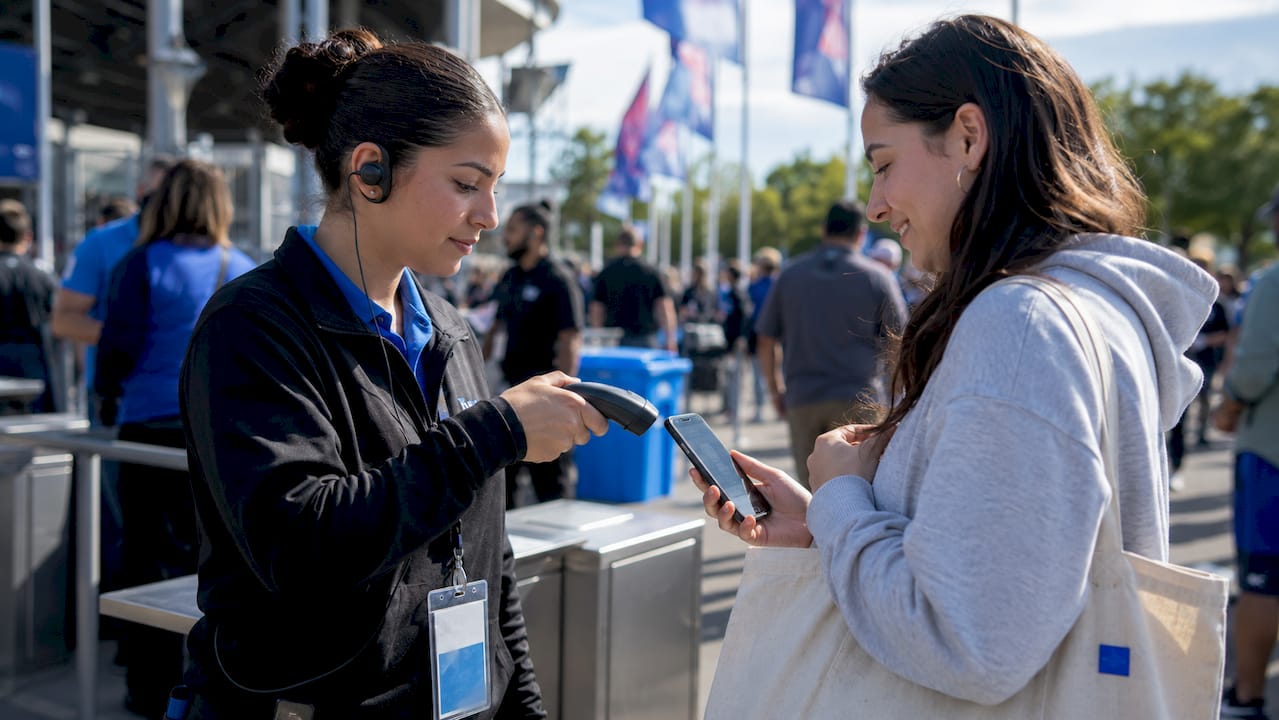
A ticket barcode is a unique, scannable code printed or displayed on your ticket that links directly to your booking record in an event’s database. When a scanner reads it, the system confirms your reservation in real time and grants or denies entry. Understanding ticket barcodes helps you avoid entry problems, spot fraud risks, and get through the gate faster at concerts, sports events, and theater productions. The Ticket Blog breaks down exactly how these codes work, what the different formats mean, and what you need to know before your next event.
What is a ticket barcode and how does it verify entry?
A ticket barcode is a machine-readable symbol that acts as a key to your booking record, not a container of your full ticket data. QR codes store a unique identifier or URL that points to the venue’s database, where the actual reservation details live. That distinction matters: the barcode itself holds almost nothing sensitive. All the verification happens on the back end, in real time.
The two main barcode categories you will encounter are 1D (one-dimensional) and 2D (two-dimensional) codes. A 1D barcode, like Code128, is the familiar striped pattern that encodes a short string of characters. A 2D code, like a QR code or PDF417, stores far more data in a grid pattern and can be read from any angle. Most major venues now use 2D codes because they are faster to scan and harder to duplicate.

When a staff member scans your ticket, the reader sends the code’s identifier to a central server. The server checks whether the code is valid, unused, and matches the event. If all three conditions are true, entry is granted and the code is immediately marked as used. Real-time server validation is the standard approach, though some systems support offline validation using cryptographic signatures embedded in the code itself.
Pro Tip: If you are attending a large festival or stadium event, screenshot your ticket before you lose cell service. A static screenshot works at venues using offline validation, but dynamic QR code venues require a live app connection.
The most secure systems go further by embedding cryptographic signatures and time-based invalidation into each code. Static barcodes are vulnerable to duplication; secure systems generate codes that expire after a single scan, making a copied ticket useless the moment the original is scanned.
Why ticket barcodes make events faster and more secure
Speed is the most immediate benefit of barcode scanning for tickets. Barcode scanning at events reduces entry time by up to 66%, enabling 15–20 validations per minute at a single entrance. One stadium event processed 60,000 scans in under one hour using this technology. That kind of throughput is impossible with manual ticket checks.
Security gains are equally significant. Transitioning to 2D dynamic barcodes and QR codes reduces ticket fraud by 60–90%. The combination of real-time database lookups and cryptographically signed tokens means a fraudulent copy gets rejected the moment the legitimate ticket is scanned first. That “first-scan-wins” policy is now standard at major venues.
Offline capability is a less-discussed but critical advantage. Some scanning systems cache validation data locally, so they keep working even when the venue’s internet connection drops. Offline validation uses embedded cryptographic signatures verified against a public key, though the trade-off is an inability to detect duplicate tickets on the spot. For most events, the speed and reliability benefits outweigh that limitation.
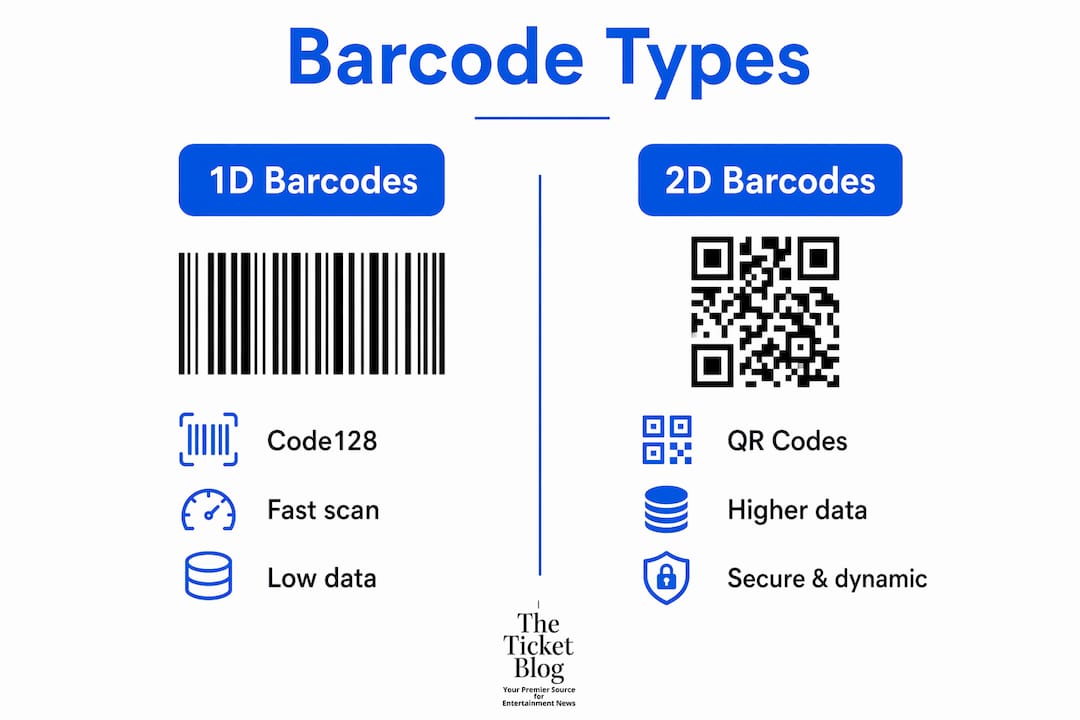
Scanners also work across ticket formats. Ticket scanners read from printed tickets or mobile screens as long as the barcode is clear and undamaged. QR code scanners handle both 1D and 2D codes, which gives venues flexibility and gives attendees the choice between paper and digital.
What barcode types appear on tickets?
Four barcode formats dominate the ticketing industry, each with different data capacity and scan speed characteristics.
Barcode type | Data capacity | Scan speed | Best use case |
Code128 | 10–20 characters | 0.3 seconds | Simple entry codes, low-data tickets |
QR Code | Up to 3,000 characters | 0.8 seconds | Mobile tickets, data-rich reservations |
PDF417 | Up to 1,100 characters | 1.0 second | Boarding passes, transit tickets |
Aztec | Up to 1,200 characters | 0.8 seconds | Transit and airline tickets |
Source: barcode type comparison
Code128 is the fastest to scan but stores very little data, making it suitable for simple venue access where the booking ID is short. QR codes hold the most data and are now the default for mobile ticketing because they work well on screens and can encode a URL for live database lookup. PDF417 is common on printed airline and transit tickets where a moderate amount of data needs to be stored locally. Aztec codes appear frequently on transit systems because they scan reliably at high speed even in low light.
Print quality and size directly affect scan reliability. Error Correction Level H allows QR codes to scan correctly even when folded or wet, and the minimum recommended print size is 3x3 cm. Printing smaller than that or on glossy paper with heavy ink saturation increases scan failure rates at the gate.
Pro Tip: When printing your ticket at home, use the highest print quality setting your printer offers. A blurry or faded barcode is the most common reason for scan failures at the entrance.
Where to find your ticket barcode and how to use it
Knowing where your barcode appears saves time and stress at the gate. The location varies by ticket format, but the patterns are consistent.
Printed tickets: The barcode appears at the bottom or on the right side of the ticket. It is usually the largest graphic element on the page. Do not fold or crease the ticket across the barcode area.
PDF e-tickets: Open the PDF and scroll to the bottom of the page. The barcode or QR code is typically centered below your seat and event details. Zoom in slightly on your phone screen before reaching the scanner.
Mobile app tickets: Open the ticketing app and navigate to “My Tickets” or “My Orders.” The barcode displays automatically on the ticket detail screen. Keep your screen brightness at maximum before you approach the scanner.
Email confirmations: Some venues send a barcode directly in the confirmation email. Save the email or screenshot the code before the event in case you lose signal.
Wallet apps: Apple Wallet and Google Wallet store tickets with the barcode accessible from your lock screen. This is the fastest format to present at the gate.
Screenshot fraud is the most common ticket scam you need to know about. Screenshotting tickets is the most prevalent fraud method, and modern apps counter it with rotating dynamic QR codes that refresh every 30–60 seconds. If someone sends you a ticket screenshot as “proof” they are selling a legitimate ticket, treat it as a red flag. A real seller transfers the ticket through the official platform, not a static image.
Never share your barcode on social media or in public photos. Even a brief exposure gives bad actors enough time to copy and use it before you arrive.
Key Takeaways
Ticket barcodes are unique digital keys that link to your booking record and verify entry in real time, making them the most reliable and fraud-resistant method for event access.
Point | Details |
Barcodes are keys, not data containers | They store an identifier that points to your booking record, not your full ticket details. |
Dynamic QR codes reduce fraud by up to 90% | Rotating codes and first-scan-wins policies make copied tickets useless. |
Entry speed improves dramatically | Barcode scanning enables 15–20 validations per minute, cutting wait times by up to 66%. |
Print size and quality matter | QR codes need a minimum 3x3 cm print size and high print quality to scan reliably. |
Screenshot tickets are a fraud risk | Always receive transferred tickets through official platforms, never as static images. |
The Ticket Blog’s take on where ticket technology is heading
Ticket barcode technology has moved faster in the past three years than in the previous decade. The shift from static 1D barcodes to dynamic, cryptographically signed QR codes is not just a technical upgrade. It fundamentally changes the relationship between the ticket and the event.
What stands out most is how the fraud problem has been reframed. The old model tried to make barcodes harder to copy. The new model makes copying irrelevant. A dynamic code that refreshes every 30 seconds cannot be usefully duplicated, regardless of how good the copy is. That is a more honest solution to the problem.
The next shift worth watching is the move toward NFC-based tickets, where your phone taps a reader instead of displaying a code. Several major venues have piloted this format, and it eliminates the scan-failure problem entirely. No screen glare, no brightness issues, no folded paper. The barcode may eventually become a fallback format rather than the primary one.
For attendees, the practical advice is simple. Use the official app when one is available, keep your screen brightness high, and never accept a ticket as a screenshot. The technology protects you well when you use it correctly. The digital ticketing guide at The Ticket Blog covers the full picture of how e-tickets and mobile formats work together.
— The Ticket Blog
Ticket resources at The Ticket Blog
Understanding how your ticket barcode works is the first step toward a smoother event experience. The Ticket Blog covers everything from ticket security and mobile ticketing formats to finding the best deals on concerts, sports, and theater.

Whether you are buying tickets for the first time or navigating the secondary market, The Ticket Blog gives you the guidance to buy with confidence. Check out the full ticketing news and guides library for the latest on dynamic pricing, buyer guarantees, and promo codes that save you money on face value and beyond.
FAQ
What is a ticket barcode used for?
A ticket barcode is a scannable code that links to your booking record and verifies your right to enter an event. Scanning it confirms your reservation in real time and marks the ticket as used to prevent reuse.
How does a ticket barcode work at the gate?
A scanner reads the barcode and sends its unique identifier to the venue’s server, which checks whether the ticket is valid and unused. The system grants or denies entry in under 500 milliseconds and immediately invalidates the code after the first successful scan.
Can a ticket barcode be used more than once?
No. Modern ticketing systems apply a first-scan-wins policy that marks a barcode as used the moment it is scanned. Any attempt to scan the same code again results in a rejection, which is why dynamic QR codes are now standard at major events.
Where is the barcode on a ticket?
On printed tickets, the barcode appears at the bottom or right side of the page. On mobile app tickets, it displays on the ticket detail screen under “My Tickets.” PDF e-tickets show the barcode centered at the bottom of the document.
Why does my ticket barcode fail to scan?
Scan failures most often result from a damaged or blurry barcode, a screen with low brightness, or a dynamic QR code that has expired because the app is not open. Print tickets at the highest quality setting and keep your phone screen at full brightness when presenting a mobile ticket.
Recommended
Comments