How to Avoid Concert Ticket Fees and Save Big


Concert ticket fees are defined as the additional charges added on top of a ticket’s face value, and they routinely add 20–40% to what you actually pay at checkout. Buying at a venue box office, using presale codes, and choosing platforms with all-in pricing are the three most reliable methods to avoid concert ticket fees. The Ticket Blog has tracked these strategies across hundreds of events and found that fans who plan their purchases around fee structures consistently pay less than those who buy impulsively through the first link they find. This guide breaks down exactly how each method works, so you can save on concert tickets without guesswork.
Why do concert ticket fees exist and how are they structured?
Ticket fees are not random. They are a structured revenue layer built into the ticketing industry, and understanding them is the first step to reducing what you pay.
Most tickets carry three distinct fee types. A service fee goes to the ticketing platform and typically represents the largest charge. A facility charge goes to the venue itself. An order processing fee covers payment handling and is often applied per transaction rather than per ticket.

Fee percentages vary significantly by platform. Platform fees vary widely, with major primary platforms averaging around 27% of the ticket price, large resale marketplaces averaging around 25%, and mid-tier platforms landing in the 15–20% range. Box offices carry the lowest fees of all, and often none at all. That spread matters because a $100 ticket can cost anywhere from $100 to $127 depending entirely on where you buy it.
Dynamic pricing makes this worse. When demand spikes, primary platforms raise ticket prices in real time, and fees scale up with them. Resale markets compound the problem further. A $200 resale ticket with a 25% resale fee costs $250 total before you even add delivery charges. Knowing the fee structure before you buy is the single most effective way to reduce ticket service charges.
Here is how the main fee types break down:
Fee Type | Who Receives It | Typical Range |
Service fee | Ticketing platform | 15–27% of face value |
Facility charge | Venue | $2–$10 per ticket |
Order processing fee | Platform/payment processor | $2–$5 per order |
Delivery/shipping fee | Platform | $0–$25 depending on format |
How can buying tickets at the venue box office help you avoid fees?
The box office is the most direct way to eliminate online service fees entirely. Venue box office purchases generally carry no service fees, because the transaction bypasses the third-party ticketing platform altogether. The savings are real and consistent.
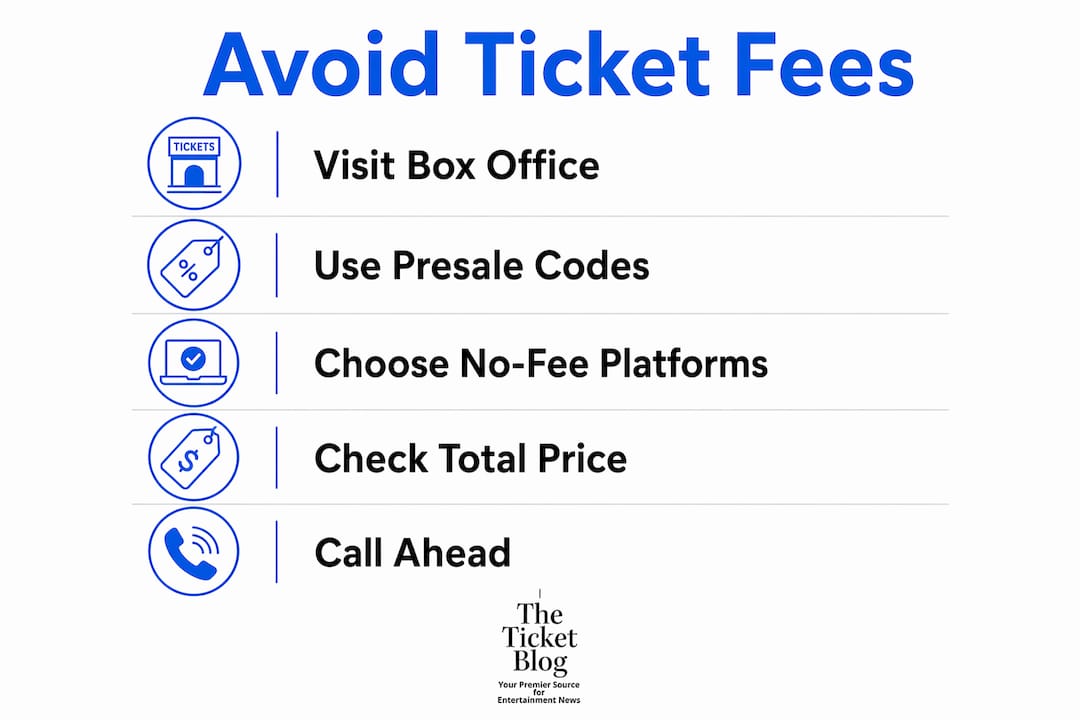
Box offices also hold physical ticket allocations that are separate from the online inventory. These allocations are exempt from digital service fees and are accessible in person or sometimes by phone. Most fans do not know this allocation exists, which means box office lines are often shorter than you would expect for a sold-out show.
Follow these steps to buy at the box office effectively:
Call ahead. Phone the venue box office before making the trip. Confirm that tickets are still available, ask about accepted payment methods (some only take cash or debit), and ask whether any fees apply to phone purchases.
Go early on the day of the show. Many venues release held or returned tickets at the box office on the day of the event. Day-of-show buying is one of the most underused strategies for face-value tickets.
Bring valid ID. Some venues require ID matching the buyer’s name for will-call or box office purchases, especially for high-demand shows.
Ask specifically about fees. Even box offices occasionally charge a small facility fee. Asking directly removes any surprise at the window.
Pro Tip: Call the venue box office at least two weeks before the show. Inventory moves fast, and a quick phone call can confirm whether the trip is worth making before you drive across town.
A common misconception is that box offices are only for day-of-show purchases. Many venues open box office sales weeks in advance, often on the same day as the general online sale. Checking the venue’s official website for box office hours is worth the two minutes it takes.
How to use presale codes and artist fan clubs to save money on tickets
Presale codes are access keys that unlock ticket sales before the general public can buy. They are the most consistent way to reach face-value pricing and avoid the 20–40% price surges that hit after general sale opens. Artists, venues, and credit card companies all distribute presale codes through different channels.
Getting presale access requires signing up before the announcement, not after. Here is where to look:
Artist mailing lists. Signing up for an artist’s official newsletter is the single most reliable source of presale codes. Many artists send codes exclusively to subscribers 24–48 hours before the public sale.
Artist fan clubs or membership programs. Paid fan clubs often provide priority presale access with the lowest fees attached.
Social media. Artists frequently post presale codes on Instagram, X (formerly Twitter), and Facebook within 48 hours of announcing a tour.
Credit card presales. Card-linked offers from major card issuers provide presale windows and occasional fee discounts for cardholders.
Venue mailing lists. Venues run their own presales separate from the artist’s, and subscribing to the venue’s list gives you a second shot at face-value tickets.
Pro Tip: Sign up for an artist’s mailing list the moment you hear they are touring, not after the show is announced. Early subscribers almost always get first access to presale codes and the best seat selections.
One warning: presale tickets are not always fee-free. The presale code gets you in early, but the platform still adds its standard service fees at checkout. The advantage is access to face-value base prices before dynamic pricing kicks in. Always check the all-in pricing total before completing a presale purchase. Some platforms now show the full cost upfront, but many still reveal fees only at the final checkout screen.
For a full breakdown of promo codes and presale offers available right now, The Ticket Blog’s guide to 2026 summer concert promo codes is updated regularly with current offers.
What are no-fee ticket platforms and how do you identify legitimate ones?
No-fee platforms are ticketing services that either absorb fees into the displayed price or charge a flat, transparent amount with no hidden additions. The industry term for this model is “all-in pricing,” and it means the price you see is the price you pay. Ticketmaster introduced all-in pricing on some listings starting in late 2023, but it remains inconsistent. Many tickets on the same platform still add fees only at checkout.
Identifying a legitimate no-fee or low-fee platform requires checking three things before you buy:
Total cost transparency. A trustworthy platform shows the full price, including all fees, before you reach the payment screen. If the price jumps at checkout, the platform is not using all-in pricing.
Refund and buyer guarantee policy. Legitimate platforms publish clear refund policies. If a show is canceled, you should receive a full refund automatically. Platforms that bury their refund terms or require you to contact support to initiate a refund are higher risk.
Delivery fee clarity. Some platforms advertise low service fees but charge $15–$25 for ticket delivery. Mobile delivery (direct to your phone) is almost always free. Always select mobile delivery when available to eliminate this charge.
Resale platforms present the highest fee risk. A ticket listed at face value on a resale site often carries a buyer fee and a seller fee, both added to the final price. The only way to compare total cost accurately is to add all fees before finalizing any purchase. The Ticket Blog’s guide to concert venue ticket fees explains exactly which charges to watch for on each type of platform.
Additional tips to reduce or eliminate concert ticket fees
Beyond box offices and presales, several practical habits consistently reduce what fans pay in fees.
Check for group discounts. Many venues offer reduced per-ticket pricing for groups of 10 or more. The discount often applies to the base price, which also reduces the percentage-based service fee.
Look at weekday shows. Weekday concerts sometimes carry lower ticket prices and reduced demand, which keeps dynamic pricing in check.
Monitor last-minute inventory. Venues and primary platforms sometimes release unsold tickets in the final 24–48 hours before a show, often at face value with standard fees rather than inflated resale prices.
Calculate the total cost before you commit. Add every fee shown on the checkout page before entering your payment details. A $75 ticket with a $22 service fee, $5 facility charge, and $3 order fee costs $105. Knowing that before checkout prevents surprises.
Avoid manufactured urgency. Countdown timers and “only 3 left” warnings are designed to push you through checkout before you compare prices. Take 60 seconds to open a second tab and check the same event on another platform.
Use the types of concert discounts guide from The Ticket Blog to identify discount categories you may qualify for, including student, military, and loyalty discounts that some venues apply before fees are calculated.
The most common mistake fans make is focusing only on the base ticket price. The total cost, including every fee and delivery charge, is the only number that matters.
Key takeaways
Buying at the box office, using presale codes, and checking all-in pricing totals are the three most effective ways to avoid concert ticket fees and pay closer to face value.
Point | Details |
Box office purchases | Venue box offices carry no service fees and hold separate ticket allocations most fans overlook. |
Presale code access | Signing up for artist mailing lists before tour announcements gives you face-value access before dynamic pricing starts. |
All-in pricing check | Always verify the total cost including all fees before completing any purchase, on any platform. |
Resale fee awareness | A $200 resale ticket with a 25% fee costs $250 total. Calculate before you buy. |
Group and weekday savings | Group discounts and weekday events reduce base prices, which also lowers percentage-based service fees. |
The Ticket Blog’s take on fee avoidance
The most consistent mistake I see fans make is treating urgency as a reason to skip price comparison. A countdown timer on a checkout page is a sales tool, not a deadline backed by reality. Tickets rarely disappear in the 90 seconds it takes to check a second platform.
Patience is the most underrated skill in ticket buying. Fans who subscribe to artist mailing lists months before a tour announcement, who call the box office the week tickets go on sale, and who calculate total cost before clicking “buy” almost always pay less than fans who react to announcements and buy from the first available link.
The box office strategy surprises people the most. Most fans assume box offices are outdated or inconvenient. In practice, a 10-minute phone call to a venue can confirm face-value availability with zero service fees. That call has saved fans $30–$50 on a single ticket more times than I can count.
One habit worth building immediately: subscribe to the artist’s official mailing list today, before the next tour is announced. That single step costs nothing and puts you ahead of the majority of buyers when presale codes drop. The hidden fee discounts guide on The Ticket Blog covers additional insider approaches worth adding to your routine.
— The Ticket Blog
What The Ticket Blog offers for concert ticket savings
The Ticket Blog is a trusted resource for fans who want to pay less and know more before they buy.
Every week, The Ticket Blog publishes updated guides on concert ticket discounts, fee structures, and presale opportunities across major tours and venues. Whether you are buying for a single show or planning a full season of events, the site covers the strategies that actually reduce what you pay. Browse the full library of fan savings guides to find current promo codes, fee breakdowns, and buying tips organized by event type. Staying informed is the lowest-effort way to keep more money in your pocket every time you buy a ticket.
FAQ
What is the cheapest way to buy concert tickets?
Buying directly at the venue box office is the cheapest method. Box office purchases typically carry no service fees, saving fans 15–27% compared to major online platforms.
Do presale codes eliminate ticket fees?
Presale codes provide early access to face-value pricing but do not remove platform service fees. The savings come from avoiding dynamic price increases that hit after general sale opens.
What does all-in pricing mean for concert tickets?
All-in pricing means the displayed ticket price includes all fees, so the amount shown is the final amount charged. Not all platforms use this model, so always check the checkout total before paying.
How much do concert ticket fees typically add to the price?
Concert ticket fees typically add 20–40% to the base ticket price, depending on the platform and event. A $100 ticket can cost $115–$140 by the time all fees are applied.
Are resale platform fees higher than primary platform fees?
Resale platforms often charge fees on top of already-inflated ticket prices, making the total cost significantly higher. A $200 resale ticket with a 25% buyer fee costs $250 before delivery charges are added.
Recommended
Comments