Types of Ticket Promo Code Sources: 2026 Buyer's Guide


Types of ticket promo code sources are the platforms and channels that distribute valid discount codes for event tickets, covering everything from official artist presales to coupon aggregator websites. Budget-conscious buyers who tap only one source leave real money on the table. The most reliable savings come from combining official channels, such as fan clubs and credit card presales, with curated ticket discount code websites and social media drops. This guide breaks down every major source category, explains how each one works, and flags the risks worth knowing before you buy.
1. Types of ticket promo code sources: official presales and fan clubs
Official presale codes are the most reliable discount source for high-demand events. Artists, venues, promoters, and credit card companies each run their own presale windows, and a single show can have five or six distinct presale windows from sources like artist fan clubs, Citi cardmembers, Amex, Live Nation, and the venue itself. Each window uses a unique code and opens at a staggered time. That structure gives fans multiple shots at discounted or early-access tickets before the general public sale begins.
Fan club memberships are the most direct path to exclusive codes. Artists like Taylor Swift, Bruce Springsteen, and Beyoncé have used verified fan programs that reward registered fans with priority access and reduced fees. Credit card presales through Citi and Amex require only an eligible card at checkout, making them accessible without any additional signup.
The main risks with official presales are limited inventory and tight time windows. Codes expire fast, and fraudulent presale codes sold on third-party platforms like eBay or social media DMs are frequently invalid, already redeemed, or outright fake. For 2026 tours with high demand, scam activity around presale codes has increased noticeably.
Artist fan clubs: Sign up directly on the artist’s official website for member codes.
Credit card presales: Citi and Amex regularly offer early access windows for major concerts and sports events.
Venue presales: Register with the venue’s loyalty program for building-specific codes.
Promoter presales: Live Nation and AEG run their own presale windows tied to their membership programs.
Pro Tip: Sign up for an artist’s official newsletter before a tour is announced. Fan club presale codes almost always arrive by direct email, not social media post.
2. Coupon aggregator websites and apps
Coupon aggregator sites compile working promo codes from dozens of ticket sellers into one searchable database. Coupon databases verify and refresh available codes daily to keep listings reliable, which makes them far more useful than random Google searches for discount strings. Many aggregators also display user ratings and success timestamps so you can judge a code’s freshness before trying it.

Apps take this a step further by sending push notifications when new codes drop for events you follow. Member-only apps and reward programs provide exclusive access to coupons and automatic checkout discounts, meaning some savings apply without entering any code at all. That automatic discount feature is worth enabling if you buy tickets regularly through a specific platform.
The main limitation of aggregator sites is code decay. A code listed this morning may already be expired or capped by this afternoon, especially for popular shows. The best aggregators display a “last verified” date and allow users to report broken codes in real time.
Dedicated coupon sites: Search by retailer or event type to find codes sorted by discount size and expiration date.
Browser extensions: Tools like Honey and Capital One Shopping automatically test available codes at checkout.
Reward apps: Platform-specific apps often include member-only promo codes alongside loyalty points.
User-reported databases: Community-driven sites update faster than editorial ones because fans post codes immediately after finding them.
Pro Tip: Check the “last verified” date on any aggregator listing. A code verified within the last 24 hours has a much higher success rate than one listed a week ago.
3. Social media, influencers, and email newsletters
Social media is now a primary distribution channel for time-limited ticket promo codes. Instagram, TikTok, and Twitter are the main platforms where artists, venues, and promoters share exclusive discount codes, often tied to influencer partnerships targeting specific fan communities. These codes frequently have short expiration windows, sometimes just 24 to 48 hours, so timing matters.
Influencer codes work differently from standard presale codes. A music blogger or sports commentator with a dedicated following may receive a unique code from a promoter to share with their audience. Promo codes are designed for channel-specific tracking so marketers can measure exactly which influencer or platform drove ticket sales. That tracking purpose explains why influencer codes often differ from any code you would find on an aggregator site.
Email newsletters from venues, promoters, and fan clubs remain one of the most underused sources for promo codes. Subscribers frequently receive codes that never appear publicly on social media or aggregator sites. The Ticket Blog covers verified concert promo codes and updates its listings regularly, making it a reliable newsletter source for buyers who want codes delivered directly.
Follow official artist accounts on Instagram and TikTok for flash code drops tied to tour announcements.
Subscribe to venue newsletters for building-specific codes that apply only to shows at that location.
Track influencer partnerships in your event category, since niche creators often carry codes that mainstream channels miss.
Set notifications for accounts you follow so time-sensitive codes reach you before they expire.
4. Direct partnerships, group discounts, and sponsored codes
Corporate sponsors and media partners receive allocated promo codes as part of their event agreements. Sponsors and corporate partners get promo codes for complimentary or discounted tickets to distribute to employees, guests, or press contacts. These codes rarely appear publicly, but knowing they exist helps you ask the right questions at work or through professional networks.
Group discounts operate differently from standard promo codes. Group discounts apply automatically when a buyer purchases a preset number of tickets, with no code entry required. A promo code, by contrast, requires manual entry at checkout. The two can stack, meaning a group buying ten tickets might also enter a sponsor code for an additional percentage off. Understanding that difference helps you plan purchases with friends or colleagues to capture both savings types.
Check your employer’s benefits portal. Many large companies receive sponsor allocations for local sports teams and concert venues.
Ask your credit union or bank. Financial institutions frequently hold partner codes for regional events.
Contact the venue’s group sales department directly. Groups of ten or more often qualify for dedicated discount codes not listed publicly.
Look for media partner codes. Local radio stations and newspapers regularly run promotions with unique codes tied to their sponsorship agreements.
Pro Tip: If you are buying tickets for a work event or team outing, call the venue’s group sales line before purchasing. Group rates often beat any publicly available promo code.
5. Comparison of promo code source categories
Choosing the right source depends on what you prioritize: reliability, discount size, or ease of access. Official presale and fan club codes rank highest for reliability because they come directly from the artist or venue. Their discount size is moderate, typically covering service fees or offering a fixed dollar amount off face value, but the fraud risk is the lowest of any category.
Coupon aggregator sites offer the widest accessibility. Any buyer with internet access can search and apply codes without a membership or credit card requirement. The tradeoff is reliability. Aggregator codes expire frequently, and success rates vary by event popularity.
Social media and influencer codes deliver some of the largest percentage discounts, but they require active monitoring and move fast. Sponsored and partnership codes carry the highest discount potential, sometimes covering the full ticket cost, but they are the least accessible to the general public.
Source type | Reliability | Discount size | Accessibility | Scam risk |
Official presale and fan club | High | Moderate | Medium (requires signup) | Low |
Coupon aggregator sites | Medium | Small to moderate | High (open to all) | Low to medium |
Social media and influencer | Medium | Moderate to large | Medium (requires following) | Medium |
Sponsored and partnership codes | High | Large | Low (invite only) | Low |
The safest overall strategy combines official presale codes with a reliable aggregator check and a newsletter subscription. That three-source approach covers early access, public availability, and time-sensitive drops without relying on any single channel.
Key takeaways
The most effective ticket savings strategy uses at least three source types: official presales for reliability, coupon aggregators for accessibility, and newsletters or social media for time-sensitive drops.
Point | Details |
Official presales are safest | Fan club and credit card presale codes carry the lowest fraud risk of any source. |
Aggregators need daily checks | Code validity decays fast; always verify the “last verified” date before trying a code. |
Influencer codes are channel-specific | Marketers assign unique codes per channel, so influencer codes rarely appear on aggregator sites. |
Group discounts stack with codes | Buying in bulk can trigger automatic group pricing on top of any promo code you enter. |
Sponsored codes offer the biggest discounts | Corporate and media partner codes often cover fees or provide the largest percentage off, but require a direct connection. |
The Ticket Blog’s take on finding promo codes that actually work
After tracking ticket deals across hundreds of events, the pattern is clear: buyers who rely on a single source consistently overpay. The fans who save the most are the ones who treat promo code hunting as a short checklist, not a lucky find.
Official sources should always come first. A presale code from an artist’s fan club or a Citi cardmember window is verified before it ever reaches you. That verification step is what separates a real discount from a wasted checkout attempt. Effective promo code campaigns track detailed metrics including redeemed code, order date, and campaign source, which means every code you use was deliberately placed in a specific channel for a specific audience. Knowing that helps you think like a marketer when you search.
The second layer is newsletters. Venue and promoter email lists distribute codes that never surface publicly. Subscribing to three or four relevant lists takes five minutes and pays off repeatedly across a season of events. Pair that with a daily check on a reputable aggregator site, and you cover both the exclusive and the public ends of the market.
The one habit worth building is patience. High-demand shows generate the most fraudulent code activity, especially in the weeks before a sale opens. If a code appears in a DM, a resale forum, or an unsolicited email, treat it as invalid until proven otherwise. The types of concert ticket discounts that deliver real savings are almost always traceable to a named, official source.
— The Ticket Blog
How The Ticket Blog helps you find verified ticket deals
The Ticket Blog publishes verified promo codes and buying guides for concerts, sports events, and theater productions, updated regularly so you are not working from stale information.
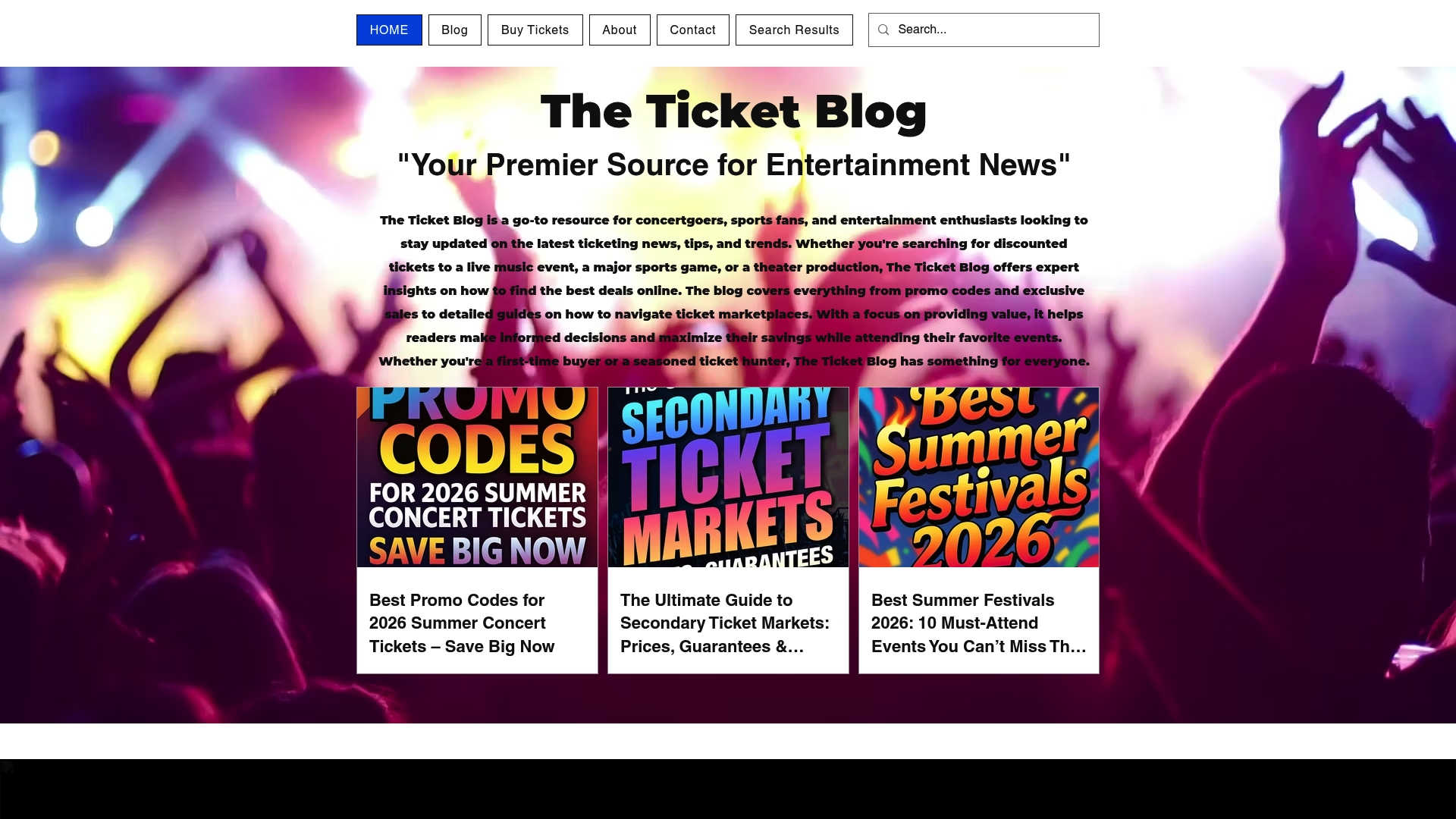
The site covers specific promotions like Live Nation’s Summer of Live and festival-specific discount codes, alongside broader guides on where to find promo codes across event categories. Whether you are buying tickets for a stadium tour or a local theater run, The Ticket Blog’s curated listings give you a verified starting point. Visit theticketblog.com for the latest promo codes, buying tips, and event-specific discount guides.
FAQ
What are the most reliable types of ticket promo code sources?
Official presale codes from artist fan clubs, credit card companies like Citi and Amex, and venue loyalty programs are the most reliable sources. They carry the lowest fraud risk because codes come directly from the event organizer.
How do I find ticket promo codes on social media?
Follow official artist, venue, and promoter accounts on Instagram, TikTok, and Twitter, and turn on post notifications. Influencer partnerships also distribute unique codes, though these expire quickly and are channel-specific.
What is the difference between a group discount and a promo code?
A group discount applies automatically when you purchase a preset number of tickets, requiring no code entry. A promo code requires manual entry at checkout and can often be combined with a group discount for layered savings.
Are promo codes on coupon aggregator sites safe to use?
Most aggregator sites are safe, but code validity decays fast. Check the “last verified” date on any listing and use sites that allow users to report expired codes in real time for the best results.
Why do some promo codes only work for certain buyers?
Promo codes are often assigned to specific channels or audience segments for marketing attribution purposes. A code shared by an influencer or sent to newsletter subscribers is intentionally different from a public code, which is why it may not work if you find it secondhand.
Recommended
Comments